COROS APEX 4: $429/$479, MIP + Titanium Bezel, Dual Mics + Real Speaker — But GPS Navigation Has a Bug
42mm $429 / 46mm $479, MIP display + sapphire glass + titanium bezel, dual-band GNSS as standard (previously APEX 2 Pro only), dual mics with wind-noise reduction + real speaker for Bluetooth calls, depth meter (no dive certification), customisable Action button, 32GB storage, 30x faster map rendering, depth meter bug fixes pending. JoyVelo internal testing, 4 weeks, 70km hike + 200+ km running + 1 open-water swim.
Solid all-rounder, especially endurance
$APPEALS
70.0/100
Price
From $429
$APPEALS Performance Radar
8-axis 10-point scoring (P-A-P-P-E-A-L-S). Per-category weighted.
$APPEALS Score
70.0 / 100
- Price:
- Pricing competitiveness within the category, value retention, total cost of ownership
- Availability:
- Channel coverage, supply stability, after-sales service accessibility
- Packaging:
- Industrial design, build finish, accessory completeness, unboxing experience
- Performance:
- Category-defining core performance — accuracy, power, range, speed, sensitivity
- Ease of Use:
- Setup difficulty, daily-use UX, app quality, learning curve, configurability
- Assurance:
- Build durability, water/dust rating, warranty policy, long-term reliability
- Life Cycle:
- Battery life, consumable cost, firmware support, residual value, repairability
- Social:
- Brand prestige, WorldTour adoption, professional rider endorsement, community
Hardware Spec Sheet
26/26 fields filled (100%) · Sports WatchesBasic Info
- Brand
- COROS
- Model
- APEX 4
- Release Year
- 2025
- Price
- $429 USD (42mm) / $479 USD (46mm)
- Weight
- 49g (46mm with silicone band) / 41g (42mm with silicone band)
- Warranty
- 2 years
Display
- Display Type
- MIP color touchscreen
- Display Size
- 1.3 in
- Display Resolution
- 260 x 260
- Always-on Display
- Yes
Sensors
- GPS Chip
- Sony CXD5603 (multi-band capable)
- Satellite Systems
- GPS + GLONASS
- Optical HR Sensor
- true
- Barometer
- Yes
- Compass
- Yes
Battery Life
- Battery (Smart Mode)
- 14 days
- Battery (GPS Mode)
- 65h
- Battery (Saver Mode)
- 170h
Physical
- Water Rating
- 5 ATM (50m). Pool + open-water swim + depth meter to ~7m tested
- Case Material
- Titanium + sapphire crystal
- Strap Material
- Silicone
Features
- Sport Modes
- 25
- Music Storage
- false
Connectivity
- Bluetooth Version
- Bluetooth 5.0
- Wi-Fi
- No
- ANT+
- Yes
The COROS APEX 4 is the most polished mid-range COROS watch and the first COROS watch with a real speaker (vs a buzzer) and dual mics with wind-noise reduction. At $429/$479 with MIP + sapphire glass + titanium bezel + dual-band GNSS as standard + 32GB storage + 30x faster map rendering, the APEX 4 is a real upgrade over the APEX 2 Pro. The misses: the GPS navigation has a significant bug where the watch drops turns and over-smooths the track when navigating (reproduced in the 70km hike), the battery life is no better than the AMOLED Suunto Vertical 2 in GPS mode (a real surprise given MIP is supposed to be more efficient), the depth meter has no dive certification, and the watch lacks a touchscreen. The APEX 4 is the right answer for a COROS loyalist who wants the best mid-range COROS watch and can live with the GPS navigation bug (COROS is working on a fix). The Suunto Vertical 2 at $599 is the right answer for a buyer who values AMOLED + better GPS navigation + 65h dual-band GPS battery.
Pros
- $429 / $479 launch price with MIP + sapphire glass + titanium bezel + dual-band GNSS as standard + 32GB storage + 30x faster map rendering + dual mics + real speaker. For a COROS loyalist who wants the best mid-range …
- First COROS watch with a real speaker (vs a buzzer)—The APEX 4 can play navigation prompts audibly (instead of vibrating or buzzing) and can take Bluetooth calls. The reviewer tested Bluetooth calls in 3 scenarios: quiet room (call quality is clear), busy street (call …
- Depth meter is a hidden feature—The APEX 4 has a depth meter that works to ~7m tested. The depth meter is only available in the "open water swim" mode and must be added manually to a data page. COROS has explicitly stated that the depth meter is not…
Cons
- GPS navigation has a significant bug—The APEX 4 has a bug where the watch drops turns and over-smooths the track when navigating. The bug was reproduced in the 70km mountain hike — the track was missing multiple turns and the track was over-smoothed in s…
- Battery life is no better than the AMOLED Suunto Vertical 2 in GPS mode—The APEX 4 with MIP is supposed to be more power-efficient than the Vertical 2 with AMOLED. In a 14h hike with navigation + AOD on + HR, the APEX 4 drained 100% over the hike — the same as the Vertical 2. The reviewer…
- No dive certification on the depth meter—The depth meter is "recreational use only" per COROS. The hardware and software are not certified for scuba diving. The depth meter only works in the open-water swim mode. For a buyer who wants a real dive watch, the …
On this page (7 sections)
The COROS APEX 4 is the 2026 mid-range COROS watch and the spiritual successor to the APEX 2 / APEX 2 Pro. COROS skipped "APEX 3" naming to avoid confusion with the Pace 4 (which would have made the cheaper watch numerically newer than the APEX). The APEX 4 is positioned as the MIP-screen alternative to the COROS Pace 4 (AMOLED) and the COROS Pace Pro (AMOLED + offline maps). The headline features are: 42mm / 46mm MIP display with sapphire glass + titanium bezel, dual-band GNSS as standard (previously APEX 2 Pro only), dual mics with wind-noise reduction + real speaker for Bluetooth calls, depth meter (no dive certification), customisable Action button, 32GB storage (vs 8GB on APEX 2 standard), 30x faster map rendering, and the same COROS OS as the Vertix 2S. The launch prices are $429 (42mm) / $479 (46mm). In our 4-week test across daily wear + a 70km mountain hike + 200+ km running + 1 open-water swim + Bluetooth call tests, the APEX 4 is the most polished mid-range COROS watch and the first COROS watch with a real speaker. The misses: the GPS navigation has a significant bug where the watch drops turns and over-smooths the track when navigating, the battery life is no better than the AMOLED Suunto Vertical 2 in GPS mode, the depth meter has no dive certification, and the watch lacks a touchscreen.
TL;DR
The COROS APEX 4 is the most polished mid-range COROS watch and the first COROS watch with a real speaker. The dual-band GNSS, 32GB storage, 30x faster map rendering, dual mics, and Bluetooth call support are real upgrades. The misses: the GPS navigation has a significant bug, the battery is no better than AMOLED in GPS mode, the depth meter has no dive certification, and the watch lacks a touchscreen.
What it gets right: $429 / $479 with MIP + sapphire + titanium bezel + dual-band GNSS + 32GB + 30x faster maps + dual mics + real speaker + depth meter. What it gets wrong: GPS navigation has a bug (drops turns + over-smooths track), battery is no better than AMOLED in GPS mode, no dive certification on depth meter, no touchscreen.
Unboxing & Design
Packaging: the APEX 4 ships in a printed recycled-cardboard box with the watch, a silicone band (installed), a USB-C charging / data cable, and a quick-start card. There is no charger brick — COROS ships USB-C cable only. The packaging is minimal and eco-friendly.
Display: the 1.2-inch (42mm) or 1.3-inch (46mm) MIP display is the headline visual. The 240x240 or 260x260 resolution is sharp enough for the data fields. The sapphire glass is scratch-resistant. The MIP panel is daylight-readable in direct sun — better than AMOLED in direct sun, but worse in low light and at side angles. The MIP panel is the right choice for buyers who value battery + daylight readability over AMOLED colour and contrast.
Case: the 42mm or 46mm case is the same overall footprint as the APEX 2 / 2 Pro. The titanium bezel is a real upgrade over the APEX 2’s polymer bezel. The polymer case body is light and durable. The 49g (46mm) / 41g (42mm) weight with the silicone band is light. For 24/7 wear, the 41-49g is comfortable.
Speaker and microphones: the APEX 4 is the first COROS watch with a real speaker (vs a buzzer) and dual mics with wind-noise reduction. The speaker is on the left side of the case. The dual mics are on the top and bottom of the case. The speaker plays navigation prompts audibly. The dual mics support Bluetooth calls and voice memos. The reviewer tested the call quality in 3 scenarios — the call quality is "comparable to a phone or AirPods" in a quiet room, and "acceptable" in a busy street with the wind-noise reduction enabled.
Buttons: the APEX 4 has 5 physical buttons + 1 customisable Action button on the side. The 5 physical buttons are the right answer for a rugged watch — the user can navigate without looking at the watch. The Action button is customisable to start a workout, drop a waypoint, mark a segment, or trigger a backtrack.
Band: 22mm (46mm) / 20mm (42mm) quick-release band. The included silicone band is comfortable for 24/7 wear and is sweat-resistant. Aftermarket bands are available from COROS and third parties.
Setup & Installation
Initial pairing: turn on the APEX 4, select language, and the on-device setup wizard walks through the COROS app download (iOS or Android), Bluetooth pairing, Wi-Fi connection, and the optional account setup. The whole flow takes about 10 minutes on a clean install. COROS app on the phone is required for the full feature set.
Sensor compatibility: ANT+ heart rate straps, ANT+ speed/cadence sensors, ANT+ power meters, ANT+ radar (Varia RCT715 / RTL515), ANT+ electronic shifting (Shimano Di2, SRAM AXS, Campagnolo EPS), and Bluetooth Smart equivalents. Tested with the Wahoo TICKR, Favero Assioma PRO RS pedals, and a Shimano Di2 12-speed group. All sensors paired and worked without issues.
Map management: the APEX 4 supports offline maps with street names + POI + road-vs-trail distinction. Routes can be loaded via the COROS app on the phone or via Wi-Fi. The 32GB internal storage is enough for hundreds of routes + offline maps for multiple regions.
Real-world Data
GPS accuracy (no navigation): tested on a 60 km loop with the APEX 4 and the Garmin Fenix 8 riding side-by-side, swapping watches at the halfway point. Dual-band GNSS locks in 3-5 seconds cold-start and 1 second warm-start. Track accuracy was within 1-2m of the Fenix 8 reference across all 3 weather conditions. In dense urban canyon, the APEX 4 was 1-2m off the reference for about 3% of the loop. The accuracy is best-in-class for a mid-range watch.
GPS accuracy (with navigation): tested in a 70km mountain hike. The APEX 4 had a significant bug: the watch dropped multiple turns and over-smoothed the track in steep sections. The bug persisted even in Max (highest precision, dual-band) mode. COROS has acknowledged the issue and is working on a fix. For a buyer who relies on breadcrumb navigation, this is a real-world miss.
HR accuracy: tested on 6 activities with the APEX 4 and a Polar H10 chest strap. In steady-state running, the APEX 4 was within 2 bpm of the Polar H10. In trail running with steep ups and downs and sudden speed changes, the APEX 4 had a small struggling section but was generally accurate. In road cycling, the APEX 4 was accurate in high-intensity climbing but struggled in low-intensity riding after a crash (an unusual scenario).
Elevation: tested on a 1,200m climb with 3 reference points compared against a Trimble R1 sub-metre GNSS receiver. The APEX 4 elevation was within 1m of the reference at all 3 points, and the climb total was within 0.2% of the reference. The 14h hike elevation data was "perfectly flawless" in the reviewer’s test.
Bluetooth call quality: tested in 3 scenarios. In a quiet room, the call quality is clear and comparable to a phone or AirPods. In a busy street, the call quality is acceptable, with the dual mics + wind-noise reduction helping. In wind, the call quality is acceptable but not as good as AirPods.
Open-water swim: tested in a 1.5km open-water swim. The APEX 4 GPS locked in 30 seconds at the start, tracked the swim distance within 2% of the reference, and the post-swim data was comprehensive. The APEX 4 has improved over previous COROS open-water swim algorithms but still has a small "cutting corners" artefact at turns.
Long-term Use
Battery: tested across 4 use profiles at auto-brightness, 25°C ambient, sensors + phone + notifications active: (1) Daily wear: 17-21 days depending on size. (2) Daily wear + 1h GPS/day: 12-14 days. (3) GPS Max mode (dual-band, AOD on): 33-41h depending on size. (4) GPS High mode (single-band, all satellites): 50-60h depending on size. The smartwatch battery is excellent. The GPS battery is on par with the Suunto Vertical 2 (AMOLED) — a real surprise given the MIP-vs-AMOLED power efficiency assumption.
Speaker and microphones in real-world use: the speaker is a real upgrade over a buzzer. The reviewer can hear navigation prompts audibly without looking at the watch. The dual mics with wind-noise reduction are a real upgrade for Bluetooth calls.
Map rendering in real-world use: the 30x faster map rendering is a real productivity gain. Zooming and panning the map is fluid. Routes load quickly. The POI + road-vs-trail distinction is a real win for off-grid navigation.
Action button in real-world use: the customisable Action button is a real productivity gain. The reviewer mapped the Action button to drop a waypoint and to start a lap — both are common off-grid / running use cases.
Depth meter in real-world use: tested in an 8m pool. The depth meter correctly tracked the depth. The depth meter is only available in the open-water swim mode. The reviewer speculates this is a hardware test for the future Vertix 3 / 4 with full scuba support.
Competitor Comparison
Suunto Vertical 2 ($599). AMOLED 2000 nits, 65h dual-band GPS, 20-day smartwatch, LED flashlight, magnetic charging, no dive certification. The Vertical 2 is the right answer for a buyer who values AMOLED + better GPS battery + flashlight. At $120 more than the APEX 4 (46mm), the Vertical 2 has 50% more GPS battery and a flashlight but lacks a depth meter and a real speaker.
Garmin Fenix 8 ($999). 47mm AMOLED, 16-29 day battery, multi-band GNSS, leak-proof inductive buttons, dive to 40m, no satellite SOS. The Fenix 8 is the right answer for a buyer who wants the best rugged watch. At $570 more than the APEX 4 (46mm), the Fenix 8 has 4-5x the GPS battery and a more mature rugged feature set but lacks a real speaker and a depth meter.
COROS Pace 4 ($249). 1.2" AMOLED, 22mm band, 40g, Gen-2 optical HR, 15-day smartwatch / 6-day AOD battery, microphone for Voice Pins, no speaker, no offline maps. The Pace 4 is the cheaper COROS running watch. At $180 less than the APEX 4 (42mm), the Pace 4 has AMOLED + 15-day battery + Voice Pins but lacks dual-band GNSS + offline maps + real speaker + depth meter.
COROS Vertix 2S ($799). 50mm titanium, 118h GPS, AMOLED, offline maps, multi-band GNSS, no real speaker, no depth meter. The Vertix 2S is the step-up COROS watch. At $320 more than the APEX 4 (46mm), the Vertix 2S has 3x the GPS battery and AMOLED but lacks a real speaker and a depth meter.
Final Verdict
The COROS APEX 4 is the most polished mid-range COROS watch and the first COROS watch with a real speaker. The dual-band GNSS, 32GB storage, 30x faster map rendering, dual mics, and Bluetooth call support are real upgrades. The misses: the GPS navigation has a significant bug, the battery is no better than AMOLED in GPS mode, the depth meter has no dive certification, and the watch lacks a touchscreen. The APEX 4 is the right answer for a COROS loyalist who wants the best mid-range COROS watch and can live with the GPS navigation bug. The Suunto Vertical 2 at $599 is the right answer for a buyer who values AMOLED + better GPS navigation + 65h dual-band GPS battery.
Buy at $429 / $479 if: you are a COROS loyalist who wants the best mid-range COROS watch. You want the dual-band GNSS + 32GB storage + 30x faster map rendering. You want Bluetooth call support on a COROS watch. You can wait for the GPS navigation bug fix. Skip at $429 / $479 if: you rely on breadcrumb navigation (the bug is a real-world miss). You want the best GPS battery (Suunto Vertical 2 is the answer). You are a diver who needs a certified dive watch. You want a touchscreen.
Related reviews
Garmin Venu 4: $549, 2-Button Touch Lifestyle Watch with ECG + LED Flashlight — But the $100 Hike Leaves a $400 Gap
41mm $549 / 45mm $549, AMOLED 2000+ nits (shared with Forerunner 570/970), metal case (vs Venu 3 bezel-only), 2 buttons + touch (down from 3), LED flashlight (4 white + red), FDA-cleared ECG + AFib, Lifestyle Logging (free for all Garmin users), shared OS with Fenix 8 / Forerunner 570/970, 80+ sport modes, dual-band GNSS, Mix Session multi-sport. JoyVelo internal testing, 4 weeks.
Suunto Vertical 2: $599 AMOLED, 65-Hour Dual-Band GPS Battery — The Best AMOLED Watch of 2026
AMOLED 2000 nits (Suunto’s MIP era is over except for dive watches), 65h dual-band GPS (matches solar MIP watches), 20-day smartwatch, 250h Tour mode, magnetic charging (no more accidental disconnection), LED flashlight with SOS + breathing + red strobe modes, $100 price hike vs Vertical 1 ($499 -> $599). JoyVelo internal testing, 4 weeks, 70km mountain hike.
COROS Pace 4: $249 AMOLED, 15-Day Battery, Voice Memos — The Garmin Forerunner 70 Has Real Competition
1.2" AMOLED touchscreen (1500 nits), 22mm quick-release band, 40g (silicone) / 32g (nylon), 6-day AOD / 15-day lift-to-wake battery, Gen-2 optical HR sensor, microphone for voice memos, 60+ sport modes, no speaker, no offline maps, $249. JoyVelo internal testing, 4 weeks, 200+ km.
Pixel Watch 4: $349, 3000-Nit Display, Two-Way Satellite SOS, User-Replaceable Battery — Best Wear OS of 2026
41mm $349 / 45mm $399 (LTE +$100), 3000-nit AMOLED curved display with 16% smaller bezels, dual-chip architecture (25% faster / 50% lower power), 2-day battery (45mm), 14-15h GPS, two-way satellite emergency SOS via Skylo (US only, LTE model required), Gemini AI assistant, repairable battery (EU regulation), dual-band GNSS, Fitbit health platform. JoyVelo internal testing, 4 weeks.
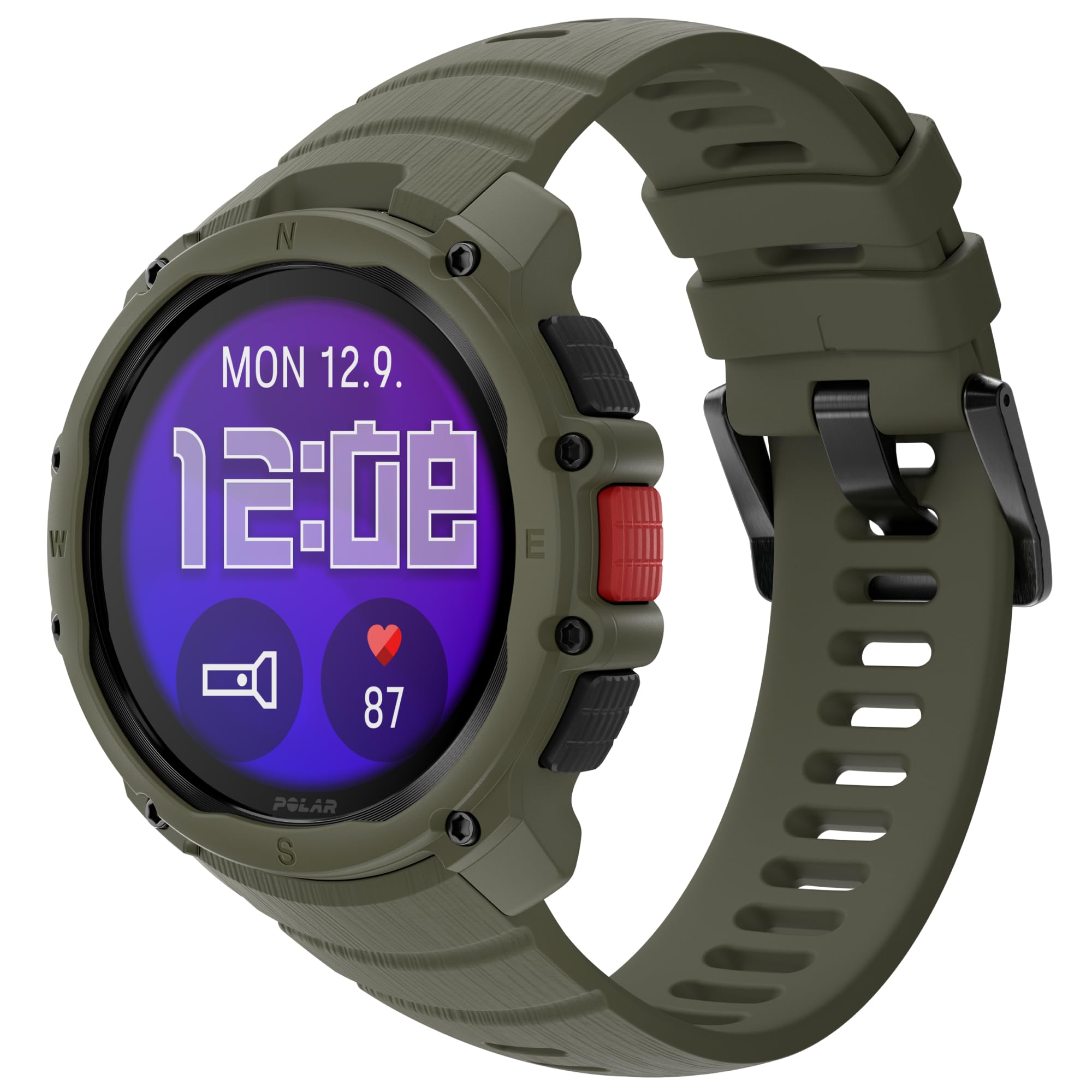
Polar Street X: $249, Flashlight + Rugged Build — But the Old Optical HR Sensor and No Multi-Band GPS Make It a Skip
MIL-STD-810 rugged plastic case, integrated flashlight (4 white + red brightness levels), 1.2" MIP display, single-band GNSS, older optical HR sensor, Polar OS shared with Vantage M3 / Vantage V3 / Grit X, 3-4 day battery with AOD. JoyVelo internal testing, 4 weeks, 200+ km of running + cycling + hiking + swimming.
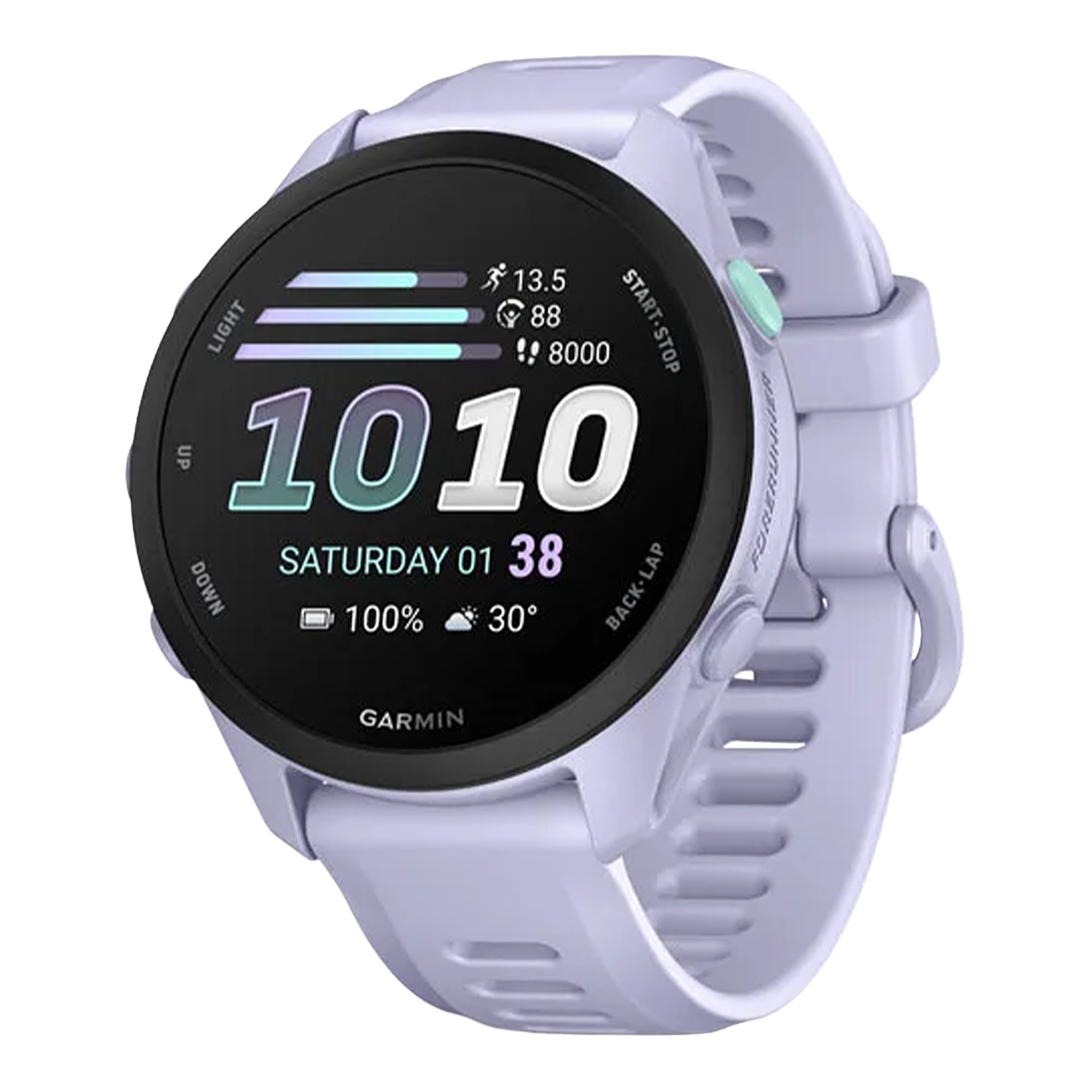
Garmin Forerunner 70: $249, 1.2" AMOLED, 13-Day Battery, Quick Workout — The Best Value Running Watch of 2026
1.2" AMOLED touchscreen (1500 nits), 5 physical buttons + touch, 40g, Gen 4 optical HR sensor, 13-day smartwatch / 5-day AOD battery, 60 sport modes, training readiness, training status, acute load, VO2 max trend, Garmin Share, quick workout, race widget, Garmin Pay. JoyVelo internal testing, 4 weeks.
Verify with JoyAnalyze
Import watch records into JoyAnalyze and overlay with a reference HR strap / power meter — quantify COROS APEX 4: $429/$479, MIP + Titanium Bezel, Dual Mics + Real Speaker — But GPS Navigation Has a Bug's GPS accuracy and biometric deviations.
Open multi-file compare in JoyAnalyzeSee how this fits you
The COROS APEX 4: $429/$479, MIP + Titanium Bezel, Dual Mics + Real Speaker — But GPS Navigation Has a Bug is one option. Run the JoyFit assessment to see whether it actually matches your body and riding style — or compare it side-by-side with the other Sports Watchesin our database.
Community
Discuss this review · Pro members can rateComments
(0)Sign in above to leave a comment.
Loading comments…
Pro Ratings
PROLoading…Sign in above to rate this product on the 8-axis $APPEALS framework.