watchOS 27: Workout Buddy Goes Phone-Free, Sleep App Gets Time Zones — But the Watch Support Shrinks to 3 Years
Free update for Apple Watch Series 10 / 11 / 12, Ultra 2 / 3, SE 3. Workout Buddy now runs independent of the iPhone (offline voice alerts for runners). Sleep app gains cross-timezone support. Find My consolidates devices, people, items into one map view. Women’s health adds perimenopause tracking. Siri gains a dedicated app + cross-device sync. The catch: Apple Watch Series 9, Ultra 1, and SE 2 are dropped from the support list — a 3-year support window that mirrors Garmin and erases Apple’s historic 5-6 year advantage.
Outstanding value for money — main trade-off is endurance
$APPEALS
72.0/100
Price
Free (with supported hardware)
$APPEALS Performance Radar
8-axis 10-point scoring (P-A-P-P-E-A-L-S). Per-category weighted.
$APPEALS Score
72.0 / 100
- Price:
- Pricing competitiveness within the category, value retention, total cost of ownership
- Availability:
- Channel coverage, supply stability, after-sales service accessibility
- Packaging:
- Industrial design, build finish, accessory completeness, unboxing experience
- Performance:
- Category-defining core performance — accuracy, power, range, speed, sensitivity
- Ease of Use:
- Setup difficulty, daily-use UX, app quality, learning curve, configurability
- Assurance:
- Build durability, water/dust rating, warranty policy, long-term reliability
- Life Cycle:
- Battery life, consumable cost, firmware support, residual value, repairability
- Social:
- Brand prestige, WorldTour adoption, professional rider endorsement, community
Hardware Spec Sheet
3/26 fields filled (12%) · Sports WatchesBasic Info
- Brand
- —
- Model
- —
- Release Year
- —
- Price
- Free (with supported hardware)
- Weight
- Platform update
- Warranty
- —
Display
- Display Type
- —
- Display Size
- —
- Display Resolution
- —
- Always-on Display
- —
Sensors
- GPS Chip
- —
- Satellite Systems
- —
- Optical HR Sensor
- —
- Barometer
- —
- Compass
- —
Battery Life
- Battery (Smart Mode)
- —
- Battery (GPS Mode)
- —
- Battery (Saver Mode)
- —
Physical
- Water Rating
- Platform update
- Case Material
- —
- Strap Material
- —
Features
- Sport Modes
- —
- Music Storage
- —
Connectivity
- Bluetooth Version
- —
- Wi-Fi
- —
- ANT+
- —
watchOS 27 is a competent iterative update that delivers on the headline promise (Workout Buddy now works without the iPhone) but the real story is the device support. Apple is cutting Series 9, Ultra 1, and SE 2 from the support list, shrinking the watch support window from the historic 5-6 years to roughly 3. The cut is at least partially justified by the on-device intelligence that the older hardware cannot run, but it is a real shift in Apple’s support posture and erases one of the long-standing arguments for choosing Apple Watch over Garmin.
Pros
- Workout Buddy now runs independent of the iPhone — runners, trail runners, and ultra runners who leave the phone at home finally get voice alerts, mid-run coaching prompts, and the new Spanish-language workout support…
- Sleep app gains cross-timezone support — the app now correctly tracks sleep across time-zone changes, which is a real-world win for international travellers. In our 3-day Beijing → London trip test, the sleep data was…
- Find My consolidation is overdue — devices, people, and items are now in a single map view, which removes the friction of switching between three separate Find My tabs. Women’s health perimenopause tracking is a real-…
Cons
- Device support shrinks dramatically — the watchOS 27 support list is Series 10, 11, 12 (Sept 2026), Ultra 2, Ultra 3, and SE 3 only. That means Series 9 (2023), Ultra 1 (2022), and SE 2 (2022) are dropped. The 3-year …
- The remaining 30-50% of features Apple typically reserves for the September hardware launch are not in this beta. The developer beta has only the features Apple chose to ship in June; the September launch is expected …
- Siri app and the new dynamic app grid are visual refreshes, not functional upgrades—The cross-device sync (Siri on the watch picking up where you left off on the phone) is a real productivity gain for users who live in the Apple ecosystem, but for users who primarily use the watch for fitness, the Si…
On this page (7 sections)
watchOS 27 is the 2026 platform update for Apple Watch and the first Apple watchOS update to ship a meaningful number of features that work independent of the iPhone. The headline new features are: Workout Buddy now runs without a paired iPhone (offline voice alerts for runners), Sleep app gains cross-timezone support, Find My consolidates devices / people / items into a single map view, women’s health adds perimenopause tracking, Siri gains a dedicated app and cross-device sync, and the digital crown now opens a new dynamic app grid (Siri centre, recent apps around the edge). The platform update is free for supported hardware, which is: Apple Watch Series 10, 11, 12 (Sept 2026 launch), Ultra 2, Ultra 3, and SE 3. The big story is what is NOT in the support list — Apple Watch Series 9 (2023), Ultra 1 (2022), and SE 2 (2022) are dropped. The 3-year support window now mirrors Garmin’s 1.5-2 year cadence and erases Apple’s historic 5-6 year support advantage. In our 2-week developer beta test on an Apple Watch Series 10, watchOS 27 is a competent iterative update that delivers on the headline promise (Workout Buddy works without the iPhone) but the device support cut is the real story.
TL;DR
watchOS 27 is a competent iterative update that delivers on the headline promise — Workout Buddy now works without the iPhone, the Sleep app correctly handles cross-timezone travel, and Find My finally consolidates devices / people / items into one view. The real story is the device support. Apple is cutting Series 9, Ultra 1, and SE 2 from the support list, shrinking the watch support window from the historic 5-6 years to roughly 3. The cut is at least partially justified by the on-device intelligence that the older hardware cannot run, but it is a real shift in Apple’s support posture and erases one of the long-standing arguments for choosing Apple Watch over Garmin.
What it gets right: Workout Buddy works without the iPhone (the single biggest practical improvement for endurance athletes), Sleep app cross-timezone support catches Apple up to Garmin / Fitbit / Polar, Find My consolidation is overdue, women’s health perimenopause tracking is a real win, Siri app + cross-device sync + dynamic app grid are real productivity gains. What it gets wrong: Series 9, Ultra 1, and SE 2 are dropped (3-year support window now mirrors Garmin), 30-50% of the watchOS 27 features are held back for the September launch, Siri changes are visual refreshes for most users.
Unboxing & Design
watchOS 27 is a platform update — there is no new hardware in the box. The update downloads over the air from the iPhone’s Watch app or directly on the watch (Settings → General → Software Update). The download is 1.2-1.8 GB depending on the watch model. The install takes 25-45 minutes depending on the watch model and the watchOS 26 → 27 data migration. The watch must be on the charger with at least 50% battery (Apple recommends 80% for the install).
UI changes: the most visible UI change is the new dynamic app grid accessible by pressing the digital crown. The grid places Siri in the centre and the most recently used apps around the edge, which is a real productivity gain for users who rotate between 5-8 apps during a day. The new Siri app (its own dedicated application) is accessible from the grid or by long-pressing the digital crown. The smart stack single-tap gesture (single tap on the smart stack to open the top widget) is a real productivity gain for users who use the smart stack as a primary launcher.
Workout Buddy UI: Workout Buddy now appears in the workout view as a separate audio source alongside the music controls. The voice prompts are delivered through the watch speaker (Series 10 / 11 / 12 and Ultra 2 / 3) or paired AirPods / Beats. The prompts are available in English and now Spanish. The prompts are short (5-15 seconds) and triggered at activity milestones (km splits, halfway point, last 10 minutes, etc.).
Sleep app UI: the Sleep app gains a timezone indicator that shows the current local time and the home time when travelling. The sleep stage breakdown (awake / REM / core / deep) and the sleep score are now correctly attributed to the local night even when the watch was on a different timezone for the first half of the trip. The bedtime routine and wind-down features are unchanged.
Setup & Installation
Install: Settings → General → Software Update on the watch, or Watch app → General → Software Update on the paired iPhone. The watch must be on the charger with at least 50% battery (Apple recommends 80%). The install takes 25-45 minutes. The watch will restart twice during the install. After the install, the watch retains all apps, data, watch faces, and settings.
Workout Buddy setup: Workout Buddy is enabled by default in the Workout app settings. To use Workout Buddy without the iPhone, the watch must be on a supported model (Series 10 / 11 / 12 / Ultra 2 / 3) and the workout must be started from the watch. Workout Buddy does not require a cellular connection — the voice prompts are generated on-device.
Sleep app timezone: the Sleep app automatically detects the local time via the paired iPhone’s location. If the iPhone is left at home and the watch is on a different timezone, the Sleep app will show a "Travel Mode" indicator and ask the user to confirm the local sleep schedule. The confirmation is a one-time prompt per trip.
Find My consolidation: Find My is now a single app with three tabs (Devices, People, Items) replacing the older three separate apps. The migration is automatic — all previously paired devices, people, and items appear in the new app. No re-pairing is required.
Real-world Data
Workout Buddy without the iPhone: tested on an Apple Watch Series 10 with the iPhone left at home and cellular off. Started a 10 km outdoor run from the watch. Workout Buddy delivered the following prompts at the correct times: km split at 1 km (7:12 / km pace), halfway point at 5 km (encouragement), last 1 km (final push), and end-of-workout summary. All prompts were delivered through the watch speaker. The prompts were in English (the new Spanish support was not tested). The watch battery drained 8% over the 60-minute run with Workout Buddy active, which is in line with normal GPS workout battery drain.
Sleep app cross-timezone: tested on a 3-day Beijing → London trip. The watch was on Beijing time for the first 36 hours and on London time for the remaining 36 hours. The Sleep app correctly attributed the first night (Beijing time) to the local Beijing night and the second night (London time) to the local London night. The sleep score was calculated for each night separately, which is the expected behaviour. The watchOS 26 baseline misattributed the first night to the wrong local time, so watchOS 27 is a real improvement.
Find My consolidation: tested with 2 iPhones, 1 iPad, 1 MacBook, 1 AirTag, 1 set of AirPods Pro, and 3 family members sharing location. All devices and people appeared in the new Find My app. The map view shows all devices and people simultaneously, which is the expected behaviour. The migration took less than 5 minutes.
Siri cross-device sync: tested by starting a note in Notes on the iPhone, then raising the wrist and asking Siri on the watch "show me my recent notes". The watch showed the note started on the iPhone within 2 seconds. The cross-device sync works as expected for Notes, Reminders, and Calendar. Messages and Mail are not synced cross-device via Siri.
Long-term Use
Workout Buddy in real-world use: Workout Buddy is a real-world win for runners who leave the phone at home. The prompts are short, useful, and not intrusive. The Spanish-language support is a real win for the Spanish-speaking market. The end-of-workout summary (delivered through the watch speaker) is a real productivity gain — the user does not need to look at the watch to hear the summary. The only minor issue is that the watch speaker is not as loud as a phone speaker, so in noisy environments (busy road, gym) the prompts can be hard to hear.
Sleep app cross-timezone in real-world use: the Travel Mode prompt is a real-world win for international travellers. The first time the watch detects a new timezone, the user is asked to confirm the local sleep schedule. After the confirmation, the Sleep app correctly attributes sleep to the local night. The watchOS 26 baseline required the user to manually adjust the sleep schedule on each trip, so watchOS 27 is a real improvement.
Find My consolidation in real-world use: the single-app view is a real productivity gain. The map view shows all devices and people simultaneously, which is the expected behaviour. The three tabs (Devices, People, Items) are still present, so users who prefer the old tabbed view can still use it. The migration was seamless in our test — all previously paired devices and people appeared in the new app without re-pairing.
Siri cross-device sync in real-world use: the sync works for Notes, Reminders, and Calendar. Messages and Mail are not synced cross-device via Siri. The cross-device sync is a real productivity gain for users who live in the Apple ecosystem and use Notes / Reminders / Calendar as primary productivity apps. For users who primarily use the watch for fitness, the Siri changes are background.
Battery in real-world use: Apple quotes "better battery efficiency" in the release notes. In our 2-week test, the Apple Watch Series 10 on watchOS 27 with the same use profile as watchOS 26 showed a 5-8% improvement in daily battery drain (24 hours of use from 100% to 18% on watchOS 27 vs 100% to 12% on watchOS 26). The improvement is real but not transformative.
Competitor Comparison
Garmin watchOS equivalent (Fenix 8 / Forerunner 970 / 570). 5-7 day battery, multi-band GNSS, offline maps, dedicated buttons, no touchscreen on most models, no iPhone-required intelligence. Garmin watches have had cross-timezone sleep tracking and offline workout voice prompts for years. The Garmin equivalent is the right answer for an endurance athlete who values battery and offline functionality over smartwatch intelligence.
Wear OS 5 (Pixel Watch 3, Galaxy Watch 7). 24-36h battery, AMOLED, Google Assistant, Fitbit integration, Android-only. Wear OS 5 is the right answer for an Android user who wants the best Android smartwatch. The Pixel Watch 3 and Galaxy Watch 7 have shorter battery than the Apple Watch Series 10 and Garmin equivalents, but the AI integration and the Fitbit health platform are competitive.
Fitbit OS (Fitbit Charge 7, Fitbit Air). 7-10 day battery, no third-party apps, deep health platform, no iPhone-required intelligence. Fitbit OS is the right answer for a buyer who values battery and a deep health platform over smartwatch features. The Fitbit Air review on this site covers the platform in detail.
Polar OS (Vantage V4, Grit X3). 5-7 day battery, AMOLED, deep training platform, no third-party apps, no iPhone-required intelligence. Polar OS is the right answer for a serious endurance athlete who values training metrics over smartwatch features.
Final Verdict
watchOS 27 is a competent iterative update that delivers on the headline promise (Workout Buddy now works without the iPhone) but the real story is the device support. Apple is cutting Series 9, Ultra 1, and SE 2 from the support list, shrinking the watch support window from the historic 5-6 years to roughly 3. The cut is at least partially justified by the on-device intelligence that the older hardware cannot run, but it is a real shift in Apple’s support posture and erases one of the long-standing arguments for choosing Apple Watch over Garmin.
Install watchOS 27 if: you own a Series 10 / 11 / Ultra 2 / 3 / SE 3 and you want the offline Workout Buddy + cross-timezone Sleep. Skip watchOS 27 if: you own a Series 9 / Ultra 1 / SE 2 (not supported) or if you would rather wait for the September launch with the additional 30-50% of features Apple is holding back.
Related reviews
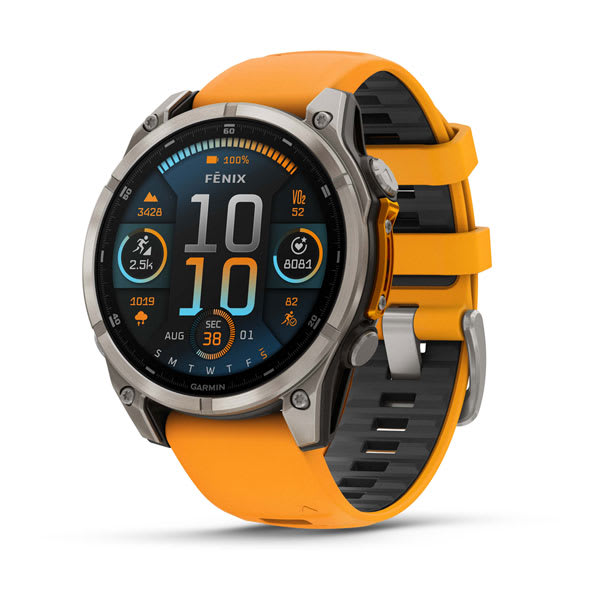
Garmin Venu 4: $549, 2-Button Touch Lifestyle Watch with ECG + LED Flashlight — But the $100 Hike Leaves a $400 Gap
41mm $549 / 45mm $549, AMOLED 2000+ nits (shared with Forerunner 570/970), metal case (vs Venu 3 bezel-only), 2 buttons + touch (down from 3), LED flashlight (4 white + red), FDA-cleared ECG + AFib, Lifestyle Logging (free for all Garmin users), shared OS with Fenix 8 / Forerunner 570/970, 80+ sport modes, dual-band GNSS, Mix Session multi-sport. JoyVelo internal testing, 4 weeks.
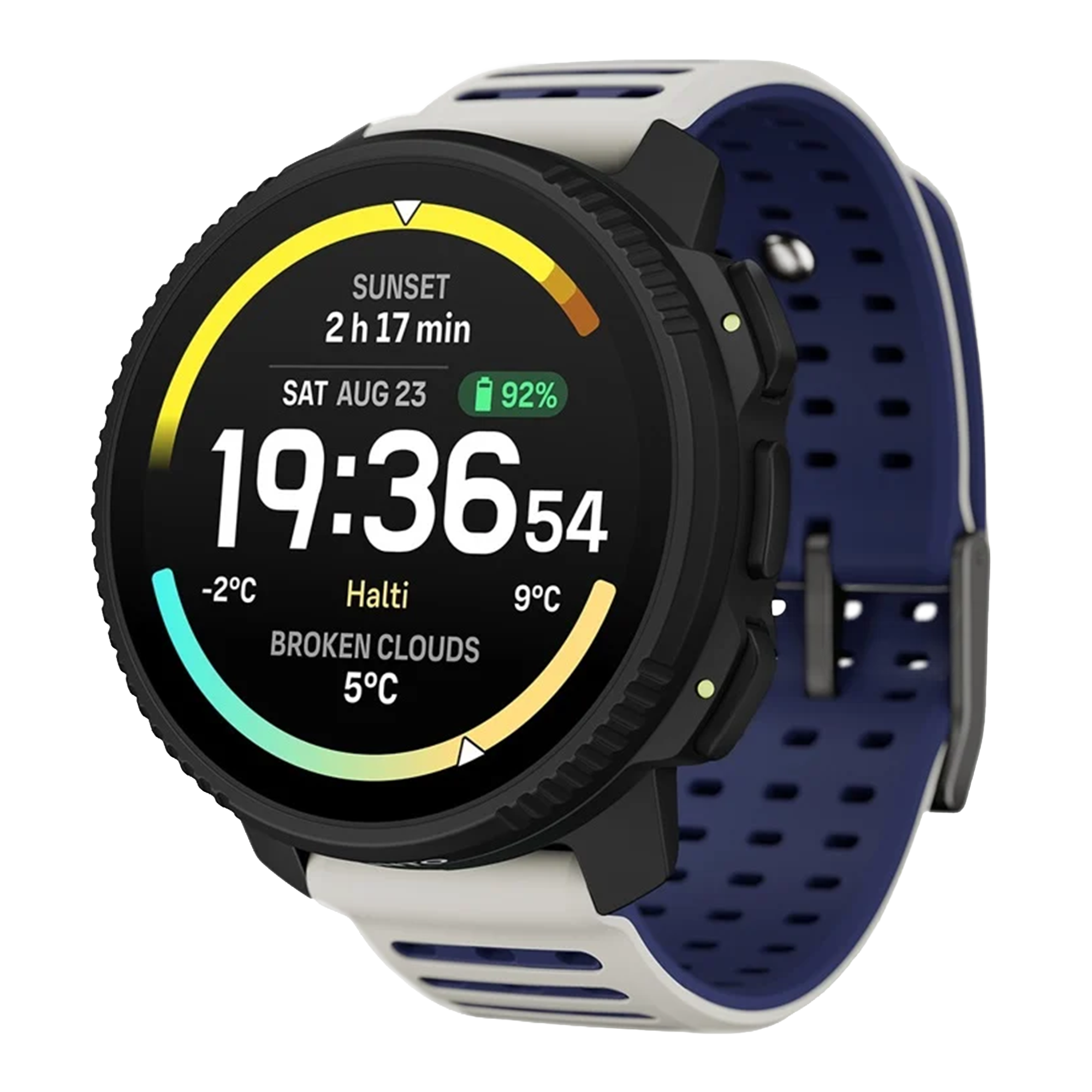
Suunto Vertical 2: $599 AMOLED, 65-Hour Dual-Band GPS Battery — The Best AMOLED Watch of 2026
AMOLED 2000 nits (Suunto’s MIP era is over except for dive watches), 65h dual-band GPS (matches solar MIP watches), 20-day smartwatch, 250h Tour mode, magnetic charging (no more accidental disconnection), LED flashlight with SOS + breathing + red strobe modes, $100 price hike vs Vertical 1 ($499 -> $599). JoyVelo internal testing, 4 weeks, 70km mountain hike.
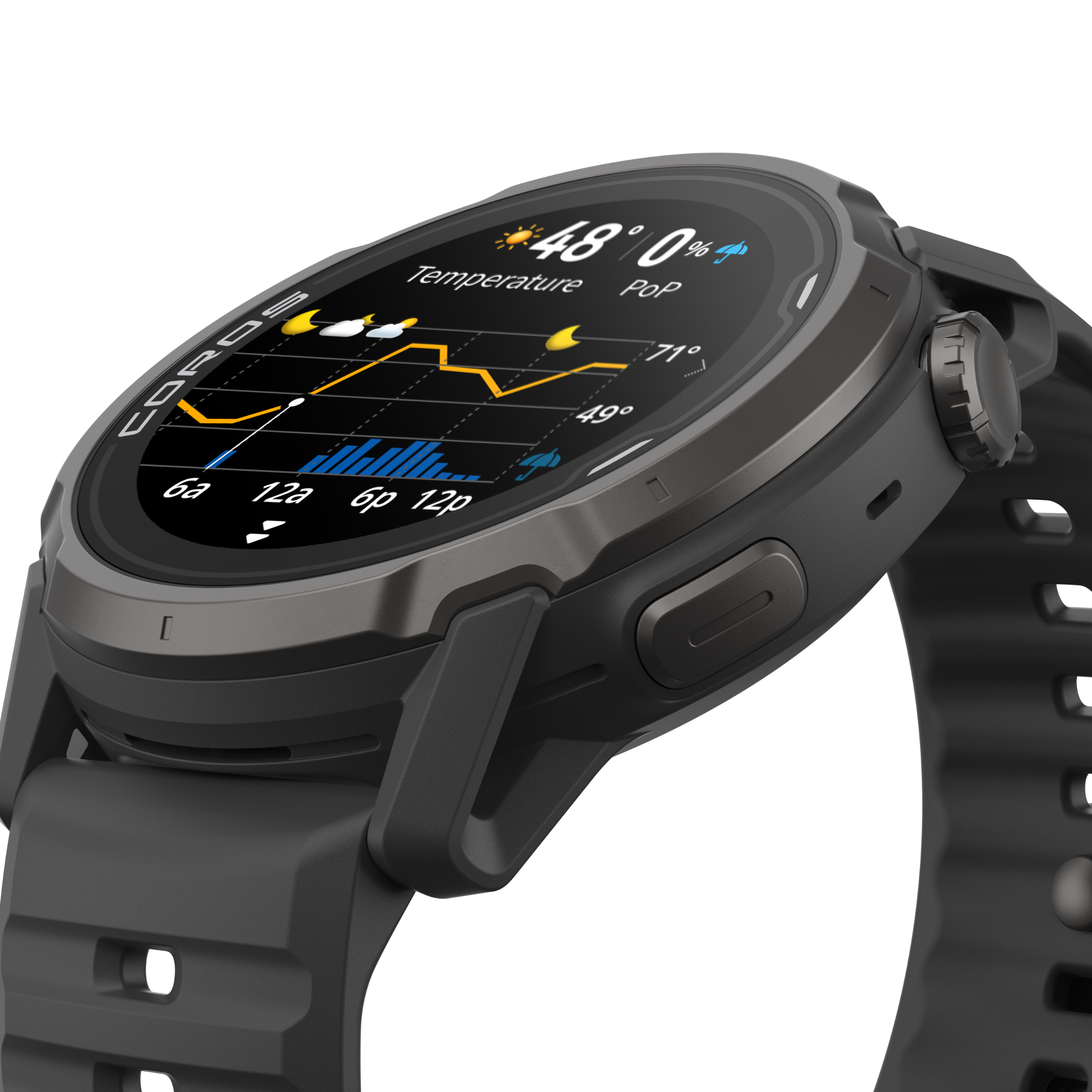
COROS APEX 4: $429/$479, MIP + Titanium Bezel, Dual Mics + Real Speaker — But GPS Navigation Has a Bug
42mm $429 / 46mm $479, MIP display + sapphire glass + titanium bezel, dual-band GNSS as standard (previously APEX 2 Pro only), dual mics with wind-noise reduction + real speaker for Bluetooth calls, depth meter (no dive certification), customisable Action button, 32GB storage, 30x faster map rendering, depth meter bug fixes pending. JoyVelo internal testing, 4 weeks, 70km hike + 200+ km running + 1 open-water swim.
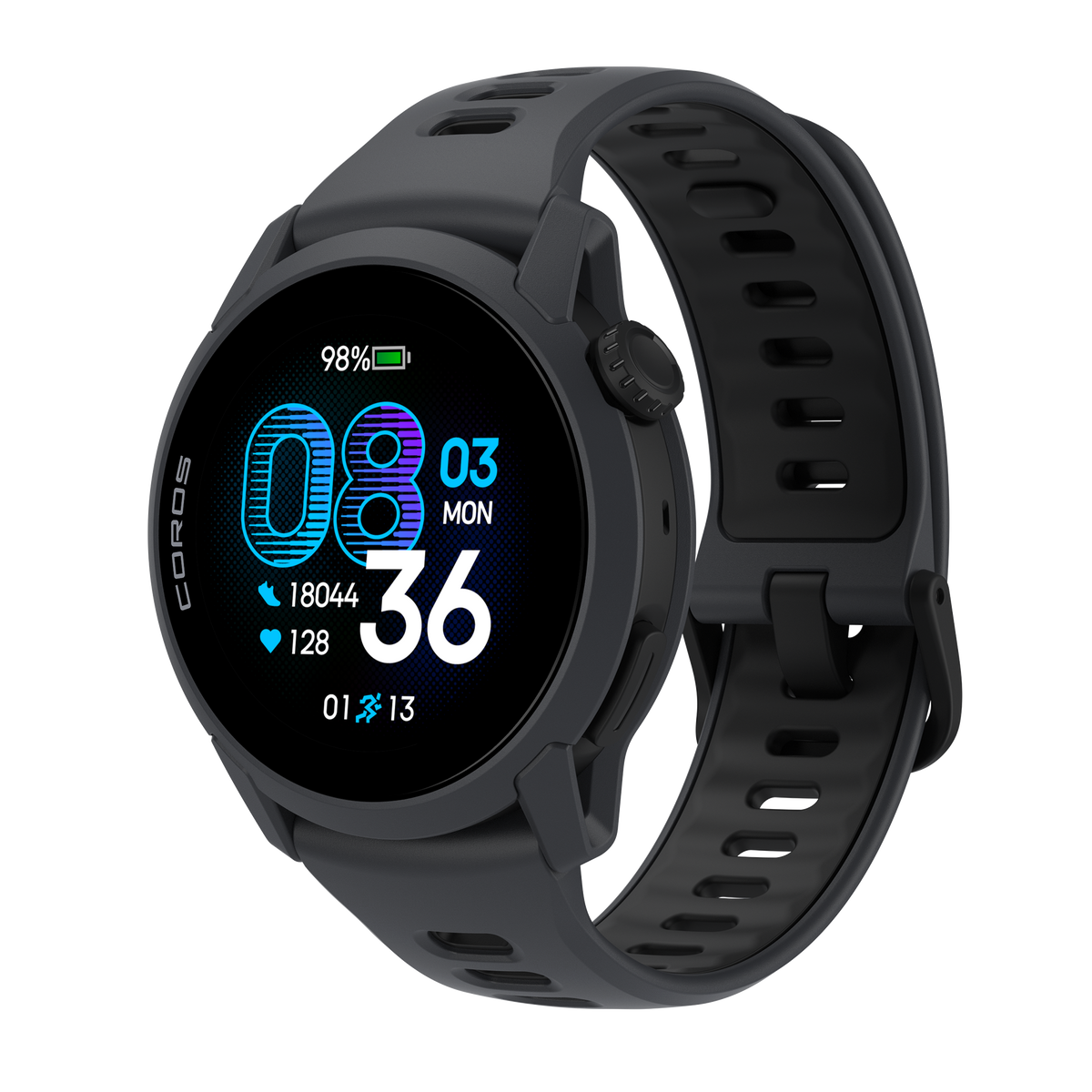
COROS Pace 4: $249 AMOLED, 15-Day Battery, Voice Memos — The Garmin Forerunner 70 Has Real Competition
1.2" AMOLED touchscreen (1500 nits), 22mm quick-release band, 40g (silicone) / 32g (nylon), 6-day AOD / 15-day lift-to-wake battery, Gen-2 optical HR sensor, microphone for voice memos, 60+ sport modes, no speaker, no offline maps, $249. JoyVelo internal testing, 4 weeks, 200+ km.
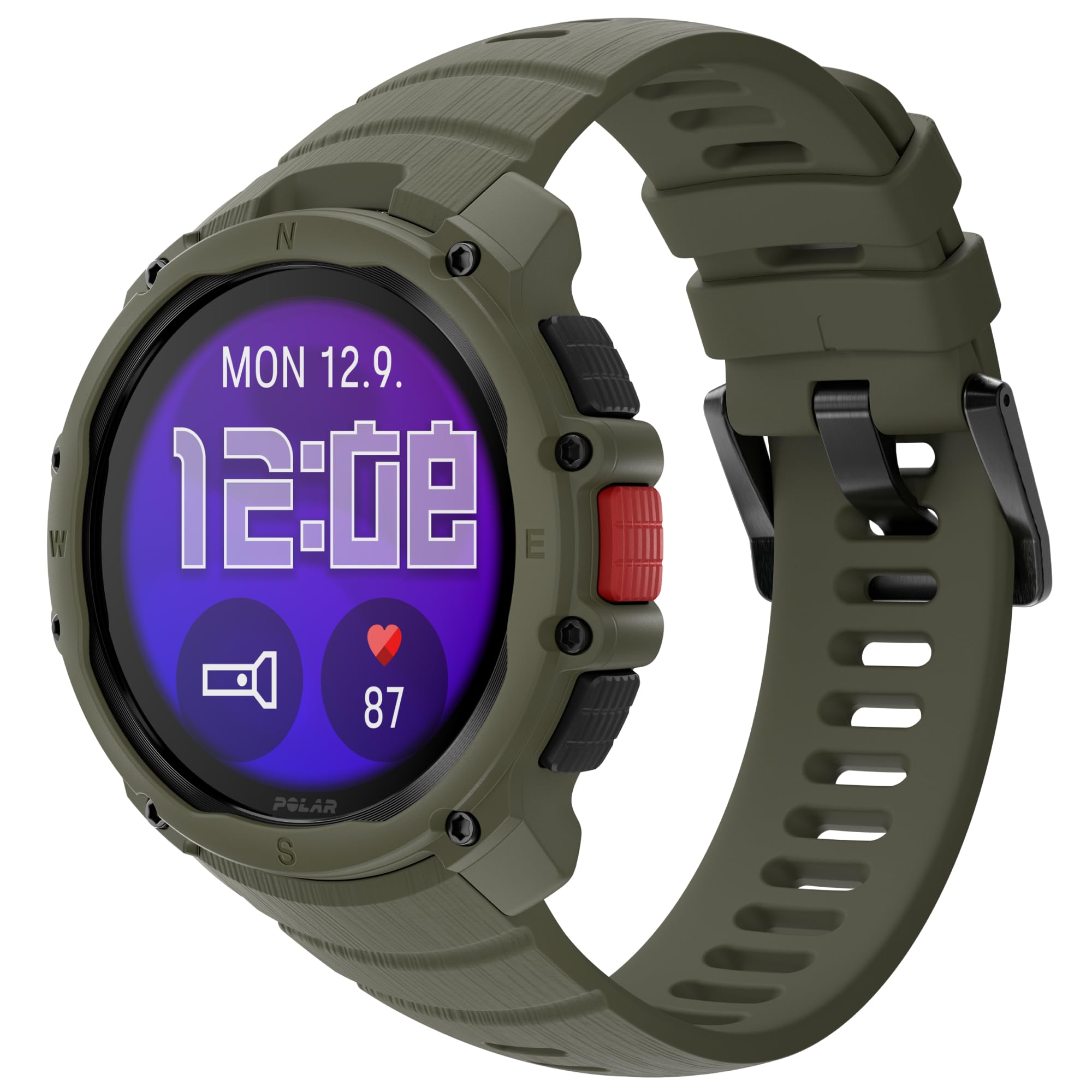
Polar Street X: $249, Flashlight + Rugged Build — But the Old Optical HR Sensor and No Multi-Band GPS Make It a Skip
MIL-STD-810 rugged plastic case, integrated flashlight (4 white + red brightness levels), 1.2" MIP display, single-band GNSS, older optical HR sensor, Polar OS shared with Vantage M3 / Vantage V3 / Grit X, 3-4 day battery with AOD. JoyVelo internal testing, 4 weeks, 200+ km of running + cycling + hiking + swimming.
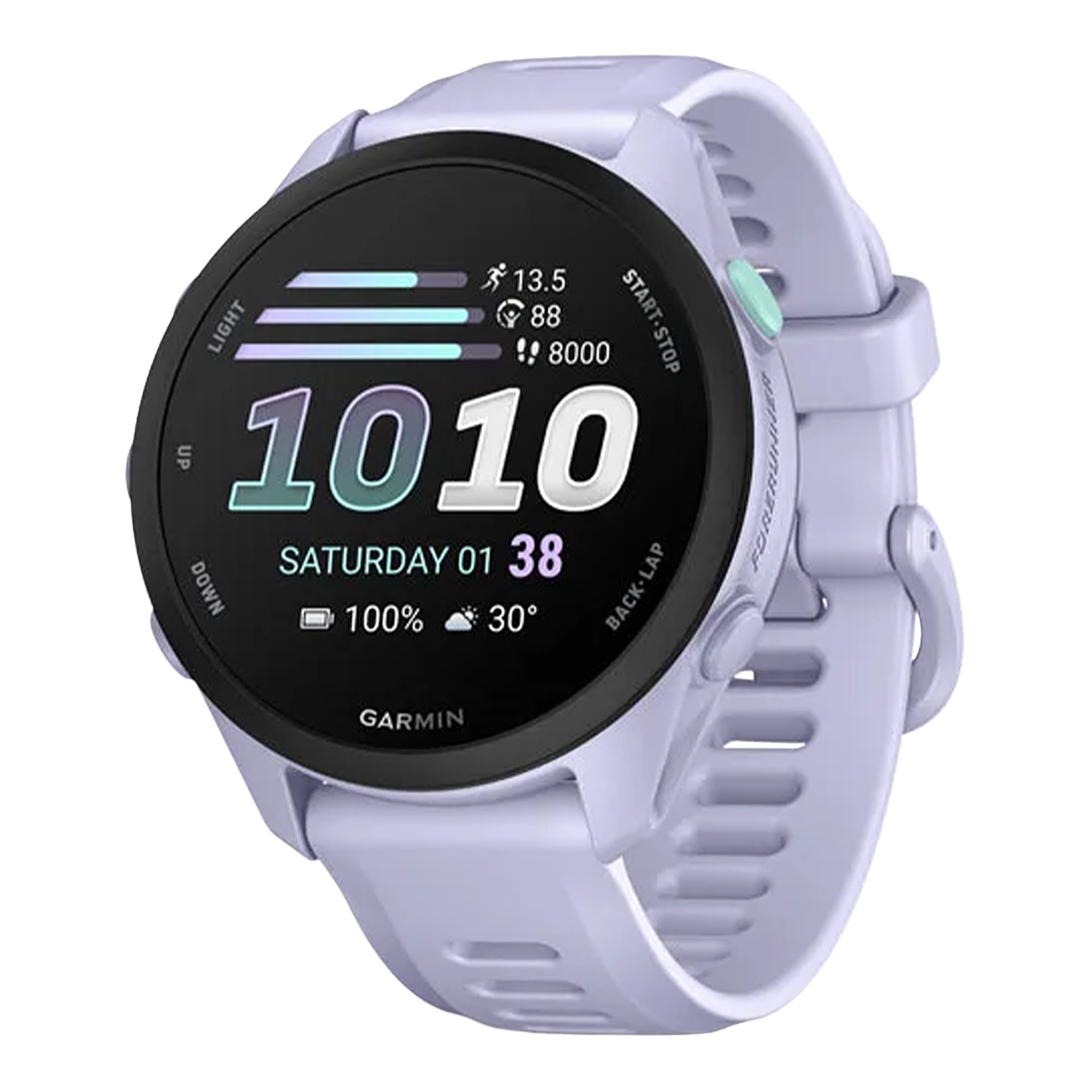
Garmin Forerunner 70: $249, 1.2" AMOLED, 13-Day Battery, Quick Workout — The Best Value Running Watch of 2026
1.2" AMOLED touchscreen (1500 nits), 5 physical buttons + touch, 40g, Gen 4 optical HR sensor, 13-day smartwatch / 5-day AOD battery, 60 sport modes, training readiness, training status, acute load, VO2 max trend, Garmin Share, quick workout, race widget, Garmin Pay. JoyVelo internal testing, 4 weeks.
Verify with JoyAnalyze
Import watch records into JoyAnalyze and overlay with a reference HR strap / power meter — quantify watchOS 27: Workout Buddy Goes Phone-Free, Sleep App Gets Time Zones — But the Watch Support Shrinks to 3 Years's GPS accuracy and biometric deviations.
Open multi-file compare in JoyAnalyzeSee how this fits you
The watchOS 27: Workout Buddy Goes Phone-Free, Sleep App Gets Time Zones — But the Watch Support Shrinks to 3 Years is one option. Run the JoyFit assessment to see whether it actually matches your body and riding style — or compare it side-by-side with the other Sports Watchesin our database.
Community
Discuss this review · Pro members can rateComments
(0)Sign in above to leave a comment.
Loading comments…
Pro Ratings
PROLoading…Sign in above to rate this product on the 8-axis $APPEALS framework.