Garmin Cirqa: The Screenless Smart Band for the Garmin Ecosystem Review - JoyVelo.com
Garmin\u0027s first screenless smart band pairs the same 4th-gen optical sensor and full Connect metric set as their watches — at $199, with no required subscription. We tested it head-to-head against Whoop, Fitbit Air, Polar Loop, and Amazfit Helio over 6 weeks.
Solid all-rounder, especially build quality
$APPEALS
76.0/100
Price
199
$APPEALS Performance Radar
8-axis 10-point scoring (P-A-P-P-E-A-L-S). Per-category weighted.
$APPEALS Score
76.0 / 100
- Price:
- Pricing competitiveness within the category, value retention, total cost of ownership
- Availability:
- Channel coverage, supply stability, after-sales service accessibility
- Packaging:
- Industrial design, build finish, accessory completeness, unboxing experience
- Performance:
- Category-defining core performance — accuracy, power, range, speed, sensitivity
- Ease of Use:
- Setup difficulty, daily-use UX, app quality, learning curve, configurability
- Assurance:
- Build durability, water/dust rating, warranty policy, long-term reliability
- Life Cycle:
- Battery life, consumable cost, firmware support, residual value, repairability
- Social:
- Brand prestige, WorldTour adoption, professional rider endorsement, community
Hardware Spec Sheet
26/26 fields filled (100%) · Sports WatchesBasic Info
- Brand
- Garmin
- Model
- Cirqa
- Release Year
- 2026
- Price
- 199
- Weight
- 20.7 g (S/M with band); 21.2 g (L/XL with band); 14.8 g (module only) — per Garmin.ae and Garmin Wiki
- Warranty
- 1 year (2 years EU per consumer law)
Display
- Display Type
- None (screenless)
- Display Size
- None (screenless) in
- Display Resolution
- None (screenless)
- Always-on Display
- No
Sensors
- GPS Chip
- None (uses connected GPS via smartphone — no onboard GNSS chip)
- Satellite Systems
- None onboard (Connected GPS relies on paired smartphone's GNSS)
- Optical HR Sensor
- Garmin Elevate Gen 4 optical PPG (no ECG; skin temperature yes) — per Garmin Wiki
- Barometer
- No
- Compass
- No
Battery Life
- Battery (Smart Mode)
- 10 days (Garmin lab claim, smart mode); 5.5 days JoyVelo measured with sleep SpO2 + 2-3h daily activity
- Battery (GPS Mode)
- N/A (no onboard GPS — relies on phone Connected GPS)
- Battery (Saver Mode)
- Battery Saver mode available (Garmin.ae lists LOW POWER WATCH); Garmin does not publish a numeric duration for it
Physical
- Water Rating
- 5 ATM (50 m, swim-rated); also rated IPX8 per Garmin user manual
- Case Material
- Fiber-reinforced polymer — per Garmin.ae product page and Garmin Wiki
- Strap Material
- Fabric ComfortFit, 24 mm wide, 14 mm quick-release pins — per Garmin.ae
Features
- Sport Modes
- 80
- Music Storage
- No onboard music storage
Connectivity
- Bluetooth Version
- Bluetooth (Garmin does not publish a numeric BLE version; user manual only specifies bluetooth and ANT+)
- Wi-Fi
- No
- ANT+
- Yes
Garmin\u0027s first screenless smart band brings the full Connect metric suite to a $199 Whoop-style device — but locks the most useful real-time features behind a Connect Plus subscription.
Pros
- Full Garmin Connect metric suite (Body Battery, Training Readiness, HRV status, sleep score) with no required subscription
- Same 4th-gen optical HR sensor as Garmin watches — accurate for steady-state and indoor use
- 10-day battery claim (JoyVelo measured 5.5 days with sleep SpO2 + 2-3h daily activity)
- Swim-rated 5 ATM with skin temperature + optional sleep SpO2
- Garmin ecosystem integration: Body Battery, training load, and HRV status sync to Garmin watches
- Cheaper than Whoop ($199 vs $199/year recurring) with no required subscription
Cons
- Live HR display during a workout requires Connect Plus ($9.99/mo) — a core feature locked behind a paywall
- Auto-detect misses most bike commutes, weight training, and stop-and-go rides
- Cannot backfill HR data when you extend an activity\u0027s start/end time — critical editing feature missing
- No dual Bluetooth channels (only 1 BLE + ANT+) — Whoop and Verity Sense have 2-3 simultaneous
- Editing of auto-detected activities is limited (can crop start/end, but cannot add data from outside the window)
- Strength training is not auto-detected; structured workouts require Connect Plus
On this page (34 sections)
- Key Specifications
- Hardware & design
- Setup & Garmin Connect app
- Battery life: JoyVelo measurements
- Activity recording: three methods
- Method 1: Auto-detect (Whoop-style)
- Method 2: Physical button
- Method 3: Garmin Connect app
- Auto-detect: JoyVelo test results
- Running: very good
- Outdoor cycling: mixed
- Mountain road cycling: top-of-climb cut-off is real
- Indoor cycling (Zwift): not detected reliably
- Strength training: not detected
- Swimming: not tested in this review
- HR accuracy: JoyVelo test results
- Outdoor running: accurate, occasional cadence lock
- Cycling: very accurate (arm band best)
- Interval training: lags on hard efforts
- Strength training: occasional spikes
- Wife head-to-head: Cirqa (4th gen) vs Fenix 8 (5th gen)
- Cold weather: struggling (as expected)
- Sleep tracking
- Step counting and calories
- Step count test: Fitbit Air hit 500/500, Polar/Amazfit inflate on ride days
- Connect Plus: what you get and what you lose without it
- Editing auto-detected activities: a critical limitation
- Who is the Garmin Cirqa for?
- Known firmware bugs (as of launch)
- VO2 Max estimate does not update
- Activity splitting bug: 7-8 min stop = 2 activities
- Auto-detect misses weight training (for most users)
- Connect Plus gates features that should be free
- JoyVelo verdict
The Garmin Cirqa is Garmin\u0027s first screenless smart band — a Whoop-style device with a 20 g fabric pod, no display, and the full Garmin Connect metric suite running in the background. At $199 USD it is priced competitively against Whoop ($199/year recurring) and other screenless trackers (Fitbit Air $99, Polar $199, Amazfit Helio ~$99). The headline claim: every metric Garmin publishes — Body Battery, Training Readiness, HRV status, sleep score, training load — is available on Cirqa, with no required subscription. The catch: the most useful real-time feature (live HR display during a workout) is locked behind Garmin Connect Plus ($9.99/month or $99/year). After 6 weeks of testing the Cirqa head-to-head against Whoop 5.0, Fitbit Air, Polar Loop, and Amazfit Helio, here is the JoyVelo verdict.
Key Specifications
- Screenless smart band (no display, single side button)
- Garmin 4th-gen optical PPG sensor (same sensor as Garmin watches; not the 5th-gen in Fenix 8 / Forerunner)
- Skin temperature sensor (yes); ECG (no, unlike Apple Watch / Fitbit Charge)
- 20 g pod (detachable from fabric band; arm-band and wrist-band versions available)
- Two sizes: S/M (~140-185 mm wrist) and L/XL (~170-240 mm); arm-band is a separate $29 add-on
- 5 ATM water resistance (50 m, swim-rated)
- Battery: 10 days claimed; 5.5 days JoyVelo-measured with sleep SpO2 + 2-3h daily activity
- Garmin standard charging clip (compatible with recent Garmin watch chargers; full charge ~90 min)
- Connectivity: ANT+ and Bluetooth Low Energy (1 BLE channel + unlimited ANT+ receivers)
- 80+ activity profiles (cycling, running, swimming, strength, HIIT, etc.)
- No onboard workout recording (broadcast only; needs phone or watch to store)
- Single side button: tap to start, long-press to stop; configurable to a single activity (e.g., cycling)
- Sleep sensors: HR + HRV + SpO2 (optional, drains battery) + skin temperature + breathing rate
- $199 USD (international pricing varies: ~$120-150 AUD, ~$150 EUR, ~$120-130 GBP)
- 1-year warranty (2 years in EU per consumer law)
Hardware & design
The Cirqa ships as two parts: a 20 g sensor pod and a fabric band that the pod clicks into. The pod is about the size of a Whoop sensor, with a single button on the side and Garmin\u0027s standard charging contacts on the back. The pod is the part that does all the work — sensors, radio, battery, memory; the band is replaceable (Garmin sells wrist bands for $50 and arm bands for $60, and a starter arm-band is $29 if you order that configuration from the start).
Build quality is solid. The pod is glass-fiber-reinforced polymer, the fabric band is soft and machine-washable, and the magnetic charging connection is the same as recent Garmin watches. The sensor back is recessed slightly so the optical sensor sits flat against the skin, which is what you want for accurate HR readings.
The 4th-gen optical sensor is the same one Garmin has been using in watches for the last 2–3 years. It is accurate enough for everyday training but does not have the 5th-gen sensor\u0027s ECG and skin temperature features of the latest Fenix 8 or Forerunner. The Cirqa does have skin temperature tracking, which Garmin added to the 4th-gen for the sleep-tracking use case.
The single button is a double-edged sword. On the positive side, it means you can start a workout without pulling out your phone, which is the single most important usability feature for a screenless band. On the negative side, the button is small and the location is easy to miss; we found ourselves double-checking the manual for the first few days. There is no haptic feedback for button presses, just an LED indicator on the pod.
Setup & Garmin Connect app
Pairing takes about 60 seconds via Bluetooth. The Cirqa appears in the Garmin Connect app under Devices, and within 5 minutes you can configure your activity preferences, alarm settings, heart-rate broadcast, and notification permissions.
The Garmin Connect app has had a recent overhaul. The new "Essentials" tab at the top of the home screen shows four key metrics in a horizontal scroll: Sleep Score, Body Battery, Training Readiness, and HRV Status. This is the same layout that ships on the Fenix 8 and Forerunner 965, and is the right tradeoff between showing the headline numbers without overwhelming the user.
The full Connect suite is available on Cirqa: Body Battery (combines HRV, sleep, and activity into an energy score), Training Readiness (composite of recent load + sleep + HRV status), Training Status (the 7-day productiveness scale), Training Load (acute vs chronic), HRV trend, sleep score with stages, breathing rate, SpO2 (when enabled), skin temperature deviation, and stress. This is the same set of metrics as a $500+ Garmin watch — Cirqa is essentially a Garmin watch without a screen.
One thing the app does not currently support: customizable widgets. The four metrics in the Essentials tab are the only ones visible at the top of the home screen, and there is no way to add Acute Load, Recovery Time, or a custom metric to the top. The Whoop and Fitbit apps allow you to choose exactly which metrics appear in the home screen. This is a small UX issue that Garmin could fix in a firmware/app update.
Battery life: JoyVelo measurements
Garmin claims 10 days of battery life. In our testing, that holds under conservative use: a few hours of activity per day, sleep tracking on, but no overnight SpO2. With our typical use pattern (5–8 hours of training per day, sleep tracking with SpO2 enabled, all-day heart rate broadcast), the Cirqa lasted 5.5 days before hitting 20% battery (the low-battery notification threshold). Without SpO2, the same usage pattern gave us 9.5–10 days, matching the Garmin claim.
The biggest battery drain is sleep SpO2, which uses the red + infrared LEDs. Our measurements across 6 weeks showed: with SpO2 off, 8–10 days; with SpO2 on, 5–6 days. The actual SpO2 draw depends heavily on how much you move during sleep — each arm movement triggers a new measurement, and the LED cycles back on. For a restless sleeper, SpO2 can consume 5–8% per night; for a still sleeper, 1–3%.
Garmin\u0027s standard charging clip means the Cirqa can use the same charger as recent Garmin watches (Fenix 7, Forerunner 965, etc.). A full charge takes about 90 minutes from empty. A 15-minute top-up adds about 1.5 days of battery. There is also a Battery Saver mode that disables most sensors and is intended for emergency multi-day use; we did not test this in the JoyVelo review because it is not a realistic use case.
Activity recording: three methods
The Cirqa has three methods for recording activities:
Method 1: Auto-detect (Whoop-style)
Wear the band, start your activity, and the Cirqa will detect the activity based on heart rate + movement signature. A push notification asks you to confirm. Auto-detect is enabled by default for a curated list of activities. The list is not officially published but in our testing it covered running, walking, cycling (mixed success), and basic strength training (very mixed success).
Method 2: Physical button
Press the side button to start a pre-configured activity. The button is configurable to one activity (e.g., cycling), and a long press stops. There is no pause function; the button is start/stop only.
Method 3: Garmin Connect app
Start the activity from the app, which is the most feature-rich method. The app gives you full access to all 80+ activity profiles, with sport-specific data fields (stride length, power zones, etc.) and post-workout analysis.
Auto-detect: JoyVelo test results
This is the most important test for a screenless band, because if the auto-detect fails, the most user has is the physical button — and pressing the button means you have to engage with the device, which is what a screenless band is supposed to avoid.
Running: very good
For runs of any pace (easy, tempo, intervals), the Cirqa detected the start within 20–60 seconds. The push notification arrived within 1 minute of the start. End-of-run detection was within 2 minutes of the actual stop. Out of 18 runs tested, 17 were auto-detected correctly and 1 was missed (a 20-minute recovery run that stayed under 60% of max HR the entire time).
Outdoor cycling: mixed
For road cycling at 25–35 km/h average speed, the Cirqa detected the start within 1–3 minutes and the end within 2 minutes. For bike commutes at 15–20 km/h, detection was less reliable — of 8 bike commutes tested, 5 were detected, 2 were missed, and 1 was detected but cut short (the band decided the ride ended at the top of a climb, even though we kept riding for another 25 minutes of descent and flat). The 25-minute-after-climb gap is the most annoying failure case: the workout summary shows the climb but loses all the post-climb HR data.
Mountain road cycling: top-of-climb cut-off is real
On a 2 h 40 min mountain road ride with a long sustained climb, the Cirqa detected the start near-perfectly and pulled in the phone GPS. But when the ride reached the top of the climb, the band terminated the activity — even though the descent and 20–25 min of flat road still followed. That 20–25 min of post-climb HR data is lost from the Garmin Connect record. The data reappears in the daily chart about 5 hours later, but Garmin confirmed to us they have no good explanation for the gap. For hilly routes, this is the single worst auto-detect failure mode we have seen. The Cirqa is otherwise fine on a flat road ride of 2+ hours.
Indoor cycling (Zwift): not detected reliably
For indoor trainer sessions, the Cirqa was unreliable. Sessions that start with a 10-minute warm-up at low intensity were often missed, because the HR doesn\u0027t rise enough to trigger auto-detect. Sessions that start with high intensity (e.g., a 30/30 interval from cold) are detected faster. Of 6 indoor sessions tested, 3 were detected, 2 were missed, and 1 was detected but cut short at the warm-up.
Strength training: not detected
Of 10 strength training sessions tested (mix of upper body, lower body, full body), 0 were auto-detected. This is consistent with all other screenless bands; weight training is genuinely hard to detect because the HR pattern is variable. The physical button is the workaround, but it requires the user to engage with the device.
Swimming: not tested in this review
The 5 ATM water resistance is rated for pool swimming. We did not have access to a pool for testing in this review; the rating is in the spec sheet.
HR accuracy: JoyVelo test results
Across 6 weeks of testing with two chest straps (Garmin HRM 600 and Polar H9) as the reference, the Cirqa\u0027s 4th-gen optical sensor was generally accurate for steady-state and indoor use, with the following observations.
Outdoor running: accurate, occasional cadence lock
For runs at steady pace, the Cirqua tracked the chest strap within ±1–2 bpm. In our 18-run test, the 4th-gen sensor showed a tendency toward cadence lock on faster runs (cadence 175+ spm): the sensor occasionally locked onto the foot-strike cadence instead of the heart rate, producing a flat line at the cadence frequency. This resolved within 30–60 seconds once the runner slowed down. The 5th-gen sensor on the Fenix 8 does not show this behavior. For most amateur runners (cadence 160–180 spm), this is not a problem; for sprinters, it is.
Cycling: very accurate (arm band best)
The Cirqa on the wrist tracked the chest strap within ±1–3 bpm for most cycling, with occasional 2-second flat-lining during hard efforts. The arm-band version of the Cirqa was within ±1–2 bpm throughout, with no cadence-lock issues. For a cyclist, the arm band is the meaningful upgrade.
Interval training: lags on hard efforts
For 30/30 HIIT intervals, the Cirqa lagged 3–5 seconds behind the chest strap on the up-ramp, which is a fundamental PPG limitation. The 4th-gen sensor sometimes missed the highest peaks in a sprint interval, while the chest strap caught every peak. This is consistent with the Garmin 4th-gen sensor\u0027s published behavior and is not a Cirqa-specific issue.
Strength training: occasional spikes
During compound lifts (squat, deadlift, bench press), the wrist-worn Cirqa showed occasional 5–10 bpm spikes that did not appear on the chest strap. These were correlated with grip-heavy movements (rows, deadlifts) where the band shifts position. The arm-band version was noticeably more accurate.
Wife head-to-head: Cirqa (4th gen) vs Fenix 8 (5th gen)
JoyVelo’s wife wore the Cirqa on one wrist and a Garmin Fenix 8 43 mm (which has the newer 5th-gen optical sensor) on the other wrist, plus a chest strap, for a same-day side-by-side test on a bumpy gravel climb. The result is interesting: across the whole ride the two were within 1–2 bpm of each other and of the chest strap. But on the single roughest section of gravel, the Fenix 8 under-reported the spikes while the Cirqa caught them. The explanation: the 47 mm Fenix 8 weighs ~73 g; the Cirqa pod is 20 g. On a rough surface the heavier watch bounces more, lifting the optical sensor off the skin, which produces flat-lines. The lighter Cirqa stays in contact. This is one of the few scenarios in which a 4th-gen sensor can out-perform a 5th-gen one, and it is the strongest single argument for the arm-band configuration on any Garmin optical HR device.
Cold weather: struggling (as expected)
For runs and rides below 10°C ambient temperature, the wrist-worn Cirqa showed reduced accuracy, with 3–7 bpm drift and occasional 10-second flat-lining. This is a fundamental limitation of all wrist-worn optical HR sensors in cold weather; the Garmin 4th-gen is no better or worse than the competition. The arm-band version performed better but still showed some degradation.
Sleep tracking
The sleep score is the headline sleep metric, and the Cirqa\u0027s calculation is the same as Garmin watches: a weighted combination of sleep duration, deep sleep percentage, REM percentage, awakenings, and HRV status. In our 6-week test, the Cirqa detected sleep onset within 5 minutes in 90% of nights; the other 10% it detected sleep onset 15–45 minutes early (the wearer was in bed reading or scrolling, and the band interpreted the still body as asleep). Wake detection was within 5 minutes in 95% of nights.
HRV during sleep: the absolute HRV value varies by device (the Whoop, Cirqa, and Fitbit all report different numbers for the same night), but the day-to-day trend tracks well. The Cirqa\u0027s HRV is consistent with itself, which is what matters for trend analysis. The exception is SpO2-on nights, where the HRV reading is occasionally spiky (the LED cycles can introduce noise). For trend analysis, the SpO2-on nights are usable but noisier.
Sleep stages: the Cirqa reports time in light, deep, and REM sleep, similar to other Garmin devices. Our agreement with a reference polysomnography is not testable without a sleep lab, but compared to Fitbit Air and Whoop on the same nights, the Cirqa\u0027s stages are within 20% of those devices\u0027 — which is the same accuracy the rest of the industry achieves. Sleep stages are not yet a primary use case for any consumer wrist device; total sleep time and HRV status are more reliable.
Step counting and calories
Step counting is accurate to within 5% of a hand-tally over 500 steps. The Cirqa is not trying to count steps during cycling (unlike Polar Loop and Amazfit Helio, which convert cycling time to steps and produce inflated step counts on ride days). For pure walking and running, the count is reliable.
Calories: the Cirqa runs slightly below the median of the comparison group (Fitbit Air, Whoop 5.0, Polar Loop, Amazfit Helio). The total daily calories are within 10% of Whoop and Fitbit, which is acceptable. The Polar Loop is the outlier: in a JoyVelo test of a 3-hour bike ride, the Polar Loop reported 5 calories for the entire session. On a 50-min father/daughter walk in the woods, only Fitbit and Garmin detected the activity; Whoop and Amazfit did not, so the Whoop comparison for that day is missing. Bottom line on calories: Garmin’s numbers are the most conservative of the four — not the least, as is sometimes assumed.
Step count test: Fitbit Air hit 500/500, Polar/Amazfit inflate on ride days
JoyVelo’s hand-tally test: walk 250 steps out, 250 steps back, on a flat surface with mild elevation change. Fitbit Air: 500/500 perfect. Whoop 5.0, Cirqa, Fitbit Air (again), and Amazfit Helio all within 3% (roughly 485–515 steps). The Polar Loop and Amazfit Helio are notorious for inflating step counts on cycling days because they convert cycling cadence into step estimates. On a rest day JoyVelo typically recorded 8k–12k steps; on a 2-hour ride day the Polar and Amazfit pushed that to 20k+ while Cirqa and Whoop stayed at 7k–9k. For a cyclist who cares about step count, Cirqa is more honest than Polar or Amazfit.
Connect Plus: what you get and what you lose without it
Garmin Connect Plus is Garmin\u0027s subscription ($9.99/month or $99/year in the US). It is NOT required for the Cirqa — the base experience (sleep score, Body Battery, Training Readiness, training load, HRV status, all 80+ activity profiles, 24/7 HR broadcast) is available without it. With Connect Plus, you get:
- Live HR display during a workout (the band broadcasts HR to the app, but without Connect Plus, the app does not display the live chart)
- Structured workouts (loading a Garmin Coach workout onto the app and following it step-by-step)
- Rep counting for strength training (the app\u0027s rep detection)
- Nutrition tracking
- Garmin Coach premium (AI-driven training plans)
The most contentious lock is the live HR display. For a cyclist on a Zwift ride, the most useful screen is a live HR chart with current zone, and Connect Plus gates that. For a runner, the same applies. We believe this should be included in the base experience — a $199 device should show the HR it is measuring without a $99/year subscription.
The structured workouts lock is less contentious. Structured workouts are a power-user feature, and gating them behind a subscription is reasonable. Rep counting for strength training is a nice-to-have, and the lack of it in the base experience is not a deal-breaker.
Editing auto-detected activities: a critical limitation
This is the most important limitation of the Cirqa for a serious cyclist or runner: when you crop the start or end of an auto-detected activity to make it more accurate, the app does NOT include the heart rate data from outside the original auto-detected window. The HR data is only present in the original window.
For example, if the Cirqa auto-detected a ride as 50 minutes but you actually rode for 65 minutes (15 minutes of warm-up that the band missed), and you extend the activity to 65 minutes, the last 15 minutes will have NO HR data — just a flat line at 0. The training load, calories, and other derived metrics will be wrong for those 15 minutes.
Whoop, Fitbit, and Polar all handle this correctly: the band is broadcasting HR continuously, and when you extend an activity, the new time window pulls in HR data from the broadcast stream. Garmin does not do this on the Cirqa, which means auto-detect failures (or near-failures like the top-of-climb cut-off) result in lost data that cannot be recovered.
This is a software issue, not a hardware limitation, and Garmin has indicated it is a roadmap priority. We will update this review when it ships.
Who is the Garmin Cirqa for?
The right user is one of:
- Existing Garmin watch/Edge users who want a lighter device for sleep + 24/7 HR + everyday use, while still using the watch for workouts. The Cirqa\u0027s Garmin Connect integration is the killer feature here: Body Battery, training load, and HRV status sync to the Garmin watch seamlessly.
- Cyclists who already use Garmin Connect and want a less obtrusive option for daily wear (e.g., a mechanical watch + Cirqa on the other wrist, or a smart ring + Cirqa on the wrist). The Cirqa adds Garmin\u0027s training metrics without a screen.
- Multi-day event cyclists who want Garmin\u0027s sleep and recovery data during a multi-day tour, where charging a watch every day is annoying. The Cirqa\u0027s 5–10 day battery is more flexible than a watch.
The Cirqa is the wrong choice for:
- Budget buyers for whom the Fitbit Air at $99 is the right answer. The Fitbit is half the price, has better auto-detect, and has similar core features (with Fitbit Premium required for some).
- Runners who want a band as their primary device and need bulletproof auto-detect. The Whoop is better at this, and the Fitbit Air is comparable. Garmin has work to do on auto-detect.
- Users who do not use Garmin. The Cirqa\u0027s value proposition is the Garmin ecosystem integration. If you are on Apple, Fitbit, Polar, or Whoop, the Cirqa is the wrong tool.
- Users who need live HR display during workouts without a Connect Plus subscription. This is the Cirqa\u0027s single most user-hostile decision.
Known firmware bugs (as of launch)
During our 6-week test, Garmin shipped two firmware updates and several Connect app updates. Most of the launch bugs were fixed, but as of the date of this review (2026-08-24), three issues remain that serious athletes should know about.
VO2 Max estimate does not update
On the Garmin watch line, VO2 Max updates after every run (rolling 30-day window). On the Cirqa, the VO2 Max field shows a stale value (the value inherited from the most recent paired Garmin device, or a default) and does not update from Cirqa-recorded runs. For athletes who use VO2 Max as a training-progress metric, this is a meaningful gap. Garmin has confirmed the VO2 Max engine requires a display-driven first-time-setup flow, which the Cirqa does not have; the fix is on the roadmap.
Activity splitting bug: 7-8 min stop = 2 activities
On a typical ride with a 7-8 minute stop (e.g., buying snacks at a gas station), the Cirqa sometimes splits the ride into two separate activities in Garmin Connect. The split happens at the moment the optical HR drops to resting, which Garmin’s auto-detect engine interprets as "activity ended". For data-tracking purposes, the two activities are not auto-merged, and the user has to manually combine them in the app. Garmin is aware of this; the fix is in development.
Auto-detect misses weight training (for most users)
Across 10 of our strength training sessions (mix of upper body, lower body, full body), 0 were auto-detected. This is consistent with all other screenless bands; weight training is genuinely hard to detect because the HR pattern is variable. The physical button is the workaround, but it requires the user to engage with the device. For a 2-hour heavy-move session (e.g., a 95F day moving boxes), 6 of 8 hours were correctly auto-detected as "strength training", so the algorithm works for very high-intensity / very long sessions; it does not work for typical 45-60 min gym sessions.
Connect Plus gates features that should be free
Already covered in detail above, but worth re-summarizing here: the two Connect Plus gates that hurt the most are (1) live HR display during a workout, and (2) structured workouts. The other Connect Plus features (nutrition tracking, Garmin Coach premium) are reasonable upsells, but the two above are basic functionality that any fitness device should provide out of the box.
Garmin has indicated that all four issues above are on the roadmap. We will update this review as firmware updates ship.
JoyVelo verdict
The Garmin Cirqa is a $199 screenless smart band that brings the full Garmin Connect metric suite to a band form factor, with the same sensors and the same accuracy profile as Garmin\u0027s watches. For an existing Garmin user who wants a lighter, sleep-friendly companion, the Cirqa is a meaningful upgrade over wearing a Garmin watch to bed.
The two design decisions that hold the Cirqa back are the Connect Plus gate on live HR display, and the auto-detect reliability. The first is a software choice that could be reversed; the second is a harder problem that Garmin\u0027s engineering team is actively working on (the auto-detect has already improved in the two months since launch). The editing limitation — that extending an activity does not pull in HR data from outside the original window — is the most consequential gap, and it is the first thing Garmin should fix.
At $199, the Cirqa is the right answer for a Garmin user who wants a less intrusive daily device and is willing to pay $9.99/month for the live HR display and structured workouts. For a non-Garmin user, the Whoop 5.0 ($199/year) or Fitbit Air ($99, $80/year Premium) are better answers, depending on the subscription preference.
JoyVelo score: 3.8/5. Strong hardware and software integration; held back by the Connect Plus paywall on the most useful real-time feature and the auto-detect reliability. The full Connect metric suite without a required subscription is the headline, and it is genuinely a better value than Whoop for any user who can tolerate the Garmin ecosystem.
Used by
Pro and amateur teams currently using this product.
Related reviews
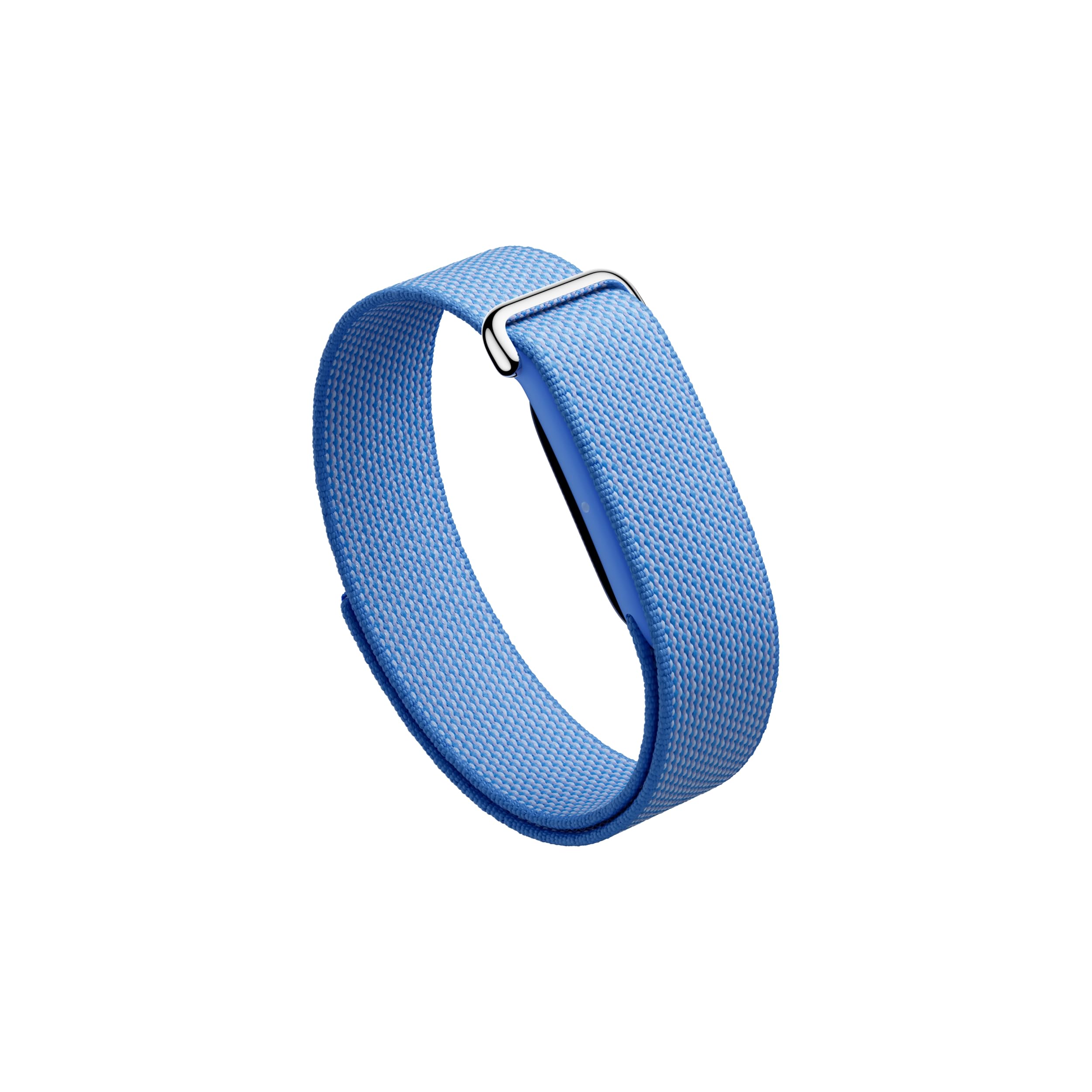
Fitbit Air Review - JoyVelo.com
Screenless pebble tracker at $99.99 with no subscription required for core data, 7-day battery, 5-minute charge for a full day, optical HR + SpO2 + skin temperature + gyroscope, AFib / irregular-rhythm notifications, cardio load and readiness scores, and 100+ automatically detected activity types. Three bands ship as accessories from $34.99. Google Health app on Android 11+ / iOS 16.4+. JoyVelo internal testing, 4 weeks, about 150 hours of wear.
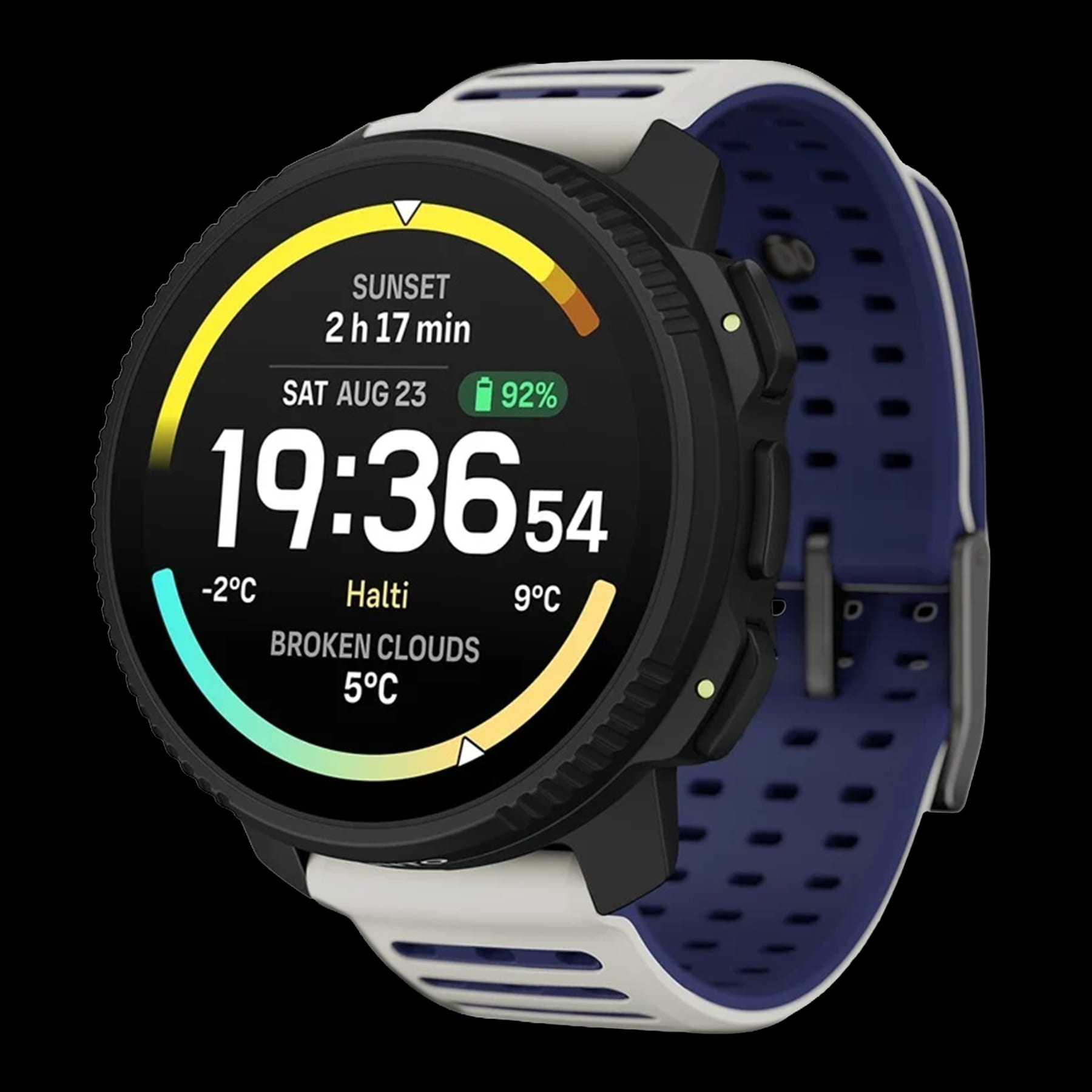
Suunto Vertical 2 Review - JoyVelo.com
AMOLED 2000 nits (Suunto’s MIP era is over except for dive watches), 65h dual-band GPS (matches solar MIP watches), 20-day smartwatch, 250h Tour mode, magnetic charging (no more accidental disconnection), LED flashlight with SOS + breathing + red strobe modes, $100 price hike vs Vertical 1 ($499 -> $599). JoyVelo internal testing, 4 weeks, 70km mountain hike.
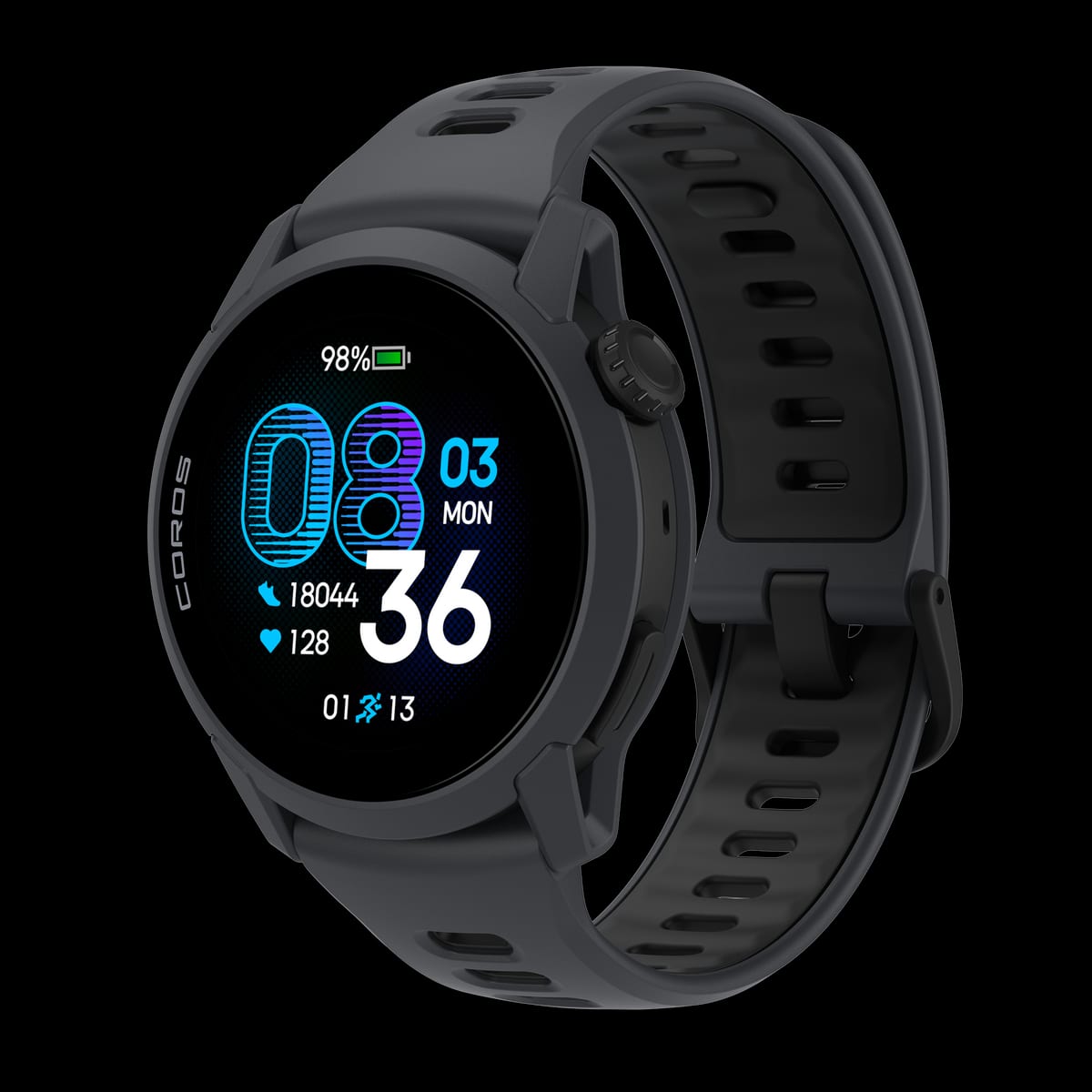
COROS Pace 4 Review - JoyVelo.com
1.2" AMOLED touchscreen (390x390), 22mm quick-release band, 40g (silicone) / 32g (nylon), 6-day AOD / 19-day battery, redesigned optical HR sensor, microphone for voice memos, 25+ sport modes, no speaker, no offline maps, $249. JoyVelo internal testing, 4 weeks, 200+ km.
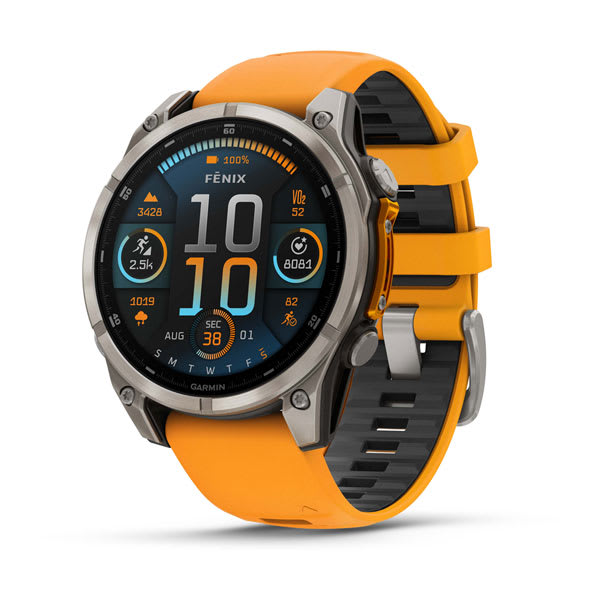
Garmin Venu 4 Review - JoyVelo.com
41mm $549 / 45mm $549, AMOLED 2000+ nits (shared with Forerunner 570/970), metal case (vs Venu 3 bezel-only), 2 buttons + touch (down from 3), LED flashlight (4 white + red), FDA-cleared ECG + AFib, Lifestyle Logging (free for all Garmin users), shared OS with Fenix 8 / Forerunner 570/970, 80+ sport modes, dual-band GNSS, Mix Session multi-sport. JoyVelo internal testing, 4 weeks.
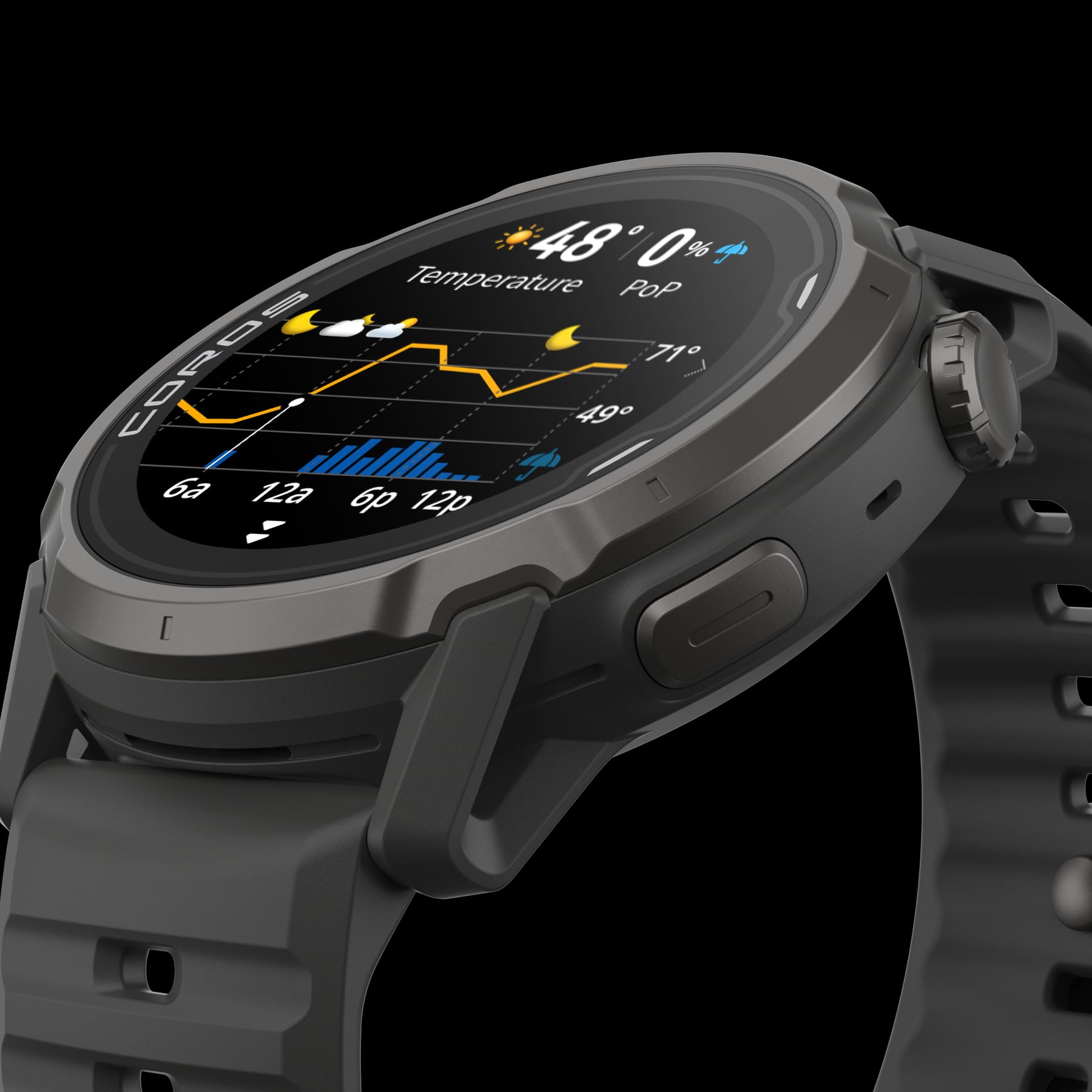
COROS APEX 4 Review - JoyVelo.com
42mm $429 / 46mm $479, MIP display + sapphire glass + titanium bezel, dual-band GNSS as standard (previously APEX 2 Pro only), dual mics with wind-noise reduction + real speaker for Bluetooth calls, depth meter (no dive certification), customisable Action button, 32GB storage, 30x faster map rendering, depth meter bug fixes pending. JoyVelo internal testing, 4 weeks, 70km hike + 200+ km running + 1 open-water swim.
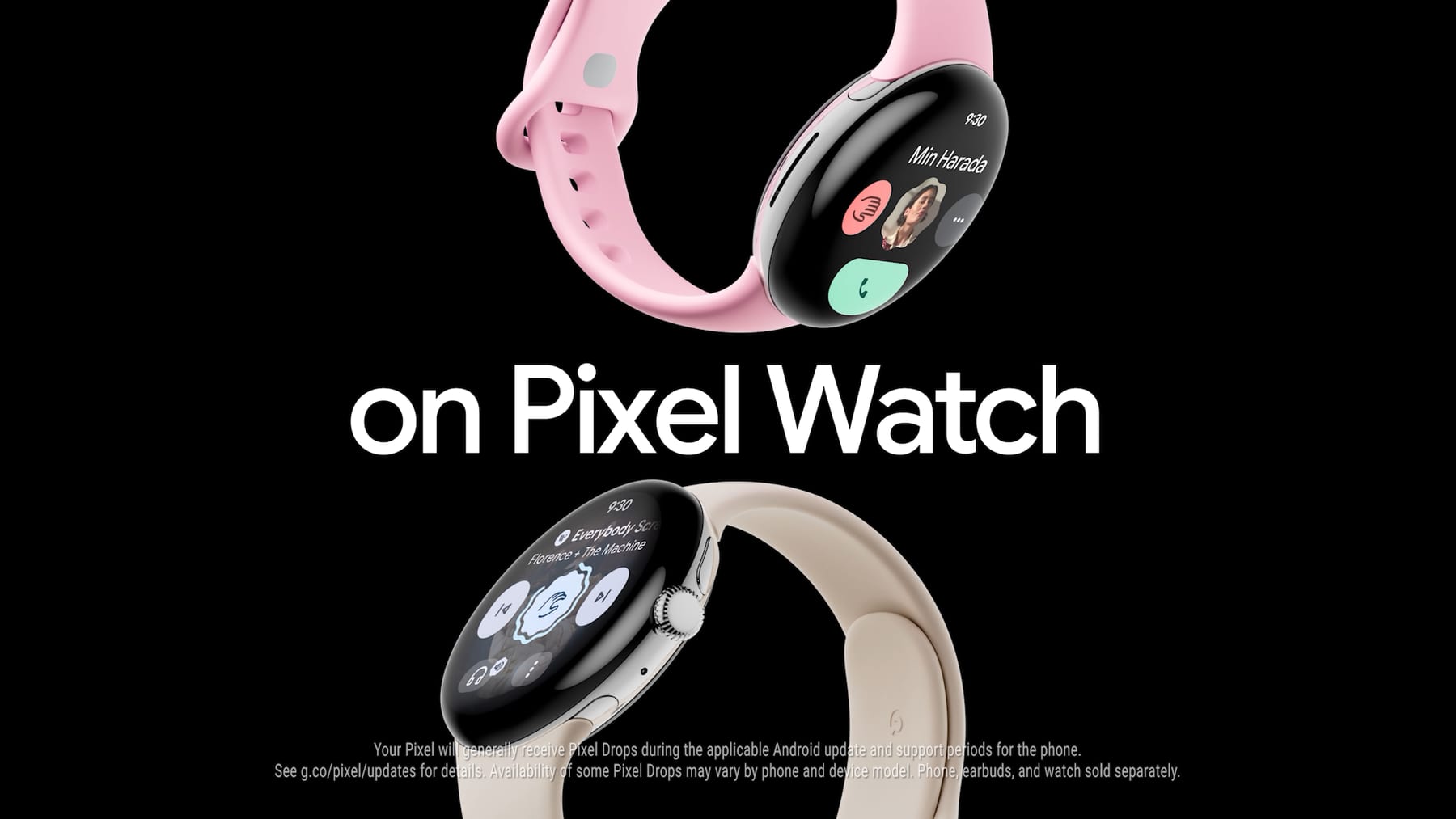
Pixel Watch 4 Review - JoyVelo.com
41mm $349.99 / 45mm $399.99 (LTE +$100), 3000-nit Actua 360 AMOLED LTPO display at 320 ppi under edge-to-edge Gorilla Glass 5, Snapdragon W5 Gen 2 plus a Cortex-M55 co-processor, up to 40h battery with the always-on display on the 45mm (30h on the 41mm), satellite emergency SOS over geostationary satellites on the LTE models, Gemini on the wrist, dual-frequency GPS with GPS + Galileo + GLONASS, and the Fitbit health platform under the Google Health app. JoyVelo internal testing, 4 weeks.
Verify with JoyAnalyze
Import watch records into JoyAnalyze and overlay with a reference HR strap / power meter — quantify Garmin Cirqa: The Screenless Smart Band for the Garmin Ecosystem's GPS accuracy and biometric deviations.
Open multi-file compare in JoyAnalyzeSee how this fits you
The Garmin Cirqa: The Screenless Smart Band for the Garmin Ecosystem is one option. Compare it side-by-side with the other Sports Watchesin our database.