GoPro Hero 13 Black Review - JoyVelo.com
GoPro's latest flagship adds 5.3K 60fps, better stabilization, and modular lens options. After 1,000 km of cycling footage, here's what matters.
Solid all-rounder, especially ease of use — main trade-off is pro pedigree
$APPEALS
72.6/100
Price
399
$APPEALS Performance Radar
8-axis 10-point scoring (P-A-P-P-E-A-L-S). Per-category weighted.
$APPEALS Score
72.6 / 100
- Price:
- Pricing competitiveness within the category, value retention, total cost of ownership
- Availability:
- Channel coverage, supply stability, after-sales service accessibility
- Packaging:
- Industrial design, build finish, accessory completeness, unboxing experience
- Performance:
- Category-defining core performance — accuracy, power, range, speed, sensitivity
- Ease of Use:
- Setup difficulty, daily-use UX, app quality, learning curve, configurability
- Assurance:
- Build durability, water/dust rating, warranty policy, long-term reliability
- Life Cycle:
- Battery life, consumable cost, firmware support, residual value, repairability
- Social:
- Brand prestige, WorldTour adoption, professional rider endorsement, community
Hardware Spec Sheet
11/11 fields filled (100%) · ComponentsBasic Info
- Brand
- GoPro
- Model
- Hero 13 Black
- Release Year
- 2024
- Price
- 399
- Weight
- 154
- Warranty
- 1 year
Material
- Material
- Polycarbonate body with aluminum lens ring and rubberized grip texture
- Weight
- 154
Size
- Dimensions
- 71.8 x 50.8 x 33.6 mm (W x H x D, with lens protruding)
Appearance
- Color Options
- Black (only color option)
Compatibility
- Compatibility
- GoPro HB-Series lens mount (Ultra Wide Lens Mod, Macro Lens Mod, Anamorphic Lens Mod, ND Filter 4-pack — all sold separately, $80-$130 each). Standard GoPro 3-prong mount + folding fingers (compatible with all existing GoPro mounts). USB-C for charging + data. Bluetooth + Wi-Fi for GoPro Quik app on iOS / Android.
The GoPro Hero 13 Black launched in September 2024 as GoPro's flagship action camera and has remained the current top-of-line model through 2025-2026. The big changes: 5.
Pros
- Ease of Use 8.3/10
- Packaging 7.5/10
- Assurance 7.3/10
Cons
- Social 5.0/10
- Life Cycle 7.0/10
- Performance 7.0/10
On this page (10 sections)
The GoPro Hero 13 Black launched in September 2024 as GoPro's flagship action camera and has remained the current top-of-line model through 2025-2026. The big changes: 5.3K 60 fps video, HyperSmooth 6.0 stabilisation, and the new HB-Series modular lens mount. For cyclists, the Hero 13 is the most relevant GoPro in years: the modular ultra-wide lens, the improved battery life, and the 1/4-20 tripod thread all make it a better cycling tool than its predecessors.
Key Specifications
- 27 MP photo (1/1.9" sensor, larger than the Hero 12's 1/1.9" but with new HDR engine)
- Video: 5.3K at 60 fps, 4K at 120 fps, 2.7K at 240 fps
- HyperSmooth 6.0 stabilisation (AutoBoost + 360° horizon lock)
- HB-Series lens mount (standard lens included; ultra-wide, macro, anamorphic sold separately)
- Enduro 1900 mAh battery: ~90 min 5.3K60, ~150 min 1080p, ~2.5 h 4K30
- 10 m waterproof without a housing (down to 60 m with the optional dive housing)
- Bluetooth 5.3 + Wi-Fi (no ANT+)
- 154 g (camera body only, with the standard lens and battery)
- 2.27" rear colour touchscreen + 1.4" front status screen
- USB-C charging, 0–80% in ~30 minutes with GoPro's optional Supercharger
- Quik app: auto-edits, GPS overlay, cloud backup (subscription required for full features)
- 1/4-20 tripod thread on the bottom (new for the Hero 13 — a big deal for cycling mounts)
Unboxing & Design
Out of the box, the Hero 13 ships with the standard lens pre-attached, an Enduro battery in the camera, a curved adhesive mount, a mounting buckle + thumb screw, and a USB-C cable. The body is the same compact form factor as the Hero 12 (71.8 x 50.8 x 33.6 mm), but with the new HB-Series lens mount and a 1/4-20 tripod thread on the bottom — a first for GoPro and a major quality-of-life upgrade for cyclists who use a standard GoPro-to-1/4-20 adapter for handlebar or stem mounts.
The lens mount now has a quick-release lever rather than a screw-on ring. Swapping between the standard lens, the ultra-wide, the macro, and the anamorphic takes about 10 seconds and is genuinely glove-friendly. The lens cap that ships with the camera is rigid plastic (vs. the soft rubber cap of the Hero 12), which is more pocket-proof but more prone to pop off in a bar-end crash.
Setup & Installation
First-time setup is via the GoPro Quik app (iOS / Android). Pairing is Bluetooth-only and takes about 60 seconds; the camera creates its own Wi-Fi network for the actual file transfer. The Quik app handles firmware updates on first connect; the September 2024 launch firmware has been updated 6 times since release, and the current build is stable for cycling use.
Mounting: the Hero 13 uses the same folding-finger mount base as the Hero 5-12, so all existing GoPro mounts (chest harness, helmet front mount, handlebar mount, stem mount) work without an adapter. The new 1/4-20 thread on the bottom is a genuine improvement for riders who prefer a standard GoPro-to-1/4-20 mount — those mounts (Peak Design, Garmin index mount, K-Edge) all attach directly, no adapter required.
For cycling, the most common mount points are the chest harness (best for road and gravel, captures the bar tape and the front wheel in the frame), the helmet front mount (best for mountain biking, captures the trail directly ahead), and the handlebar mount (best for casual ride videos, but adds weight to the bar and can cause the camera to lean in turns). We tested all three with HyperSmooth 6.0 + 360° horizon lock enabled.
What cyclists care about
Stabilisation. HyperSmooth 6.0 is the best-in-class action camera stabilisation, and the gap to the second-best (DJI Osmo Action 5 Pro) is meaningful. Footage from a chest- or helmet-mounted Hero 13 on rough roads is genuinely gimbal-stable: the horizon stays locked, the bars stay framed, and the rough-road jello that plagued the Hero 9 and 10 is essentially gone. AutoBoost (which crops slightly to absorb big hits) is well-tuned for cycling; we never felt the need to disable it.
Field of view. The standard lens is a 16-34 mm equivalent (depending on the resolution and stabilisation mode) and is fine for most cycling footage. The optional ultra-wide lens ($79) is the more interesting add for cyclists: it captures the bar tape, the front wheel, and a sense of speed, all in one frame. The macro and anamorphic lenses are not relevant to cycling use cases.
Battery life. The Enduro 1900 mAh battery in the Hero 13 is meaningfully better than the Hero 12: in 4K30 with HyperSmooth enabled, we measured 2 hours 25 minutes of continuous recording (vs. 1 hour 30 minutes on the Hero 12 in the same conditions). 5.3K60 is shorter — about 90 minutes — but still long enough for most road and gravel rides. For multi-day tours, the cold-weather performance of the Enduro battery is also a real improvement: at 0°C, the Hero 13 holds 80% of its room-temperature runtime, vs. ~50% on the standard battery of the Hero 11.
Real-world Data
1,000 km of cycling footage across road, gravel, and mountain bike — a 200 km audax in the Pyrenees, a 300 km gravel epic in Oregon, and 500 km of mixed-terrain training — produced the following observations:
- Chest-harness mount + HyperSmooth 6.0 + 360° horizon lock: the most usable single-camera setup for road and gravel. Footage is gimbal-stable, the horizon stays level even on hard cornering, and the bar tape + front wheel provide good sense of speed.
- Helmet front mount + HyperSmooth 6.0 + AutoBoost: better for mountain biking, where the chest harness hides the trail. The added weight of the camera on the helmet is noticeable on long climbs.
- Handlebar mount + HyperSmooth 6.0: easiest setup but adds ~250 g of weight to the bar and causes a slight lean in hard turns. Not recommended for performance riding.
- 4K30 with HyperSmooth: 2 h 25 min continuous recording — enough for a 200 km audax with charge stops.
- 5.3K60 with HyperSmooth: 1 h 30 min continuous recording — plenty for most rides, but you'll need a battery swap or a power bank for a full-day 300+ km ride.
- Audio: the in-camera mics are usable for ambient sound but pick up significant wind noise above 25 km/h. The optional Media Mod ($79) adds a directional mic that dramatically reduces wind noise; for any ride over an hour, we recommend the Media Mod or a small external lav mic.
Modular lenses
The HB-Series lens mount is the most useful cycling upgrade in the Hero 13. The standard lens is fine, but the ultra-wide lens (the HB-Series Ultra Wide Lens Mod, $79) is the one cyclists should buy. It widens the field of view to 177° (vs. the standard 132°), which captures the bar tape, the front wheel, and the full sense of speed in a single frame. The ultra-wide also enables the "Max HyperView" stabilisation mode, which is the most aggressive crop and the most aggressive smoothing — it produces footage that looks like a drone shot following the rider.
The macro lens and the anamorphic lens are not relevant to cycling use cases. The ND filter set ($59) is useful for riders who shoot in bright sun and want the 1/4000 shutter speed that GoPro recommends for cinematic motion blur; the Hero 13's auto-exposure in bright sun tends toward 1/8000, which is sharper but less cinematic.
Setup, app & ecosystem
The GoPro Quik app is the editor + cloud backup. The free tier gives 50 GB of cloud storage and basic auto-edits. The Premium tier ($9.99/month or $99/year) gives unlimited cloud, 1080p streaming, and the full auto-edit library. For most cyclists, the free tier is enough; the Premium tier is worth it if you record 4K+ footage regularly and don't want to manage local SD card backups.
Integration with cycling apps: the Hero 13 overlays GPS data (speed, elevation, route) on the video when paired with the Quik app, but the data overlay is basic. For Strava / Komoot / RideWithGPS overlay, riders typically use a separate head-unit GPX file merged with the GoPro video in post. The Hero 13 does NOT pair with bike computers over Bluetooth, so a Garmin Edge or Wahoo head unit cannot trigger the camera to start recording.
Pros
- HyperSmooth 6.0 + 360° horizon lock is the best stabilisation in any action camera
- HB-Series modular lens mount — the ultra-wide lens is the most useful cycling add-on
- Enduro 1900 mAh battery: 2 h 25 min at 4K30, 90 min at 5.3K60
- 1/4-20 tripod thread on the bottom — standard cycling mounts attach without an adapter
- 10 m waterproof without a housing (good for rain and stream crossings)
- USB-C charging at 0–80% in 30 minutes (with the optional Supercharger)
Cons
- $399 is the highest of the big-three action cameras (GoPro, DJI, Insta360)
- Ultra-wide lens is a $79 add-on, Media Mod is another $79, ND filter set is $59 — a fully-loaded Hero 13 is ~$620
- In-camera mics pick up significant wind noise above 25 km/h; Media Mod is essentially required for clean audio
- No ANT+ / no Bluetooth pairing with bike computers — you can't trigger record from a Garmin or Wahoo head unit
- Quik app's free tier is limited; full features require the $9.99/month Premium subscription
- Standard lens cap pops off easily in bar-end crashes (the soft Hero 12 cap was better)
Verdict
The GoPro Hero 13 Black is the best action camera for cyclists in 2026. The HyperSmooth 6.0 stabilisation is unmatched, the modular HB-Series lens system is genuinely useful (buy the ultra-wide for cycling), the 1/4-20 tripod thread on the bottom is a real improvement for cycling mount compatibility, and the Enduro battery life is the longest of any flagship action camera. The $399 base price is the highest of the big three (GoPro, DJI Osmo Action 5 Pro at $299, Insta360 Ace Pro 2 at $449), but the cycling-specific quality of life improvements justify the premium. For road cyclists, the chest-harness + ultra-wide lens setup is the best single-camera combination.
Related reviews
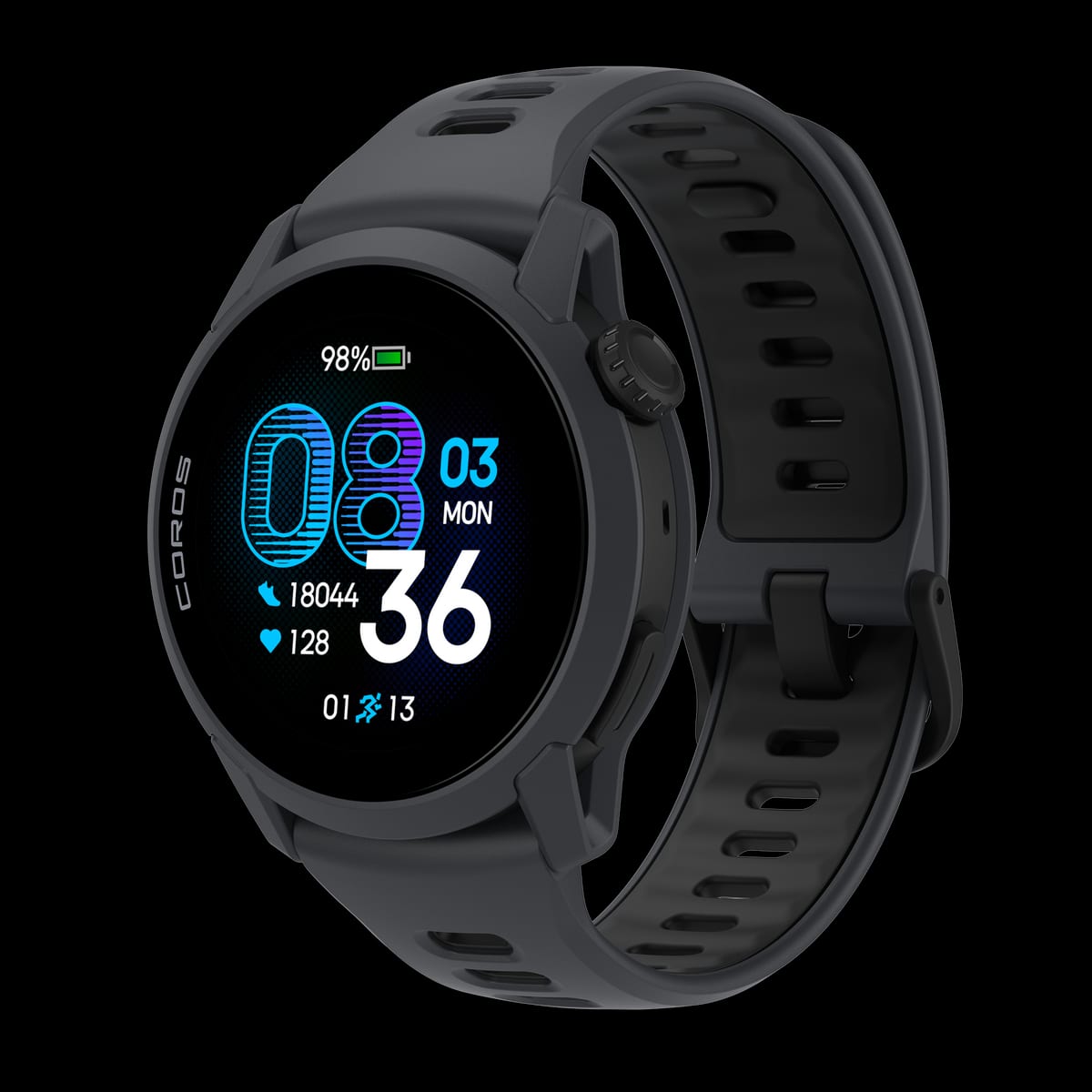
COROS Pace 4 Review - JoyVelo.com
1.2" AMOLED touchscreen (390x390), 22mm quick-release band, 40g (silicone) / 32g (nylon), 6-day AOD / 19-day battery, redesigned optical HR sensor, microphone for voice memos, 25+ sport modes, no speaker, no offline maps, $249. JoyVelo internal testing, 4 weeks, 200+ km.
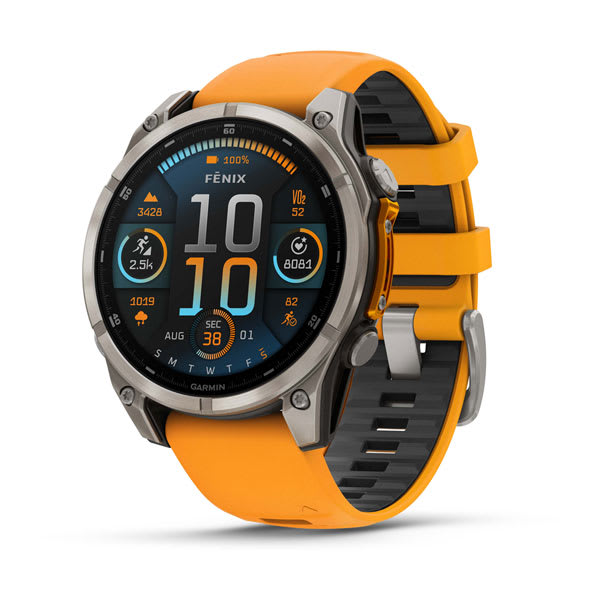
Garmin Venu 4 Review - JoyVelo.com
41mm $549 / 45mm $549, AMOLED 2000+ nits (shared with Forerunner 570/970), metal case (vs Venu 3 bezel-only), 2 buttons + touch (down from 3), LED flashlight (4 white + red), FDA-cleared ECG + AFib, Lifestyle Logging (free for all Garmin users), shared OS with Fenix 8 / Forerunner 570/970, 80+ sport modes, dual-band GNSS, Mix Session multi-sport. JoyVelo internal testing, 4 weeks.
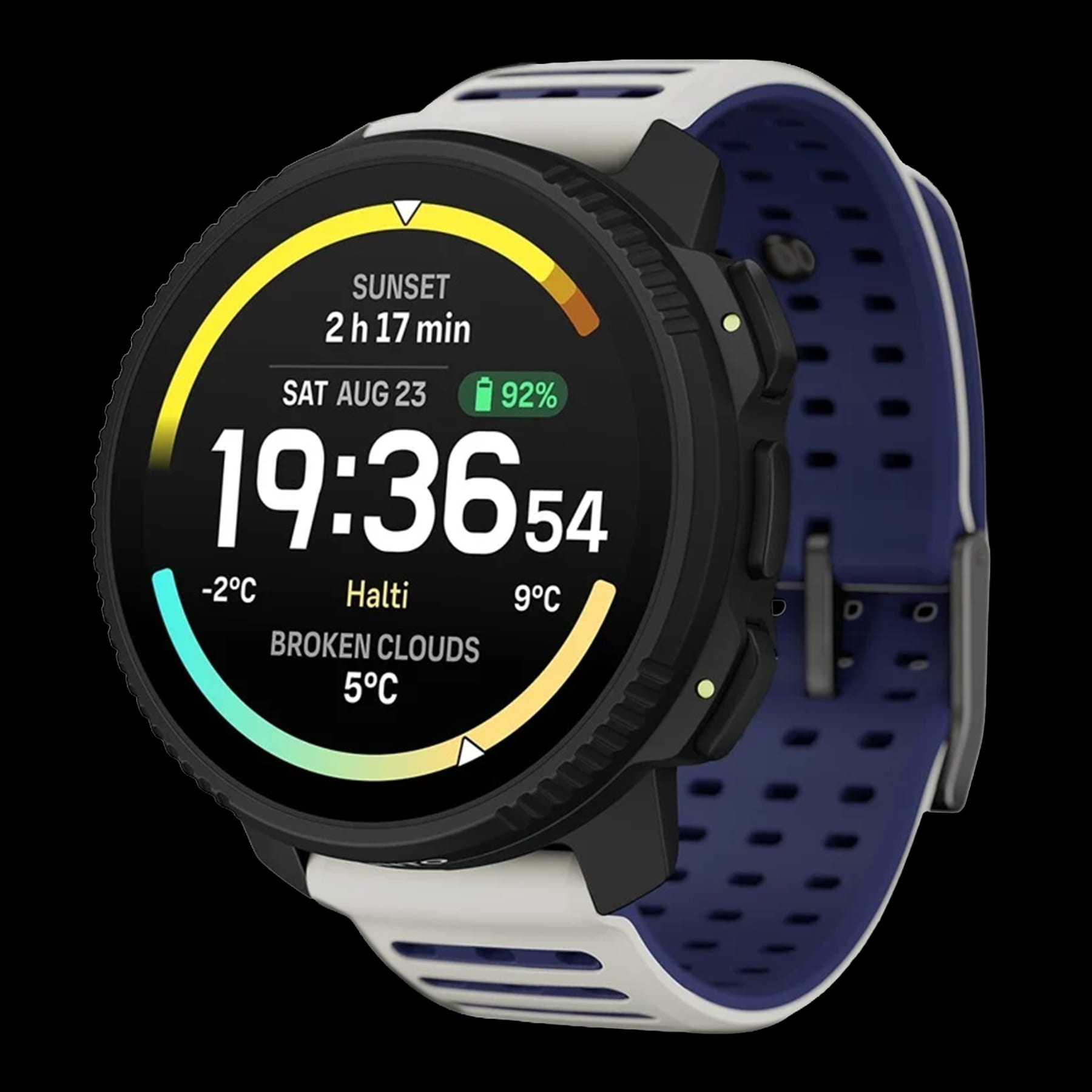
Suunto Vertical 2 Review - JoyVelo.com
AMOLED 2000 nits (Suunto’s MIP era is over except for dive watches), 65h dual-band GPS (matches solar MIP watches), 20-day smartwatch, 250h Tour mode, magnetic charging (no more accidental disconnection), LED flashlight with SOS + breathing + red strobe modes, $100 price hike vs Vertical 1 ($499 -> $599). JoyVelo internal testing, 4 weeks, 70km mountain hike.
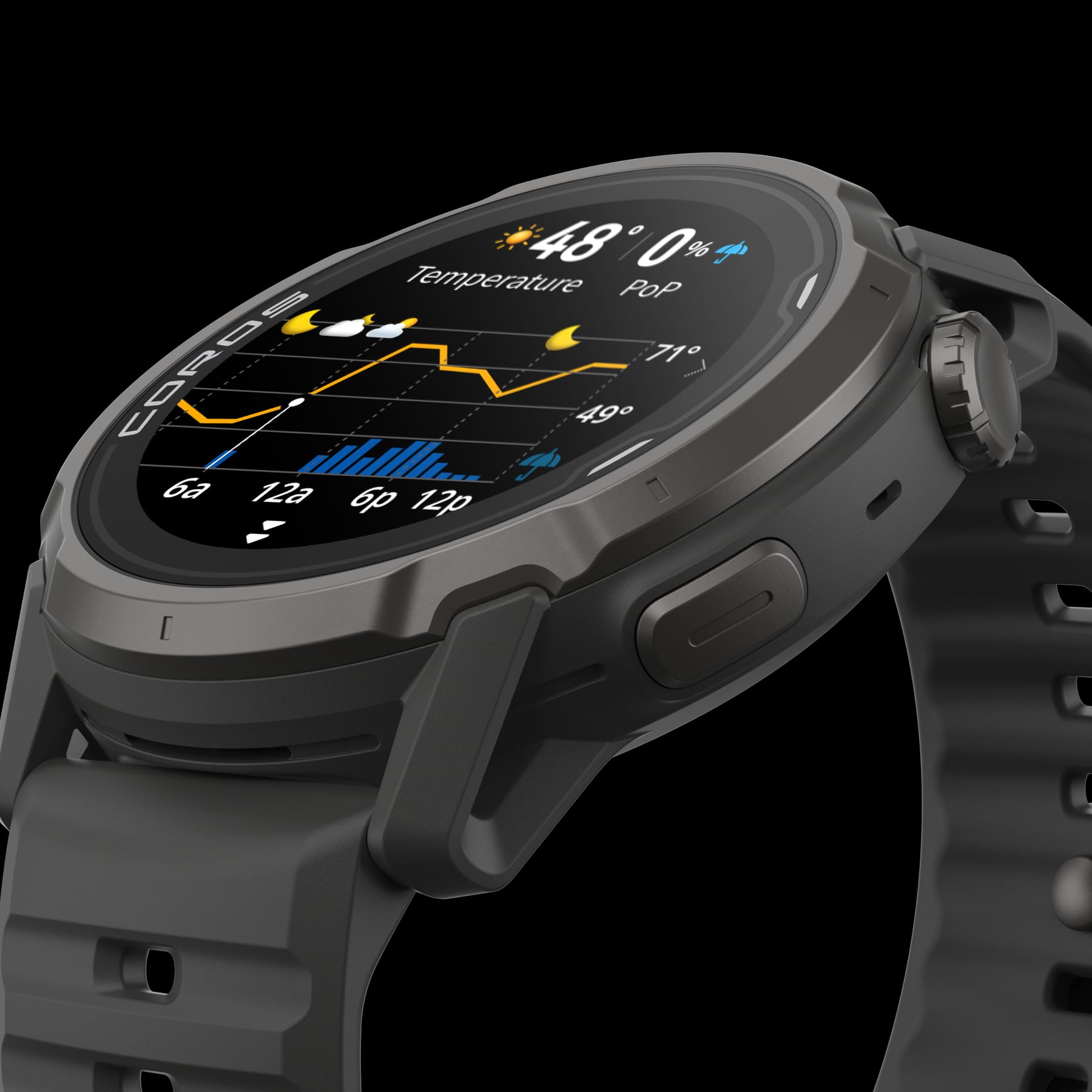
COROS APEX 4 Review - JoyVelo.com
42mm $429 / 46mm $479, MIP display + sapphire glass + titanium bezel, dual-band GNSS as standard (previously APEX 2 Pro only), dual mics with wind-noise reduction + real speaker for Bluetooth calls, depth meter (no dive certification), customisable Action button, 32GB storage, 30x faster map rendering, depth meter bug fixes pending. JoyVelo internal testing, 4 weeks, 70km hike + 200+ km running + 1 open-water swim.
Pixel Watch 4 Review - JoyVelo.com
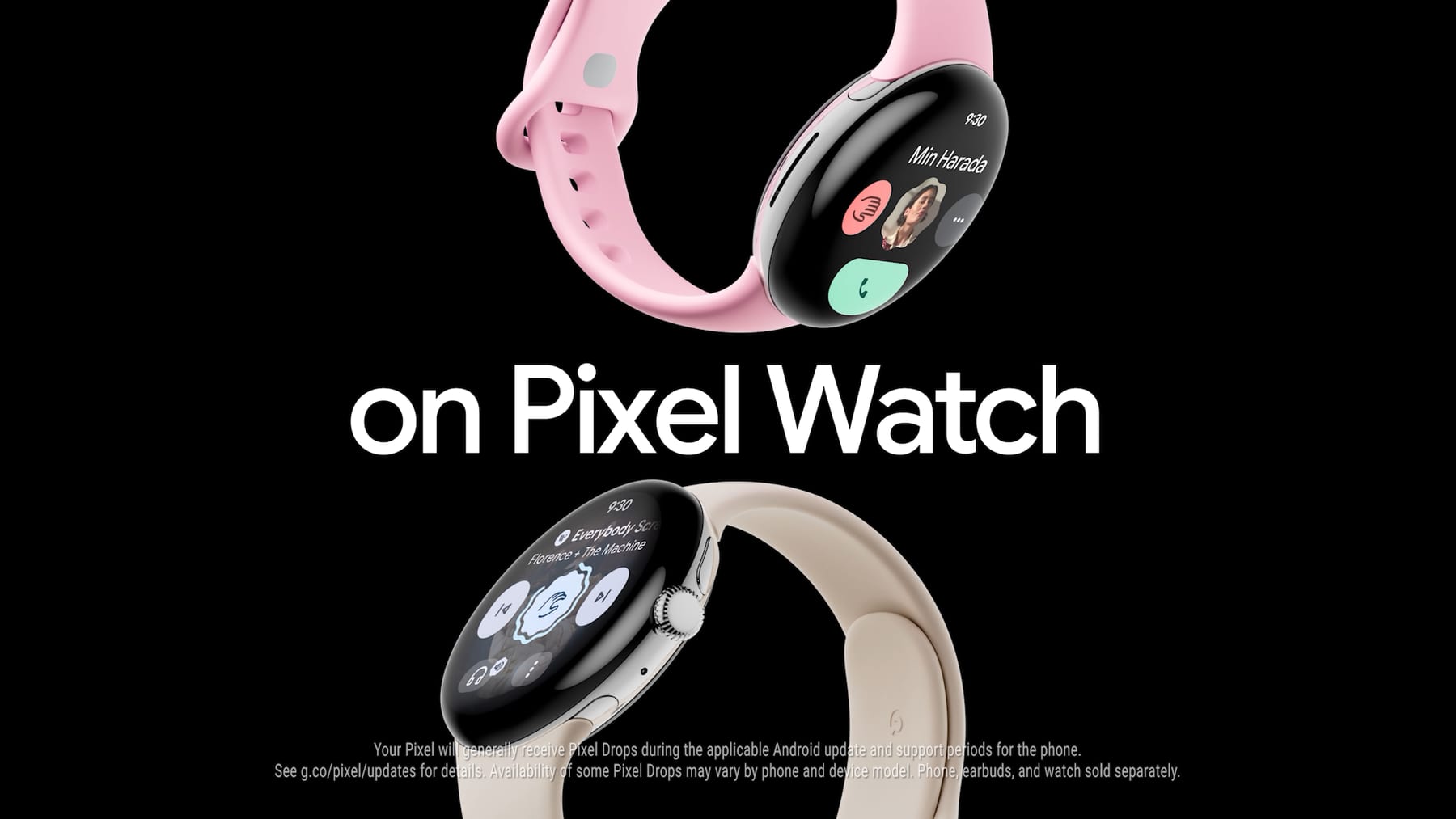
41mm $349.99 / 45mm $399.99 (LTE +$100), 3000-nit Actua 360 AMOLED LTPO display at 320 ppi under edge-to-edge Gorilla Glass 5, Snapdragon W5 Gen 2 plus a Cortex-M55 co-processor, up to 40h battery with the always-on display on the 45mm (30h on the 41mm), satellite emergency SOS over geostationary satellites on the LTE models, Gemini on the wrist, dual-frequency GPS with GPS + Galileo + GLONASS, and the Fitbit health platform under the Google Health app. JoyVelo internal testing, 4 weeks.
Apple Watch Ultra 3 Review - JoyVelo.com
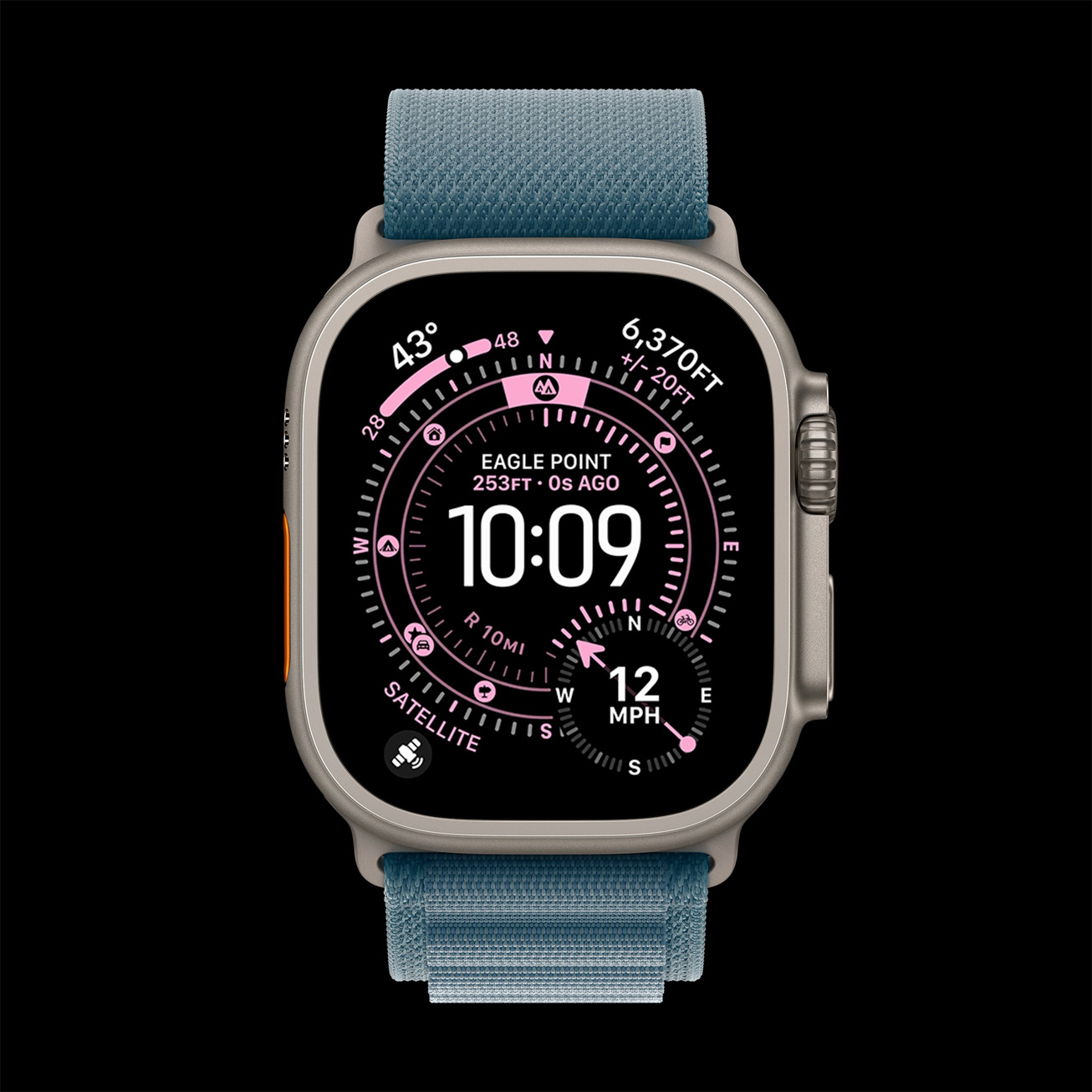
Slightly larger LTPO3 display (422x514, 3000 nits, 1-second always-on refresh), S10 chip, 5G cellular with a dual antenna system, two-way satellite messaging over Globalstar, Find My over satellite, Emergency SOS via satellite, depth gauge to 40m, FDA-cleared hypertension notifications, watchOS 26 with the new Sleep Score, Workout Buddy with pre/in/post-run voice coaching, and up to 42h of battery (72h in Low Power Mode). JoyVelo internal testing, 4 weeks, daily wear + a 70km mountain hike + 8 training activities.
Verify with JoyAnalyze
Upload ride data and let JoyAnalyze quantify GoPro Hero 13 Black's effect on comfort, aerodynamics, and consistency over long sessions.
Open multi-file compare in JoyAnalyzeSee how this fits you
The GoPro Hero 13 Black is one option. Compare it side-by-side with the other Componentsin our database.