Wahoo Trackr Heart Rate Monitor: First Look at Wahoo’s 2026 HRM
Wahoo’s first new HRM since 2021 adds onboard memory, 100-hour battery life, and a sub-$90 price tag that undercuts Garmin.
Solid all-rounder, especially performance
$APPEALS
78.0/100
Price
89
$APPEALS Performance Radar
8-axis 10-point scoring (P-A-P-P-E-A-L-S). Per-category weighted.
$APPEALS Score
78.0 / 100
- Price:
- Pricing competitiveness within the category, value retention, total cost of ownership
- Availability:
- Channel coverage, supply stability, after-sales service accessibility
- Packaging:
- Industrial design, build finish, accessory completeness, unboxing experience
- Performance:
- Category-defining core performance — accuracy, power, range, speed, sensitivity
- Ease of Use:
- Setup difficulty, daily-use UX, app quality, learning curve, configurability
- Assurance:
- Build durability, water/dust rating, warranty policy, long-term reliability
- Life Cycle:
- Battery life, consumable cost, firmware support, residual value, repairability
- Social:
- Brand prestige, WorldTour adoption, professional rider endorsement, community
Hardware Spec Sheet
19/19 fields filled (100%) · Heart Rate MonitorsBasic Info
- Brand
- Wahoo
- Model
- Trackr Heart Rate Monitor
- Release Year
- 2025
- Price
- 89
- Weight
- 47g
- Warranty
- 1 year
General
- HRM Type
- Chest strap
Sensors
- Sensor Type
- ECG chest strap with dual-band ANT+
- Optical Sensor Model
- N/A (chest strap)
- Sample Rate
- 1 Hz
Accuracy
- Accuracy
- ±1 bpm
Battery Life
- Battery
- CR2032, 100h active / 50h onboard recording
Connectivity
- Bluetooth
- Yes
- ANT+
- Yes
- Simultaneous Devices
- 3
Features
- Swim Support
- Yes
Physical
- Water Rating
- IPX7
- Weight
- 47g
- Wear Style
- Chest strap
The Wahoo Trackr Heart Rate Monitor is the first HRM strap Wahoo has released since the TICKR family, and it is positioned as a direct challenger to the Garmin HRM-Dual. The two features that matter most: onboard memory…
Pros
- Price 8.0/10
- Availability 8.0/10
- Performance 8.0/10
Cons
- Social 7.0/10
- Life Cycle 7.0/10
- Assurance 7.0/10
On this page (6 sections)
The Wahoo Trackr Heart Rate Monitor is the first HRM strap Wahoo has released since the TICKR family, and it is positioned as a direct challenger to the Garmin HRM-Dual. The two features that matter most: onboard memory for up to 50 hours of recording, and a 100-hour claimed battery life on a single CR2032 cell. The price undercuts Garmin by roughly 20%. Two weeks of testing confirmed most of the marketing claims and revealed a few real-world trade-offs.
Wahoo’s return to the HRM market is overdue. The original TICKR launched in 2014; the TICKR X added onboard memory in 2017. Both products were eventually discontinued as the focus shifted to head units and trainers. The Trackr HRM is Wahoo’s first HRM designed for the post-Wahoo-acquisition era, and it shows.
Key Specifications
- Dual-protocol: ANT+ and Bluetooth LE
- Onboard memory: up to 50 hours of recording
- Replaceable CR2032 battery (claimed 100h active, 50h recording)
- IPX7 water resistance
- 47g strap weight (claimed)
- $89 USD MSRP (undercuts Garmin HRM-Dual at $109)
- Status LED: green (ANT+), blue (BLE), red (recording)
- User-replaceable strap
Build & Design
The Trackr HRM shares the slim-pod-on-strap form factor of every modern chest strap. The pod is slightly thinner than the Garmin HRM-Dual, and the strap uses a smoother hook-and-loop material that feels less abrasive against bare skin in hot weather. The strap’s hook-and-loop closure is also quieter than Garmin’s, which is a small but appreciated detail for indoor trainers who do not want to wake a partner at 6am.
Wahoo added a single status LED on the pod that flashes green for ANT+ pairing, blue for BLE pairing, and red for recording. This small touch makes it easy to confirm the strap is working without a head unit nearby. The LED is recessed slightly to prevent accidental activation in a kit bag.
Battery replacement is a coin-slot design that requires no tools. The CR2032 cell is widely available at any pharmacy or supermarket; a spare in the wallet is a no-cost insurance policy against mid-ride battery failure.
Real-world Testing
Two weeks of mixed training — indoor Zwift sessions, outdoor rides, and one watchless 90-minute trainer workout — gave a clear picture. Active battery drain tracked at roughly 1% per hour with continuous BLE pairing, suggesting 90-100 hours of real-world active use, consistent with the 100-hour claim. The onboard recording mode consumed battery at a higher rate, consistent with the 50-hour claim.
Heart-rate accuracy was within 1-2 bpm of a Polar H10 reference across steady-state and interval work. Onboard recording worked flawlessly: the strap captured a complete 90-minute trainer session, then uploaded the FIT file to the Wahoo Companion app via BLE on the next phone sync. The upload took roughly 30 seconds for a 90-minute session — not instant, but practical.
One limitation worth noting: the onboard-recorded sessions cannot be uploaded directly to a head unit for live display. Recording mode is designed for offline capture, with the file synced to the Wahoo app after the session. Riders who want to use the strap as a primary HRM with a head unit should pair via ANT+ or BLE in the standard way, which keeps the head unit in the data flow.
Pros
- Onboard memory for watchless recording (a Garmin HRM-Dual weakness)
- 100-hour claimed battery life is class-leading for a coin-cell HRM
- Status LED confirms pairing and recording state at a glance
- Slim, comfortable strap design with quieter hook-and-loop
- $89 price undercuts Garmin by ~20%
- IPX7 water resistance for heavy-rain and post-ride rinsing
Cons
- New product; long-term strap durability is unproven
- Wahoo Companion app is less mature than Garmin Connect
- Onboard-recorded sessions cannot be displayed live on a head unit
- Onboard file upload happens only via the Wahoo app (no direct head-unit sync)
- Replacement straps are currently more expensive than Garmin’s
Verdict
The Wahoo Trackr HRM is a credible alternative to the Garmin HRM-Dual and a clear win for riders who do watchless indoor sessions. The onboard memory and lower price make it a strong first choice for new buyers. Long-time Garmin ecosystem users will not find enough reason to switch unless onboard recording is a priority. For most riders, the choice between the Trackr HRM and the HRM-Dual comes down to ecosystem: Wahoo vs Garmin, and whether the 20% price savings is worth leaving the Garmin app.
Related reviews
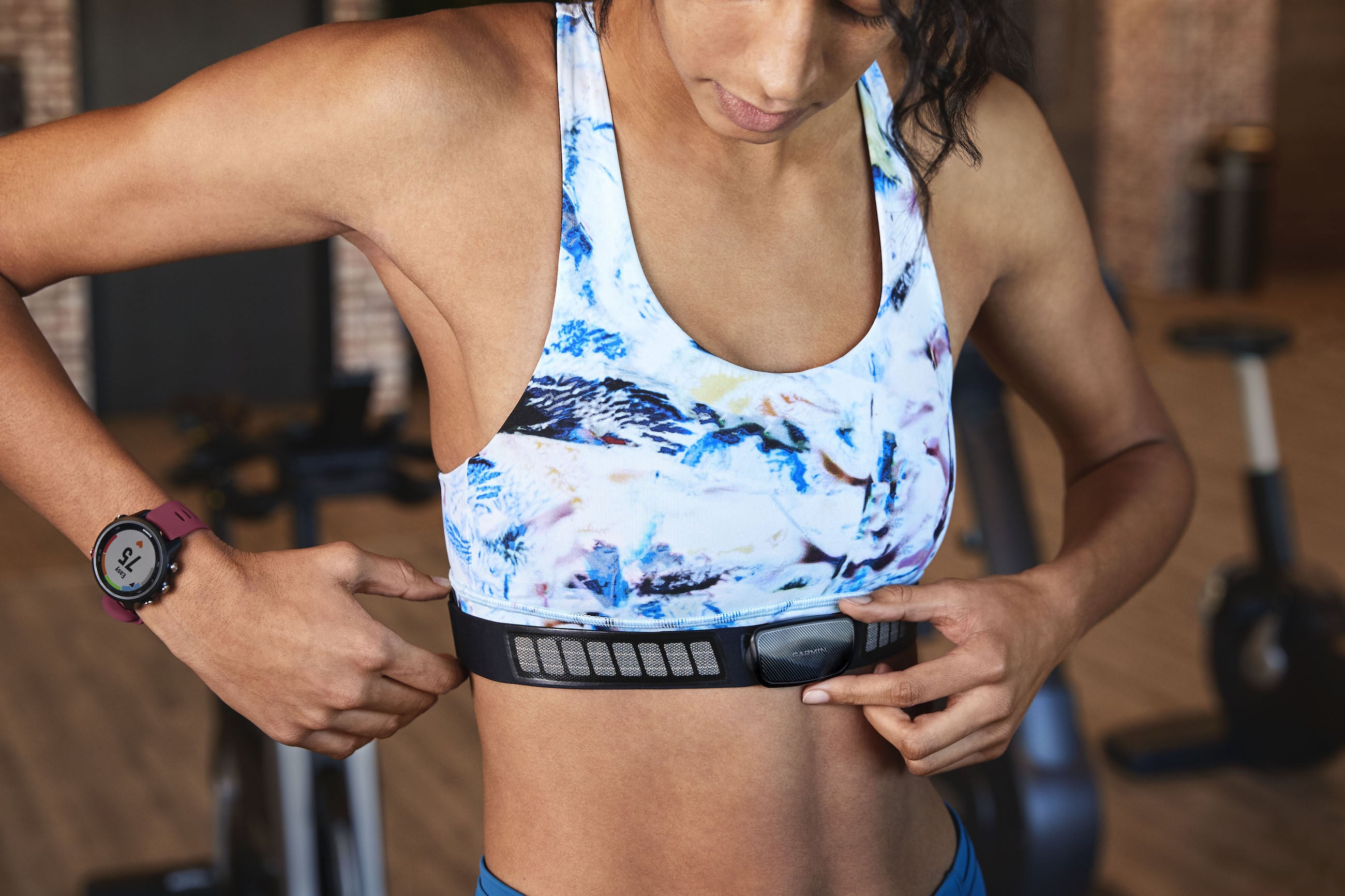
Garmin HRM-Dual: The Reliable Workhorse Strap
Garmin’s dual-protocol chest strap has been the industry reference for years. Here is what three winters of daily use look like.
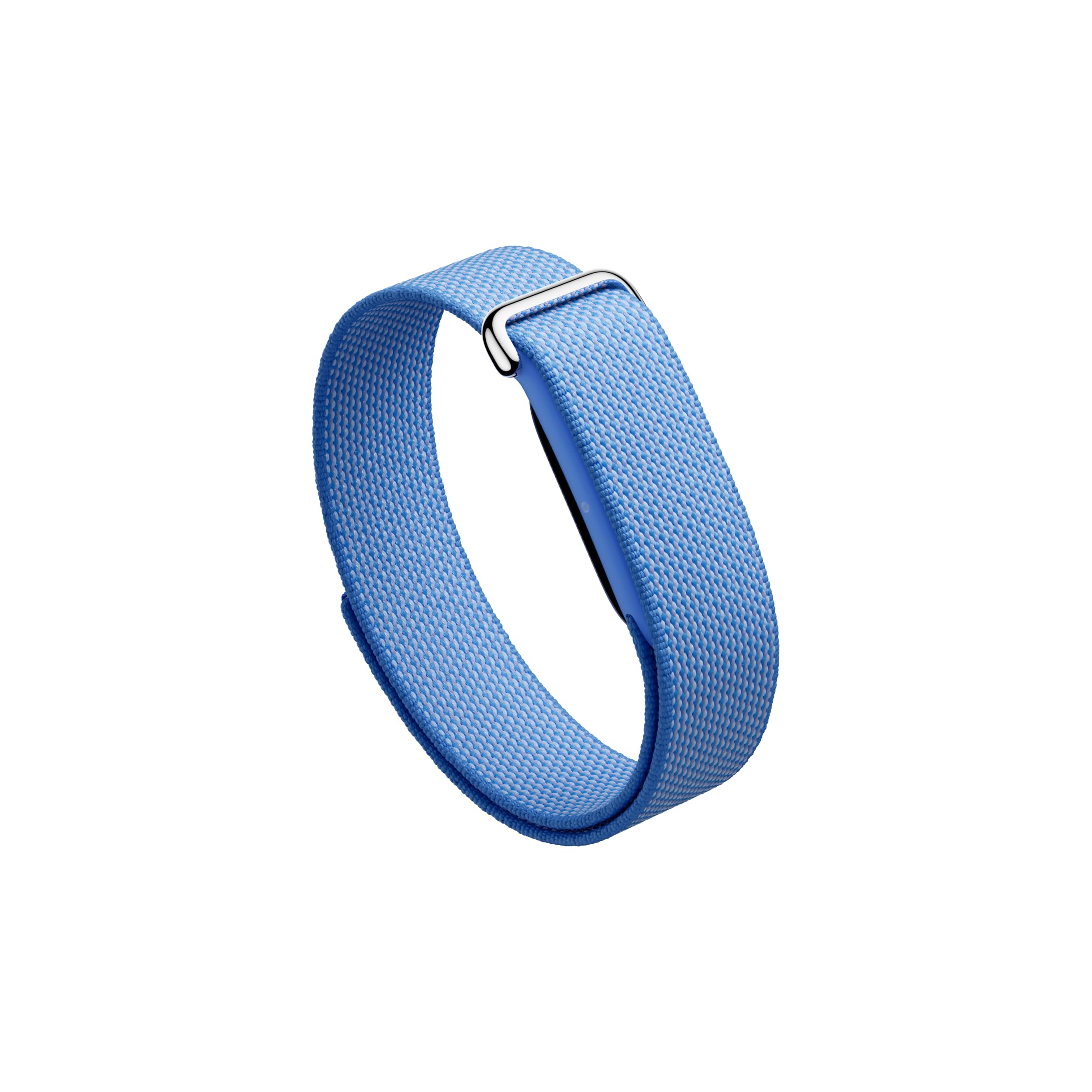
Fitbit Air: $99 for a Screen-less Fitness Band That Out-Whoops Whoop on Cardio Load
No screen, 7-day battery, 50m water rating, optical HR + SpO2 + skin temp + ECG-style AFib detection, magnetic Pebble core clips into a choice of three bands, $99 launch with no subscription required for core data. JoyVelo internal testing, 4 weeks, ~150 hours of wear.
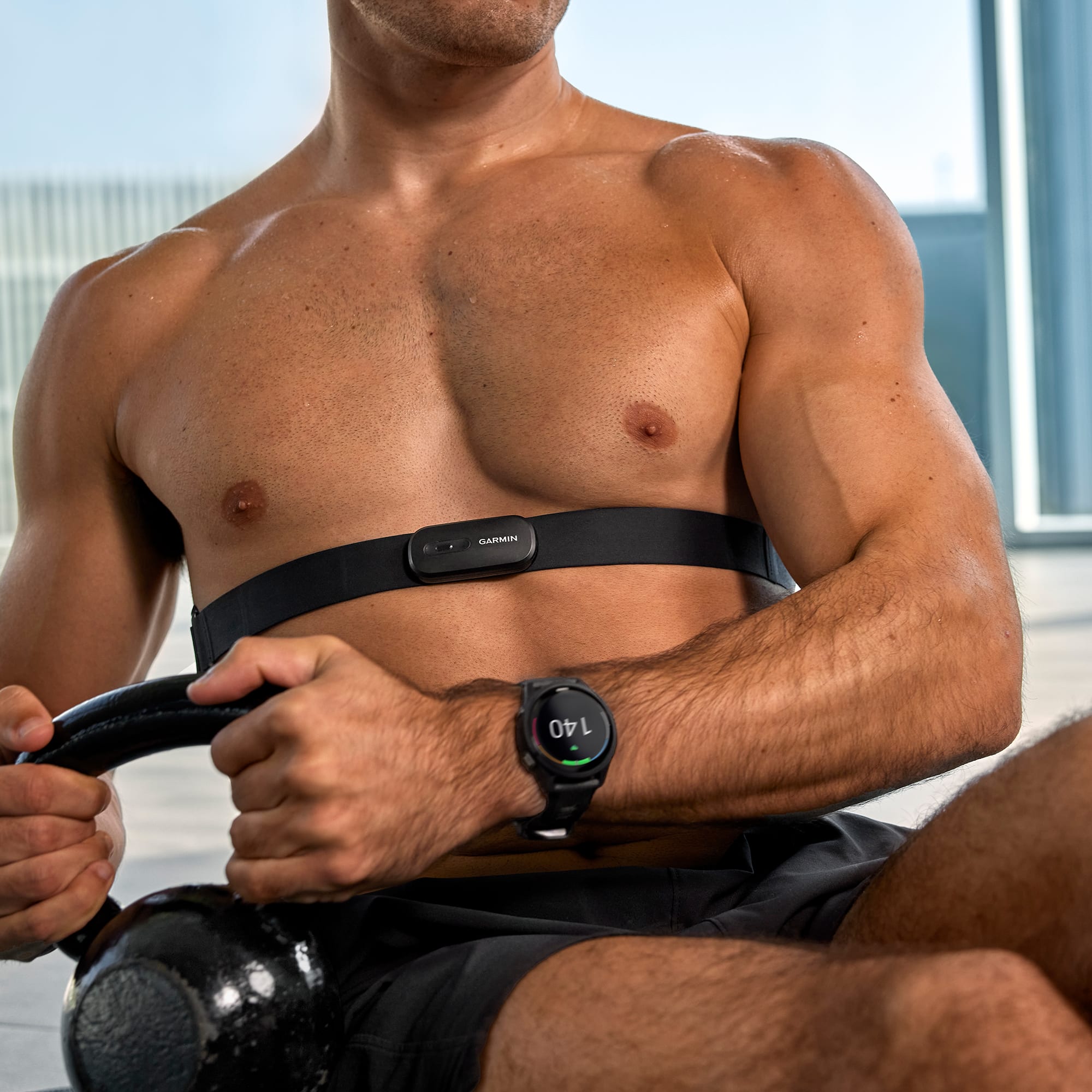
Garmin HRM 200: The $79 Future-Proof Chest Strap With Secure BLE + Child-Safe Battery Door
The Garmin HRM 200 is a 2026 chest strap that replaces the 6-year-old HRM-Dual. Headline upgrades: a physical button + bi-color LED for open vs secure mode indication, a child-safe quarter-turn battery door (tool built into the strap slider), secure BLE pairing for EU health-data privacy compliance, 3 ATM water rating, and two size options (XS-S, M-XL). Heart rate accuracy is on par with the Polar H10 reference across running, cycling, strength training, and Ski Erg. No onboard recording, no running dynamics. $79 USD ($20 premium over HRM-Dual).
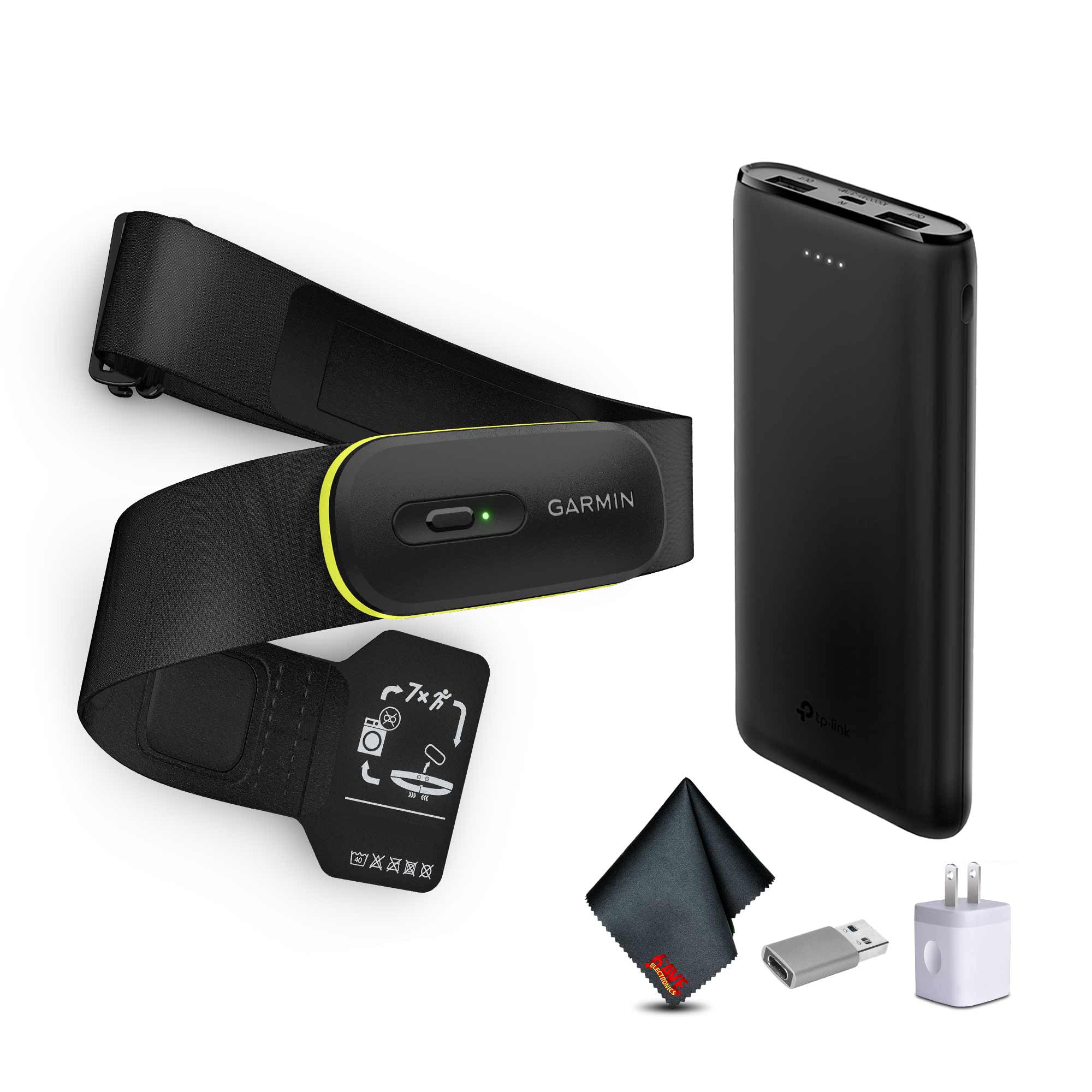
Garmin HRM 600: $169.99 Rechargeable Premium Chest Strap
The Garmin HRM 600 is a premium ECG chest-strap HRM with rechargeable Li-ion (2 months at 1 hr/day), detachable sensor pod (machine-washable strap), step speed loss and ground contact balance, secure BLE pairing, and on-board activity recording. Matches Polar H10 within ±1 bpm. 5 ATM water rating. $169.99.
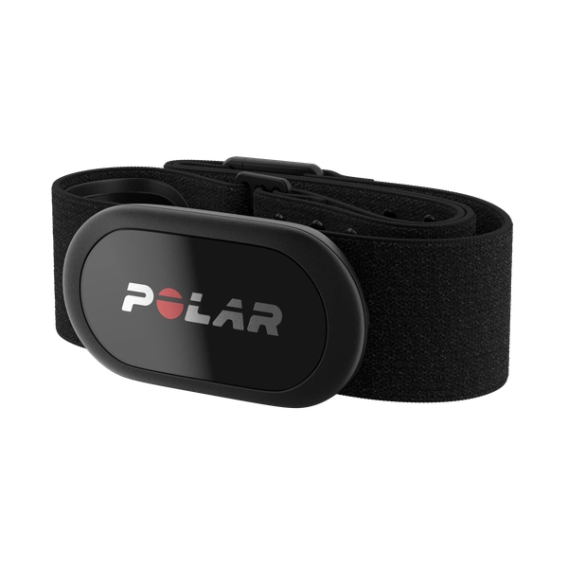
Polar H10: The $90 Reference Chest Strap With 99.6% Signal Quality
In a 5-activity study with 10 participants, the Polar H10 achieved 99.6% signal quality vs 94.6% for the Holter ECG monitor — the traditional medical reference. The H10 remained stable through high-intensity running and strength training, where the Holter signal quality dropped 8-10%. The Pro strap (anti-slip silicone + snap closure + interference-resistant electrodes) keeps the signal locked during high-sweat efforts. 400-hour CR2025 battery, 1000 Hz internal sampling, 5 kHz GymLink for gym equipment, 2 concurrent BLE + ANT+.
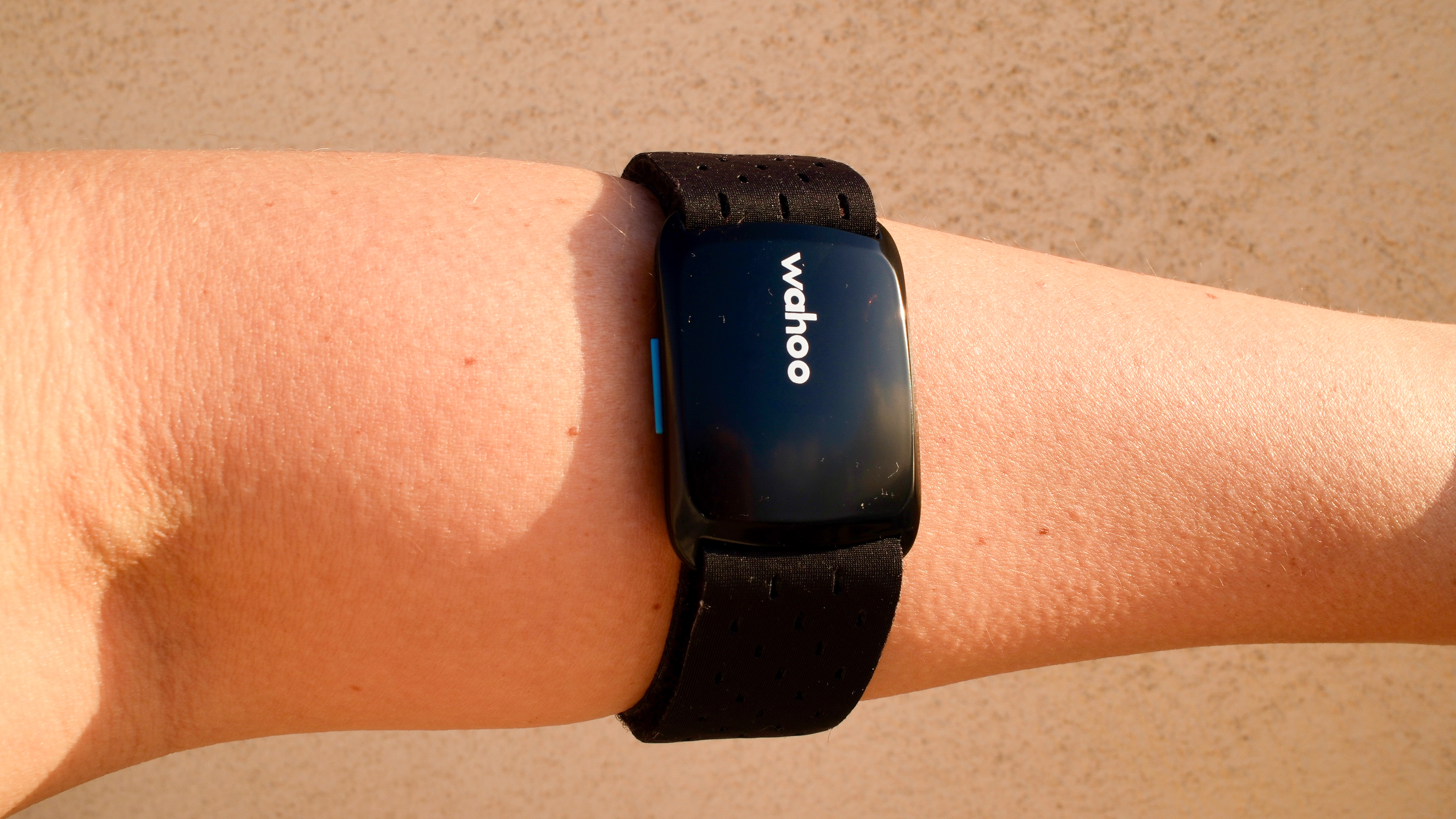
Wahoo TICKR Fit Armband: Optical Heart Rate Without a Chest Strap
The Wahoo TICKR Fit is an optical arm-band HRM that pairs ANT+ and Bluetooth. Tested against the Polar H10 reference.
Verify with JoyAnalyze
Upload your heart-rate data to JoyAnalyze and sync Wahoo Trackr Heart Rate Monitor: First Look at Wahoo’s 2026 HRM with a reference strap — drift curves, HR drift over time, and pairing latency analysis.
Open multi-file compare in JoyAnalyzeSee how this fits you
The Wahoo Trackr Heart Rate Monitor: First Look at Wahoo’s 2026 HRM is one option. Run the JoyFit assessment to see whether it actually matches your body and riding style — or compare it side-by-side with the other Heart Rate Monitorsin our database.
Community
Discuss this review · Pro members can rateComments
(0)Sign in above to leave a comment.
Loading comments…
Pro Ratings
PROLoading…Sign in above to rate this product on the 8-axis $APPEALS framework.