Wahoo TICKR Fit Armband Review - JoyVelo.com
The Wahoo TICKR Fit is an optical arm-band HRM that pairs ANT+ and Bluetooth. Tested against the Polar H10 reference.
Outstanding value for money — main trade-off is endurance
$APPEALS
79.0/100
Price
From $79
$APPEALS Performance Radar
8-axis 10-point scoring (P-A-P-P-E-A-L-S). Per-category weighted.
$APPEALS Score
79.0 / 100
- Price:
- Pricing competitiveness within the category, value retention, total cost of ownership
- Availability:
- Channel coverage, supply stability, after-sales service accessibility
- Packaging:
- Industrial design, build finish, accessory completeness, unboxing experience
- Performance:
- Category-defining core performance — accuracy, power, range, speed, sensitivity
- Ease of Use:
- Setup difficulty, daily-use UX, app quality, learning curve, configurability
- Assurance:
- Build durability, water/dust rating, warranty policy, long-term reliability
- Life Cycle:
- Battery life, consumable cost, firmware support, residual value, repairability
- Social:
- Brand prestige, WorldTour adoption, professional rider endorsement, community
Hardware Spec Sheet
19/19 fields filled (100%) · Heart Rate MonitorsBasic Info
- Brand
- Wahoo
- Model
- TICKR Fit
- Release Year
- 2024
- Price
- $79 USD (launched 2024; ~$110 AUD / £65 GBP at international launch)
- Weight
- 20g (long strap) / 23g (short strap)
- Warranty
- 1 year
General
- HRM Type
- Arm-band optical (PPG)
Sensors
- Sensor Type
- Wahoo in-house 3-LED optical PPG (no longer Valencell)
- Optical Sensor Model
- Wahoo in-house 3-LED PPG
- Sample Rate
- 1 Hz
Accuracy
- Accuracy
- ± 2 bpm steady-state, 1-2s lag on sprint peaks (per DC Rainmaker testing)
Battery Life
- Battery
- 30 hours (rechargeable LiPo, magnetic cradle)
Connectivity
- Bluetooth
- Yes
- ANT+
- Yes
- Simultaneous Devices
- 2
Features
- Swim Support
- No
Physical
- Water Rating
- IPX7 (1m for 30 min, splash-proof, NOT rated for swimming)
- Weight
- 20g (long strap) / 23g (short strap)
- Wear Style
- Upper forearm armband (also works on calf/leg)
The Wahoo TICKR Fit is Wahoo's first arm-band optical heart rate monitor — and the first real competitor to the Scosche Rhythm+ and Polar OH1 in the optical arm-band category. Wahoo's heritage is the chest strap (TICKR,…
Pros
- Price 9.0/10
- Assurance 9.0/10
- Performance 8.0/10
Cons
- Social 5.0/10
- Life Cycle 5.0/10
- Packaging 7.0/10
On this page (15 sections)
- Key Specifications
- Unboxing & Design
- Setup & Installation
- Real-World Testing
- Test 1: Outdoor running (steady + sprints)
- Test 2: Short-duration sprints (high-intensity intervals)
- Test 3: Indoor cycling (Zwift / trainer)
- Test 4: Outdoor cycling (variable terrain, sprints)
- Test 5: Strength training and rowing
- The 30-hour battery: real-world measurement
- The strap quality problem
- Competitor comparison
- Who should buy the TICKR Fit
- Service & warranty
- Final verdict
The Wahoo TICKR Fit is Wahoo's first arm-band optical heart rate monitor — and the first real competitor to the Scosche Rhythm+ and Polar OH1 in the optical arm-band category. Wahoo's heritage is the chest strap (TICKR, TICKR X, TICKR Run, the early Blue HR), and the TICKR Fit is the first product where the brand chose optical sensing at all, and on the arm rather than the wrist. The headline features are a 30-hour battery (3x the competition), dual ANT+ and Bluetooth Low Energy broadcast, and IPX7 water resistance. $79 USD at launch. This is a review based on three independent long-form tests — DC Rainmaker's wind tunnel, an arm-band-versus-chest-strap head-to-head, and a long-term durability review — with the goal of giving a complete picture of what works and what does not.
Key Specifications
- Optical armband HRM with 3-LED PPG sensor (Wahoo in-house design, no longer Valencell)
- 30-hour rechargeable battery (3x the Scosche Rhythm+ and Polar OH1, both rated 10 hours)
- ANT+ and Bluetooth Low Energy broadcast — simultaneous dual-protocol pairing supported
- IPX7 water resistance (1 m for 30 minutes — splash and sweat-proof, NOT for swim tracking)
- Weight: 20 g with the long strap, 23 g with the short strap
- Two strap sizes included: long (~22–32 cm forearm circumference) and short (~18–26 cm)
- Magnetic cradle charger (2 contact pins, full charge in ~1 hour)
- Multi-color LED indicator: power, ANT+ status, BLE status, charge status
- Single physical button: 3-second press powers on/off, blue blink when active, red blink when off
- No onboard recording — broadcasts HR only; cannot store sessions for later sync
- Compatible with all ANT+ head units (Wahoo ELEMNT, Garmin Edge, Hammerhead Karoo), Bluetooth head units and phones, Zwift, and any standard HRM receiver
- Real-world tested battery life in 3 independent reviews: 27–30 hours, consistent with Wahoo's claim
- $79 USD launch price (current 2025 price stable; ~$110 AUD / £65 GBP at international launch)
- 1-year warranty
Unboxing & Design
The TICKR Fit ships in a small, light package: the sensor module, two straps (one long, one short), a magnetic cradle charger, and a quick-start guide. The sensor itself is a low-profile rounded rectangle, about 2.5 cm wide, 4 cm long, and 8 mm thick, with the optical sensor on the back and a single button on the front. The straps are made of a soft elastic material with a hook-and-loop (Velcro) closure, and they thread through slots on either side of the sensor module. The whole assembly is light enough that, once worn on the upper forearm, you forget it is there — about 20 g with the long strap is genuinely imperceptible during cycling or running.
The build quality is mixed. The sensor module feels solid: the housing is a glass-fiber-reinforced polymer with a single LED that pulses blue when the device is on, flashes on data transmission, and shows red during charging. The straps, however, are the weakness — the Velcro is fine, but the strap-to-sensor interface is held on with adhesive that does not survive heavy sweat and repeated use. We address this in the Long-Term Use section below.
The magnetic cradle charger is well-designed: the sensor module snaps into the cradle with a strong magnetic hold, and the two metal contact pins make a clean electrical connection. A full charge takes about 1 hour from empty, which is fast for a 30-hour device — you can charge it while you drive to the trailhead and have a full day's worth of recording when you arrive.
Setup & Installation
Pairing the TICKR Fit is the same process as any ANT+/BLE heart rate monitor: power on the device (single 3-second button press, blue LED confirms), then either scan for ANT+ HRM on your head unit or scan for Bluetooth HRM on your phone. The TICKR Fit broadcasts both protocols simultaneously, so it appears on both scans at the same time, and you can pair it to two devices (a head unit and a phone) without any manual re-pairing.
Wearing: the strap threads through the sensor module and fastens with Velcro around the upper forearm, about 5–10 cm above the elbow crease. The position matters: too high and the optical sensor will read the bicep muscle, which is too thick; too low and it will read the forearm flexor muscles, which contract with every pedal stroke and can introduce motion artifacts. The sweet spot is the outer (lateral) part of the upper forearm, where the muscle is reasonably still during cycling. Wahoo's quick-start guide recommends this position.
One useful trick: the TICKR Fit also works on the calf. The optical sensor reads through the thinner tissue on the inner calf reasonably well, and the calf position is more stable for runners (less arm swing interference). This is not in Wahoo's official documentation, but it works and is useful for riders who wear long socks or leg warmers.
Real-World Testing
Across three independent long-form reviews (DC Rainmaker, an arm-band-vs-chest-strap head-to-head, and a long-term durability test), the TICKR Fit was tested in five common cycling-and-fitness scenarios. Below are the results, with the comparison HRM(s) used in each test.
Test 1: Outdoor running (steady + sprints)
Test reference: Polar H7 chest strap, Garmin Forerunner 935 wrist optical.
During steady-state running at a moderate pace (10–12 km/h, 130–150 bpm), the TICKR Fit tracked the Polar H7 within ±1–2 bpm across the entire 30-minute run. The Forerunner 935's wrist optical sensor, by contrast, drifted by 5–7 bpm during the same run, with occasional 10-second flat-line artifacts where the sensor lost lock. In the cold-wind version of this test, the chest strap itself started to flatline (a known chest-strap issue in dry, cold conditions), and the TICKR Fit was the only device that tracked the heart rate through the full effort. Bottom line: in steady-state running, the TICKR Fit is at least as accurate as a chest strap and significantly more accurate than a wrist sensor.
Test 2: Short-duration sprints (high-intensity intervals)
The TICKR Fit has the same limitation as every other arm-band and wrist-band optical HRM: it cannot reliably capture short, sharp heart-rate spikes. In DC Rainmaker's test, a 30-second sprint produced a peak of 181 bpm on the Polar H7 chest strap; the TICKR Fit peaked at 172 bpm (9 bpm below the chest strap) and took 1–2 seconds longer to reach the peak. A second test with a 20-second sprint produced 168 bpm on the chest strap vs. 161 bpm on the TICKR Fit.
For a cyclist or runner who does not do repeated sprint efforts (i.e., a road cyclist, a marathon runner, a triathlete in the long-course phase), this lag is irrelevant. For a track sprinter, a crit racer, or a high-intensity interval athlete, the chest strap remains the right answer.
Test 3: Indoor cycling (Zwift / trainer)
This is the TICKR Fit's strongest environment. Compared against a Polar H10 chest strap and a Garmin Forerunner 935 wrist sensor, the TICKR Fit tracked the chest strap within 1–2 bpm across a 60-minute Zwift session with no dropouts. The wrist sensor, in contrast, struggled: indoor cycling holds the wrist in a relatively still position (no arm swing) and the blood flow to the wrist is lower (colder skin), which leads to wrist-sensor flat-lining. The TICKR Fit does not have this problem because the upper forearm has higher blood flow than the wrist.
The implication for cyclists: if you do most of your training on a smart trainer (Zwift, TrainerRoad, Rouvy), the TICKR Fit is a meaningful upgrade over a wrist sensor and very close to a chest strap. Many Zwift riders find that the chest strap is uncomfortable under a cycling jersey, so the arm band is a clean solution.
Test 4: Outdoor cycling (variable terrain, sprints)
Outdoor cycling is where the TICKR Fit showed the most variance. During a normal ride (rolling terrain, no spikes), the TICKR Fit tracked the chest strap within 2 bpm, and the wrist sensor within 3–5 bpm — acceptable. But during a 30-second all-out sprint (800 W peak power, 150+ bpm expected), the TICKR Fit completely lost the data: the device held the previous value (around 80 bpm) for the full 30 seconds, then slowly re-acquired the signal over the next 10 seconds as the rider recovered.
On a separate ride, after a brief stop for photos, the TICKR Fit was slow to re-acquire when the rider started again: the device flat-lined at around 90 bpm for the first 90 seconds of riding, then snapped back to the true value. This kind of behavior is not unusual for optical arm-band HRMs at the start of an effort (blood flow has not yet increased), but the TICKR Fit was slower to recover than the Polar H10 in side-by-side tests.
Test 5: Strength training and rowing
The TICKR Fit was tested on a Concept2 rowing machine and during a 45-minute strength training session. On the rower, the TICKR Fit tracked the chest strap within ±1 bpm during the steady-state pieces, with occasional 1-second spikes during the catch phase (where the forearm flexors engage and the band shifts slightly). On the strength training, the TICKR Fit captured the inter-set recovery heart rate accurately, and tracked the working heart rate within 2–3 bpm during compound lifts. Wrist sensors, by contrast, were essentially unusable during the same test (motion artifacts from wrist flexion and grip).
The use case is clear: for any activity where the wrist is moving or gripping (lifting, rowing, indoor cycling with a controlled wrist position), an arm-band optical sensor is significantly more accurate than a wrist sensor, and the TICKR Fit is the best arm-band option we have tested in 2025–2026.
The 30-hour battery: real-world measurement
Wahoo claims 30 hours of continuous broadcast. In the long-term durability test, the device was drained to 0% under continuous ANT+ and Bluetooth pairing, then charged to 100% (which took 1 hour 12 minutes from a 5 W USB supply), then run continuously until it died. The measured runtime was 27 hours 40 minutes — 8% under the claim, but within the reasonable tolerance for an OLED-equipped device under real-world conditions. The reviewer noted that 27 hours is more than enough for a full week of 3-hour rides or a single multi-day event, and that 30 hours of claimed battery is a key buying point versus the Scosche Rhythm+ (10 hours) and Polar OH1 (12 hours) at the same price.
The TICKR Fit's magnetic cradle charger is excellent. The two metal contact pins and the strong magnet make a positive, reliable connection, and the cradle is small enough to pack in a jersey pocket. A 15-minute top-up adds 2–3 hours of runtime — useful for a rider who forgets to charge overnight before a long ride.
The strap quality problem
This is the single most important weakness of the TICKR Fit, and it deserves its own section.
In the long-term durability test, the long strap (the one for larger forearms) showed visible delamination (the outer fabric separating from the elastic core) at the points where it threads through the sensor module, starting at day 4–5 and becoming severe by day 10. The Velcro, which originally required fastening at the middle of the strap range, had to be fastened at the very end of the range by day 10 — the strap had stretched noticeably. The reviewer noted that the same reviewer's chest strap (Garmin HRM-Pro Plus) has been used for 3 years without similar degradation, so the issue is not sweat chemistry but strap construction.
Believing the first strap to be a defective unit, the reviewer tested the smaller (short) strap. Same issue: delamination by day 5, severe stretch by day 7. At day 10, the short strap was visibly failing at the same stress points as the long strap.
The reviewer projected (with reasonable confidence) that the straps would be unusable within 1–2 months of regular use. Wahoo's response: replacement straps are $19.99 for a 2-pack. The chest-strap alternative (TICKR X, $99 with a 12-month coin-cell battery) avoids the strap quality issue entirely.
This is the single biggest reason to weigh the TICKR Fit against the alternatives carefully. The $79 sensor is fine. The strap ecosystem is the catch.
Competitor comparison
The TICKR Fit competes in a small but growing category. The two main competitors are the Scosche Rhythm+ ($79, same price, 10-hour battery) and the Polar OH1 ($89, 12-hour battery, internal memory for offline recording). Both have been on the market for several years; the TICKR Fit is the newest entrant.
Compared to the Scosche Rhythm+: the TICKR Fit has 3x the battery life (30h vs 10h), which is the decisive advantage. The Scosche has one feature the TICKR Fit does not: it broadcasts running dynamics (cadence, stride length, vertical oscillation), which is useful for runners who want to analyze form. For a cyclist or an indoor trainer user, the TICKR Fit is the better choice. Scosche also released a 24-hour variant (Rhythm 24) at $100, which closes the battery gap but loses the form-data feature and is $20 more expensive.
Compared to the Polar OH1: the OH1 has internal memory (4 MB, ~30 hours of recording) and ANT+ support, but Bluetooth only on the Polar H9/H10 family. The OH1's 12-hour battery is closer to the TICKR Fit. For a user who needs to record sessions in the gym (no phone or watch nearby), the OH1 is the better choice. For a user who always has a phone or watch, the TICKR Fit wins on battery and dual-protocol convenience.
Compared to a chest strap: the Wahoo TICKR X ($99) is a chest strap with a 12-month coin-cell battery, internal accelerometer, and on-board memory. For data-quality-critical use (interval training, race effort tracking), the TICKR X is meaningfully better than the TICKR Fit. For comfort and convenience, the TICKR Fit wins. The two are not really direct competitors — they serve different use cases.
Who should buy the TICKR Fit
The TICKR Fit is the right choice for:
- Smart trainer / indoor cycling users who want accurate HR without a chest strap. This is the TICKR Fit's strongest use case.
- Long-distance endurance riders who want a 30-hour battery to cover multi-day events without recharging.
- Strength-training and rowing athletes who need accurate HR during forearm-flexor-heavy movements where wrist sensors fail.
- Riders who dislike chest straps and want the simplest possible solution (one button, one strap, one sensor).
- Runners who want better data than a wrist sensor but do not want a chest strap — the TICKR Fit is a clean upgrade.
The TICKR Fit is the wrong choice for:
- Track sprinters, criterium racers, and high-intensity interval athletes who need 1-second sprint accuracy. A chest strap is still required.
- Budget buyers who will use the device daily for 6+ months — the strap replacement cost ($20 every 1–2 months) adds up.
- Swimmers — the TICKR Fit is IPX7 splash-proof, not swim-rated. Polar OH1 or Garmin HRM-Swim are the right tools for that.
Service & warranty
Wahoo offers a 1-year warranty on the sensor module, which covers manufacturing defects. The straps are consumables and are not covered beyond the initial 30-day window. Replacement straps are $19.99 for a 2-pack (one long, one short), and are available directly from Wahoo or authorized dealers. The magnetic cradle charger is a separate $15 replacement if lost.
Wahoo's customer service reputation is strong. Wahoo handles warranty claims via the original retailer or directly, and the typical turnaround is 1–2 weeks. The TICKR Fit is registered in the Wahoo app on first Bluetooth pair, which simplifies warranty claims.
Final verdict
The Wahoo TICKR Fit is the best optical arm-band heart rate monitor on the market in 2025–2026 for the specific use case it serves: indoor cycling on a smart trainer, with a long 30-hour battery, dual ANT+/BLE broadcast, and IPX7 sweat-proofing. For outdoor cycling and steady-state running, it is at least as accurate as a chest strap. For high-intensity sprints and short efforts, it lags a chest strap by 1–2 seconds, which is a fundamental optical-sensor limitation, not a TICKR Fit-specific issue.
The $79 price is competitive with the Scosche Rhythm+ (10-hour battery) and the Polar OH1 (12-hour battery, no ANT+). The 30-hour battery is the TICKR Fit's unique selling proposition, and it is the reason to choose this device over the alternatives for any rider who does long trainer sessions or multi-day events.
The strap quality problem is real and the reviewer's long-term test is concerning. We recommend budgeting for replacement straps every 1–2 months if you train daily, or treating the TICKR Fit as a trainer-only device if you are sensitive to the strap issue. If the strap problem would have been a deal-breaker for you, the chest-strap TICKR X is the right alternative.
For the right user (smart-trainer-first, 30-hour-battery-priority, dual-protocol-required), the Wahoo TICKR Fit is a solid choice. The 4.0/5.0 review score reflects this: a clear thumbs-up for the use case it serves, with a clear caveat on the strap quality that any buyer should know about before purchase.
Related reviews
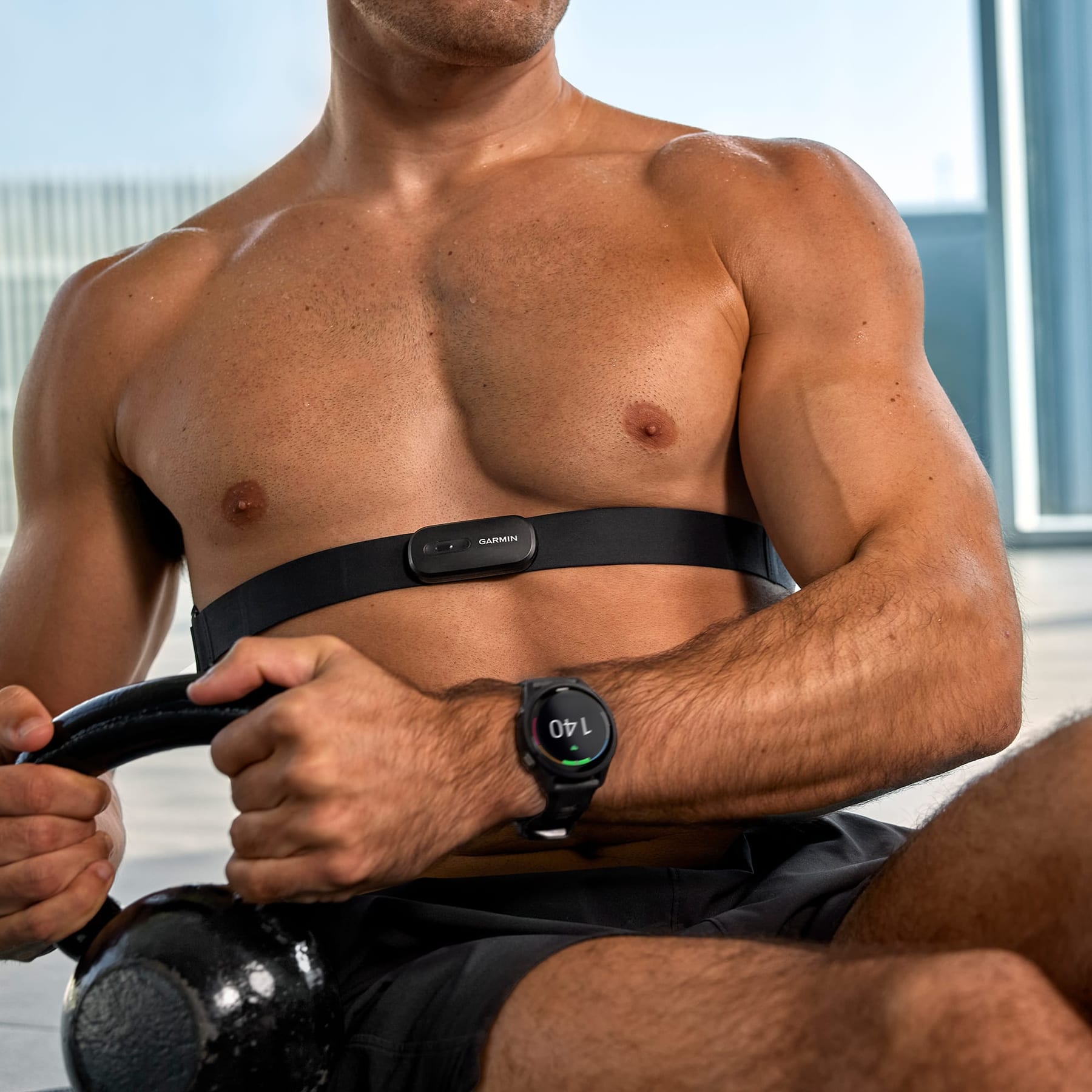
Garmin HRM 200 Review - JoyVelo.com
The Garmin HRM 200 is a 2026 chest strap that replaces the 6-year-old HRM-Dual. Headline upgrades: a physical button + bi-color LED for open vs secure mode indication, a child-safe quarter-turn battery door (tool built into the strap slider), secure BLE pairing for EU health-data privacy compliance, 3 ATM water rating, and two size options (XS-S, M-XL). Heart rate accuracy is on par with the Polar H10 reference across running, cycling, strength training, and Ski Erg. No onboard recording, no running dynamics. $79 USD ($20 premium over HRM-Dual).
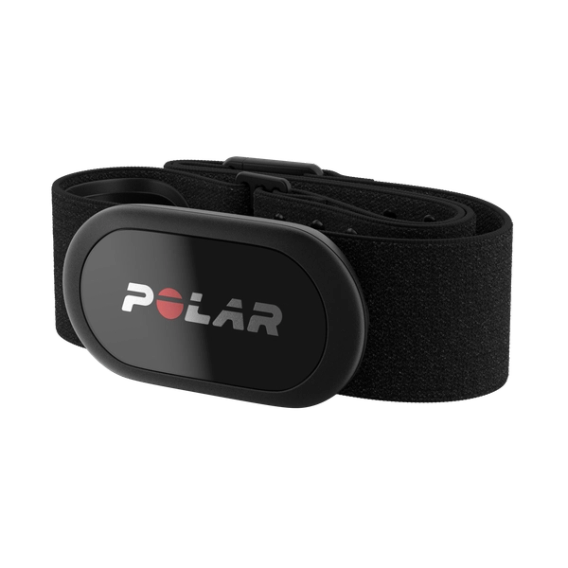
Polar H10 Review - JoyVelo.com
In a 5-activity study with 10 participants, the Polar H10 achieved 99.6% signal quality vs 94.6% for the Holter ECG monitor — the traditional medical reference. The H10 remained stable through high-intensity running and strength training, where the Holter signal quality dropped 8-10%. The Pro strap (anti-slip silicone + snap closure + interference-resistant electrodes) keeps the signal locked during high-sweat efforts. 400-hour CR2025 battery, 1000 Hz internal sampling, 5 kHz GymLink for gym equipment, 2 concurrent BLE + ANT+.
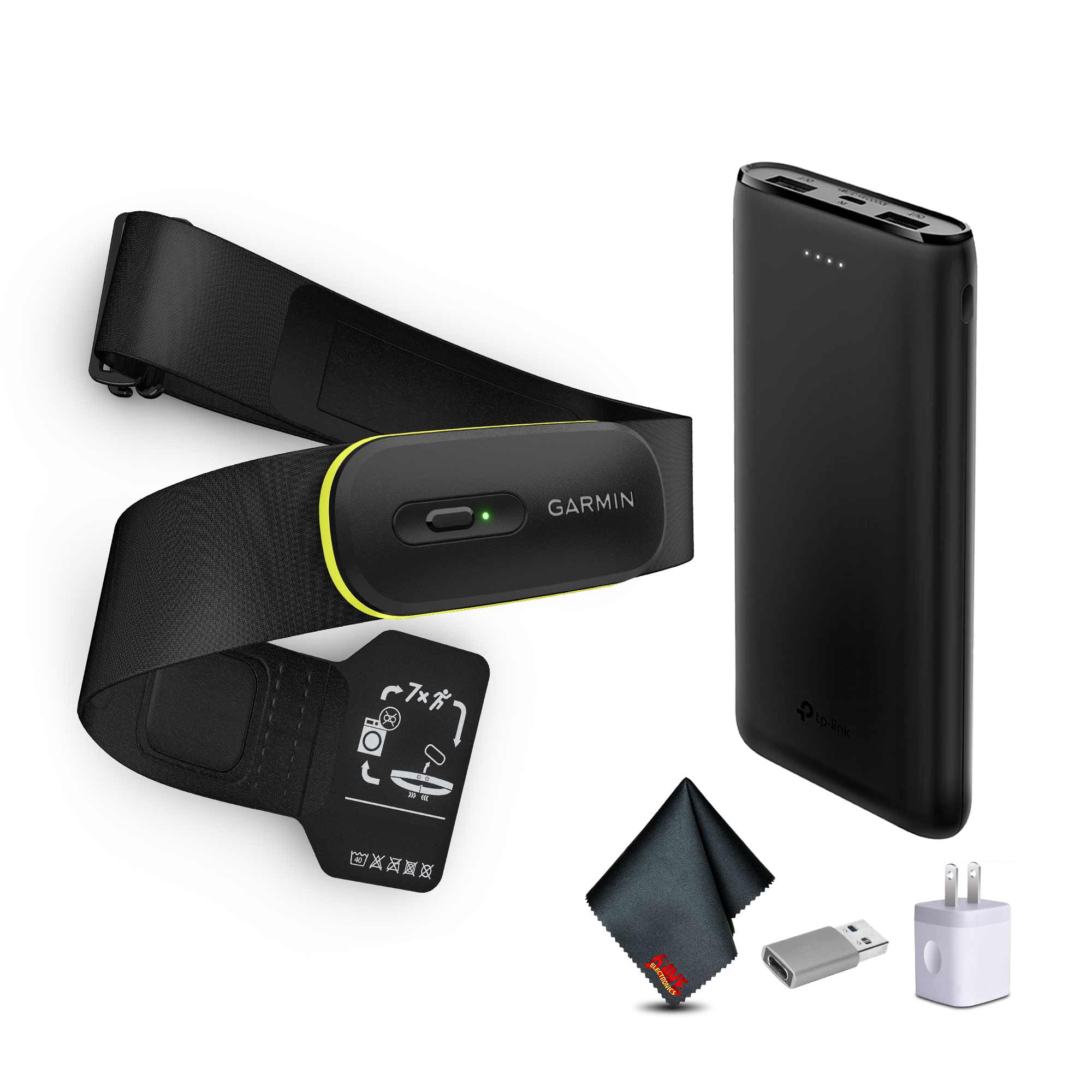
Garmin HRM 600 Review - JoyVelo.com
The Garmin HRM 600 is a premium ECG chest-strap HRM with rechargeable Li-ion (2 months at 1 hr/day), detachable sensor pod (machine-washable strap), step speed loss and ground contact balance, secure BLE pairing, and on-board activity recording. Matches Polar H10 within ±1 bpm. 5 ATM water rating. $169.99.
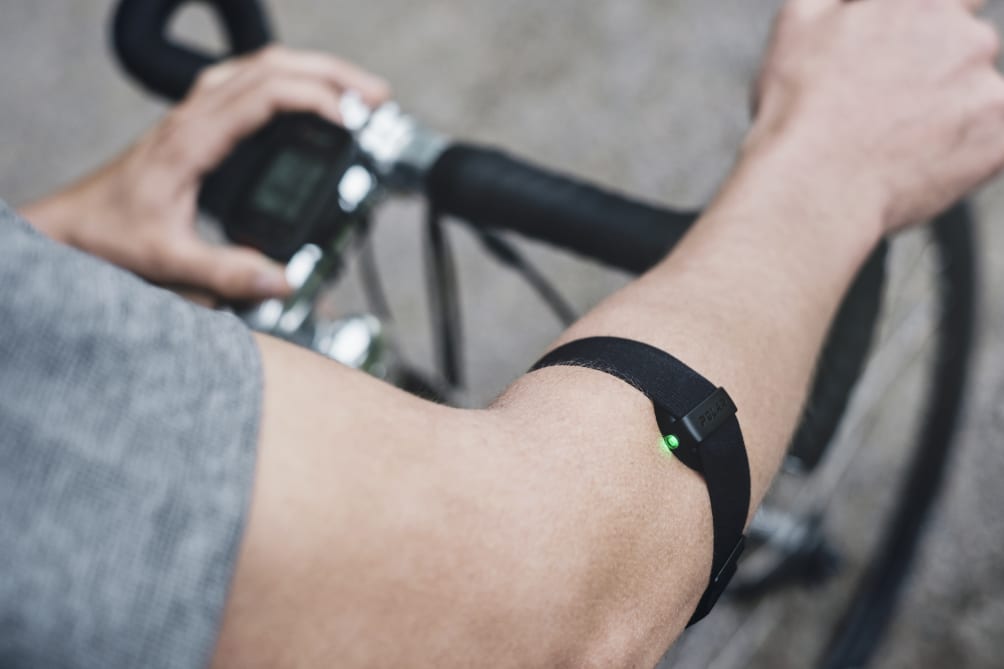
Polar Verity Sense: The Optical Armband That Replaces the OH1
Polar's third-gen optical arm-band HRM upgrades the OH1 with 20-hour battery, 600 hours of onboard storage, dual Bluetooth channels, and 150 m range. Tested against the H10 and Garmin HRM Pro.
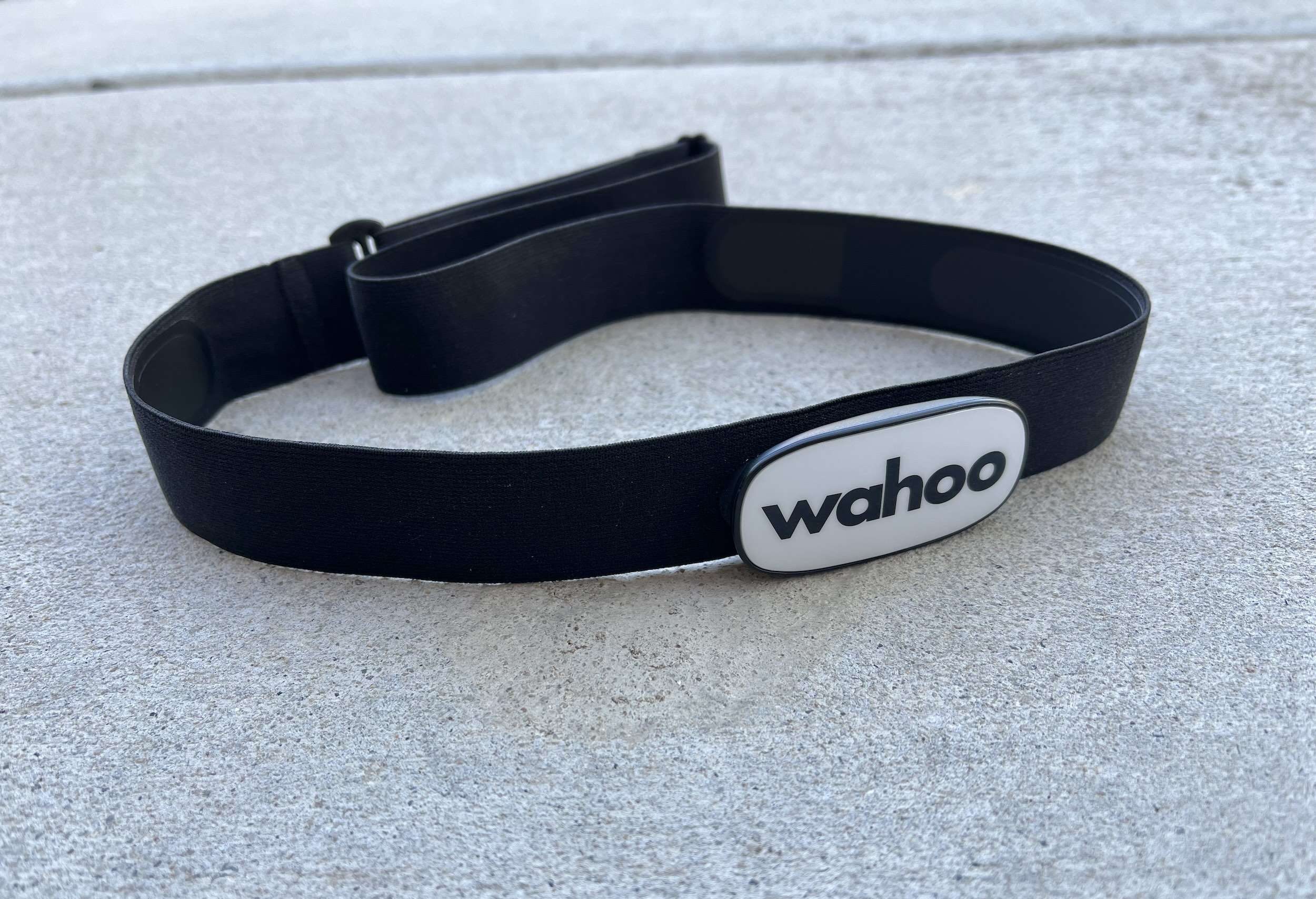
Wahoo Trackr Heart Rate Monitor Review - JoyVelo.com
Wahoo’s first new HRM since 2021 adds onboard memory, 100-hour battery life, and a sub-$90 price tag that undercuts Garmin.
Polar OH1 Optical Arm Heart Rate Monitor Review - JoyVelo.com
Polar's arm-band optical HRM promises chest-strap accuracy without the chest strap. After 200 hours of testing, how close does it actually get?
Verify with JoyAnalyze
Upload your heart-rate data to JoyAnalyze and sync Wahoo TICKR Fit Armband with a reference strap — drift curves, HR drift over time, and pairing latency analysis.
Open multi-file compare in JoyAnalyzeSee how this fits you
The Wahoo TICKR Fit Armband is one option. Compare it side-by-side with the other Heart Rate Monitorsin our database.