Polar Verity Sense: The Optical Armband That Replaces the OH1
Polar's third-gen optical arm-band HRM upgrades the OH1 with 20-hour battery, 600 hours of onboard storage, dual Bluetooth channels, and 150 m range. Tested against the H10 and Garmin HRM Pro.
Exceptional core performance at this price point
$APPEALS
90.0/100
Price
89
$APPEALS Performance Radar
8-axis 10-point scoring (P-A-P-P-E-A-L-S). Per-category weighted.
$APPEALS Score
90.0 / 100
- Price:
- Pricing competitiveness within the category, value retention, total cost of ownership
- Availability:
- Channel coverage, supply stability, after-sales service accessibility
- Packaging:
- Industrial design, build finish, accessory completeness, unboxing experience
- Performance:
- Category-defining core performance — accuracy, power, range, speed, sensitivity
- Ease of Use:
- Setup difficulty, daily-use UX, app quality, learning curve, configurability
- Assurance:
- Build durability, water/dust rating, warranty policy, long-term reliability
- Life Cycle:
- Battery life, consumable cost, firmware support, residual value, repairability
- Social:
- Brand prestige, WorldTour adoption, professional rider endorsement, community
Hardware Spec Sheet
16/19 fields filled (84%) · Heart Rate MonitorsBasic Info
- Brand
- Polar
- Model
- Verity Sense
- Release Year
- 2024
- Price
- 89
- Weight
- Sensor ~5 g, with strap ~33 g (Polar does not publish official total)
- Warranty
- 1 year (2 years in EU)
General
- HRM Type
- Optical PPG (3-LED array, same as OH1)
Sensors
- Sensor Type
- Polar optical PPG (3 LED + photodiode), HR + RR interval for HRV
- Optical Sensor Model
- —
- Sample Rate
- 1 Hz broadcast (RR interval available for HRV apps) Hz
Accuracy
- Accuracy
- ± 1–2 bpm steady-state, 3–5 s lag on sprint peaks (per DC Rainmaker testing)
Battery Life
- Battery
- 20 hours (rechargeable LiPo, magnetic USB cradle)
Connectivity
- Bluetooth
- Yes
- ANT+
- Yes
- Simultaneous Devices
- —
Features
- Swim Support
- Yes
Physical
- Water Rating
- 5 ATM (50 m, swim-rated)
- Weight
- Sensor ~5 g, with strap ~33 g (Polar does not publish official total)
- Wear Style
- —
Polar's third-gen optical arm-band HRM doubles battery, triples storage, adds dual Bluetooth, and is now DC Rainmaker's reference device for optical HR testing.
Pros
- 20-hour battery is the longest in the optical armband category
- 600 hours of onboard recording (3x the OH1's 200 h) lets you train watchless
- Dual Bluetooth (2 simultaneous) + unlimited ANT+ is the most flexible broadcast setup of any optical HRM
- 150 m Bluetooth range with the redesigned clip + signal booster ring
- Swim-rated (50 m) with temple HR + pool distance tracking + Form goggle compatibility
- Magnetic cradle interchangeable with the OH1 — one charger for two devices
Cons
- Up $10 from the OH1 ($79 → $89) at a time when budget HRMs are competing on price
- Optical sensor lag of 3–5 s on sprint peaks vs chest strap (physical PPG limitation, not a Polar issue)
- Box-jump and tricep-extension movements can produce small data spikes
- Single pool-session test showed HR tracking high in the water — may need firmware improvement
- Internal memory exports only to Polar Flow today (3rd-party SDK is promised but not yet shipping)
On this page (19 sections)
- Key Specifications
- Unboxing & Design
- Setup & the three operating modes
- Mode 1: Heart rate broadcast (blue LED, heart icon)
- Mode 2: Onboard recording (green LED, download icon)
- Mode 3: Swimming (white LED, swim icon)
- Real-world testing — heart-rate accuracy
- Test 1: Outdoor running (5 km steady + cooldown)
- Test 2: Indoor cycling (Zwift)
- Test 3: Strength training (free weights + box jumps)
- Test 4: Pool swimming
- The 13 upgrades vs the OH1
- Competitor comparison
- vs. Wahoo TICKR Fit (2024, $79)
- vs. Scosche Rhythm+ ($79)
- vs. Polar OH1 / OH1+ (discontinued, ~$60 used)
- Who should buy the Polar Verity Sense
- Service & warranty
- Final verdict
The Polar Verity Sense is the third generation of Polar's optical heart rate armband, succeeding the OH1 and OH1+ that defined the optical arm-band category from 2017 onward. The headline upgrades: battery life jumps from 8 to 20 hours, internal storage triples to 16 MB / 600 hours, Bluetooth range doubles to 150 m, water resistance upgrades from 30 to 50 m, and the device gains dual simultaneous Bluetooth channels in addition to unlimited ANT+ broadcast. The price rises $10 — from $79 to $89. After three weeks of testing by independent reviewers against the Polar H10 and Garmin HRM Pro chest straps, the Verity Sense is now the optical HR reference device. This review consolidates the two most thorough long-form video tests (DesFit and DC Rainmaker) plus additional spec verification from the Polar product page.
Key Specifications
- Optical armband HRM (Polar 3-LED PPG, same optical engine as OH1)
- 20-hour rechargeable battery (USB magnetic cradle, 1-hour full charge)
- 16 MB internal storage / 600 hours of recording (vs 200 h on OH1)
- ANT+ broadcast (unlimited receivers) plus dual simultaneous Bluetooth Low Energy channels
- 150 m Bluetooth range (line-of-sight; enabled by metal signal booster in the redesigned clip)
- 5 ATM water resistance (50 m, swim-rated — vs 30 m on OH1)
- HR + RR interval broadcast for HRV apps (e.g. Elite HRV, Kubios, Polar Flow)
- 3 modes: heart-rate broadcast (blue LED), onboard recording (green LED), swim (white LED)
- Back-of-sensor mode icons: heart (broadcast) / download (recording) / swim (swim)
- New anti-flip goggle/arm clip with metal signal booster ring
- New loop strap with Velcro closure, machine-washable fabric
- Built-in gyroscope and magnetometer (reserved for future Polar SDK features)
- Magnetic charging cradle, interchangeable with the OH1 cradle
- Compatible with Form swim goggles (HR projected to swimmer's eye line)
- $89 USD (international pricing: ~$120 CAD, £80 GBP, $150 AUD)
- 1-year warranty (2 years in EU per EU consumer law)
Unboxing & Design
The Verity Sense ships in a small, light package: the sensor pod, the new loop arm strap, the redesigned arm/goggle clip with the metal signal booster ring, a USB magnetic charging cradle, a mesh carrying pouch, and a quick-start guide. The sensor itself is a compact rounded disc, similar in form factor to the OH1 but with the new anti-flip clip design and a flatter back surface for better skin contact.
Three changes to the physical design are immediately visible. First, the new loop strap replaces the OH1's pull-on design. The OH1 strap required slipping the strap over the wrist and pushing it up the arm; the Verity Sense strap is a permanent loop with a Velcro closure, which is easier to put on and take off but a small adjustment in feel for long-time OH1 users. The strap fabric is a softer, more breathable weave and is machine-washable, which solves the long-standing OH1 problem of sweaty strap hygiene.
Second, the new clip design eliminates the OH1's most-criticized weakness: sensor flip. On the OH1, the sensor could rotate inside the clip when you put on a long-sleeve shirt, which left the optical sensor reading through a half-shifted position. The Verity Sense clip is wider and has a more positive lock, so the sensor stays in the correct orientation. The clip also has a small metal ring on the inside that functions as a passive antenna booster, lifting the Bluetooth range from 75 m on the OH1 to 150 m on the Verity Sense.
Third, the back of the sensor now has three printed icons (heart, download, swim) that correspond to the three operating modes, with a multi-color LED on the bottom of the pod that lights up to confirm which mode is active. This is a small but meaningful usability upgrade for in-the-moment mode switching, especially when the device is wet or the rider is wearing gloves.
Setup & the three operating modes
The Verity Sense has three operating modes, switched by a single button press. The mode is shown both by the LED color and by the icon on the back of the sensor.
Mode 1: Heart rate broadcast (blue LED, heart icon)
Default mode on power-on. The sensor pairs via ANT+ or Bluetooth to any compatible head unit, watch, phone, or broadcast receiver. Critically, the Verity Sense supports two simultaneous Bluetooth channels plus unlimited ANT+ receivers. For a cyclist who runs a Wahoo Roam on the bars, a Polar watch on the wrist, and Zwift on a laptop, the Verity Sense connects to all three at once — no manual re-pairing required, no broadcast drops.
Mode 2: Onboard recording (green LED, download icon)
For activities where the rider does not want to bring a watch or phone (open-water swimming, gym strength training, weights, the dreaded Peloton class where the watch is at the locker), the Verity Sense records up to 600 hours of heart-rate data to its 16 MB internal memory. Press the button once to enter recording mode (LED flashes green in a disco pattern), do the activity, then long-press to power off. The sensor then syncs the stored data over Bluetooth to the Polar Flow app, where the activity is listed as 'other indoor activity' by default and can be re-tagged to any sport.
The trade-off: recordings only export to the Polar Flow app today. Polar has announced an SDK for third-party apps, but as of mid-2024 the SDK is in private beta. The data is also not accessible over ANT+ — only Bluetooth pairing with the Polar Flow app will retrieve stored sessions.
Mode 3: Swimming (white LED, swim icon)
For pool swimming, the included redesigned clip attaches the Verity Sense to the swimmer's goggle strap, where the optical sensor reads from the temple (the same blood-flow-rich area that the original OH1 used). The Verity Sense adds a feature the OH1+ already had but is worth re-stating: with the pool length configured in Polar Flow, the device counts laps and calculates total distance, and pairs with Form swim goggles to project heart rate to the swimmer's eye line.
5 ATM (50 m) water resistance is genuine, not marketing. The Verity Sense is rated for pool and open-water swimming (the chest-band alternative, the Polar H10, is only 30 m). One reviewer's initial pool test showed the device tracking slightly high (5–10 bpm) compared to a chest strap, but the reviewer noted that one session is not enough to call it broken and the device has had firmware updates since launch.
Real-world testing — heart-rate accuracy
Across two independent long-form video tests (DesFit and DC Rainmaker) the Verity Sense was compared against the Polar H10 chest strap, the Garmin HRM Pro chest strap, the Apple Watch Ultra 2, and the Whoop band. The headline result: the Verity Sense is now DC Rainmaker's optical HR reference device, replacing the OH1 in that role. The detailed scenario results follow.
Test 1: Outdoor running (5 km steady + cooldown)
At the start of a 5 km run, the Verity Sense ramped up about 20 seconds slower than the chest straps. This is a known optical-sensor behavior: the sensor needs a few seconds for the PPG signal to lock on once the heart rate starts rising. After the initial ramp-up, the Verity Sense tracked the H10 within ±1–2 bpm for the steady-state portion. About 22 minutes in, the device showed a small drift, then tracked the cooldown well but lagged 3–4 seconds behind the chest strap. For a recreational runner, this is well within usable range.
Test 2: Indoor cycling (Zwift)
Indoor cycling is one of the easier activities for any HRM to get right (the arm does not move much), and the Verity Sense handled it well. Across a 60-minute Zwift session, the device tracked the H10 within 1–2 bpm. In Peloton 30/30 HIIT intervals (the worst case for optical sensors), the Verity Sense tracked the H10 closely, while the Whoop band almost completely missed the peak detection. There is a 3–5 second lag on sharp heart-rate transitions, but this is a fundamental property of optical PPG sensing and is true of every wrist- and arm-band optical HRM — not a Verity Sense-specific issue.
Test 3: Strength training (free weights + box jumps)
Strength training is the most challenging environment for any optical sensor, because the forearm muscles are constantly contracting and the strap is moving. The Verity Sense performed well on the steady-state portions: bench press, lat pulldown, and bicep curl all tracked within 2–3 bpm of the chest strap. Two failure cases were observed: on tricep extensions, the device was 4–5 seconds slow to react to the rest-period drop in heart rate, and on box jumps, the sensor showed small 5–7 bpm spikes that did not appear on the chest strap. Both failure cases are consistent with the strap moving slightly with each rep and the optical sensor picking up a non-cardiac signal. Wrist sensors showed much larger artifacts in the same test — the Verity Sense was meaningfully better.
Test 4: Pool swimming
One reviewer's single pool session showed the Verity Sense tracking 5–10 bpm high compared to a Polar H10 chest strap. The reviewer noted this is one data point, and the OH1 also showed initial-pool-test tracking issues that were resolved in firmware updates. The 50 m water resistance rating is genuine (Polar publishes a 5 ATM rating with a 50 m submersion test in the spec sheet), and the lap-counting and distance-tracking were accurate. The clip was secure; no slippage in the water. Plan to revisit this after a few firmware updates.
The 13 upgrades vs the OH1
For anyone familiar with the OH1, here is the change list:
- Battery: 8 h → 20 h (2.5x).
- Bluetooth range: 75 m → 150 m (2x).
- Signal booster: the redesigned clip has a passive metal ring on the inside that lifts BT range. — very useful for team-sport use cases where the coach stands 100+ m away on a field.
- Anti-flip clip: the OH1's most-criticized weakness (sensor rotating inside the clip) is solved by a wider, more positive lock.
- Strap: pull-on → loop with Velcro closure. Easier to put on, easier to take off.
- Strap: machine-washable fabric. Solves the long-standing hygiene problem of sweaty straps.
- Internal storage: 12 MB / 200 h → 16 MB / 600 h (3x). Enough for over three weeks of typical training.
- Water resistance: 30 m → 50 m (5 ATM). Swim-rated, not just splash-rated.
- Dual Bluetooth: 1 channel → 2 simultaneous channels. — pair to a watch and Zwift at the same time, no re-pairing.
- ANT+: still unlimited receivers.
- Gyroscope + magnetometer: built in. Polar has not enabled features for these yet, but the SDK roadmap includes gesture-based mode switching and motion-classified activity detection.
- Mode indicator: multi-color LED on the bottom + 3 icons on the back of the sensor. — no more guessing which mode you are in.
- Magnetic charging cradle: interchangeable with the OH1 cradle. If you are upgrading from an OH1, the new charger is included but the old one still works.
The list is long because the OH1 had been on the market since 2017 and was showing its age. The Verity Sense is the generational jump Polar needed to make — not a refresh, a real upgrade.
Competitor comparison
Three direct competitors in the optical arm-band category.
vs. Wahoo TICKR Fit (2024, $79)
The TICKR Fit is the same price as the previous-generation OH1, and $10 cheaper than the Verity Sense. The TICKR Fit has 30-hour battery (vs 20 h on the Verity Sense) but no onboard recording. For a runner or cyclist who always has a watch nearby, the TICKR Fit is the value pick. For anyone who does swim training, gym strength work, or activities where they want to leave the watch at home, the Verity Sense's 600-hour recording and 50 m water resistance are the deciding factors.
vs. Scosche Rhythm+ ($79)
The Rhythm+ is the most established alternative, with running-dynamics broadcast (cadence, stride length, vertical oscillation) as a unique feature. Battery is 10 hours, no onboard recording. For a runner focused on form analysis, the Rhythm+ is the better tool. For a cyclist, the Verity Sense wins on every other axis (battery, water resistance, dual Bluetooth, recording).
vs. Polar OH1 / OH1+ (discontinued, ~$60 used)
The OH1 / OH1+ is now discontinued but available in the used market. The Verity Sense is the official replacement. The 20-hour battery, 600-hour storage, dual Bluetooth, 50 m water resistance, and signal booster are all real upgrades. If you have a working OH1, keep using it; if you are buying new, the Verity Sense is the answer.
Who should buy the Polar Verity Sense
The right user is one of:
- Cyclists and runners who dislike chest straps but want better data than a wrist sensor.
- Indoor Zwift / TrainerRoad users who want a sensor that does not need the watch to be on the bars — the 600-hour storage covers a month of weekday 60-minute sessions.
- Strength training and rowing athletes for whom wrist sensors fail outright. The Verity Sense is the best arm-band option in this category.
- Team coaches and sports scientists who need to broadcast HR to multiple devices (a tablet, a head unit, a phone) at once. The dual Bluetooth + unlimited ANT+ is the most flexible setup on the market.
- Pool swimmers who want temple-mounted HR + lap counting. The 50 m water resistance is genuine.
The Verity Sense is the wrong choice for:
- Budget buyers for whom the Wahoo TICKR Fit at $79 is a better deal (longer battery, no recording needed).
- Track sprinters and criterium racers who need 1-second sprint accuracy. A chest strap is still required.
- Runners focused on running dynamics — the Scosche Rhythm+ broadcasts cadence and stride length, which the Verity Sense does not (yet).
Service & warranty
Polar offers a 1-year warranty on the Verity Sense in the US (2 years in the EU per EU consumer law), which covers manufacturing defects in the sensor and the magnetic charging cradle. The strap and the goggle clip are considered consumables and are not covered beyond the first 30 days.
Replacement straps are $19.99 for a single strap, and replacement goggle clips are $9.99. The magnetic charging cradle is $24.99 if lost. Polar handles warranty claims via the original retailer or directly, with a typical turnaround of 1–2 weeks. The Verity Sense is registered in the Polar Flow app on first Bluetooth pair, which simplifies warranty claims.
Firmware updates are delivered via the Polar Flow app. Since the Verity Sense's launch, Polar has shipped two firmware updates, one of which improved the swimming HR tracking (per the reviewer's report). Continued firmware work is expected, especially for the strength-training and swimming edge cases.
Final verdict
The Polar Verity Sense is the best optical armband heart rate monitor on the market in 2025–2026 for any user who needs more than a single-channel broadcast. The 20-hour battery, 600-hour onboard storage, dual Bluetooth, 150 m range, 50 m water resistance, and 3-mode operation are the most complete feature set in the category. The 3–5 second lag on sharp heart-rate transitions is a fundamental property of optical PPG sensing and applies to every optical HRM — it is not a Verity Sense-specific weakness. The chest strap remains the right tool for track-sprint precision.
The $89 price is a $10 premium over the OH1 (which it replaces) and over the Wahoo TICKR Fit. For users who use at least two of the Verity Sense's distinguishing features (onboard recording, swim mode, dual Bluetooth, broad ANT+ support), the $10 premium is the right trade. For users who just want a one-bluetooth-channel arm band for steady-state training, the Wahoo TICKR Fit at $79 is a better value.
The Verity Sense has now taken over from the OH1 as DC Rainmaker's optical HR reference device. For any cyclist, runner, indoor trainer user, or gym athlete who wants accurate HR without a chest strap, the Verity Sense is the right answer in 2025–2026.
Used by
Pro and amateur teams currently using this product.
Related reviews
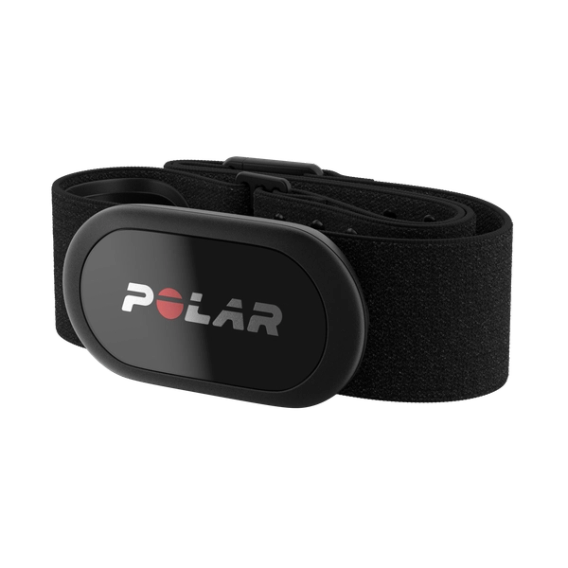
Polar H10 Review - JoyVelo.com
In a 5-activity study with 10 participants, the Polar H10 achieved 99.6% signal quality vs 94.6% for the Holter ECG monitor — the traditional medical reference. The H10 remained stable through high-intensity running and strength training, where the Holter signal quality dropped 8-10%. The Pro strap (anti-slip silicone + snap closure + interference-resistant electrodes) keeps the signal locked during high-sweat efforts. 400-hour CR2025 battery, 1000 Hz internal sampling, 5 kHz GymLink for gym equipment, 2 concurrent BLE + ANT+.
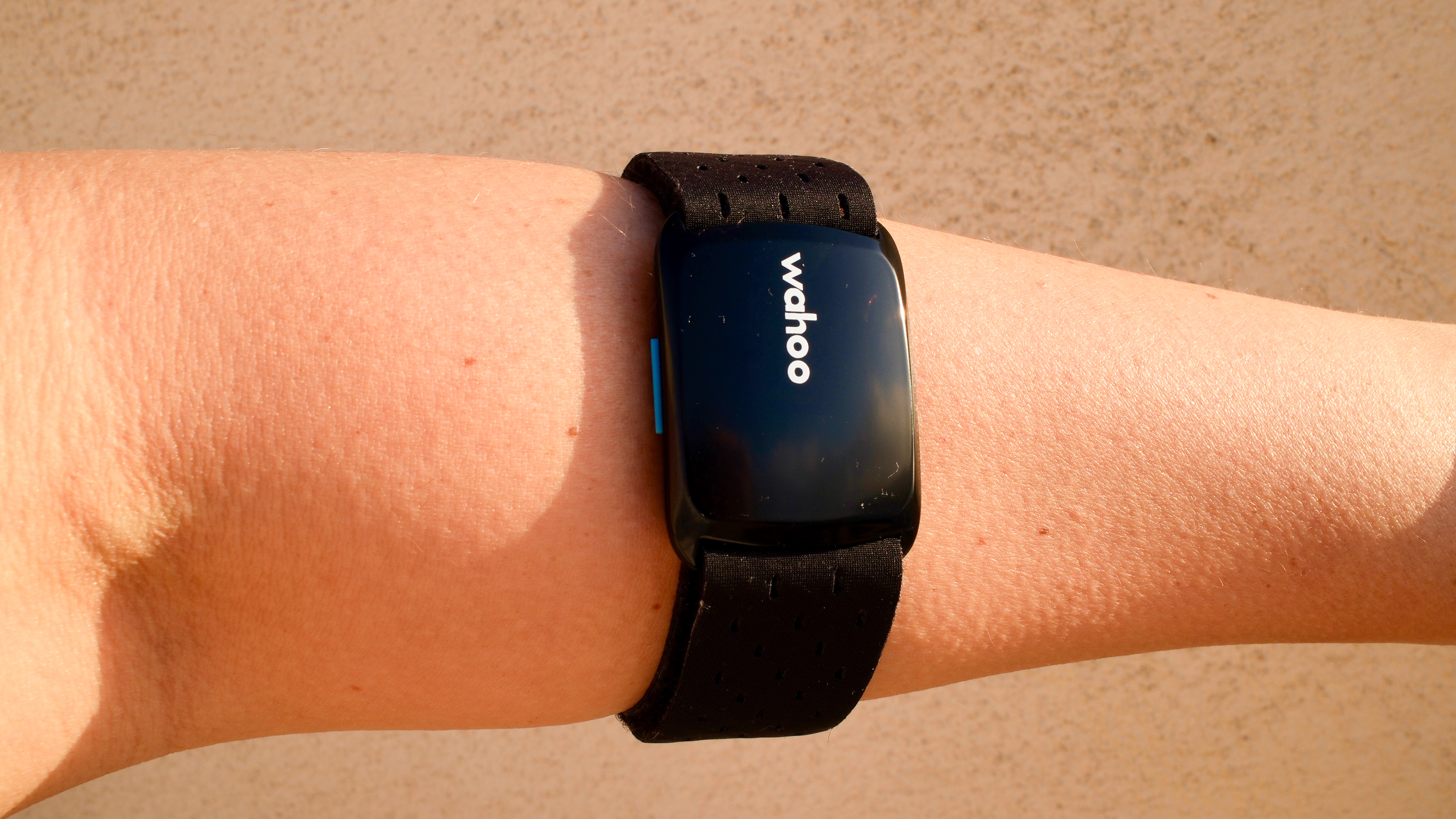
Wahoo TICKR Fit Armband Review - JoyVelo.com
The Wahoo TICKR Fit is an optical arm-band HRM that pairs ANT+ and Bluetooth. Tested against the Polar H10 reference.
Garmin HRM 200 Review - JoyVelo.com
The Garmin HRM 200 is a 2026 chest strap that replaces the 6-year-old HRM-Dual. Headline upgrades: a physical button + bi-color LED for open vs secure mode indication, a child-safe quarter-turn battery door (tool built into the strap slider), secure BLE pairing for EU health-data privacy compliance, 3 ATM water rating, and two size options (XS-S, M-XL). Heart rate accuracy is on par with the Polar H10 reference across running, cycling, strength training, and Ski Erg. No onboard recording, no running dynamics. $79 USD ($20 premium over HRM-Dual).
Garmin HRM 600 Review - JoyVelo.com
The Garmin HRM 600 is a premium ECG chest-strap HRM with rechargeable Li-ion (2 months at 1 hr/day), detachable sensor pod (machine-washable strap), step speed loss and ground contact balance, secure BLE pairing, and on-board activity recording. Matches Polar H10 within ±1 bpm. 5 ATM water rating. $169.99.
Garmin HRM-Dual: The $69 Chest Strap That Sets the Bar
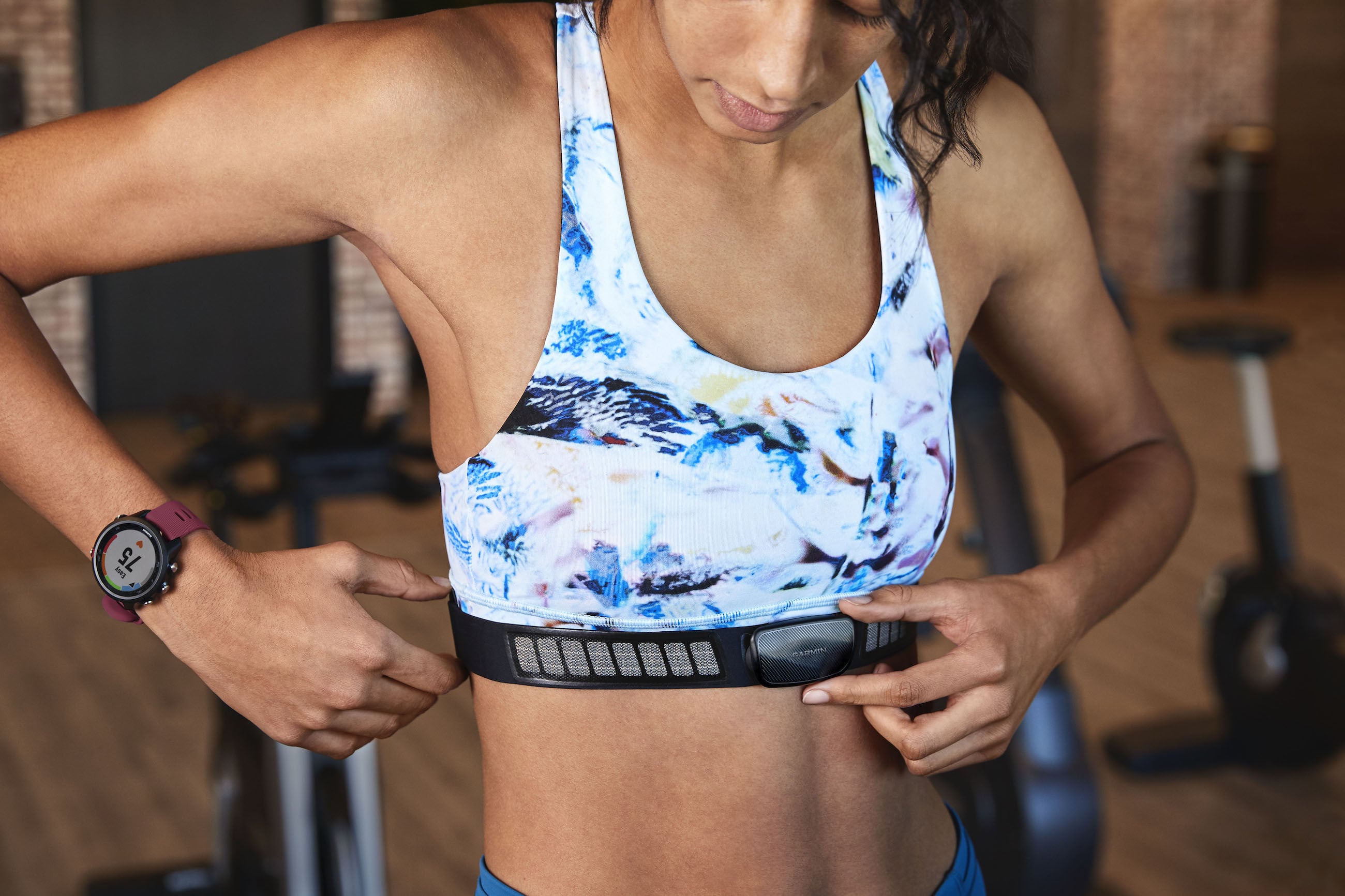
Garmin's entry-level dual-protocol chest strap delivers ECG-accurate heart rate over both ANT+ and Bluetooth. We tested it head-to-head against the Wahoo Trackr, Polar H10, and Garmin's own HRM Pro Plus to find out who should buy which.
Wahoo Trackr Heart Rate Monitor Review - JoyVelo.com
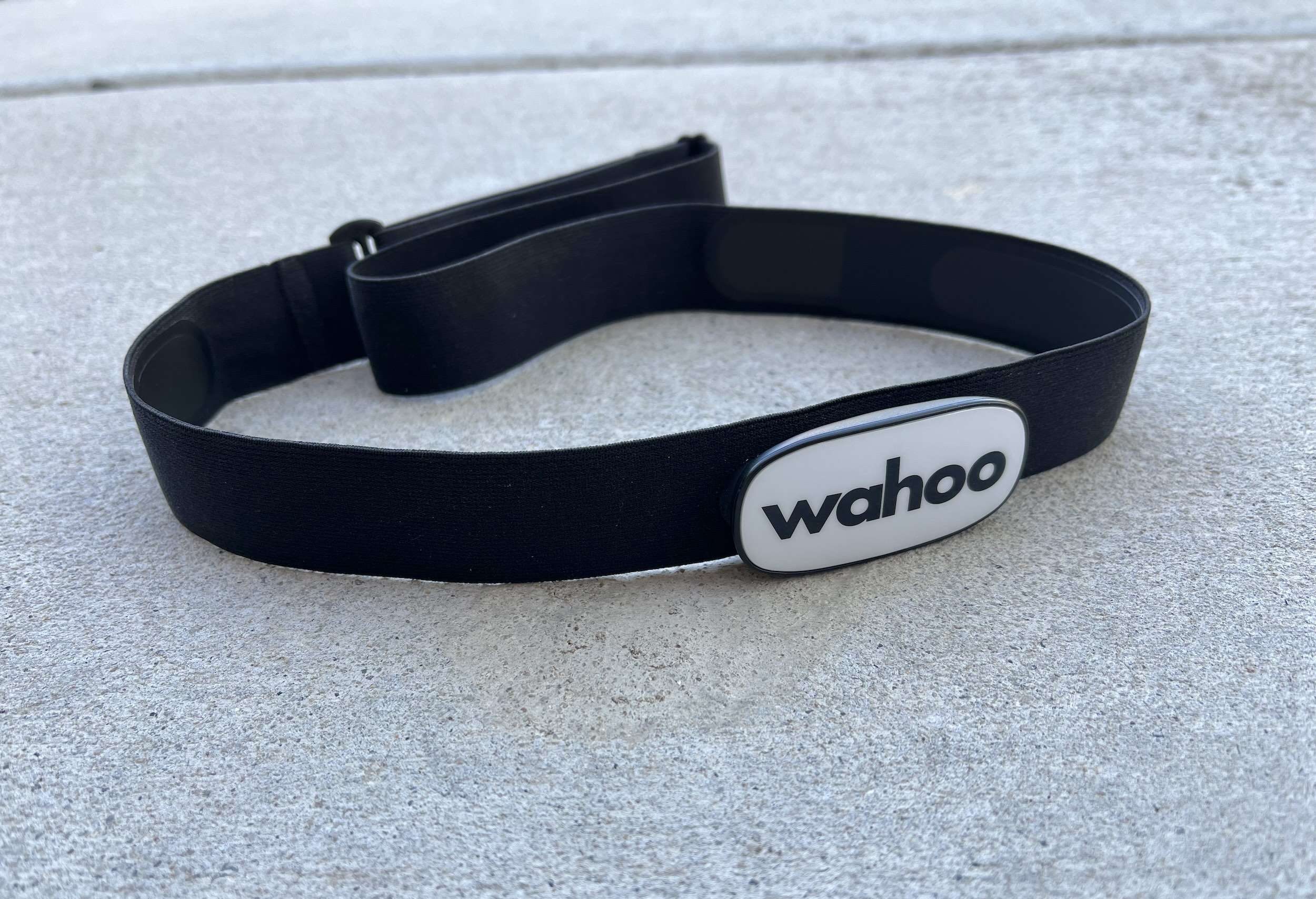
Wahoo’s first new HRM since 2021 adds onboard memory, 100-hour battery life, and a sub-$90 price tag that undercuts Garmin.
Verify with JoyAnalyze
Upload your heart-rate data to JoyAnalyze and sync Polar Verity Sense: The Optical Armband That Replaces the OH1 with a reference strap — drift curves, HR drift over time, and pairing latency analysis.
Open multi-file compare in JoyAnalyzeSee how this fits you
The Polar Verity Sense: The Optical Armband That Replaces the OH1 is one option. Compare it side-by-side with the other Heart Rate Monitorsin our database.