Favero Assioma PRO MX: 5,000 km Later, Our New SPD Baseline
The PRO MX is the SPD version of the Pro spindle — mountain bike, gravel, cyclocross. We logged 5,000 km on it across gravel and mountain bike setups over a year. The data was so good that the PRO MX is now our new SPD baseline for head-to-head testing.
Exceptional core performance at this price point
$APPEALS
90.0/100
Price
€714 + tax (~$789 USD)
$APPEALS Performance Radar
8-axis 10-point scoring (P-A-P-P-E-A-L-S). Per-category weighted.
$APPEALS Score
90.0 / 100
- Price:
- Pricing competitiveness within the category, value retention, total cost of ownership
- Availability:
- Channel coverage, supply stability, after-sales service accessibility
- Packaging:
- Industrial design, build finish, accessory completeness, unboxing experience
- Performance:
- Category-defining core performance — accuracy, power, range, speed, sensitivity
- Ease of Use:
- Setup difficulty, daily-use UX, app quality, learning curve, configurability
- Assurance:
- Build durability, water/dust rating, warranty policy, long-term reliability
- Life Cycle:
- Battery life, consumable cost, firmware support, residual value, repairability
- Social:
- Brand prestige, WorldTour adoption, professional rider endorsement, community
Hardware Spec Sheet
22/22 fields filled (100%) · Power MetersBasic Info
- Brand
- Favero
- Model
- Assioma PRO MX2
- Release Year
- 2024
- Price
- €714 + tax (~$789 USD)
- Weight
- 191.4 g per pedal (383 g per set, excluding cleats)
- Warranty
- 2 years
General
- PM Type
- Pedal-based strain gauge
- Mount Location
- Pedal (SPD-SL compatible)
- Single / Dual
- Dual-sided
Accuracy
- Accuracy
- ±1% power, 0–3,000 W range, ±1% cadence 10–250 RPM
- Power Range
- 0-3000 W
- Sample Rate
- 1 Hz
- Temp-Stable Calibration
- Yes
Features
- L/R Balance
- Yes
- Torque Effectiveness
- No
- Platform Center Offset
- Yes
- Auto-Calibrate
- No
Battery Life
- Battery
- Rechargeable Li-ion, 60 h claimed (160 h with v7.09 firmware)
Connectivity
- Bluetooth
- Yes
- ANT+
- Yes
Compatibility
- Compatibility
- Multi-brand
Physical
- Water Rating
- IP67
The PRO MX is the lightest SPD power-meter pedal on the market, with the same Pro spindle accuracy as the rest of Favero’s Pro line. After 5,000 km on gravel and mountain bike setups over a year, our conclusion is that it is the new SPD baseline for our head-to-head testing.
Pros
- Lightest SPD power-meter pedal on the market at 191.4 g per pedal — no compromise to standard 53 mm Q-factor.
- IP67 rating means it survives rain, mud, and pressure-washing—No squeaks, no seal failures after 5,000 km of mixed-terrain use.
- Same Pro spindle accuracy and IAV cycling dynamics as the rest of the Favero Pro line: ±1% power, ANT+ + 3× Bluetooth, full cycling dynamics suite.
Cons
- Charging still uses a magnetic clip with micro-USB on the spindle end — a USB-C update would be a real-world improvement.
- 11.2 mm stack height is a touch taller than a standard SPD pedal — noticeable on bikes with a low BB.
- No automatic zero-offset; manual calibration is required on first install and between bike swaps.
On this page (7 sections)
The Assioma PRO MX is Favero’s SPD pedal in the Pro spindle line. Internally it shares the same electronics package as the PRO RS and PRO RL, with a slightly taller stack height and a different pedal body. We have been riding the PRO MX since April 2023 — over 5,000 km across both a gravel bike and a mountain bike, in every condition from dry summer dust to wet winter mud. The data has been consistently clean, and we now use the PRO MX as our SPD baseline for head-to-head testing.
TL;DR
The PRO MX is the lightest SPD power-meter pedal on the market, with the same ±1% accuracy and IAV cycling dynamics as the rest of the Pro line. After 5,000 km of mixed gravel and mountain bike use, including rain, mud, and pressure-washing, the pedals have shown no squeaks, no seal failures, and no calibration drift. We are now using the PRO MX as our new SPD baseline for head-to-head testing.
Unboxing & Design
Same Favero packaging as the rest of the Pro line. Inside the box: pedals, a magnetic charge pod for each side, a micro-USB cable, a small bag of Shimano SM-SH51 SPD cleats, mounting hardware, four pedal washers for carbon-crank installations, and the greasing tool. The pedals are clearly marked left / right on the platform, with a small notch on the left-hand spindle to confirm the orientation.
The PRO MX uses the same sealed-cartridge Pro spindle as the PRO RS and PRO RL, with all electronics, battery, and sensors contained inside the spindle body. The pedal body itself is Favero’s own SPD-compatible design, manufactured in Italy. Two needle-roller bearings per pedal, 53.2 mm Q-factor (we measured it ourselves — it is not in the official spec sheet), and 11.2 mm stack height. The replacement pedal body is €49 + tax per side, so swapping between SPD and SPD-SL bodies (using the PRO RS or PRO RL pedal bodies on the same spindle) is realistic and cheap.
Setup & Installation
Installation requires a 15 mm open-ended wrench and 40 Nm of torque on the spindle threads. The Favero app walks through activation, firmware check, and zero-offset calibration on first install. For carbon cranks, the included pedal washers are required — not optional. We recommend a thin smear of grease on the threads, both for easier removal at the first re-grease and to avoid creaks.
After a firmware update, the app will step you through a manual zero-offset calibration. This is required, not optional — the pedals will not report power until they are calibrated. Activation is also required; pedals ship in travel mode and will report 0 W until activated. The whole setup process takes about 5 minutes if you have the app installed and the firmware is current.
Real-World Data
We have run the PRO MX on the test bench for over a year now — our reference dataset is 70 individual files. We will summarise the headline findings.
Indoor ERG (Direto XR + Quarq AXS + PRO MX): steady-state 183 / 185 / 186 W — within 1% of the Quarq spider. Step test 212 / 215 / 215 W. Sprint into overs-and-unders 223 / 227 / 226 W. Nothing to report on the Pro spindle; the data simply works.
Outdoor mountain bike (PRO MX + power2max NGeco): 8-minute hard effort 333 / 325.9 / 326.9 W. 30/30s overs and unders 240 / 240 W. The data is so clean we could not find anything to dig into.
Outdoor gravel (PRO MX + Quarq AXS): one ~30-minute steady-state at 185 / 186 W. A short section in the middle of the ride showed a 10 W offset, which resolved after a manual zero of the Quarq — the PRO MX was the more stable of the two, with no shift over the full 3h 15 ride.
Crit race (PRO MX + Quarq AXS): steady-state 236 / 239 W on a hilly course, sprint 1,159 / 1,180 W. The PRO MX is slightly more responsive to the spike on sprint start; the Quarq trails by 1–2 W at the peak but catches up in the average.
Long-Term Use
Over 5,000 km, the PRO MX has been faultless. No squeaks from the pedal bodies or the cleats — this is a real achievement on an SPD pedal, where shoe / pedal interface squeaks are common. No seal failures, no drift in the calibration, no impact damage. The pedals survived a 20% grade climb in heavy rain without issue. We have not had to re-grease within the test period, and the pedal bodies showed no visible play at 5,000 km.
The IAV cycling dynamics — power phase, peak power phase, platform center offset, torque effectiveness, pedal smoothness, rider position — are reported in real time on the Favero app’s live tab. Peak power phase responds as expected to gradient changes: pointing up on a 3% climb, dropping to the floor when out of the saddle. Platform center offset is the most useful metric on a mountain bike — if your PCO is consistently off-centre, your cleat position needs adjusting.
Competitor Comparison
SRAM AXS power meter spiders (€550 + crank) are the most direct competitor in the mountain bike space. They are accurate but lack left/right balance, and the spindle-based design has a slightly taller stack height than the PRO MX. Quarq DZero (€600 + crank) is the long-standing reference; the data quality is comparable but Quarq is heavier and more expensive. Garmin Rally XC (€1,099) is the SPD alternative in the Rally range; it is heavier than the PRO MX and the stack height is taller. The PRO MX is the lightest and most accurate SPD pedal power meter we have measured.
Final Verdict
The PRO MX sets a new standard for SPD power-meter pedals. Light, accurate, IP67, no squeaks, and now our new SPD baseline. The price (€714 + tax) is competitive with the Assioma DUO but you get the full IAV cycling dynamics suite. The only real improvement we would ask for is USB-C charging on the spindle end instead of the magnetic micro-USB adapter. We rate the PRO MX a strong buy.
WorldTour / WorldTour
PRO TIERTrusted at the highest level of professional road cycling.
Related reviews
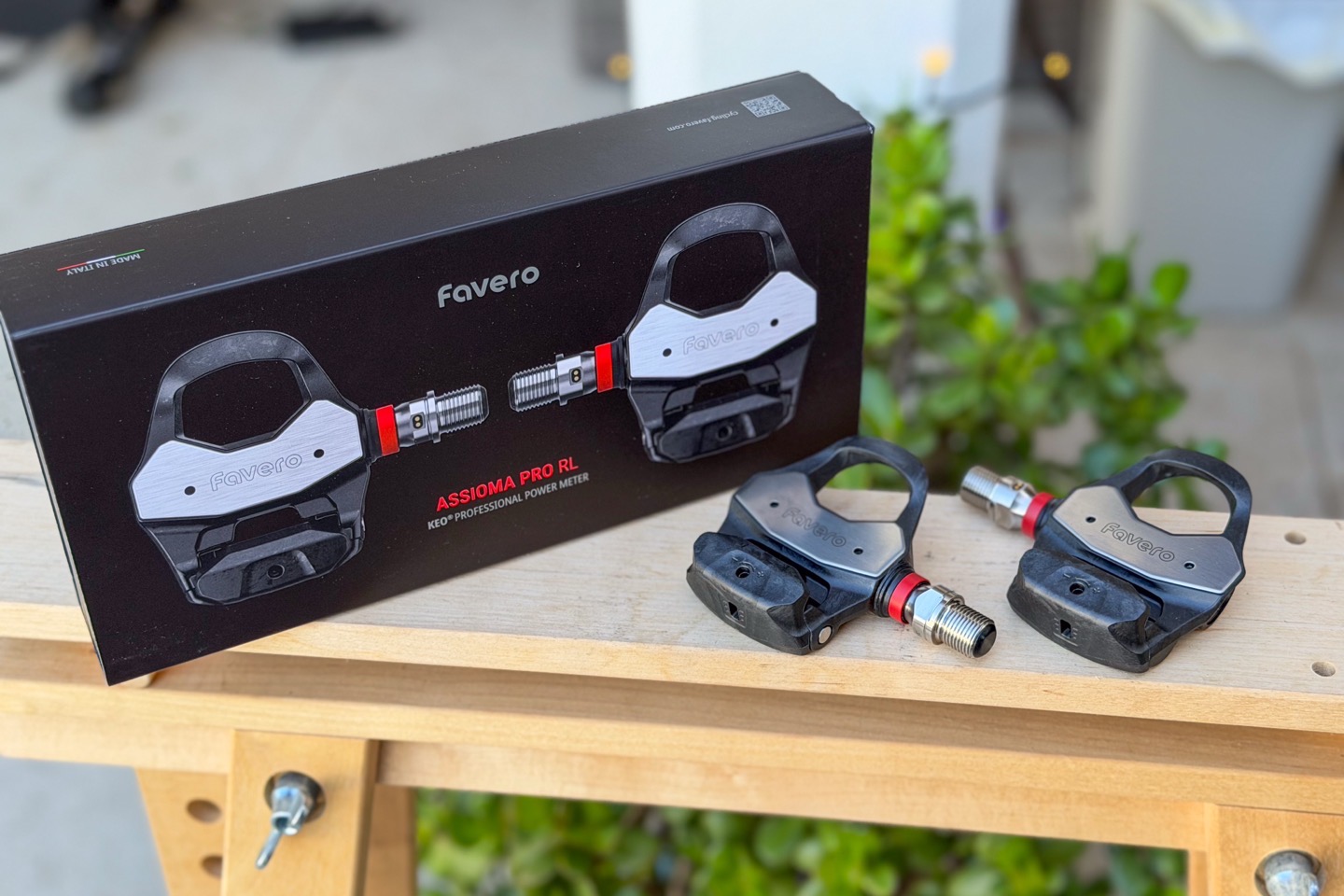
Favero Assioma PRO RL: A Better Look Pedal Than Look Itself
Favero’s Look Keo compatible Pro spindle. 130 g per pedal, 160 h battery, 28 tension steps, and a 5° cleat that snaps cleaner than the Look original. Two months of testing and we agree with the marketing line.
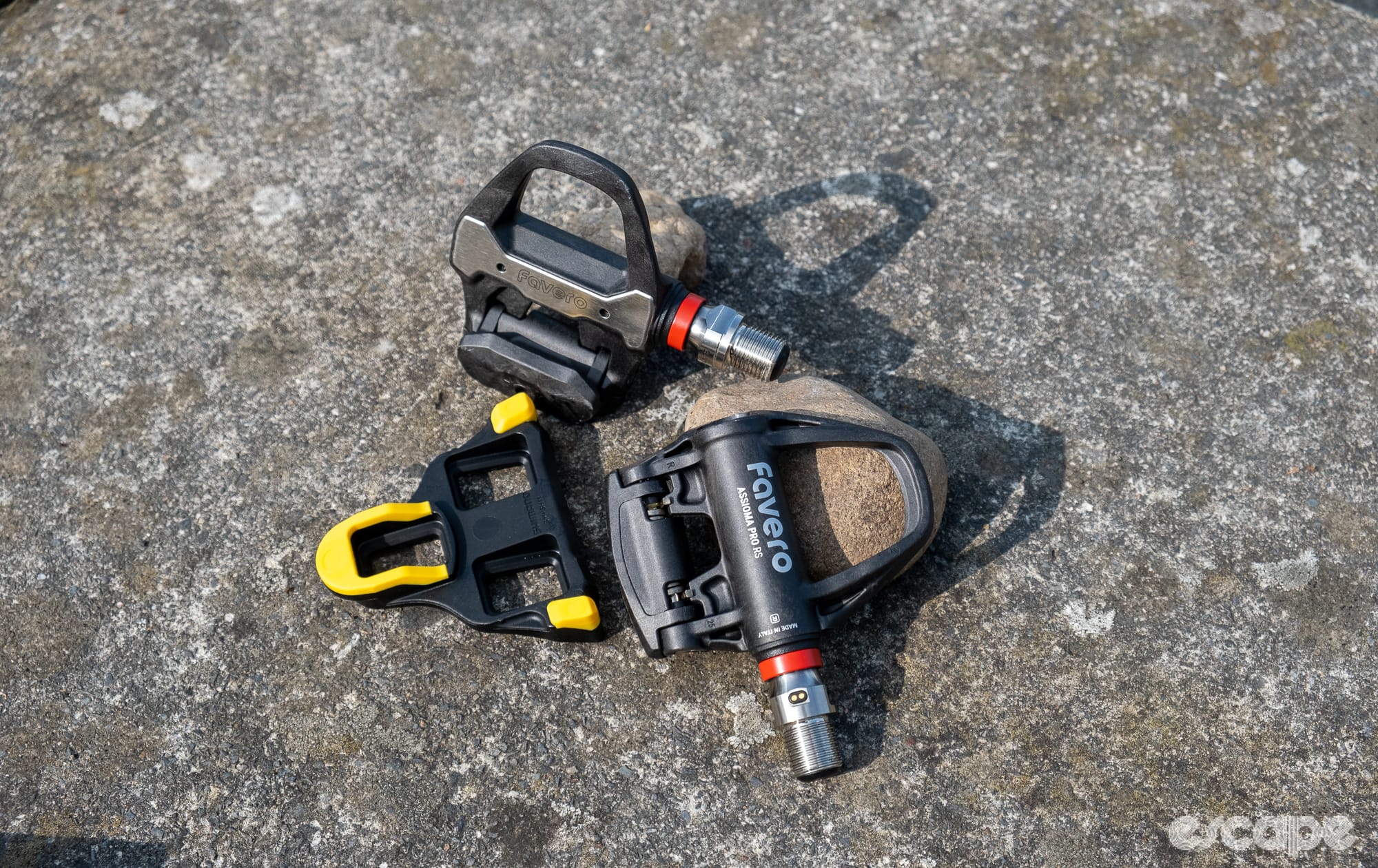
Favero Assioma PRO RS: The Lightest Dual-Sided Power Pedal Yet
The PRO RS is Favero’s dual-sided road pedal — same Pro spindle as the PRO MX, but in a Shimano SPD-SL body. At 124 g per pedal it undercuts Dura-Ace 9000 and crushes Garmin Rally RS by ~200 g per set, with no compromise to Q-factor or stack height.
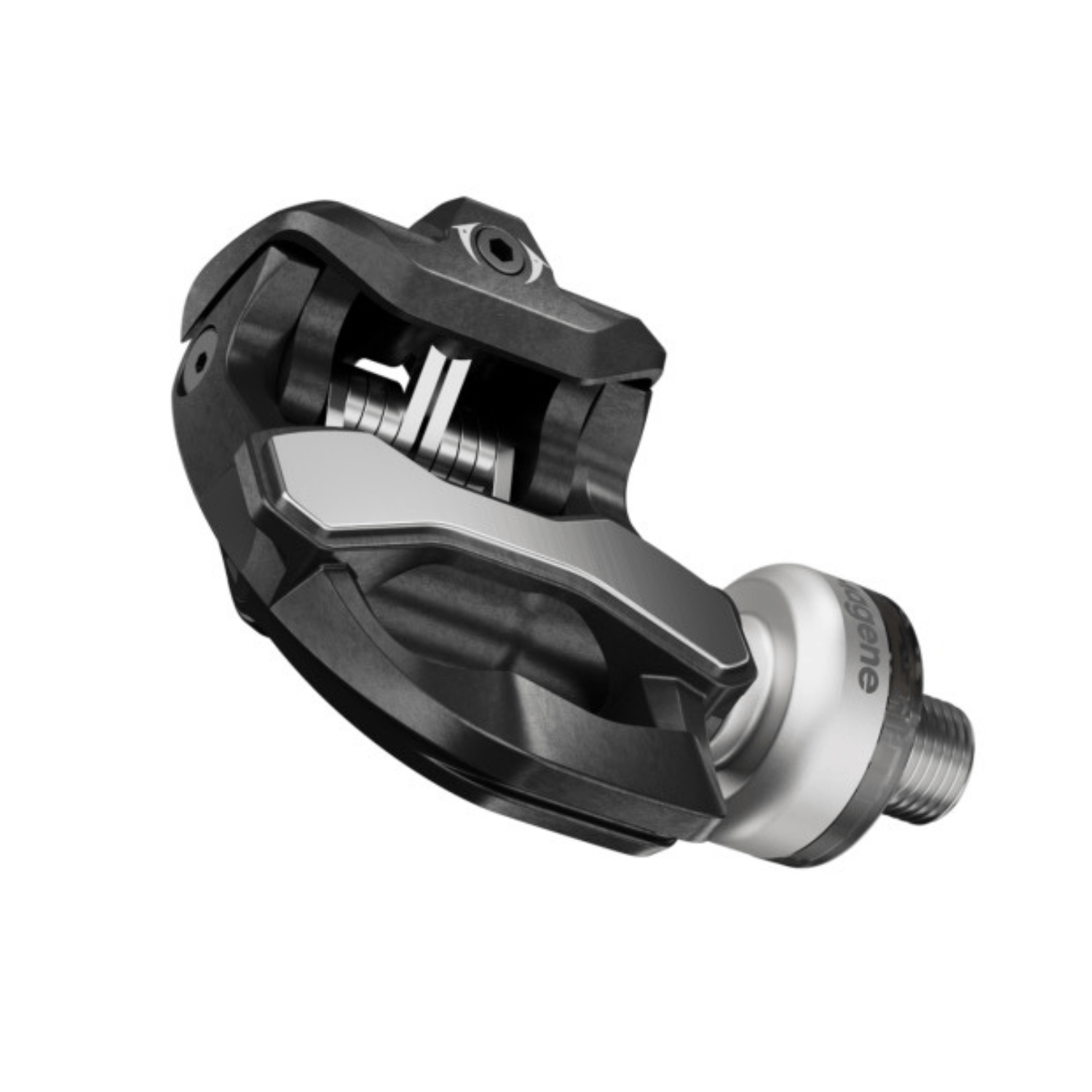
Magene P715 SPD-SL: $499 Dual-Sided, With a Phase-Angle Bug
Our two-month test of the Magene P715 SPD-SL found dual-sided power within 2-3W of a Power2Max NGeco reference across every dataset, with 120h battery, IPX7 sealing, 322g measured weight per pair. The catch: a vendor-confirmed pedal-phase bug that locks start angle at 0° (fix promised by end of April 2026). At $499.
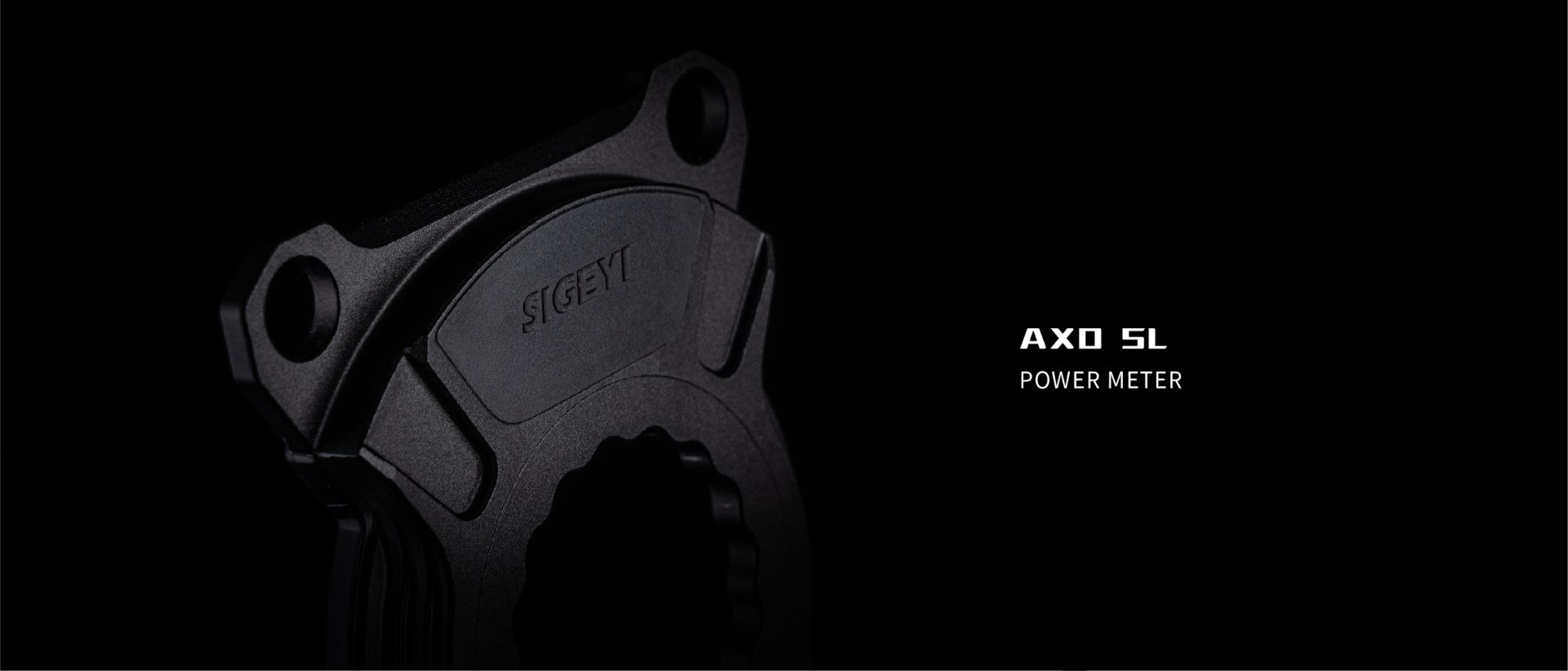
SIGEYI AXO SL Spider Power Meter: Sprint-Cadence Bug, Skip
Our first-ride test of the SIGEYI AXO SL spider reproduced a sprint-cadence-sensor failure that renders the power data unusable under hard acceleration: the cadence sensor drops to zero under >1000W load, and the power calculation follows it to garbage. Same failure mode that plagued early Garmin Rally 200 / Vector 3 pedal PMs. 79g, $376 USD. Skip.
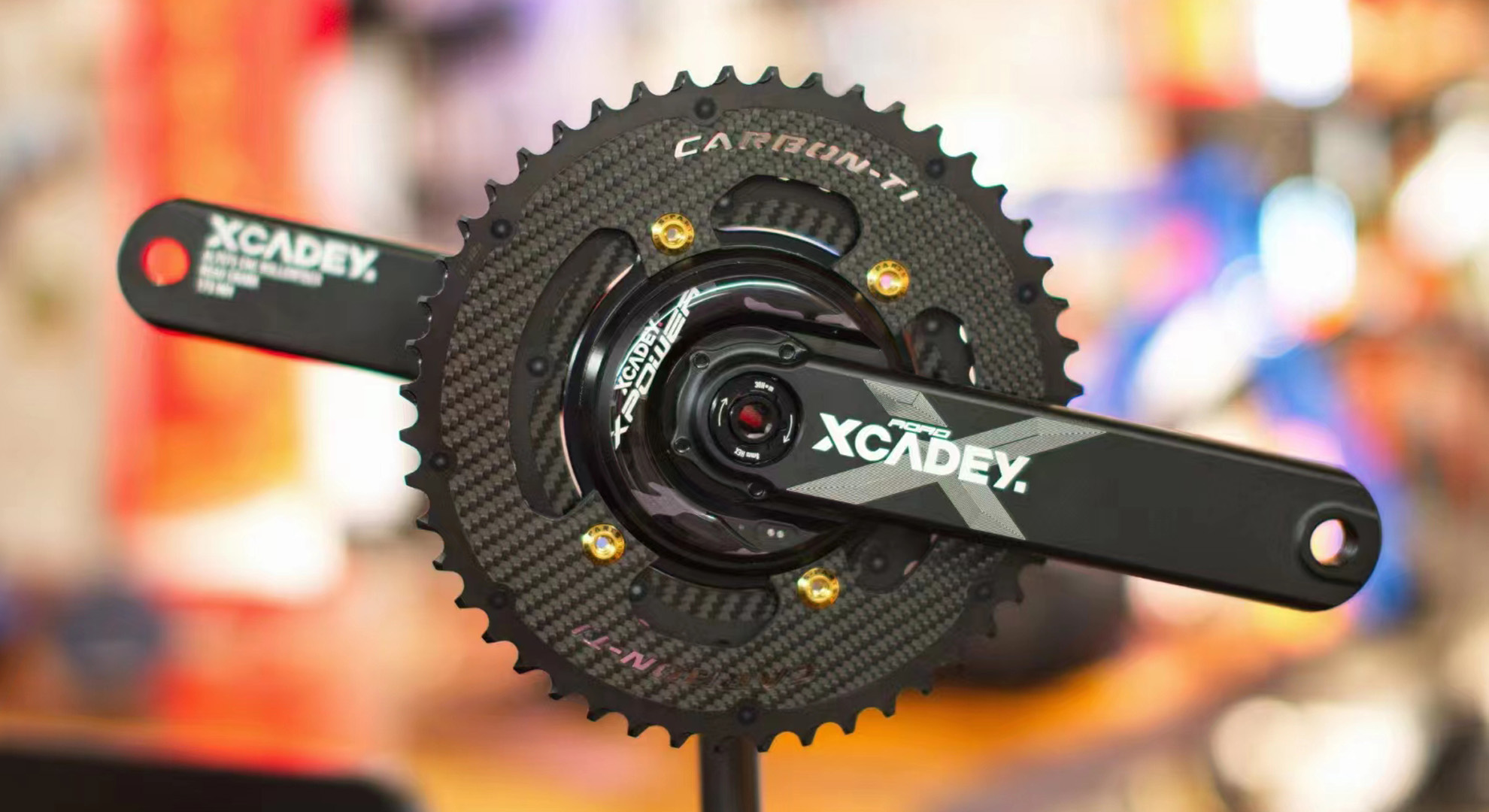
XCadey X-Power S GEN 2: 2022 Spider with 2025-Era Data Issues
Our two-round test of the second-generation XCadey X-Power S GEN 2 spider found it can drift 18W mid-ride, lose sprint peaks to a cadence dropout, and shift zero offset on every gear change — a power meter that passes the spec sheet on paper and fails the data-integrity check in practice.
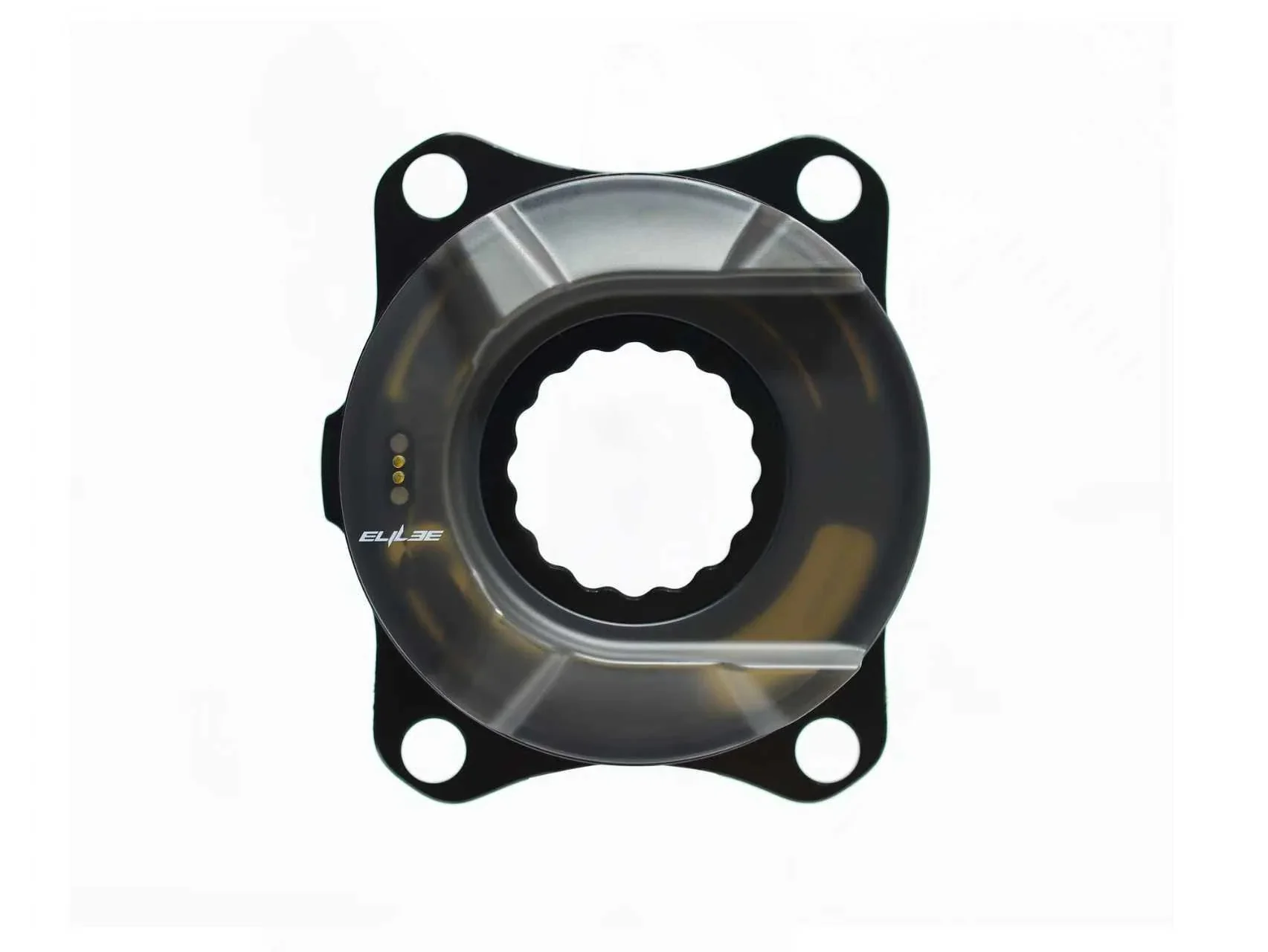
Elilee EK01 Spider Power Meter: 1kW+ Sprint Collapse, No Vendor Fix
Our two-unit cross-test of the Elilee EK01 spider — aluminum first, then the $1200 AUD carbon as a control — reproduced the same catastrophic failure on both: 4-5 second power/cadence dropout under sprint, residual-torque effect requiring manual re-zero after every hard effort. We paused testing and sent data to the vendor; no fix committed. Skip.
Verify with JoyAnalyze
Upload your power-meter data to JoyAnalyze and stack Favero Assioma PRO MX: 5,000 km Later, Our New SPD Baseline against other meters — DTW-aligned power curves, RMS error, drift, and Bland-Altman stats.
Open multi-file compare in JoyAnalyzeSee how this fits you
The Favero Assioma PRO MX: 5,000 km Later, Our New SPD Baseline is one option. Run the JoyFit assessment to see whether it actually matches your body and riding style — or compare it side-by-side with the other Power Metersin our database.
Community
Discuss this review · Pro members can rateComments
(0)Sign in above to leave a comment.
Loading comments…
Pro Ratings
PROLoading…Sign in above to rate this product on the 8-axis $APPEALS framework.