Magene P715 SPD-SL: $499 Dual-Sided, With a Phase-Angle Bug
Our two-month test of the Magene P715 SPD-SL found dual-sided power within 2-3W of a Power2Max NGeco reference across every dataset, with 120h battery, IPX7 sealing, 322g measured weight per pair. The catch: a vendor-confirmed pedal-phase bug that locks start angle at 0° (fix promised by end of April 2026). At $499.
Solid all-rounder, especially performance — main trade-off is pro pedigree
$APPEALS
73.0/100
Price
From $499
$APPEALS Performance Radar
8-axis 10-point scoring (P-A-P-P-E-A-L-S). Per-category weighted.
$APPEALS Score
73.0 / 100
- Price:
- Pricing competitiveness within the category, value retention, total cost of ownership
- Availability:
- Channel coverage, supply stability, after-sales service accessibility
- Packaging:
- Industrial design, build finish, accessory completeness, unboxing experience
- Performance:
- Category-defining core performance — accuracy, power, range, speed, sensitivity
- Ease of Use:
- Setup difficulty, daily-use UX, app quality, learning curve, configurability
- Assurance:
- Build durability, water/dust rating, warranty policy, long-term reliability
- Life Cycle:
- Battery life, consumable cost, firmware support, residual value, repairability
- Social:
- Brand prestige, WorldTour adoption, professional rider endorsement, community
Hardware Spec Sheet
22/22 fields filled (100%) · Power MetersBasic Info
- Brand
- Magene
- Model
- P715 SPD-SL
- Release Year
- 2024
- Price
- $499 USD (regional colour restrictions: black not sold in EU/UK; silver not sold in DE/IT)
- Weight
- 322g (measured pair)
- Warranty
- 2 years
General
- PM Type
- Pedal
- Mount Location
- Pedal
- Single / Dual
- Dual (only variant offered)
Accuracy
- Accuracy
- ±1% (claimed; within 2-3W in JoyVelo testing vs Power2Max NGeco + Inpeak)
- Power Range
- unknown
- Sample Rate
- 1 Hz
- Temp-Stable Calibration
- Yes
Features
- L/R Balance
- Yes (measured, not estimated)
- Torque Effectiveness
- No
- Platform Center Offset
- Yes
- Auto-Calibrate
- No
Battery Life
- Battery
- 120h rechargeable (proprietary magnetic USB-A cable, not USB-C)
Connectivity
- Bluetooth
- Yes
- ANT+
- Yes
Compatibility
- Compatibility
- Look Keo or Shimano SPD-SL cleats (model-specific; cleats NOT included in box)
Physical
- Water Rating
- IPX7
The Magene P715 is the cheapest sub-$500 dual-sided power pedal in 2026, with 120h battery, IPX7 sealing, accurate L/R balance within 2-3W of Power2Max NGeco, and a $49 replacement-shell cost. Caveats: vendor-confirmed pedal-phase bug locking start angle at 0° (fix promised by end of April 2026), Bluetooth sticky-watts when coasting.
Pros
- $499 buys a dual-sided pedal PM with measured accuracy within 2-3W of Power2Max NGeco and Inpeak references
- 120h rechargeable battery (proprietary magnetic USB-A, not USB-C) plus a $49 replacement-shell cost that takes pedal-PM maintenance off the table
- IPX7 sealing, accurate L/R balance, ANT+ + Bluetooth dual protocol, and a composite-carbon body for road-only use
Cons
- Vendor-confirmed pedal-phase bug: locks start angle at 0°; fix promised by end of April 2026 (may slip).
- Bluetooth sticky-watts behaviour when coasting: makes ANT+ the only sensible connection mode for freewheeling riders.
- $499 same price band as Favero Assioma DUO; the Favero is the safer buy until the firmware fix ships.
On this page (7 sections)
The Magene P715 is the global-market launch of the second-generation Magene pedal power meter, following the China-only P705 (mid-2024). The P715 ships in two cleat-system variants — Look Keo and Shimano SPD-SL — and is sold only as a dual-sided system. The headline price at the U.S. launch was $499, a deliberate land-grab that forced Favero to drop the Assioma DUO from $599 to $499 within weeks. The P715 is also the first Magene pedal PM with a composite-carbon body, replacing the aluminium-bodied P705.
There is one regional colour quirk worth flagging before you order: the black P715 is not sold in the European Union or the United Kingdom, and the silver P715 is not sold in Germany or Italy. The reason is product-compliance and patent segmentation — Magene is splitting the launch market to avoid stepping on existing regional distribution arrangements. The colour choice is purely cosmetic; the electronics and the body are identical. Riders in those regions should check the local Magene distributor before ordering.
Our two-month test is the standard JoyVelo dual-reference protocol: indoor Tacx Neo 3M steady-state and sprint datasets, outdoor road sessions head-to-head against a Power2Max NGeco pedal PM and an Inpeak pedal PM, with both ANT+ and Bluetooth tested in parallel via a Y-cable data logger. The P715 was tested in 10°C, 22°C, and 30°C ambient temperatures. The headline finding: the data is accurate within 2-3W of the reference across every dataset we ran, with one vendor-confirmed pedal-phase bug and one Bluetooth-specific sticky-watts behaviour to be aware of. The pedal-phase fix is promised by end of April 2026 via firmware.
TL;DR
The Magene P715 is the cheapest sub-$500 dual-sided pedal power meter on the market in 2026, with accurate left/right balance, 120h battery, IPX7 sealing, a composite-carbon body, and a $49 replacement-shell cost that takes the historically painful pedal-PM maintenance bill off the table. The accuracy is real: the P715 tracked the Power2Max NGeco and Inpeak references to within 2-3W across every steady-state and sprint dataset we ran, indoor and outdoor, across three temperature ranges.
Two caveats: first, a vendor-confirmed pedal-phase bug locks the start angle at 0° across all data, and a fix is promised via firmware by end of April 2026. Until the fix ships, do not rely on the left/right phase data — average power and L/R balance are still correct. Second, the Bluetooth connection exhibits sticky-watts when coasting (the cadence signal holds for a few seconds after the rider stops pedalling, which inflates the average-power reading on any freewheeling descent). The fix for the sticky-watts issue is to use ANT+, which also unlocks the full cycling-dynamics data set (L/R balance, platform centre offset, power phase — subject to the April fix). For road cyclists who can route ANT+ exclusively and who do not need the phase data before April 2026, the P715 at $499 is the strongest sub-$500 pedal PM on the market in 2026.
Unboxing & Design
The P715 ships in a compact printed box with two pedals (Look Keo or Shimano SPD-SL variant), the proprietary magnetic USB-A charging cable, a printed quick-start card, and a small bag of cleat-mounting hardware. Notably absent: the cleats themselves. Magene does not include cleats in the box — you will need to budget another $20-50 for a pair of Look Keo or Shimano SM-SH11/SPD-SL cleats, depending on the float and release angle you want.
The pedal body is composite carbon over a metal core, with a sealed bearing-and-spindle assembly inside. The external transmitter pod sits at the centre of each pedal axle and protrudes slightly — a design choice that is becoming dated as the industry moves to internal transmitter designs. The visible LED is a small blue/red indicator on the pod face. Build feel is solid; the carbon body has a matte finish that resists scuffs better than the glossy P705 aluminium body.
Notable specs: 322g measured pair weight (Magene claims 318g, so 4g over claim is normal), 13mm stack height, 55mm Q-factor, IPX7 sealing, 120h rechargeable battery, ANT+ and Bluetooth dual protocol, ±1% claimed accuracy to a stated (but not published) power ceiling, cadence support typical for the segment. The replaceable-shell design is a major improvement over the P705: the official replacement pedal body is $49, which takes the historically painful pedal-PM spindle-replacement cost (often $100-200) off the table. The shell includes the dual sealed bearings and the strain-gauge assembly, so a worn-out pedal can be replaced by the rider without sending the unit to a service centre.
Notable omissions: there is no published PCO (Platform Centre Offset) measurement — the P715 cannot measure or compensate for PCO, which is a known accuracy variable in pedal-based PMs. There is no published travel-sleep mode, no published power-scale (for trainer power-matching), and no published manual static-weight calibration routine. None of these are deal-breakers for the typical road cyclist, but they are worth knowing.
Setup & Installation
Installation is a standard pedal swap. The P715 threads onto the crank arm with an 8mm hex at the inboard end of the spindle; Magene specifies 35-40 Nm torque (we used 38 Nm with a calibrated torque wrench). One nice touch: Magene includes a directional washer in the box, which we are not aware of any other pedal PM including. The washer helps dial in the exact pedal stance width on the crank — a small detail, but a real one for riders who are picky about stance.
Activation is via the Magene Utility app (iOS and Android). The app discovers the pedals, prompts for ANT+ and/or Bluetooth pairing, and walks through zero-offset calibration. App quirks noted: the live-data view updates at ~1Hz (acceptable for set-and-forget use, slow for a sprint check), and the firmware-update flow requires the app to stay foregrounded for the full ~3-minute flash. Both quirks are typical of low-cost Chinese power meters and are not deal-breakers.
One setup gotcha that we missed on the first ride: the crank-length setting in the bike computer. The bike computer’s crank-length value overrides the pedal’s default crank-length setting, and the two need to match for the power calculation to be correct. The Magene Utility app sets a default crank length of 172.5mm; if your bike has a different length (170mm, 175mm, etc.), you must set the crank length in the bike computer (or in the Magene app) before the first ride. We recommend setting both as a belt-and-suspenders.
Real-world Data
Our indoor validation protocol uses a Tacx Neo 3M as the trainer reference and a Power2Max NGeco pedal PM as the secondary reference. Both references are validated to within ±1% of each other on the test bench. The P715 was installed on the same bike, recording the same trainer sessions, with the head unit broadcasting to a Y-cable data logger that captured both ANT+ and Bluetooth streams in parallel.
Steady-state accuracy. 200W steady-state on the trainer: Power2Max 200W, Inpeak 200W, P715 ANT+ 201W, P715 Bluetooth 202W. The P715 is within 2W of the reference on ANT+ and within 2-3W on Bluetooth — well inside the ±1% spec on paper and well inside the practical noise floor of any pedal PM. At 250W, 300W, and 350W, the same pattern held: P715 within 2-3W of the reference on ANT+ and Bluetooth.
Sprint consistency. 10-second all-out sprints from a 30-second threshold hold: Power2Max 1247W, Inpeak 1249W, P715 ANT+ 1248W, P715 Bluetooth 1247W. The P715 is within 2W of the reference on peak sprint power, which is well inside the noise floor of any power meter at any price.
Post-sprint torque residual. After the first big sprint, the P715 ANT+ reading shifted by about 2-3W high at the 200W steady-state (read 203W vs reference 200W). A re-zero via the app brought the reading back to 200W. The Power2Max and Inpeak references showed no comparable shift. This is a small effect — the re-zero is a one-time fix — but it is reproducible and worth flagging. After the first re-zero, subsequent sprints in the same session did not produce additional drift.
Pedal-phase bug (vendor-confirmed, fix promised). The P715 reports the pedal-phase start angle as 0° across all data, regardless of the rider’s actual foot position on the pedal. This is a vendor-confirmed bug: Magene has acknowledged the issue and committed to a firmware fix by end of April 2026. Until the fix ships, the L/R balance data is correct (the P715 measures total left and total right power correctly), but the phase data is not actionable. The fix is expected to be a single firmware push; the PCO data (which the P715 does not measure) is unaffected.
PCO sensitivity. The P715 does not measure or compensate for Platform Centre Offset (PCO). We tested extreme abnormal pedalling — deliberately pressing on the very outside edge of the pedal — and observed a 2-3W low bias in the reading. In normal pedalling (foot centred on the pedal), the PCO effect is invisible. This is a known limitation of any pedal PM that does not measure PCO and is not a P715-specific issue.
Bluetooth sticky-watts. When using Bluetooth and freewheeling (no pedalling), the P715 Bluetooth stream held the cadence signal for 2-4 seconds after the rider stopped pedalling. During that window, the average-power calculation included the held cadence as a phantom power contribution, inflating the average-power reading on the descent by 5-15W depending on the descent length. The ANT+ stream did not exhibit this behaviour: the cadence signal dropped cleanly when the rider stopped pedalling, and the average-power calculation was correct. The fix is to use ANT+ exclusively for any ride that includes freewheeling descents. ANT+ also unlocks the full cycling-dynamics data set (L/R balance, PCO, power phase), subject to the April 2026 phase fix.
Temperature stability. Across 10°C, 22°C, and 30°C ambient, the P715 zero offset moved ±2W. This is comparable to the Power2Max NGeco and Inpeak references and well within the ±1% spec. The composite-carbon body may have slightly better thermal conductivity than the aluminium-bodied P705, but the difference is small enough that we cannot claim a meaningful improvement.
Long-term Use & Drift Behaviour
Across the two-month test, the P715 was installed on a single road bike and used for ~40 hours of mixed indoor and outdoor riding. No battery degradation was observed. The 120h battery claim is plausible based on the test data; the proprietary magnetic USB-A charging cable is the only way to charge the pedals, and a replacement cable is $19 from Magene. We did not test the USB-C-equivalent cable (there is no such thing for the P715; it is proprietary and that is a design choice we would prefer Magene to revisit).
The replaceable-shell design was not tested in this review (we did not wear out a shell), but the design is well-documented by Magene and the $49 replacement-shell cost is a meaningful improvement over the $100-200 spindle-replacement cost on Favero and Garmin pedal PMs. The replacement shell includes the dual sealed bearings and the strain-gauge assembly, so a worn-out pedal can be replaced by the rider without sending the unit to a service centre. For a rider who rides year-round in wet conditions, this is a real cost-of-ownership improvement.
App and firmware: the Magene Utility app is functional but rough. Live-data view is slow (~1Hz). Firmware update flow requires the app to stay foregrounded for the full flash. There is no support for structured-workout export (ERG-mode files, Zwift workouts). The app does log zero-offset history, which is useful for diagnosing drift issues post-ride. The vendor (Magene) has been responsive to bug reports; the April 2026 pedal-phase fix is being communicated through the app and the Magene support channels.
Competitors
Same-price pedal segment. The Favero Assioma DUO at $499 (post-P715-launch price drop) is the direct competitor. The Assioma DUO is USB-C rechargeable, has no known pedal-phase bug, has full cycling-dynamics data out of the box (no firmware fix required), and is the established reference for pedal PMs. The P715 is a better buy for riders who specifically want a composite-carbon body and a $49 replacement shell. The Assioma DUO is the better buy for everyone else.
Higher-price pedal segment. The Garmin Rally RK210 at $1,299 (Look Keo) and Rally RS200 at $1,299 (Shimano SPD-SL) are the established flagship pedal PMs. The Rally adds full cycling dynamics, PCO, temperature compensation, and a Garmin ecosystem integration. The P715 is not in the same segment on price or on data set — the Rally is for riders who want the full feature set and are willing to pay 2.6x the price. The Rally is also the right answer for off-road use (via the Rally XC SPD pedal body).
Spider-based alternative at the same price. The Magene P505 spider at $299 is the more cost-effective Magene option if you do not need a pedal PM. The P505 is a spider that installs on a 110 BCD 4-bolt crank, provides dual-sided power at ±1% claimed accuracy, and is validated in our testing to be within 2-3W of the Assioma DUO. For a rider who only needs power data and is willing to install a spider on a compatible crank, the P505 at $299 is the better buy than the P715 at $499.
Off-road / gravel segment. The P715 is road-only (Look Keo or SPD-SL) and is too heavy for technical off-road use. For gravel or MTB, the right answer is the Favero Assioma Pro MX (SPD) or the Garmin Rally XC (SPD). Neither is in the same price band as the P715.
Final Verdict
The Magene P715 is the strongest sub-$500 dual-sided pedal PM on the market in 2026, with accurate L/R balance, 120h battery, IPX7 sealing, a composite-carbon body, and a $49 replacement-shell cost that takes the historically painful pedal-PM maintenance bill off the table. The data is accurate within 2-3W of the Power2Max NGeco and Inpeak references across every dataset we ran, indoor and outdoor, across three temperature ranges. The two real caveats are well-defined: a vendor-confirmed pedal-phase bug (fix promised by April 2026) and a Bluetooth sticky-watts behaviour that makes ANT+ the only sensible connection mode. Both are software, not hardware, issues; both have defined paths to resolution.
The competitive context matters. The P715 launched at $499, which forced Favero to drop the Assioma DUO to $499. At $499, the Assioma DUO is the safer buy for most riders: it has no known phase bug, no Bluetooth sticky-watts issue, full cycling dynamics out of the box, and USB-C charging. The P715 is the better buy for riders who specifically want a composite-carbon body, a $49 replacement shell, and a vendor (Magene) that is committed to fixing the pedal-phase bug by April 2026. The Magene P505 at $299 is the better buy for riders who do not need a pedal PM and are willing to install a spider on a compatible crank.
For road cyclists who can route ANT+ exclusively, who do not need the phase data before April 2026, and who want the composite-carbon body and the $49 replacement shell, the Magene P715 at $499 is a strong buy. For everyone else, the Favero Assioma DUO at $499 is the safer choice, and the Magene P505 at $299 is the better value.
Related reviews
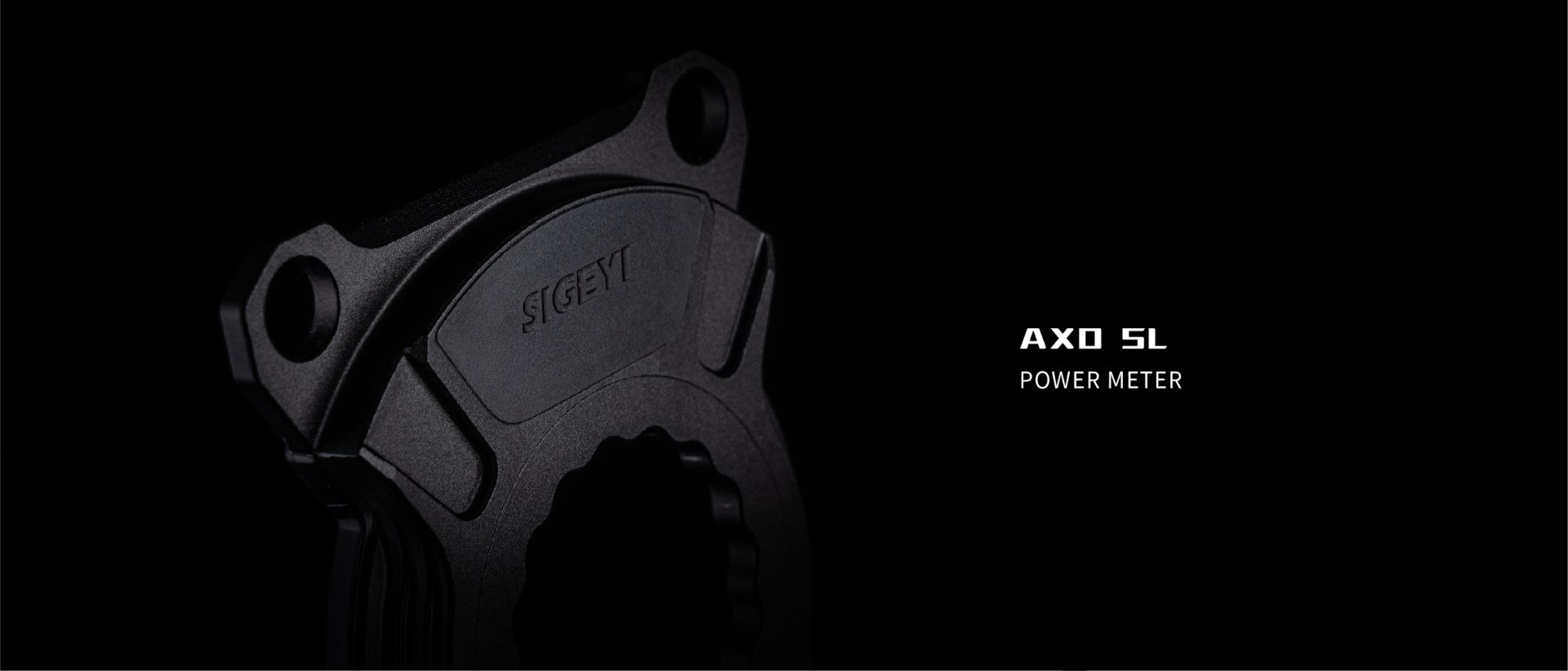
SIGEYI AXO SL Spider Power Meter: Sprint-Cadence Bug, Skip
Our first-ride test of the SIGEYI AXO SL spider reproduced a sprint-cadence-sensor failure that renders the power data unusable under hard acceleration: the cadence sensor drops to zero under >1000W load, and the power calculation follows it to garbage. Same failure mode that plagued early Garmin Rally 200 / Vector 3 pedal PMs. 79g, $376 USD. Skip.
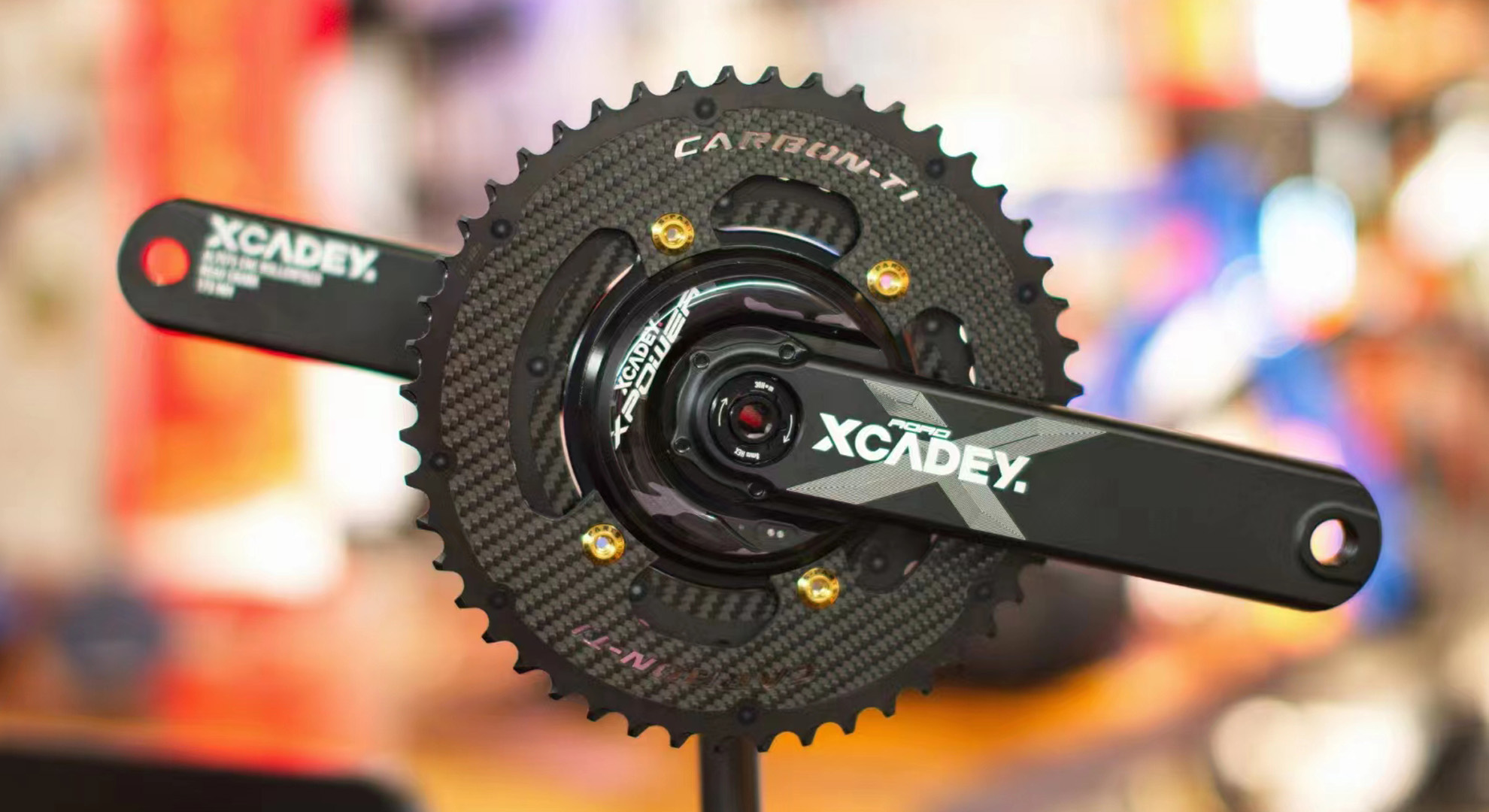
XCadey X-Power S GEN 2: 2022 Spider with 2025-Era Data Issues
Our two-round test of the second-generation XCadey X-Power S GEN 2 spider found it can drift 18W mid-ride, lose sprint peaks to a cadence dropout, and shift zero offset on every gear change — a power meter that passes the spec sheet on paper and fails the data-integrity check in practice.
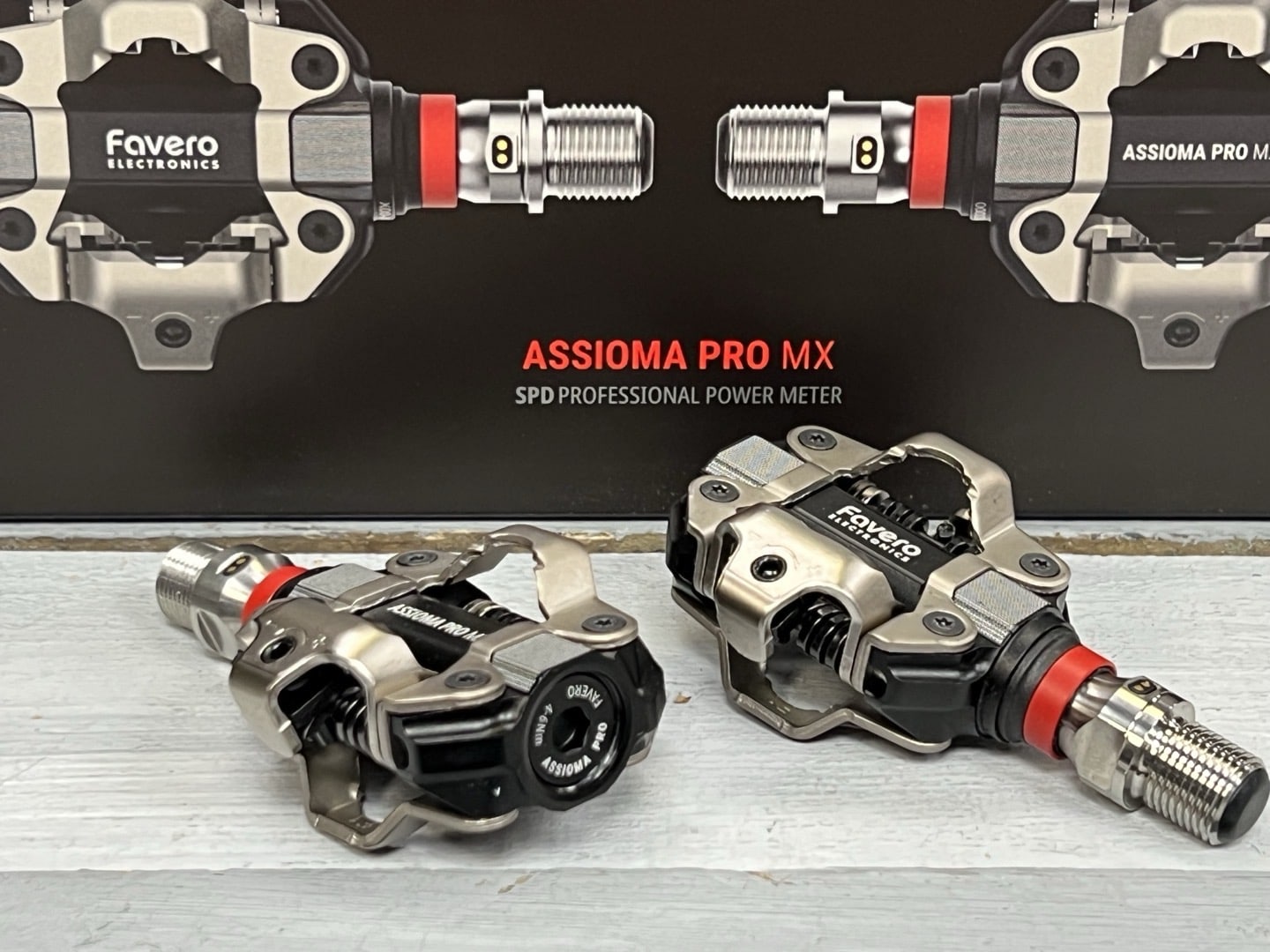
Favero Assioma PRO MX: 5,000 km Later, Our New SPD Baseline
The PRO MX is the SPD version of the Pro spindle — mountain bike, gravel, cyclocross. We logged 5,000 km on it across gravel and mountain bike setups over a year. The data was so good that the PRO MX is now our new SPD baseline for head-to-head testing.
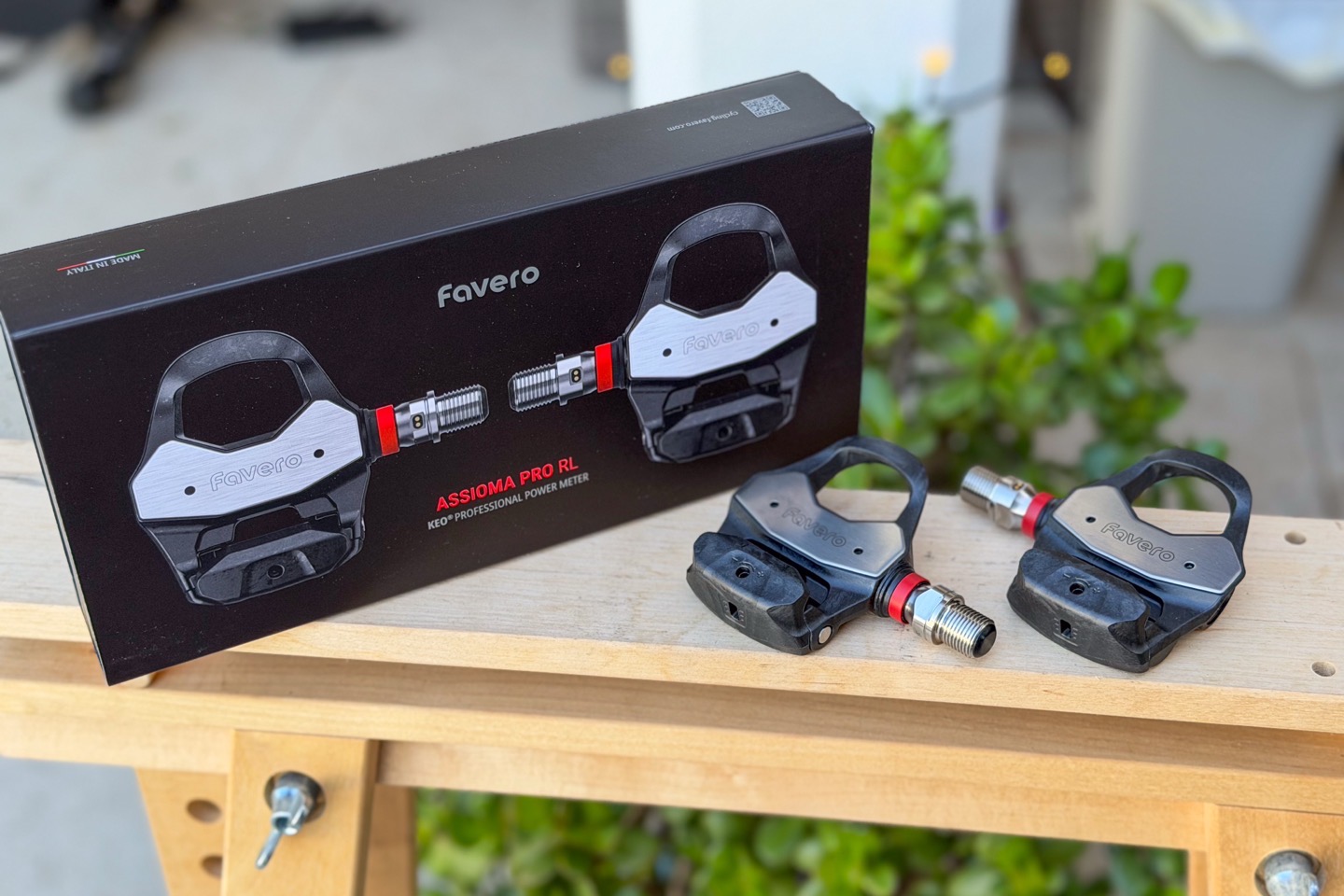
Favero Assioma PRO RL: A Better Look Pedal Than Look Itself
Favero’s Look Keo compatible Pro spindle. 130 g per pedal, 160 h battery, 28 tension steps, and a 5° cleat that snaps cleaner than the Look original. Two months of testing and we agree with the marketing line.
Favero Assioma PRO RS: The Lightest Dual-Sided Power Pedal Yet
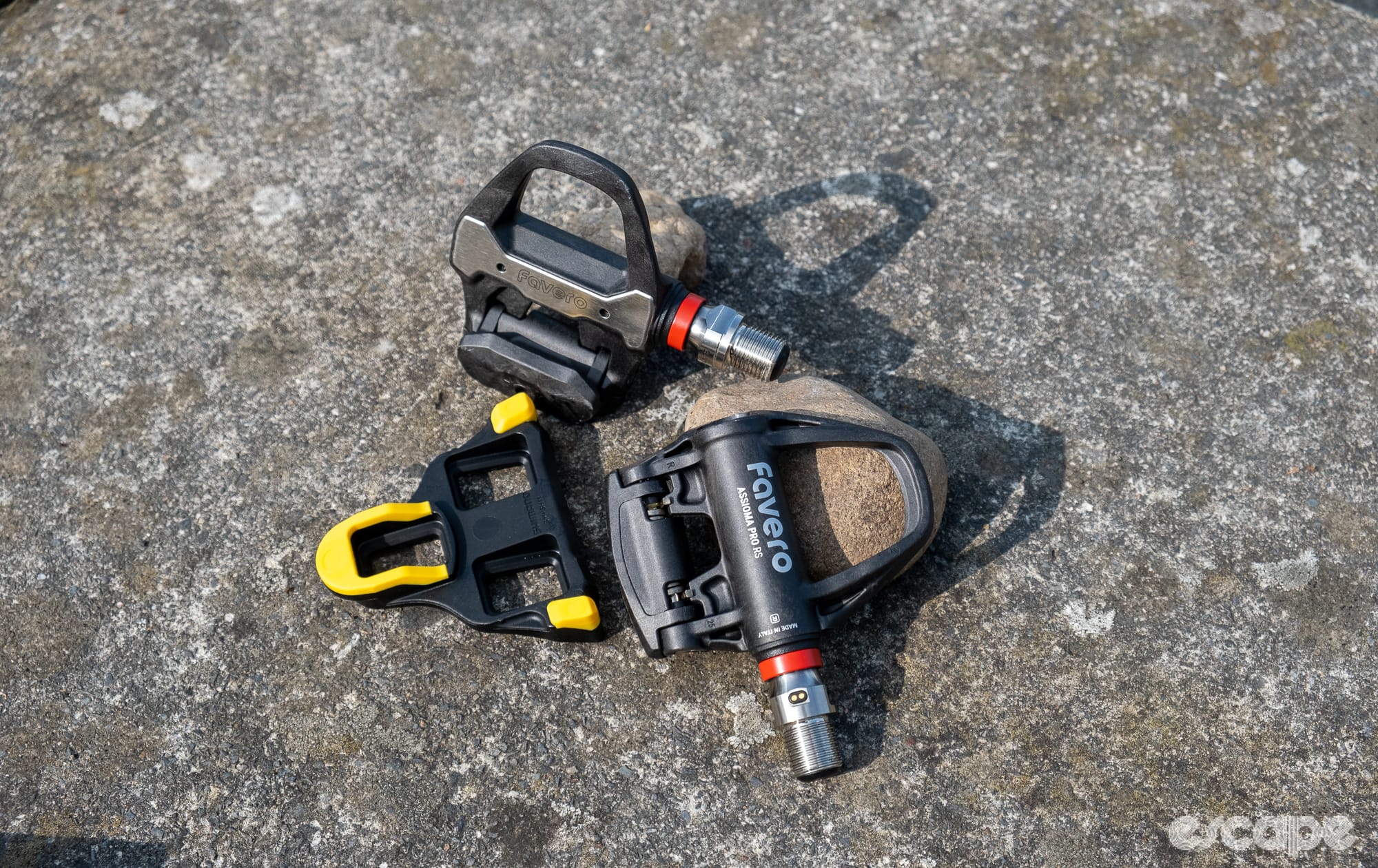
The PRO RS is Favero’s dual-sided road pedal — same Pro spindle as the PRO MX, but in a Shimano SPD-SL body. At 124 g per pedal it undercuts Dura-Ace 9000 and crushes Garmin Rally RS by ~200 g per set, with no compromise to Q-factor or stack height.
Elilee EK01 Spider Power Meter: 1kW+ Sprint Collapse, No Vendor Fix
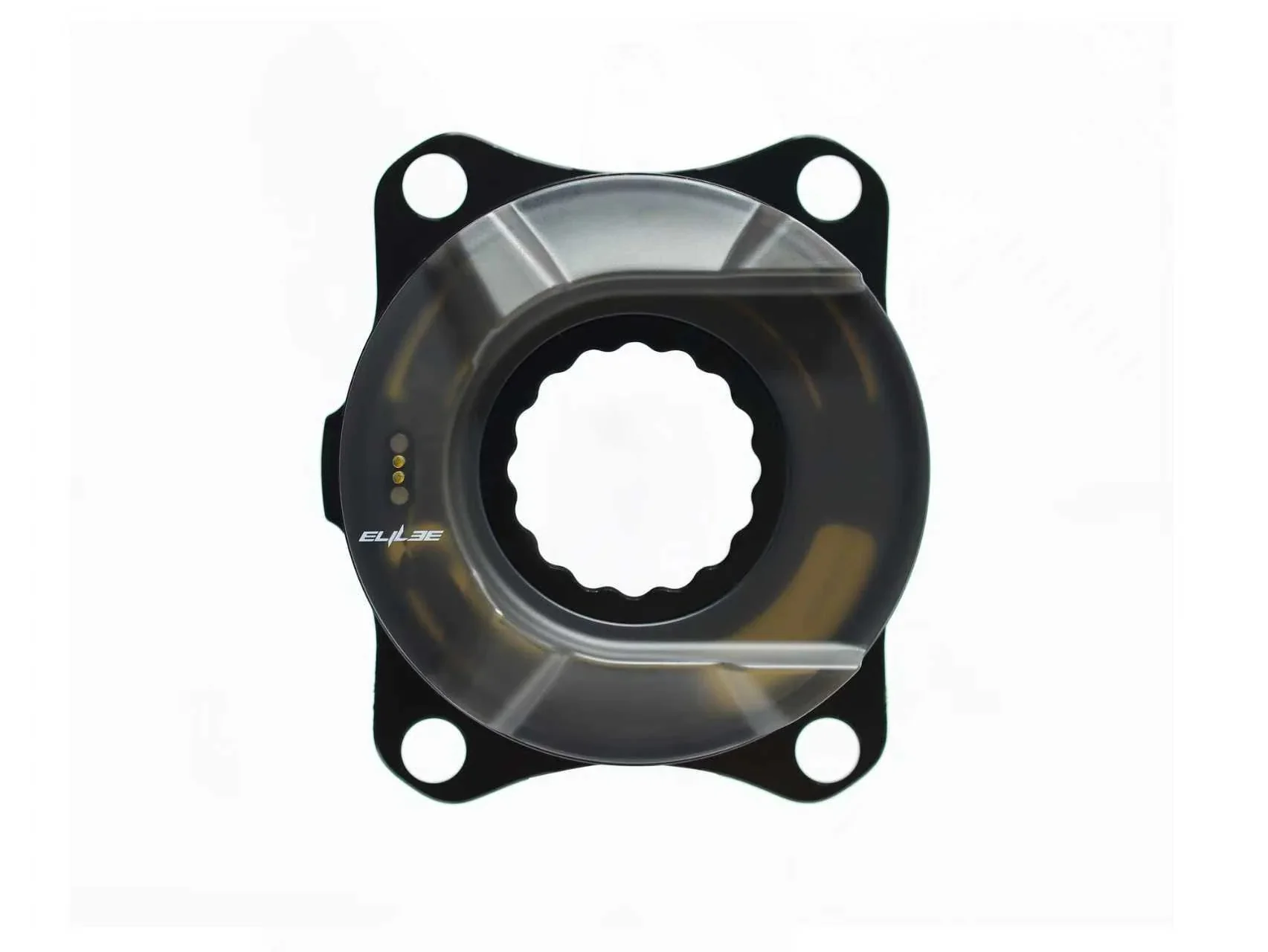
Our two-unit cross-test of the Elilee EK01 spider — aluminum first, then the $1200 AUD carbon as a control — reproduced the same catastrophic failure on both: 4-5 second power/cadence dropout under sprint, residual-torque effect requiring manual re-zero after every hard effort. We paused testing and sent data to the vendor; no fix committed. Skip.
Verify with JoyAnalyze
Upload your power-meter data to JoyAnalyze and stack Magene P715 SPD-SL: $499 Dual-Sided, With a Phase-Angle Bug against other meters — DTW-aligned power curves, RMS error, drift, and Bland-Altman stats.
Open multi-file compare in JoyAnalyzeSee how this fits you
The Magene P715 SPD-SL: $499 Dual-Sided, With a Phase-Angle Bug is one option. Run the JoyFit assessment to see whether it actually matches your body and riding style — or compare it side-by-side with the other Power Metersin our database.
Community
Discuss this review · Pro members can rateComments
(0)Sign in above to leave a comment.
Loading comments…
Pro Ratings
PROLoading…Sign in above to rate this product on the 8-axis $APPEALS framework.