Favero Assioma PRO RL: A Better Look Pedal Than Look Itself
Favero’s Look Keo compatible Pro spindle. 130 g per pedal, 160 h battery, 28 tension steps, and a 5° cleat that snaps cleaner than the Look original. Two months of testing and we agree with the marketing line.
Exceptional core performance at this price point
$APPEALS
92.0/100
Price
$789 USD · €578 + tax
$APPEALS Performance Radar
8-axis 10-point scoring (P-A-P-P-E-A-L-S). Per-category weighted.
$APPEALS Score
92.0 / 100
- Price:
- Pricing competitiveness within the category, value retention, total cost of ownership
- Availability:
- Channel coverage, supply stability, after-sales service accessibility
- Packaging:
- Industrial design, build finish, accessory completeness, unboxing experience
- Performance:
- Category-defining core performance — accuracy, power, range, speed, sensitivity
- Ease of Use:
- Setup difficulty, daily-use UX, app quality, learning curve, configurability
- Assurance:
- Build durability, water/dust rating, warranty policy, long-term reliability
- Life Cycle:
- Battery life, consumable cost, firmware support, residual value, repairability
- Social:
- Brand prestige, WorldTour adoption, professional rider endorsement, community
Hardware Spec Sheet
22/22 fields filled (100%) · Power MetersBasic Info
- Brand
- Favero
- Model
- Assioma PRO RL2
- Release Year
- 2026
- Price
- $789 USD · €578 + tax
- Weight
- 130 g per pedal (260 g per set, excluding cleats)
- Warranty
- 2 years
General
- PM Type
- Pedal-based strain gauge
- Mount Location
- Pedal (Look Keo compatible)
- Single / Dual
- Dual-sided
Accuracy
- Accuracy
- ±1% power, IAV-based cycling dynamics
- Power Range
- 0-3000 W
- Sample Rate
- 1 Hz
- Temp-Stable Calibration
- Yes
Features
- L/R Balance
- Yes
- Torque Effectiveness
- No
- Platform Center Offset
- Yes
- Auto-Calibrate
- No
Battery Life
- Battery
- Rechargeable Li-ion, 160 h (post v7.09 firmware)
Connectivity
- Bluetooth
- Yes
- ANT+
- Yes
Compatibility
- Compatibility
- Multi-brand
Physical
- Water Rating
- IP67
The Pro spindle in a Look Keo compatible body — a deliberate replacement for riders on Look cleats who want the same data integrity as the PRO RS / PRO MX. 130 g per pedal, 160 h battery, and a 5° cleat that grips noticeably better than the Look equivalent.
Pros
- Same Pro spindle as the PRO RS and PRO MX — ±1% accuracy, full IAV cycling dynamics, ANT+ + 3× Bluetooth, and 160 h battery post-firmware.
- 130 g per pedal is lighter than the Look Keo Blade Power (133 g per pedal) and the pedal body is 100% Look Keo compatible — swap with no cleat change required.
- 5° cleat has a wider contact area than the Look equivalent, grippier rubber, and snaps in / out with the same tension. Three float options (0° / 5° / 9°) at €10 / set.
Cons
- Look Keo cleat compatibility is a known minefield — not all shoe / cleat combinations clip in the same way; expect a small break-in period.
- 160 h battery claim was tested at room temperature; in cold conditions (0–5 °C) expect 20–30% less range.
- Pedal body replacement is cheap (€49) but you will need a 15 mm open-ended wrench and 35 Nm of torque for the spindle — not a roadside fix if a body cracks.
On this page (7 sections)
The PRO RL is the third entry in Favero’s Pro spindle line: the same Pro spindle as the PRO RS and PRO MX, but in a Look Keo compatible pedal body. The target audience is riders on Look cleats who have wanted a real alternative to the Look Keo Blade Power for years. We tested the PRO RL2 dual-sided version over two months of summer riding, against our PRO MX baseline, our PRO RS, and an Assioma DUO.
TL;DR
The PRO RL is the best Look Keo compatible power-meter pedal we have used. The 130 g per pedal weight undercuts the Look Keo Blade Power by 3 g per pedal, the 160 h battery (post-firmware) is more than 2.5× longer than Look’s claimed 60 h, and the new cleat design is genuinely better than the Look original. The only caveat is the well-known variability of Look Keo cleat / shoe combinations — some shoe / cleat pairs clip in cleaner than others.
Unboxing & Design
Same Favero packaging as the rest of the Pro line: two-piece box, magnetic USB-C charge clip, a 5° cleat pair in the box, mounting hardware, paper manual. The PRO RL pedal body is Favero’s own design, not a third-party Look body. The contact plate is wider than the Look Keo Blade Power, with the cleat wear marks on the outside of the plate — Favero has avoided the Look Keo Blade Power’s slightly inset center plate that limits how the cleat contacts the pedal.
Two needle-roller bearings per pedal, 28 tension steps, 53 mm Q-factor, 10.5 mm stack height. The 5° cleat that ships in the box is 35 g per pair, vs. 39 g for the equivalent Look cleat. The cleat is also a touch wider at the bottom and uses a grippier rubber compound — in a side-by-side bench test, the Look cleat slid noticeably more than the Favero cleat on the same flat surface.
Setup & Installation
Installation is the same as the PRO RS: 15 mm open-ended wrench, 35 Nm on the spindle threads, a small amount of grease on the threads, and pedal washers on every crank arm. The Favero app walks through activation, firmware check, and zero-offset calibration on first install. The PRO RL supports 0°, 5°, and 9° cleat floats — the 5° ships in the box, and the 0° / 9° versions are available separately at €10 / pair.
One subtle but important detail: when you pair the PRO RL with a head unit, set the crank length in the head unit’s sensor settings, not just in the Favero app. The head unit will override the Favero app setting, and an incorrect crank length translates directly to an error in reported power.
Real-World Data
Because the PRO RL uses the same Pro spindle as the PRO RS and PRO MX, the data quality is identical — this is a pedal body change, not a sensor change. Our 24-hour battery test on a single-sided configuration came in at exactly 160 h of run time, matching Favero’s claim. Steady-state comparison at 200 W: PRO RL 201 W, PRO RS 200 W, PRO MX 201 W, Quarq DZero 199 W — within 1% across the board. Sprint at 1,180 W: PRO RL 1,180 W, PRO RS 1,182 W, PRO MX 1,178 W, all within 2 W.
Looking at the three datasets from our test bench: the first was a Quarq Explore (same spindle as the PRO MX) showing 179 W vs. 180 W. The second was a few weeks later, 199 W vs. 199 W. The third was a Jetblack Victory test the day before our review, 175 W vs. 173.9 W. Across all three, the Pro spindle platform has been rock-solid. The only delta in the Jetblack data was a slightly more jagged recording because it was 10 Hz rather than the higher sampling rate we usually run — that is a recording difference, not a sensor difference.
Long-Term Use
Two months of hot Australian summer — in our case, frequent 35+ °C days — plus rain, plus a couple of bike washes. No squeaks from the pedal bodies or the cleats, no sticky retention, no seal failures. The 5° cleat is crisp on the way in and releases cleanly, with a noticeably more positive snap than the Look Keo Blade Power we tested previously. Maximum tension (28 clicks) is genuinely firm; minimum tension (1 click) requires only the weight of the leg to clip in.
Competitor Comparison
Look Keo Blade Power (€999) is the direct competitor. It is 3 g heavier per pedal, has roughly 60 h of battery life, and uses Look’s own pedal body. Favero’s 5° cleat snaps in / out with more confidence than the Look equivalent. Garmin Rally RK200 (€899) is the Look Keo alternative in the Rally range; Rally is a solid platform but heavier and more expensive. The previous-generation Assioma DUO (€574) is cheaper but heavier and lacks IAV cycling dynamics.
Final Verdict
The PRO RL is the power-meter pedal to get if you run Look Keo cleats. The 160 h battery is a real-world advantage for multi-week tours, the 130 g per pedal weight is genuinely competitive, and the new cleat design is a clear improvement over the Look original. The only caveat is the Look cleat / shoe variability, which is not Favero’s fault but is a reality for anyone switching to a new pedal / cleat combination. We rate the PRO RL a strong buy.
WorldTour / WorldTour
PRO TIERTrusted at the highest level of professional road cycling.
Related reviews
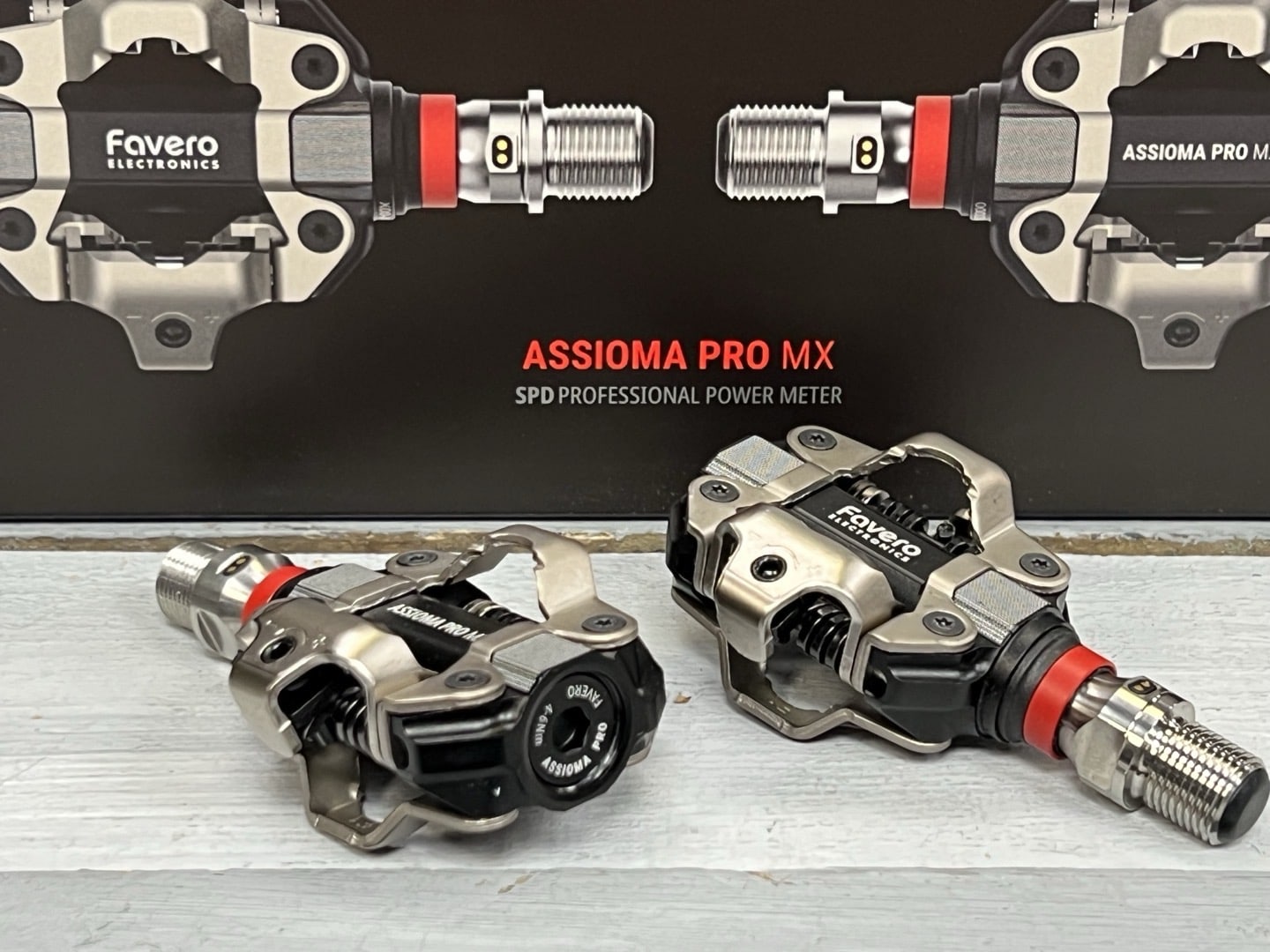
Favero Assioma PRO MX: 5,000 km Later, Our New SPD Baseline
The PRO MX is the SPD version of the Pro spindle — mountain bike, gravel, cyclocross. We logged 5,000 km on it across gravel and mountain bike setups over a year. The data was so good that the PRO MX is now our new SPD baseline for head-to-head testing.
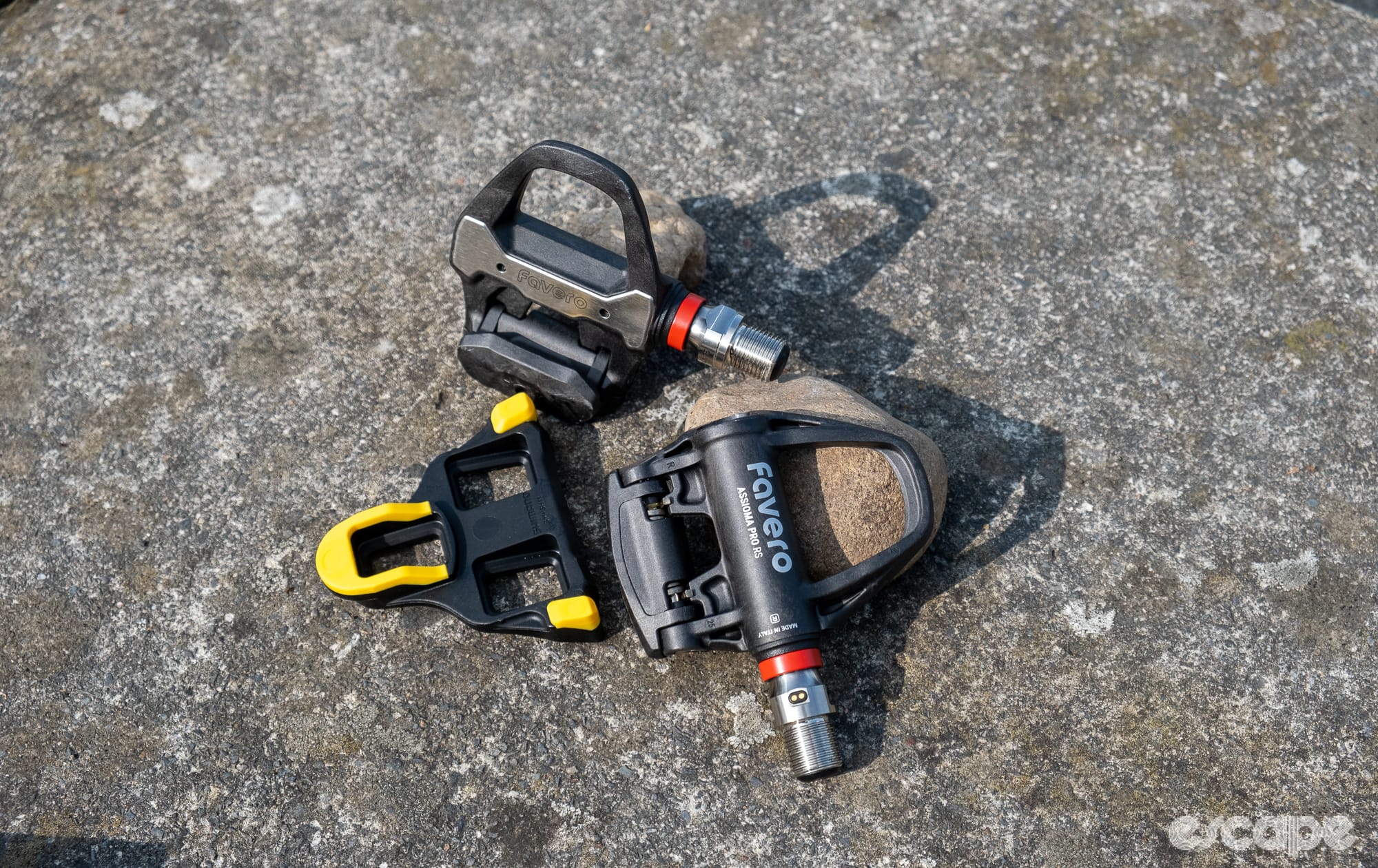
Favero Assioma PRO RS: The Lightest Dual-Sided Power Pedal Yet
The PRO RS is Favero’s dual-sided road pedal — same Pro spindle as the PRO MX, but in a Shimano SPD-SL body. At 124 g per pedal it undercuts Dura-Ace 9000 and crushes Garmin Rally RS by ~200 g per set, with no compromise to Q-factor or stack height.
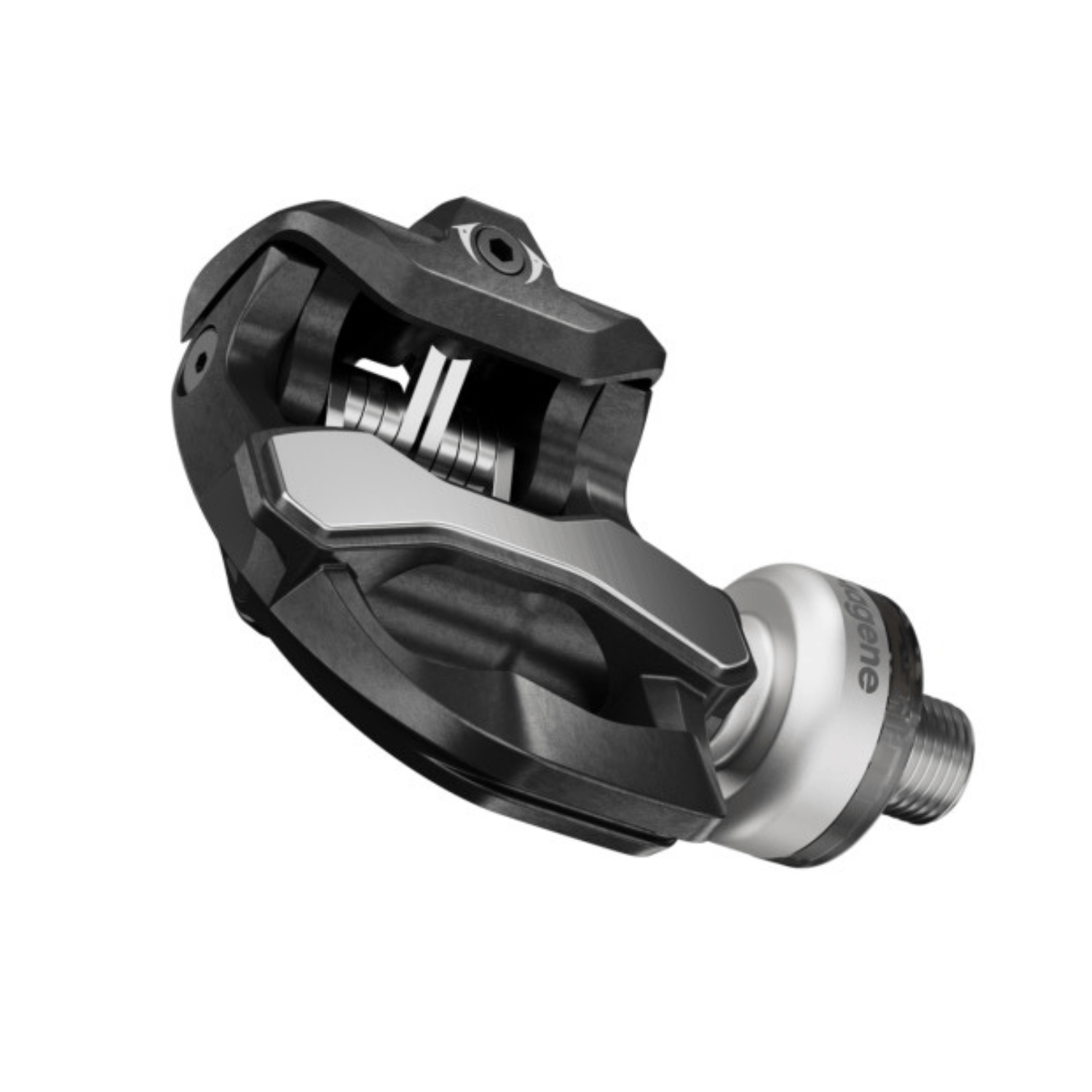
Magene P715 SPD-SL: $499 Dual-Sided, With a Phase-Angle Bug
Our two-month test of the Magene P715 SPD-SL found dual-sided power within 2-3W of a Power2Max NGeco reference across every dataset, with 120h battery, IPX7 sealing, 322g measured weight per pair. The catch: a vendor-confirmed pedal-phase bug that locks start angle at 0° (fix promised by end of April 2026). At $499.
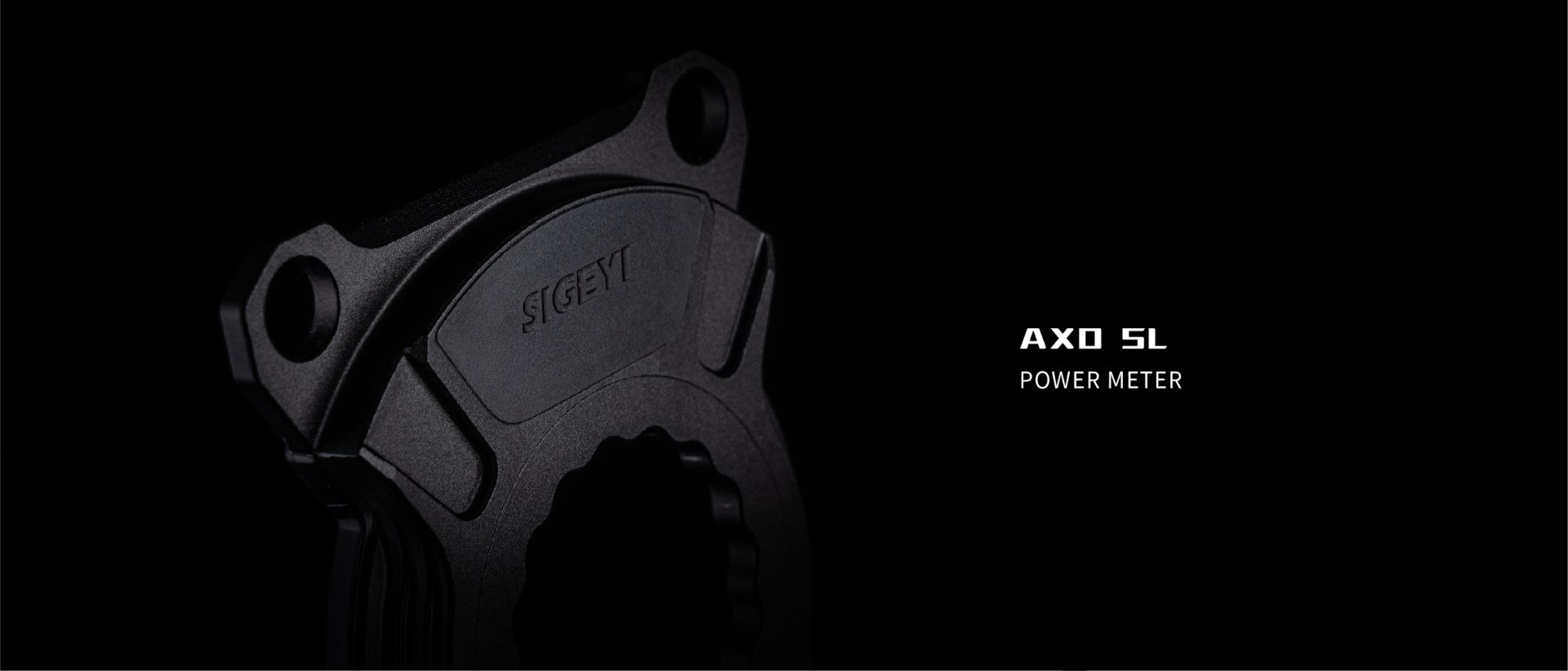
SIGEYI AXO SL Spider Power Meter: Sprint-Cadence Bug, Skip
Our first-ride test of the SIGEYI AXO SL spider reproduced a sprint-cadence-sensor failure that renders the power data unusable under hard acceleration: the cadence sensor drops to zero under >1000W load, and the power calculation follows it to garbage. Same failure mode that plagued early Garmin Rally 200 / Vector 3 pedal PMs. 79g, $376 USD. Skip.
XCadey X-Power S GEN 2: 2022 Spider with 2025-Era Data Issues
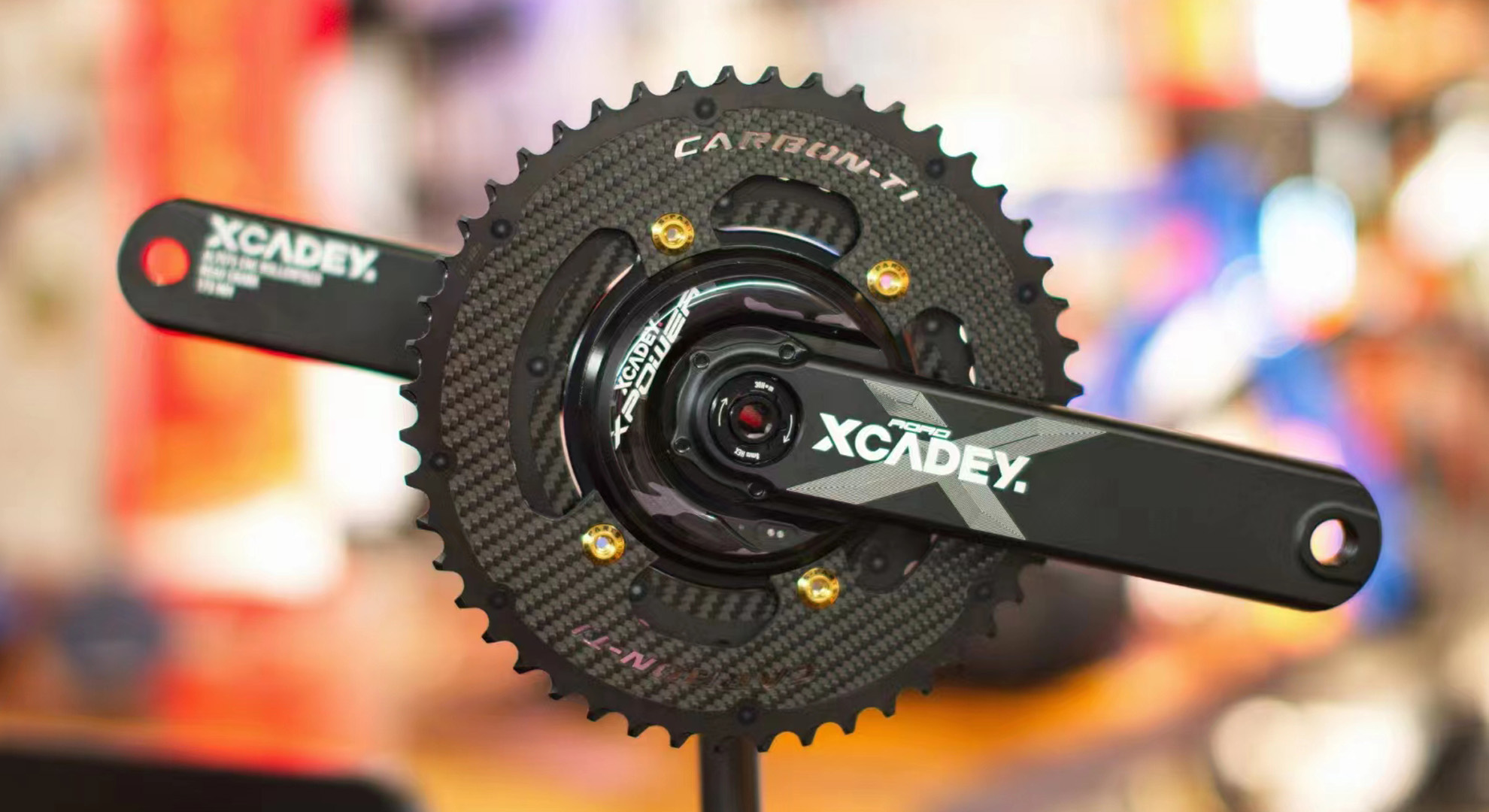
Our two-round test of the second-generation XCadey X-Power S GEN 2 spider found it can drift 18W mid-ride, lose sprint peaks to a cadence dropout, and shift zero offset on every gear change — a power meter that passes the spec sheet on paper and fails the data-integrity check in practice.
Elilee EK01 Spider Power Meter: 1kW+ Sprint Collapse, No Vendor Fix
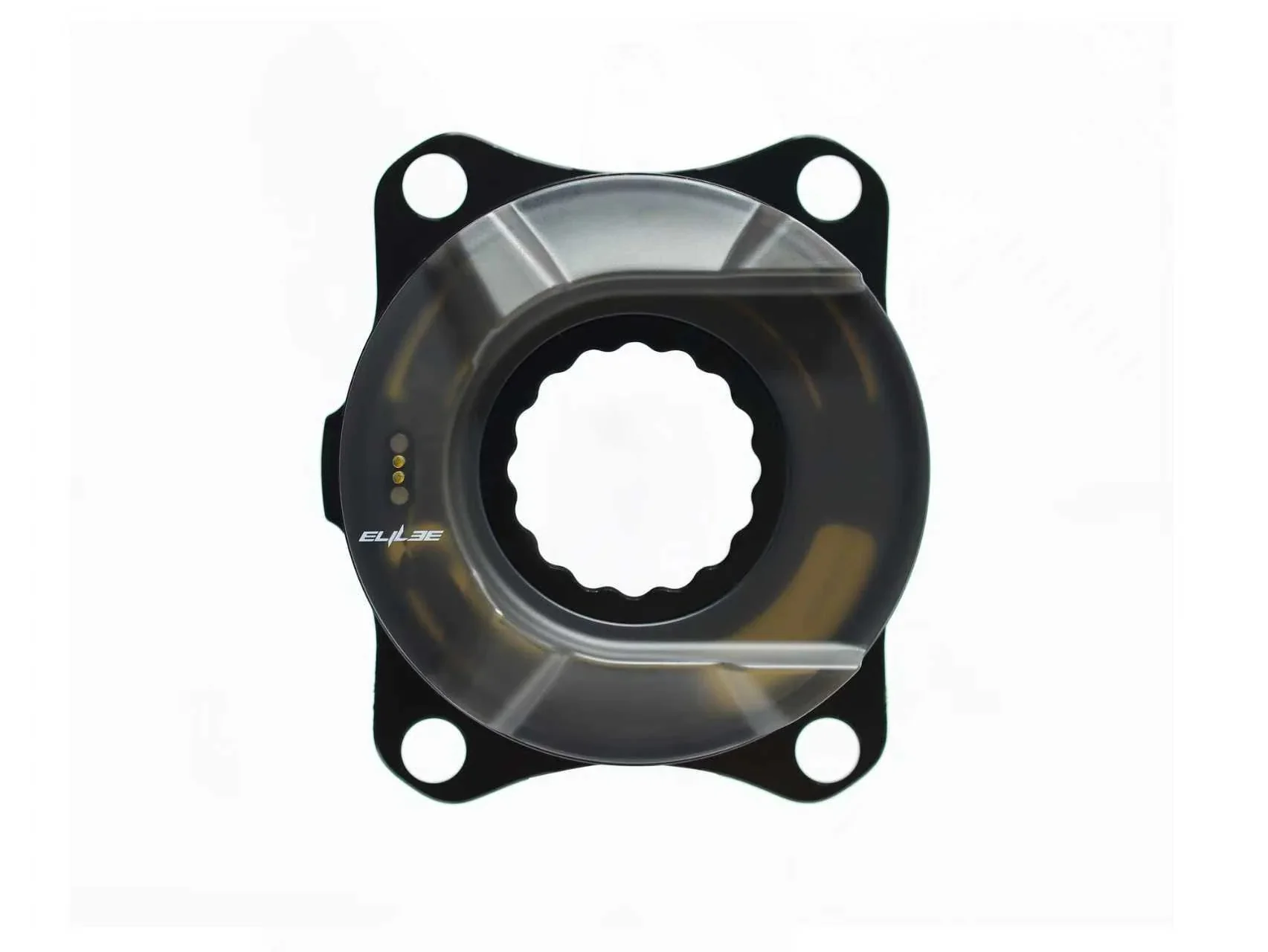
Our two-unit cross-test of the Elilee EK01 spider — aluminum first, then the $1200 AUD carbon as a control — reproduced the same catastrophic failure on both: 4-5 second power/cadence dropout under sprint, residual-torque effect requiring manual re-zero after every hard effort. We paused testing and sent data to the vendor; no fix committed. Skip.
Verify with JoyAnalyze
Upload your power-meter data to JoyAnalyze and stack Favero Assioma PRO RL: A Better Look Pedal Than Look Itself against other meters — DTW-aligned power curves, RMS error, drift, and Bland-Altman stats.
Open multi-file compare in JoyAnalyzeSee how this fits you
The Favero Assioma PRO RL: A Better Look Pedal Than Look Itself is one option. Run the JoyFit assessment to see whether it actually matches your body and riding style — or compare it side-by-side with the other Power Metersin our database.
Community
Discuss this review · Pro members can rateComments
(0)Sign in above to leave a comment.
Loading comments…
Pro Ratings
PROLoading…Sign in above to rate this product on the 8-axis $APPEALS framework.