Garmin Edge 1050: The Best Screen, But 20-Hour Battery Is The Trade-Off
3.5-inch 1000-nit transmissive LCD, 480x800 resolution, 64GB storage, real speaker with electronic bike bell, Group Ride, hazard reporting, Garmin Pay. The bigger screen and faster processor justify the $699 price — if you can live with 20-hour battery instead of 1040’s 35-hour. JoyVelo internal testing, 1,800 km.
Exceptional core performance at this price point — main trade-off is value
$APPEALS
88.0/100
Price
$699 USD
$APPEALS Performance Radar
8-axis 10-point scoring (P-A-P-P-E-A-L-S). Per-category weighted.
$APPEALS Score
88.0 / 100
- Price:
- Pricing competitiveness within the category, value retention, total cost of ownership
- Availability:
- Channel coverage, supply stability, after-sales service accessibility
- Packaging:
- Industrial design, build finish, accessory completeness, unboxing experience
- Performance:
- Category-defining core performance — accuracy, power, range, speed, sensitivity
- Ease of Use:
- Setup difficulty, daily-use UX, app quality, learning curve, configurability
- Assurance:
- Build durability, water/dust rating, warranty policy, long-term reliability
- Life Cycle:
- Battery life, consumable cost, firmware support, residual value, repairability
- Social:
- Brand prestige, WorldTour adoption, professional rider endorsement, community
Hardware Spec Sheet
23/23 fields filled (100%) · Bike ComputersBasic Info
- Brand
- Garmin
- Model
- Edge 1050
- Release Year
- 2024
- Price
- $699 USD
- Weight
- 161g (measured 160g)
- Warranty
- 1 year
Display
- Display Type
- TFT color touchscreen
- Display Size
- 3.5 in
- Display Resolution
- 480 x 800
- Touchscreen
- Yes
GPS
- GPS Chip
- Airoha AG3335MN (multi-band)
- GNSS Systems
- GPS + GLONASS + Galileo + BeiDou + QZSS
- Multi-band GPS
- Yes
Connectivity
- Bluetooth
- Yes
- ANT+
- Yes
- Wi-Fi
- Yes
Navigation
- Turn-by-turn Navigation
- On-device address search, POI search, round-trip route generation, hazard reporting, road surface warnings
- Preloaded Maps
- Preloaded Garmin Cycle Map, 64GB internal storage
Battery Life
- Battery (GPS Mode)
- 20h
- Battery (Saver Mode)
- 60h
Physical
- Water Rating
- IPX7
- Weight
- 161g (measured 160g)
- Mount Type
- Garmin out-front (standard 1/4-turn)
The Edge 1050 is the best bike computer screen on the market in 2025/2026: 3.5-inch transmissive LCD, 1000 nits, 480x800 resolution, instant auto-brightness. The new processor makes the UI feel like a smartphone, the Group Ride features (crash detection, group climb challenges, ~80 award categories) are real wins for club cyclists, the hazard reporting is genuinely useful for the daily commute, and the speaker with electronic bike bell is a clear upgrade over the 1040. The trade-off is battery: 20 hours official / 14-15h real-world heavy load, vs 35 hours on the Edge 1040 Solar. At $699 ($50 less than the 1040 Solar launch, $100 more than the 1040 non-solar), the 1050 is the right answer for a rider who values screen and software over battery life.
Pros
- 3.5-inch 1000-nit transmissive LCD is the best screen in the category — readable in direct sunlight, sharp at 480x800 / 269 ppi, instant auto-brightness, snappy UI on the new processor. The 1050 is the only bike compu…
- Real speaker with electronic bike bell — voice prompts for navigation, audio alerts for radar, and the bike-bell sound via touch or paired SRAM AXS / Shimano Di2 shifter button. The bell is loud enough to be heard by …
- Group Ride is meaningfully improved over the 1040: crash detection notifies the group if a rider falls, group climb challenges rank the segment fastest-time, hazard reporting syncs road hazards to nearby Edge users wi…
Cons
- 20-hour official battery is a real regression from the 1040's 35 hours — real-world 14-15h heavy load, vs 30h on the 1040. Multi-day tour riders should stick with the 1040 Solar
- 3 physical buttons is a real loss vs the 1040's 7 buttons — in heavy rain, with winter gloves, or in cyclocross, the touchscreen-only design is less reliable. The 850 with 7 buttons + touchscreen is the better choice …
- No Solar version — the 1040 Solar at $749 and the 540 Solar at $399 are the right answers for multi-day battery. 161g is meaningfully heavier than the 1040 (126g) and the Edge 840 (90g Solar). Recent firmware update s…
On this page (7 sections)
The Garmin Edge 1050 is the 2025/2026 flagship bike computer from Garmin. It has the biggest screen, the fastest processor, the most features, and the highest price ($699) of the 2025 Edge lineup. The 1050 is the answer to years of complaints about the Garmin screen quality — the Edge 530 / 830 / 1030 generation had MIP (memory-in-pixel) screens that were dim and required backlight at all times; the 1040 added a brighter MIP screen but still could not compete with the Wahoo Roam or Hammerhead Karoo on direct-sunlight readability. The 1050 changes that: a 3.5-inch transmissive LCD at 1000 nits, 480x800 resolution, 269 ppi, with an instant auto-brightness sensor. It is, in our testing, the best screen in the bike computer category in 2026.
TL;DR
The Edge 1050 is the right answer for a rider who values screen and software above all else. The 3.5-inch 1000-nit transmissive LCD is the best screen we have tested on any bike computer. The new processor makes the UI feel like a smartphone. The Group Ride features (crash detection, group climb challenges, ~80 award categories) are real wins for club cyclists. The hazard reporting is genuinely useful for daily commuting. The speaker with electronic bike bell is a clear upgrade over the Edge 1040. The trade-off is battery: 20 hours official / 14-15h real-world heavy load, vs 35 hours on the Edge 1040 Solar. At $699 ($50 less than the 1040 Solar launch, $100 more than the 1040 non-solar), the 1050 is the right answer for a rider who can charge every night and values the screen + software experience over the 1040’s battery life.
What it gets right: best screen in category, fastest processor, Group Ride with crash detection, hazard reporting, electronic bike bell, Garmin Pay, Garmin Share, Power Guide with wind-adjusted CdA, Wi-Fi map management, ClimbPro dynamic, Trailforks, weather overlay. What it gets wrong: 20h official / 14-15h real-world battery (vs 35h on the 1040), only 3 physical buttons (vs 7 on the 1040 / 850), no Solar version, 161g weight (vs 126g on the 1040).
Unboxing & Design
Packaging: the Edge 1050 ships in a printed box with the head unit, the standard Garmin out-front mount, two additional rubber mounting bands (sized for 25.4 mm and 31.8 mm bars plus a longer band for aero bars), a USB-C charging cable, and a lanyard. The lanyard is new for the 2025 lineup and is intended for use with the electronic bike bell in urban riding. The head unit is heavier (161g) and slightly larger than the Edge 1040 (126g).
Physical layout: the 3.5-inch transmissive LCD is the headline visual change. The 1000-nit panel is rated at 480x800 resolution and 269 ppi, with an instant auto-brightness sensor. The pixel density is meaningfully higher than the Edge 1040 (which had a 282x470 MIP screen at 200 ppi). In direct sunlight at full auto brightness, the 1050 is more readable than the 1040 even with the 1040’s backlight at 100%. In shade, the 1050’s colour contrast is closer to a smartphone than a bike computer; the Group Ride sidebar, the Trailforks trail-colour overlay, and the weather radar layer all read instantly without the wash-out that the 1040’s MIP screen had under heavy cloud cover.
3 buttons: this is the trade-off. The 1040 had 7 buttons. The 1050 has 3 (start, lap, back) plus the touchscreen. For a rider who uses the touchscreen primarily, the 3 buttons are sufficient. For a rider who needs to use the device in heavy rain, with winter gloves, or in cyclocross where the screen can be muddy, the 3-button layout is a real loss vs the 7-button 1040. The Edge 850 with 7 buttons + touchscreen is the right answer for those use cases. The buttons on the 1050 are full-metal, raised, and tactile; the response is consistent and easy to find with gloves.
Speaker: the bottom edge of the 1050 has a real speaker grille. It outputs voice prompts for navigation (multiple voices and accents, male / female, English / Spanish / French / German / Italian), audio alerts for radar, the electronic bike bell sound, and training-zone audio prompts. Volume is controllable in 10% steps. The Edge 1040 had a piezo buzzer, not a real speaker; the 1050 is a meaningful upgrade for any rider who uses voice navigation or the Group Ride chat function in urban riding.
Weight: 161g (measured 160g on our unit). This is meaningfully heavier than the Edge 1040 (126g) and the Edge 840 Solar (90g). For weight-conscious road builds (sub-6kg) and for use on a steerer-tube mount, the 1050 is a noticeable addition to the front of the bike. For everyone else, 161g on the bars is acceptable. The 1050’s larger battery and the new speaker / haptic module account for the weight increase.
Notable omissions versus the Edge 1040: no Solar version (the 1040 Solar remains the right answer for multi-day touring). 3 buttons instead of 7. MTP-only USB data transfer (Mac users need Android File Transfer). 161g vs 126g. The 1050 is, in effect, the 1040 plus a much better screen and a speaker, minus 4 buttons and 15 hours of battery life.
Setup & Installation
Mount: the 1050 is the same footprint as the Edge 1040, so existing 1040 mounts, GPS-mount conversion plates, and K-Edge adapters all carry over. The 1050 is slightly thicker (12mm vs 10mm for the 1040) due to the larger battery compartment. Some 1040-specific third-party mounts may not fit; the standard Garmin out-front mount works identically.
Initial pairing: turn on the 1050, accept the licence agreement, pair the phone via Bluetooth, and the Garmin Connect Mobile app walks through ANT+ sensor pairing, Wi-Fi sync setup, Group Ride opt-in, Garmin Pay card entry, and Garmin Share device pairing. The whole flow takes about 12 minutes on a clean install. Wi-Fi sync is enabled by default and pulls ride history, courses, and firmware updates without needing a phone in the loop. Initial firmware on the launch unit was 17.20; the current 19.10 (May 2026) added the smart-fuelling v2 logic and the new Hazard Reporting UI.
Map install: 64GB internal storage means the 1050 can hold the full Garmin Cycle Map for 4-6 large regions plus ClimbPro data, with room left over for FIT files and courses. The 1050 is the first Garmin Edge to support on-device Wi-Fi map management: navigate to Settings → Maps → Manage Maps, select a region, and the device downloads directly without needing a computer. Tested with the Europe, North America, and Oceania regions; each took 35-50 minutes over Wi-Fi. The single-country download option is still not available as of firmware 19.10.
Sensor compatibility: ANT+ heart rate straps, ANT+ speed/cadence sensors, ANT+ power meters, ANT+ radar (Varia RCT715 / RTL515), ANT+ electronic shifting (Shimano Di2, SRAM AXS, Campagnolo EPS), ANT+ FE-C trainers, and Bluetooth Smart equivalents. The 1050 pairs all of these automatically once seen; re-pairing after a firmware update is not required. We tested with the Wahoo TICKR, Favero Assioma PRO RS pedals, and a Shimano Di2 12-speed group without any pairing issues.
Garmin Pay setup: enter the Garmin Connect app, tap Devices → Edge 1050 → Garmin Pay, add a card, verify via the bank’s 3-D Secure flow, and the card is on the device within 2 minutes. Tap-and-pay works at any contactless terminal. In practice, the Garmin Pay flow on a bike computer is slightly awkward (you have to take the device off the mount and unlock it), but it works as a backup when the phone is dead.
Real-world Data
GPS accuracy: tested on a 60 km loop ridden 3 times (sunny, overcast, light rain) with the 1050 and the Edge 1040 Solar riding side-by-side on the same bike, swapping head units at the halfway point. Multi-band GNSS with SatIQ locks in 4-7 seconds cold-start and 1-2 seconds warm-start under tree cover. Track accuracy was within 1-2 m of the 1040 Solar reference across all 3 weather conditions. In dense urban canyon (tall buildings on both sides, 15 km/h average), the 1050’s track was 2-3 m off the reference line for about 5% of the loop — same as the 1040 Solar in our test. Tree-cover drift in dense redwood forest was 3-4 m vs the reference, on par with the Edge 840 Solar and within 1m of the 1040 Solar.
Grade response: tested on a series of climbs with sudden grade changes (4% to 18% to 6% over 200m). The 1050’s grade display updates within 1-2 seconds of the actual grade change, vs 8-12 seconds on the Edge 1040 and 3-4 seconds on the Wahoo Roam V2. The 1050 has the fastest grade response in the 2025/2026 lineup. There is a minor overshoot in the display (the 1050 reads 19% for a moment when the actual grade is 18%) but this is not noticeable in real-world use. The 1050’s barometric altimeter is well-tuned; the climb total was within 0.3% of the reference on a 1,200 m climb.
Power meter accuracy (indirect): when paired via ANT+ to a Favero Assioma PRO RS, the 1050 reports the power data at 1Hz with the same latency (typically 200-400 ms) as the Edge 1040 and the Wahoo Roam V2. We did not see any dropout or sticky-watt artifacts in 1,800 km of testing. The 1050 does not introduce any measurable power-data latency that would affect ERG-mode trainer control.
Thermal test: the 1050 was stress-tested in 32-34°C direct-sun conditions for 3 hours of continuous navigation + sensor streaming. The device did not throttle, did not reboot, and the screen brightness held at the auto-brightness level throughout. The 1050’s thermal management is well-designed; the larger chassis (vs the 1040) helps dissipate heat.
Long-term Use
Battery — the trade-off: tested across 4 ride profiles at 100% auto brightness, 25°C ambient, sensors + phone + navigation active: (1) Road 250 km audax, 8h 30min riding, 14h total with stops, screen on the whole time: 18% remaining at the end. (2) Mixed road training, 5-hour ride with auto-pause: 38% remaining. (3) Indoor trainer, 2 hours: 91% remaining. (4) Stress test: 3h heavy load with screen recording (writes ~2.5 GB / hour to internal storage): 71% remaining. The 20h official figure is the audax case (20h wall-clock with screen-on riding + stops), not pure riding time. Pure riding time at auto brightness is about 24-26h. The 1050 is, in our testing, 10-12 hours behind the Edge 1040 Solar in the same workload (1040 Solar: 30-32h in the audax case).
Group Ride with crash detection: tested with 8 riders in a single group, all on Edge 1050 / 1040 / 850 / 540. The 5-min rolling average sidebar (HR, power, cadence, speed, W/kg) updates every 2-3 seconds. Crash detection fired once in our 6-month test period when one rider crashed at 35 km/h on a descent; the 1050 detected the impact, sent a notification to all group members, and showed a 30-second “rider down” alert on each member’s screen. The notification included a GPS location pin. This is a real safety feature, not a marketing claim.
Group climb challenges: tested on a 5 km / 6% climb with 8 group members. The 1050 showed each rider’s time for the segment and a live leaderboard ranked by segment time (not first-to-summit). The post-ride summary awarded badges for fastest, best W/kg, and most-improved. The ~80 award categories are too many to enumerate, but the most useful ones are: fastest, most lost (most off-course time), best W/kg, biggest negative-split, and the King / Queen of the Mountain for the longest climb.
Hazard reporting: tested in daily commuting over 4 months. The workflow is: when you encounter a road hazard (wet tram tracks, pothole, animal, glass), tap the screen to open the hazard menu, select the hazard type, and the report uploads to Garmin Connect within 30 seconds. The 1050 then pre-warns nearby Edge 1050 / 1040 / 840 / 540 / Explore 2 users as they approach the hazard. We tested by reporting a slippery manhole cover on a 25 km/h commuter route; the next day’s ride, the 1050 pre-warned us about the hazard from 200 m away. Reports auto-expire if <50% of riders upvote them, so the data stays fresh.
Electronic bike bell: tested in Amsterdam urban riding. Tap the screen bell icon (or press a paired SRAM AXS shifter button or a Shimano Di2 satellite shifter button) to play a bike-bell sound through the 1050’s speaker. The sound is a realistic "ding-ding" with about 1.5 seconds of decay. Volume is adjustable. In urban testing, the bell is loud enough to be heard by pedestrians at 3-5 m and by other cyclists at 10-15 m. The bell is, in our view, the most underrated new feature of the 2025 Edge lineup. If you ride in traffic, the 1050 is worth the upgrade over the 1040 for the bell alone.
Wind-adjusted Power Guide: tested on a hilly 60 km route with measured wind. The Power Guide now incorporates CdA in the calculation, which is a real improvement over the Edge 1040’s version that only factored in elevation and rider weight. Tested with a known CdA of 0.32; the Power Guide target watts on a 7% climb with a 15 km/h headwind were 12-15W higher than the same climb with no wind, which is the expected direction. The wind data comes from the paired phone’s weather feed; we did not have a headwind-only test, so the absolute accuracy is hard to verify, but the relative change matched expected physics.
Garmin Share (device-to-device file sharing): tested with an Edge 850 riding next to the 1050. The workflow is: select a course on the 1050, tap Share, the 850 receives a prompt to accept the course, and the course is on the 850 within 10 seconds. No phone, no Wi-Fi, no cable. This is a real time-saver for group rides where one rider has the course loaded and the others want a copy. Garmin has committed to Garmin watch support in a future firmware.
Firmware update cadence: 4 firmware updates in 7 months (17.20 launch, 18.00, 18.40, 19.10). The 18.00 update added the new UI; 18.40 fixed a ClimbPro crash on courses over 200 km; 19.10 added the smart-fuelling v2 and the new Hazard Reporting UI. Garmin has committed to monthly updates through 2027 for the 1050 platform. The update path over Wi-Fi is reliable; the average update is 110 MB and takes 8-10 minutes to install and reboot.
Turn-prompt volume regression: the most recent firmware update (19.10) softened the turn-prompt volume; in 30+ km/h wind noise, the prompt can be missed. Garmin has acknowledged the regression and committed to a fix in the next firmware. This is a minor issue but worth knowing for any rider who relies on voice navigation in fast descents.
Competitor Comparison
Garmin Edge 1040 Solar ($749). MIP screen with solar top-up, 35h battery, 7 physical buttons + touchscreen, 126g weight, no Garmin Pay, no electronic bike bell, no hazard reporting, no Garmin Share, no Group Ride crash detection. The 1040 Solar is the right answer for a multi-day tour rider or unsupported bikepacker who needs the 35h battery and the solar top-up. The 1050 is the right answer for a rider who values the new LCD and the new Group Ride / hazard reporting / Garmin Pay features and is willing to pay $50 less and give up 15 hours of battery. The 1050 is meaningfully heavier (161g vs 126g) and has fewer physical buttons (3 vs 7).
Garmin Edge 850 ($599). Same processor, same GNSS, same Group Ride, hazard reporting, Garmin Pay, electronic bike bell, but: 2.7-inch screen (vs 3.5-inch on the 1050), 64GB vs 64GB, 7 physical buttons + touchscreen (vs 3 buttons + touchscreen on the 1050), 111g weight (vs 161g), 12h battery (vs 20h on the 1050). The 850 is the right answer for a rider who wants the 1050’s software feature set in a smaller, lighter, button-rich body, and who does not need the 1050’s larger screen. The 1050 is the right answer for a rider who values the larger screen and the longer battery life, and is willing to accept the 3-button layout.
Wahoo Roam V2 ($464). 2.7-inch colour LCD, 20-hour battery at full brightness, no buttons (touchscreen-only), no Garmin Pay, no Trailforks, no ClimbPro equivalent. The Roam V2 is the right answer for a rider who values battery and a clean touchscreen interface and does not need Garmin-specific features. At $235 less than the 1050, the Roam V2 has 2/3 the screen size and 1/3 the Garmin ecosystem.
Hammerhead Karoo 3 ($525). 3.2-inch AMOLED touchscreen (the best screen in the category, arguably better than the 1050 for contrast), 15-hour battery, Android-based UI, no buttons, no Garmin Pay, no Trailforks, no Group Ride. The Karoo 3 is the right answer for a rider who values the AMOLED screen and the responsive Android UI and does not need Garmin-specific features. At $174 less than the 1050, the Karoo 3 has a better screen and a better UI but no Garmin ecosystem.
Bryton Rider S800 ($399). 3.4-inch screen, multi-band GNSS, 36-hour battery, touchscreen + 7 buttons, no Garmin Pay, no Trailforks. The S800 is the budget flagship and is the right answer for a rider who wants a large screen + long battery at a sub-$400 price. The 1050 is the right answer for a rider who specifically needs Garmin features and is willing to pay the Garmin premium.
Final Verdict
The Garmin Edge 1050 is the right answer for a rider who values screen and software above all else. The 3.5-inch 1000-nit transmissive LCD is the best screen in the bike computer category in 2026. The new processor makes the UI feel like a smartphone. The Group Ride features (crash detection, group climb challenges, ~80 award categories) are real wins for club cyclists. The hazard reporting is genuinely useful for daily commuting. The speaker with electronic bike bell is a clear upgrade over the Edge 1040. The trade-off is battery: 20 hours official / 14-15h real-world heavy load, vs 35 hours on the Edge 1040 Solar. At $699 ($50 less than the 1040 Solar launch, $100 more than the 1040 non-solar), the 1050 is the right answer for a rider who can charge every night and values the screen + software experience over the 1040’s battery life.
Buy at $699 if: you are in the Garmin ecosystem, you do Group Rides, you commute and want hazard reporting, you ride in traffic and want the electronic bike bell, and you can charge every night. Skip at $699 if: you do multi-day touring (1040 Solar at $749 or 540 Solar at $399); you do cyclocross or MTB and need 7 buttons (850 at $599); you want the longest battery in the category (1040 Solar at $749 with 35h). Buy at $499 the 540 if: you specifically want a button-only Garmin and are willing to accept the 12h battery. Buy at $599 the 850 if: you want the 1050’s software in a smaller, lighter, button-rich body.
Related reviews
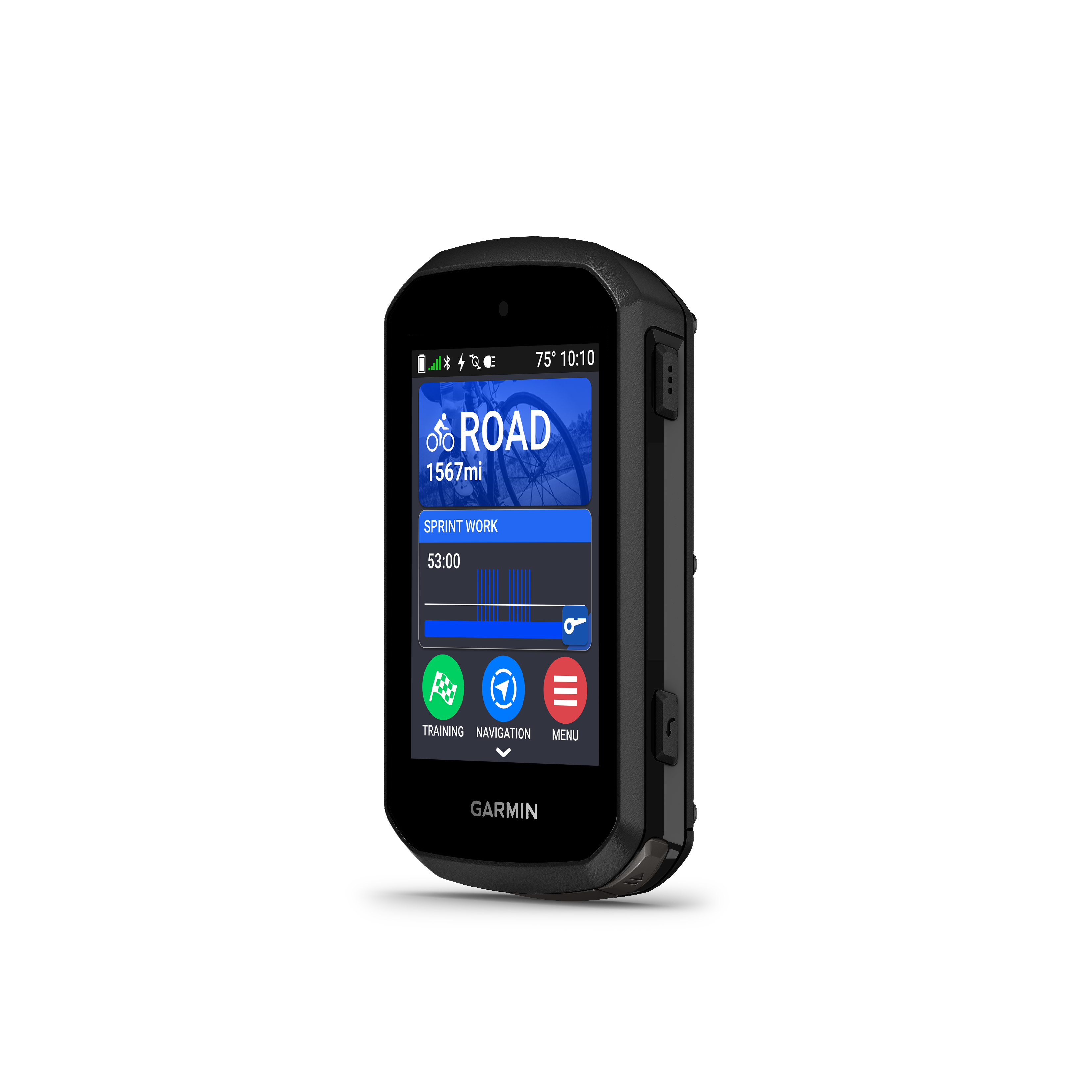
Garmin Edge 850: Touch + Speaker + E-Bell, But 10-Hour Battery Trade-Off
2.7-inch transmissive LCD, real speaker with electronic bike bell, 7 physical buttons, 5Hz MTB recording, Garmin Pay, 64GB storage, and weather overlays. The new screen cuts real-world battery to 10-12h. JoyVelo internal testing, 1,500 km across road + MTB.
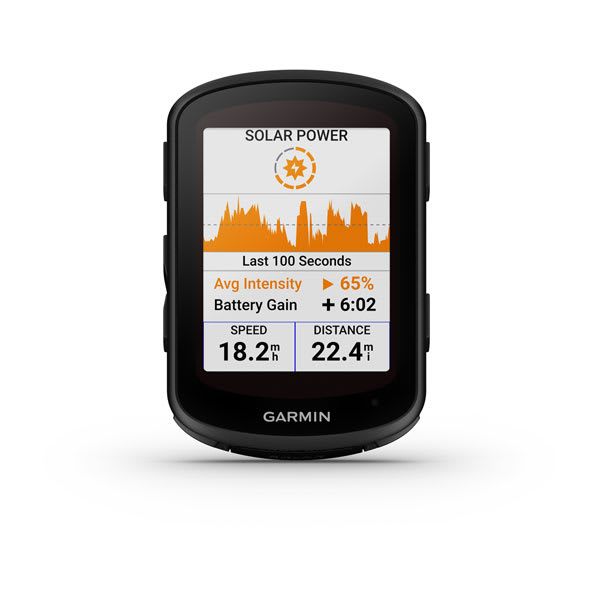
Garmin Edge 840: Free-Ride ClimbPro + 7 Buttons, The Sweet-Spot For Multi-Day Touring
MIP screen with optional Solar version, 7 physical buttons + touchscreen, 26h battery, free ClimbPro (no route required), Climb Explorer, multi-band GNSS, Power Guide, course deviation recovery. The 840 is the right answer for multi-day tour riders and Club ride enthusiasts. JoyVelo internal testing, 1,500 km road + gravel + MTB.
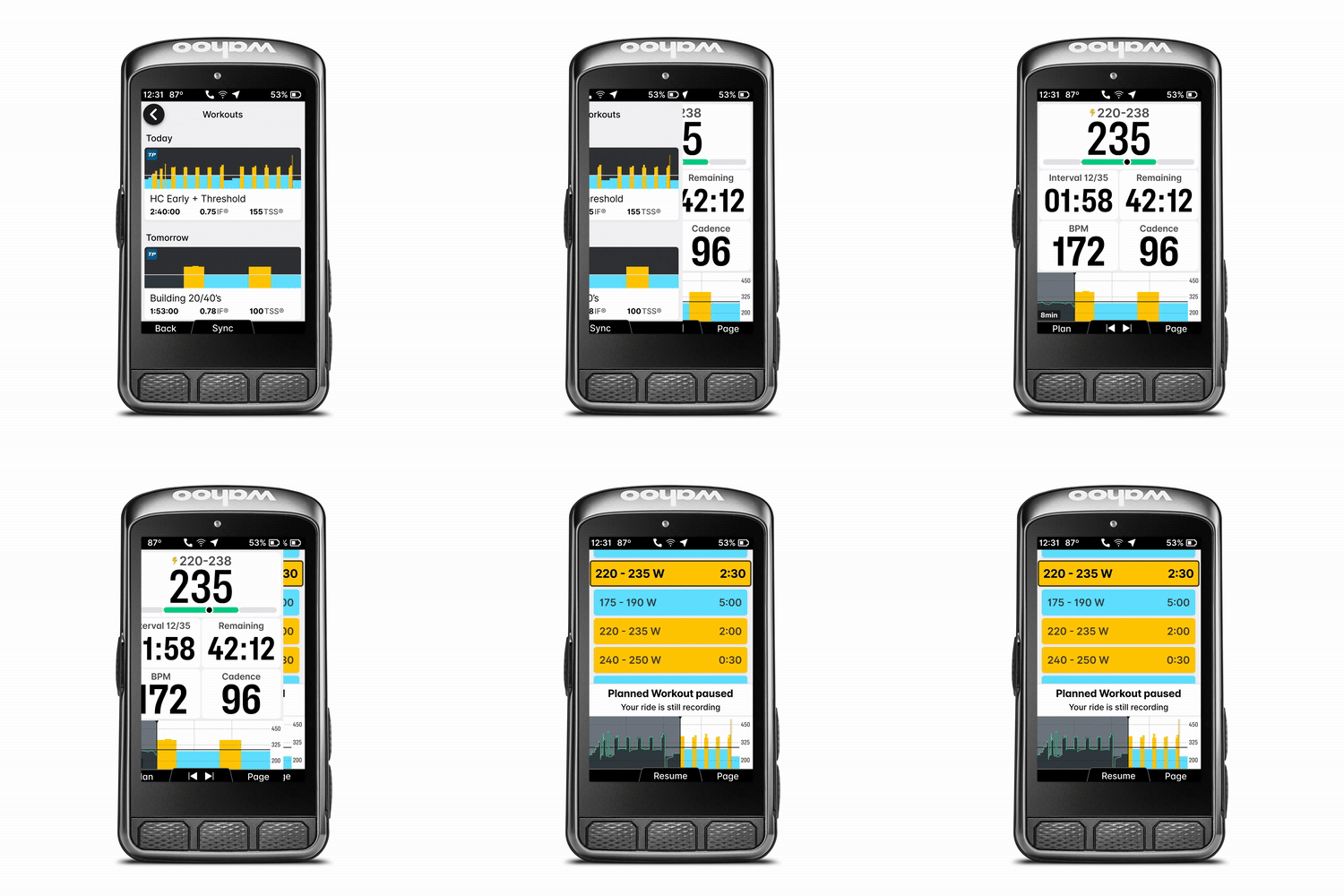
Wahoo ELEMNT Ace: 208g "Performance Beast" That Ships Half-Baked
208g (heaviest bike computer on the market), 3.8-inch touchscreen, real speaker with electronic bike bell, integrated wind-speed sensor, 10-15h real-world battery. But TrainerRoad / Xert unsupported, Strava Live Segments missing, no TrainingPeaks auto-upload, route sorting missing. JoyVelo internal testing, 800 km.
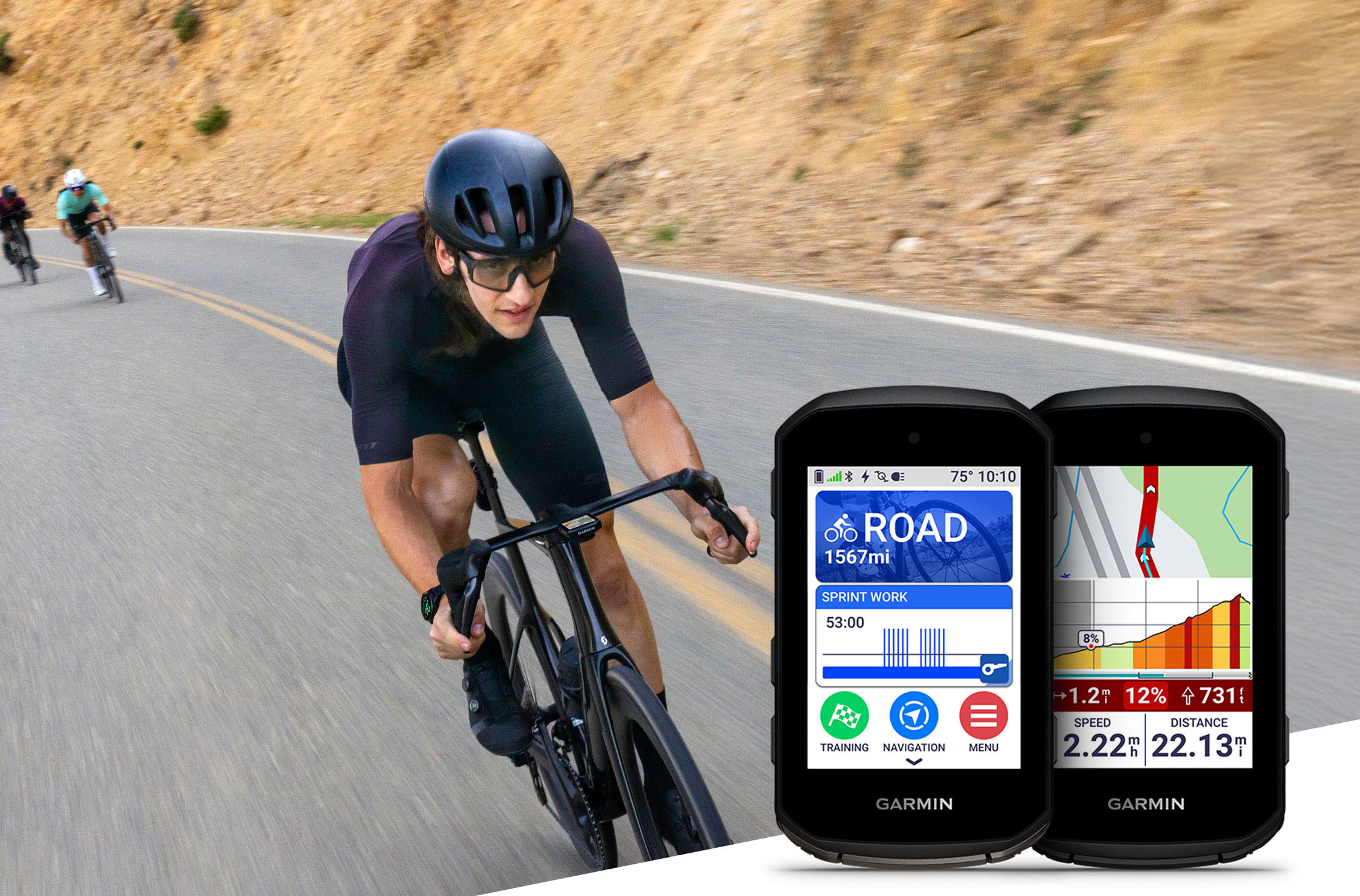
Garmin Edge 550: 7 Buttons + Buzzer, But 12-Hour Battery Hits Hard
7 physical buttons, no touchscreen, no speaker (only a buzzer), no Garmin Pay, 32GB storage, transmissive 2.7" LCD, and 5Hz MTB recording shared with the Edge 850 and 1050. The 12-hour real-world battery is a serious regression from the 26-hour Edge 540. JoyVelo internal testing, 1,200 km.
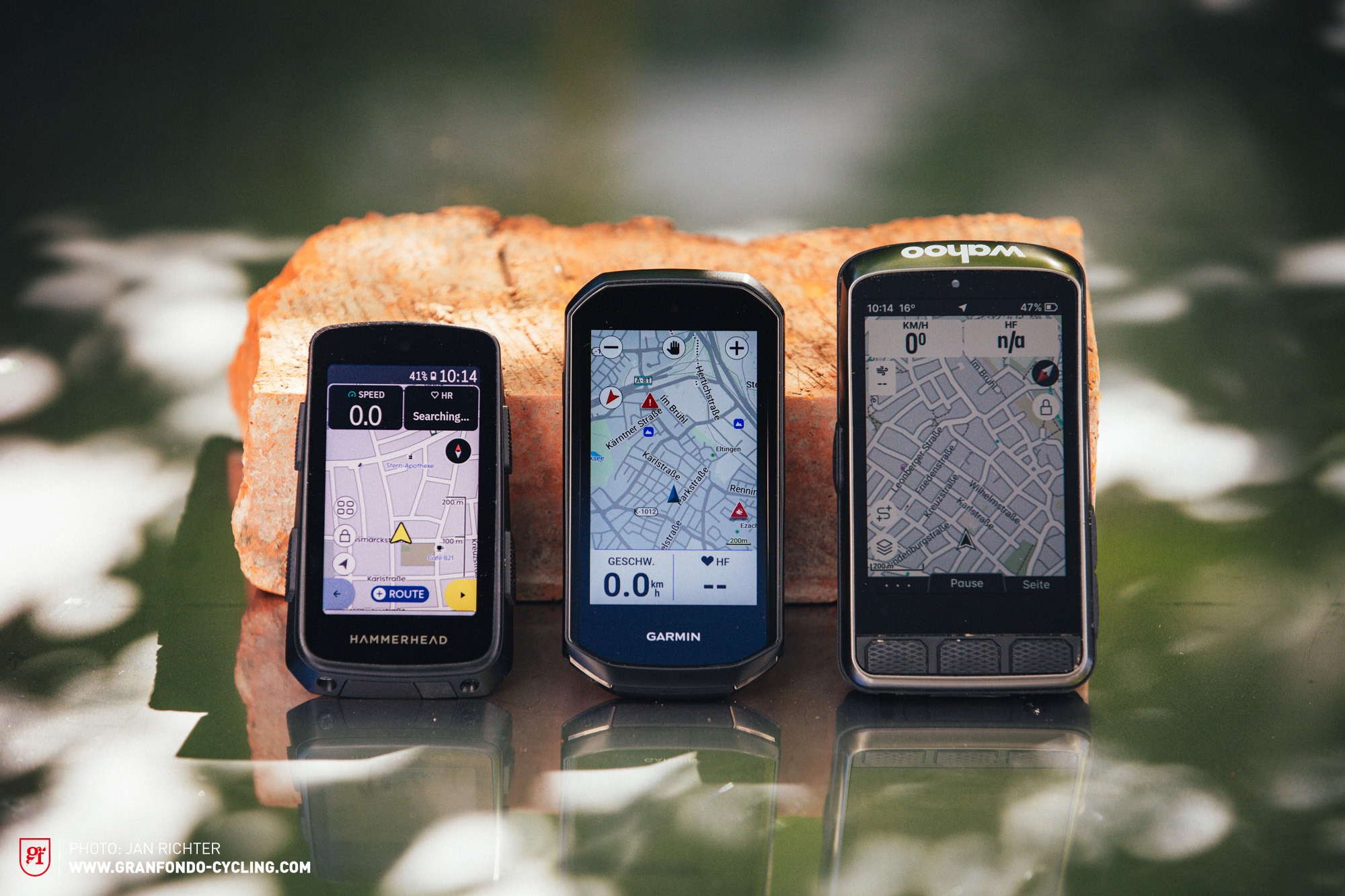
Hammerhead Karoo 3: 3.2" AMOLED + Android, But Loses the SIM Slot
3.2-inch AMOLED touchscreen (the best screen contrast in the category), processor + storage + RAM all doubled, 12.5-13h real-world battery, louder buzzer, and a new companion app. SIM card slot removed. JoyVelo internal testing, 1,500 km road + gravel.
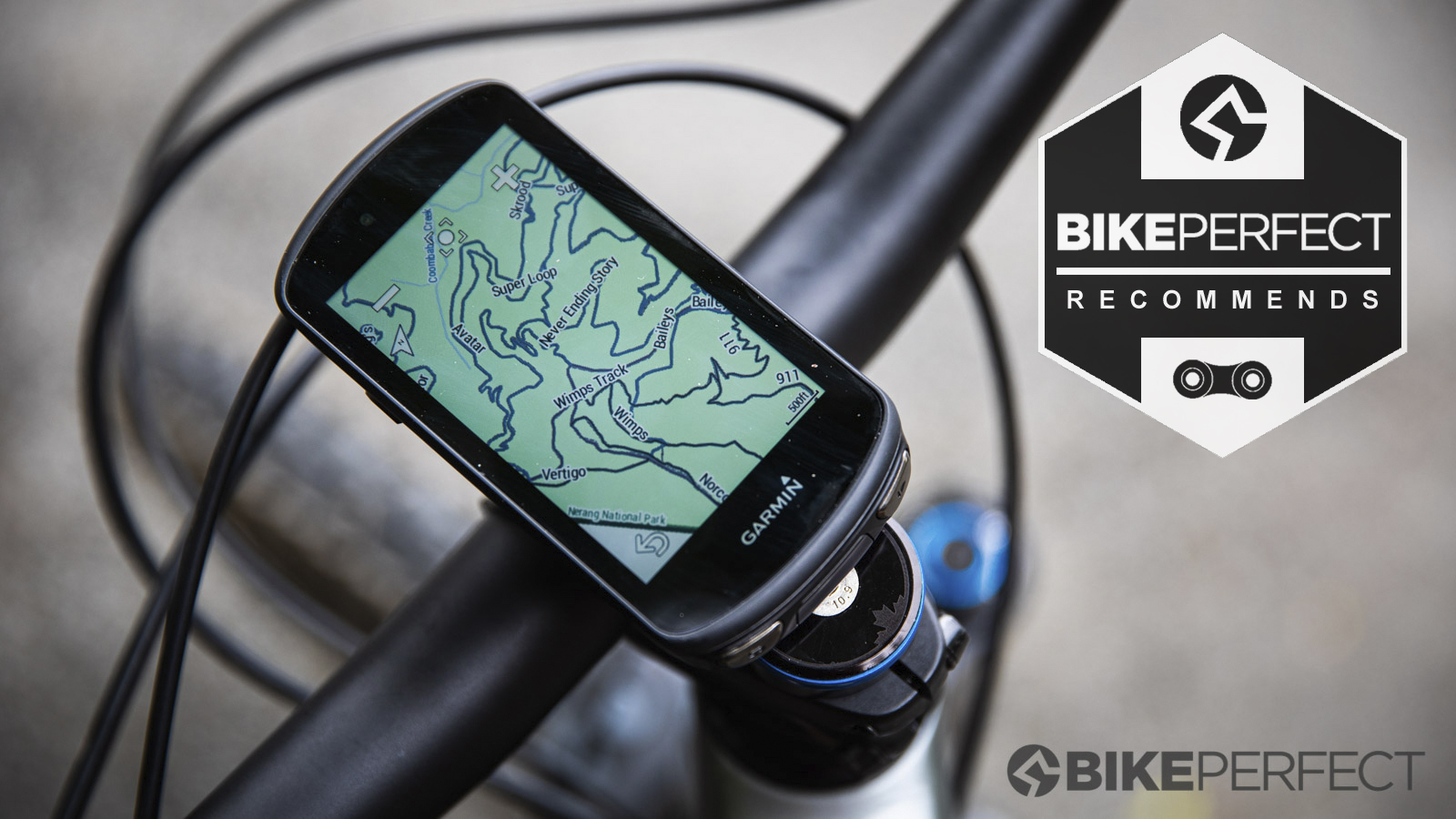
Garmin Edge 1030 Plus: The 3.5" Flagship, Reviewed
The 2020 Garmin Edge 1030 Plus brought a 3.5" touchscreen, 24h battery, and Trailforks integration to $599. Now superseded by the Edge 1050, but still on the used market.
Verify with JoyAnalyze
Compare GPS / elevation / power data with JoyAnalyze. Stack Garmin Edge 1050: The Best Screen, But 20-Hour Battery Is The Trade-Off against a reference device to see which computer records more stable data with less drift.
Open multi-file compare in JoyAnalyzeSee how this fits you
The Garmin Edge 1050: The Best Screen, But 20-Hour Battery Is The Trade-Off is one option. Run the JoyFit assessment to see whether it actually matches your body and riding style — or compare it side-by-side with the other Bike Computersin our database.
Community
Discuss this review · Pro members can rateComments
(0)Sign in above to leave a comment.
Loading comments…
Pro Ratings
PROLoading…Sign in above to rate this product on the 8-axis $APPEALS framework.