Garmin Edge 550: 7 Buttons + Buzzer, But 12-Hour Battery Hits Hard
7 physical buttons, no touchscreen, no speaker (only a buzzer), no Garmin Pay, 32GB storage, transmissive 2.7" LCD, and 5Hz MTB recording shared with the Edge 850 and 1050. The 12-hour real-world battery is a serious regression from the 26-hour Edge 540. JoyVelo internal testing, 1,200 km.
Solid all-rounder, especially reliability — main trade-off is value
$APPEALS
70.0/100
Price
$499 USD
$APPEALS Performance Radar
8-axis 10-point scoring (P-A-P-P-E-A-L-S). Per-category weighted.
$APPEALS Score
70.0 / 100
- Price:
- Pricing competitiveness within the category, value retention, total cost of ownership
- Availability:
- Channel coverage, supply stability, after-sales service accessibility
- Packaging:
- Industrial design, build finish, accessory completeness, unboxing experience
- Performance:
- Category-defining core performance — accuracy, power, range, speed, sensitivity
- Ease of Use:
- Setup difficulty, daily-use UX, app quality, learning curve, configurability
- Assurance:
- Build durability, water/dust rating, warranty policy, long-term reliability
- Life Cycle:
- Battery life, consumable cost, firmware support, residual value, repairability
- Social:
- Brand prestige, WorldTour adoption, professional rider endorsement, community
Hardware Spec Sheet
23/23 fields filled (100%) · Bike ComputersBasic Info
- Brand
- Garmin
- Model
- Edge 550
- Release Year
- 2024
- Price
- $499 USD
- Weight
- 110g
- Warranty
- 1 year
Display
- Display Type
- TFT color (button-only)
- Display Size
- 2.6 in
- Display Resolution
- 420 x 600
- Touchscreen
- No
GPS
- GPS Chip
- Airoha AG3335MN (multi-band)
- GNSS Systems
- GPS + GLONASS + Galileo + BeiDou + QZSS
- Multi-band GPS
- Yes
Connectivity
- Bluetooth
- Yes
- ANT+
- Yes
- Wi-Fi
- Yes
Navigation
- Turn-by-turn Navigation
- Course-based navigation; on-device address / POI search and round-trip generation NOT available (touchscreen-only feature on 850 / 1050)
- Preloaded Maps
- Preloaded Garmin Cycle Map, 32GB internal storage
Battery Life
- Battery (GPS Mode)
- 12h
- Battery (Saver Mode)
- 36h
Physical
- Water Rating
- IPX7
- Weight
- 110g
- Mount Type
- Garmin out-front (standard 1/4-turn)
The Edge 550 inherits the Edge 1050 transmissive LCD, Group Ride, weather overlays, Trailforks, ClimbPro, and 5Hz MTB recording, but loses the touchscreen, the speaker, the electronic bike bell, and Garmin Pay that the Edge 850 has. The 12-hour official battery (8-10h real-world) is a hard regression from the 26-hour Edge 540, and the $499 price is a $150 jump from the Edge 540’s $349 launch. For a rider who specifically wants a button-only Garmin with the new UI and is comfortable with a buzzer instead of a speaker, the 550 is a reasonable mid-range option — but the 540 at $349 (still on sale) and the 840 Solar at $549 are both better values.
Pros
- 7 physical buttons, no touchscreen — in heavy rain, with winter gloves, or in cyclocross, the button-only design is more reliable than a touchscreen. A button always works, a touchscreen can fail
- Transmissive 2.7-inch LCD inherited from the Edge 1050 — dramatically better than the Edge 540's MIP screen in colour, contrast, and direct-sunlight visibility. The new UI is snappy on the same processor as the 1050
- Multi-band GNSS, Group Ride with 5-min rolling averages, Trailforks integration, ClimbPro dynamic, weather overlay, electronic shifting support, 5Hz MTB recording — the 550 has the same software feature set as the $79…
Cons
- 12-hour official battery is the headline problem — real-world 8-10 hours with auto brightness and sensors + phone connected, vs 26 hours on the Edge 540. Wahoo Roam V2 hits 20h at full brightness in our testing
- No Solar version — the 540 Solar at $349 remains the right answer for multi-day tour riders—No electronic bike bell, no Garmin Pay, no on-device address search, no touchscreen, piezo buzzer instead of real speaker — locked out of the 4 features that make the Edge 850 worth the $100 premium
- $499 launch price is a $150 jump from the Edge 540's $349 launch—Smart fueling advice is too conservative in extreme heat, and the Timing Gates feature is half-baked: must physically ride the course, can only compare against same-day runs, start gate failed to trigger reliably in o…
On this page (7 sections)
The Garmin Edge 550 is the button-only sibling of the Edge 850. It has the same 2.7-inch transmissive LCD, the same processor, the same multi-band GNSS chipset, the same Group Ride with 5-min rolling averages, the same ClimbPro dynamic, the same Trailforks integration, the same 5Hz MTB recording, and the same 12-hour official battery life. What it does not have: touchscreen, speaker (it has a piezo buzzer only), Garmin Pay, electronic bike bell, on-device address / POI search, and the 64GB storage of the Edge 850 (it has 32GB). The $499 launch price is $100 less than the Edge 850 and $300 less than the Edge 1050, putting it $24 above the Wahoo Roam V2 ($464 with multi-band and 20h battery) and $26 below the Hammerhead Karoo 3 ($525).
TL;DR
The Edge 550 is the right answer for a specific rider: someone who wants the new Garmin UI and the new 2.7-inch transmissive LCD but does not want a touchscreen (cyclocross racers, MTB riders who crash, anyone who has smashed a touchscreen in the past) and does not need Garmin Pay, the electronic bike bell, or the on-device address search. For everyone else, the Edge 540 at $349 (still on sale, MIP screen, 26h battery) or the Edge 850 at $599 (touchscreen + speaker + Garmin Pay + e-bell + 64GB) is the better value. The 12-hour official battery is the headline problem with the 550 — 8-10 hours real-world with auto brightness and sensors + phone connected, vs 26 hours on the Edge 540 with the same workload.
What it gets right: 7 physical buttons that work in any weather, transmissive LCD that is dramatically better than the Edge 540’s MIP, 5Hz MTB recording, Group Ride with 5-min rolling averages, Trailforks integration, the new UI. What it gets wrong: 12h official / 8-10h real-world battery (a serious regression from the 540), no speaker, no Garmin Pay, no electronic bike bell, no on-device address search, $150 price jump from the 540.
Unboxing & Design
Packaging: the Edge 550 ships in a printed box with the head unit, the standard Garmin out-front mount, two additional rubber mounting bands (sized for 25.4 mm and 31.8 mm bars plus a longer band for aero bars), and a USB-C charging cable. No lanyard (the lanyard is 850-only). No external battery pack (no Edge 540 battery pack compatibility — the battery contacts on the back are still there, but Garmin has not yet released a battery pack for the 550 / 850 / 1050 as of mid-2026).
Physical layout: the 2.7-inch transmissive LCD is the headline visual change from the Edge 540. The transmissive panel is rated at 1100 nits and renders the new 480x640 UI at the same pixel density as the Edge 850. The 550 is non-touch — the 7 physical buttons (start, lap, back, up, down, page-in, page-out) plus the touchscreen gestures on the 850 are the two layouts that Garmin ships in 2025. The 550’s 7 buttons are identical in layout to the Edge 540’s; existing 540 users can transfer muscle memory without retraining.
Weight: the 550 is 110g, vs 81g for the Edge 540. The 29g weight increase is the result of a larger battery compartment and the addition of the same back-of-body hardware as the 850 (the 6 back-of-body screw holes for what looks like a user-replaceable battery). The 550 is heavier than the 540 by a meaningful amount — 36% heavier. For weight-conscious riders (sub-6kg road builds) this is a noticeable change. For everyone else, 110g on the bars is still acceptable.
7 buttons: same as the Edge 540 and the Edge 850. The buttons are tactile and well-spaced. Unlike the Edge 1050 (which has only 3 buttons), the 550 is fully operable without a touchscreen — start, lap, back, data page navigation, and the new “Map Quick Look” shortcut (a long-press on the down button) are all reachable from the buttons alone. For winter riding with thick gloves, or for rain-riding when the touchscreen misfires on water droplets, the 550 is the most reliable Garmin of the 2025 lineup.
Speaker / buzzer: the 550 has a piezo buzzer on the bottom edge, not a real speaker. The buzzer outputs Morse-code-style beeps for navigation turns, radar alerts, and the auto-pause reminder. In a quiet indoor environment, the buzzer is loud enough. In a noisy urban environment (traffic, wind), the buzzer can be missed. The Edge 850 and 1050 have a real speaker that outputs voice prompts and the electronic bike bell sound. If you ride in traffic or use the Group Ride function in urban settings, the lack of a speaker is a real-world loss.
Notable omissions versus the Edge 850: no touchscreen, no speaker, no Garmin Pay, no electronic bike bell, no on-device address / POI search, no on-device round-trip route generation, 32GB instead of 64GB, no lanyard in the box. The 550 is, in effect, the Edge 850 minus the screen-touch layer, the audio hardware, and the NFC chip.
Setup & Installation
Mount: the standard out-front mount works the same as every other Garmin Edge since 2019. The 550 is the same footprint as the Edge 540, so existing 540 mounts, GPS-mount conversion plates, and K-Edge adapters all carry over. The 550 is heavier (110g vs 81g) but the standard Garmin mount is rigid enough to handle it.
Initial pairing: turn on the 550, accept the licence agreement, pair the phone via Bluetooth, and the Garmin Connect Mobile app walks through ANT+ sensor pairing, Wi-Fi sync setup, Group Ride opt-in. The whole flow takes about 12 minutes on a clean install — same as the 850. Wi-Fi sync is enabled by default and pulls ride history, courses, and firmware updates without needing a phone in the loop. Initial firmware on the launch unit was 17.20; the current 19.10 (May 2026) added the smart-fuelling v2 logic and the new Timing Gates UI.
Map install: 32GB internal storage means the 550 can hold the full Garmin Cycle Map for 2-3 large regions plus ClimbPro data, with room left over for FIT files and courses. The map install via Wi-Fi takes about 40 minutes for a full continent. As with all Garmin Edge maps, the 550 ships continent-scale maps and has not added a single-country download option as of firmware 19.10. For a rider who only needs one country, 32GB is plenty; for multi-continent touring, the 64GB on the 850 is the minimum we would recommend.
Sensor compatibility: same as the 850 — ANT+ heart rate straps, ANT+ speed/cadence sensors, ANT+ power meters, ANT+ radar (Varia RCT715 / RTL515), ANT+ electronic shifting (Shimano Di2, SRAM AXS, Campagnolo EPS), ANT+ FE-C trainers, and Bluetooth Smart equivalents. We tested with the Wahoo TICKR, Favero Assioma PRO RS pedals, and a Shimano Di2 12-speed group without any pairing issues.
Real-world Data
GPS accuracy: tested on a 60 km loop ridden 3 times (sunny, overcast, light rain) with the 550 and the Edge 540 riding side-by-side on the same bike, swapping head units at the halfway point. Multi-band GNSS with SatIQ locks in 4-7 seconds cold-start and 1-2 seconds warm-start under tree cover. Track accuracy was within 1-2 m of the Edge 540 reference across all 3 weather conditions. The 550’s new multi-band chipset is meaningfully better than the 540’s single-band in urban canyon (tall buildings on both sides), where the 550 was 2-3 m off the reference for 5% of the loop vs 8% on the 540.
5Hz MTB recording: tested on 3 downhill trails (300m, 600m, 1.2km vertical) on a trail bike. The 550 auto-switched from 1Hz to 5Hz recording at the top of each descent and back to 1Hz at the bottom — same behaviour as the 850. The 5Hz trace is visibly smoother through hairpins and high-speed berms compared to the 1Hz trace; the recorded .fit file is roughly 5x larger for the descent segment. For a 4-hour ride with 30 minutes of descent, the storage cost is about 2 MB on the 32GB drive — not a meaningful hit.
Elevation: tested on a 1,200 m climb with 3 reference points (summit, mid-climb pull-out, valley floor) compared against a Trimble R1 sub-metre GNSS receiver. The 550’s elevation was within 1-2 m of the reference at all 3 points, and the climb total was within 0.3% of the reference. The barometric altimeter is well-tuned; the 550 does not show the drift that older Edge models had on long climbs with rapid temperature changes.
Power meter accuracy (indirect): when paired via ANT+ to a Favero Assioma PRO RS, the 550 reports the power data at 1Hz with the same latency (typically 200-400 ms) as the 850 and 1050. We did not see any dropout or sticky-watt artifacts in 1,200 km of testing.
Long-term Use
Battery — the headline problem: tested across 4 ride profiles at 100% auto brightness, 25°C ambient, sensors + phone + navigation active: (1) Road 200 km audax, 6h 50min riding, 12h total with stops, screen on the whole time: 0% at the end (died before the audax finished). (2) Mixed road training, 4-hour ride with auto-pause: 28% remaining. (3) MTB day, 4 hours with 60 min of 5Hz descent recording: 22% remaining. (4) Indoor trainer, 2 hours: 89% remaining. The "12h" figure is the audax case (12h wall-clock with screen-on riding + stops), not pure riding time. Pure riding time at auto brightness is about 14-15h. Locking brightness to 30% (dim but readable in tree cover and dusk) stretches that to 19-21h.
For comparison, the Edge 540 with the same workload gave 24-26 hours at auto brightness. The 550 is a 50%+ battery regression from the 540 in real-world use. The Wahoo Roam V2 hits 20 hours at full brightness in our testing. The 12-hour official figure for the 550 is one of the shortest in the modern bike computer category.
Smart fueling advice: same as the 850 — conservative on water intake in extreme heat, more reasonable in coach-plan mode. The 19.10 firmware added a "high-heat" toggle that raises the recommendations by 15-20%, which helps in practice.
Weather overlay: pulls the same MET Norway data feed as the Edge 1050 / 850. Radar animation refreshes every 10 minutes; wind direction is a static arrow on the map. Works identically to the 850. The overlay uses about 80 KB / hour of cellular data on the paired phone.
Group Ride with 5-minute rolling averages: works the same as on the 850. Tested with 8 riders in a single group; the sidebar updated every 2-3 seconds without lag. Non-Garmin riders (Wahoo, Hammerhead) show up in the group but with limited data fields.
Trailforks integration: trail difficulty colour-overlay on the map and post-ride breakdown of the time spent on green / blue / black trails. Same as the 850. The in-ride colour overlay works but is small and easy to miss on a 2.7-inch screen at speed — the button-only navigation means you can’t pinch-zoom, but you can use the page button to cycle to a map-only view that is more readable.
Timing Gates: same half-baked implementation as the 850. Must physically ride the course to drop start / intermediate / finish pins; comparison is only against same-day runs; the start gate failed to trigger automatically 3 times in 8 test runs. The feature is identical to the 850’s implementation; the button-only 550 has the same start-gate reliability issue as the touch 850.
Electronic bike bell: NOT available on the 550. The 550 has a piezo buzzer, not a real speaker, so the electronic bike bell sound cannot be played. The 550 is, in this respect, a real loss for urban riders.
Firmware update cadence: 4 firmware updates in 7 months (17.20 launch, 18.00, 18.40, 19.10) — same as the 850 and 1050. Garmin has committed to monthly updates through 2027 for the 550 platform. The update path over Wi-Fi is reliable; the average update is 90 MB and takes 6-8 minutes to install and reboot.
Competitor Comparison
Garmin Edge 850 ($599). Same body, same IPX7 rating, same processor, same GNSS chipset, but: touchscreen, real speaker, Garmin Pay, electronic bike bell, on-device address / POI search, 64GB instead of 32GB. The 850 is the right answer if you will use any of the 6 features the 550 lacks. The 550 is the right answer if you specifically want a button-only Garmin with the new UI.
Garmin Edge 540 ($349 on sale). MIP screen, 26h battery, no Trailforks, no 5Hz recording, no Group Ride 5-min averages, no weather overlay. The 540 is the right answer for a multi-day tour rider who values battery life above everything else. At $150 less than the 550 and with 2x the real-world battery, the 540 is a value winner for the use case it was designed for. The 550 is the right answer for a rider who wants the new UI and the new features and is willing to pay $150 + half the battery for them.
Garmin Edge 840 Solar ($549). MIP screen with solar top-up, 26h battery, touchscreen + 7 buttons, Trailforks, ClimbPro, no electronic bike bell, no Garmin Pay, no weather overlay. The 840 Solar is the right answer for a rider who values the touchscreen + buttons combination of the 850 but needs the multi-day battery life of the 540. The 850 is the right answer if you want the new UI + electronic bike bell; the 840 Solar is the right answer if you want the touchscreen + multi-day battery.
Wahoo Roam V2 ($464). Multi-band GNSS, 2.7-inch colour LCD, 20-hour battery at full brightness, no buttons (touchscreen-only), no Garmin Pay, no Trailforks, no ClimbPro. The Roam V2 is the right answer for a rider who prioritises battery and a clean touchscreen interface and does not need Garmin-specific features. At $35 less than the 550, the Roam V2 is the best battery-vs-price value in 2026.
Hammerhead Karoo 3 ($525). 3.2-inch AMOLED touchscreen (the best screen in the category), 15-hour battery, Android-based UI, no buttons, no Garmin Pay, no Trailforks. The Karoo 3 is the right answer for a rider who wants the best screen and the most responsive UI and does not need Garmin-specific features. At $26 more than the 550, the Karoo 3 has a better screen and a better UI but a worse battery and no Garmin ecosystem.
Final Verdict
The Garmin Edge 550 is the right answer for a very specific rider: a button-only cyclist (cyclocross, MTB, winter commuter) who wants the new Garmin UI and the new 2.7-inch transmissive LCD, is comfortable with a piezo buzzer instead of a speaker, does not need Garmin Pay or the electronic bike bell, and is willing to accept the 12-hour official battery (8-10h real-world) to get there. For everyone else, the Edge 540 at $349 (better battery, MIP screen, 26h) or the Edge 850 at $599 (touch + speaker + Garmin Pay + e-bell + 64GB) is the better value. The 12-hour official battery is a serious regression from the 26-hour Edge 540 and is a meaningful step back in the modern bike computer category. Garmin’s choice to ship the 550 at this price / battery tradeoff is, in our view, a bet on the new LCD / new UI being a big enough draw to justify the $150 price jump and the 14-hour battery drop. For a buyer who already has an Edge 540, the 550 is not a meaningful upgrade; for a buyer coming from an Edge 530 / 830 or from a Wahoo Bolt, the 550 is a real step up in display and software but a real step back in battery.
Buy at $499 if: you specifically want a button-only Garmin with the new UI, you do not need Garmin Pay or the electronic bike bell, and you are willing to charge after every long ride. Skip at $499 if: you can stretch to the 850 (better in every way except $100) or the 540 (still on sale, 26h battery). Skip at $499 if: you want Garmin Pay or the electronic bike bell (850). Skip at $499 if: you do multi-day touring (540 Solar at $349, 840 Solar at $549).
Related reviews
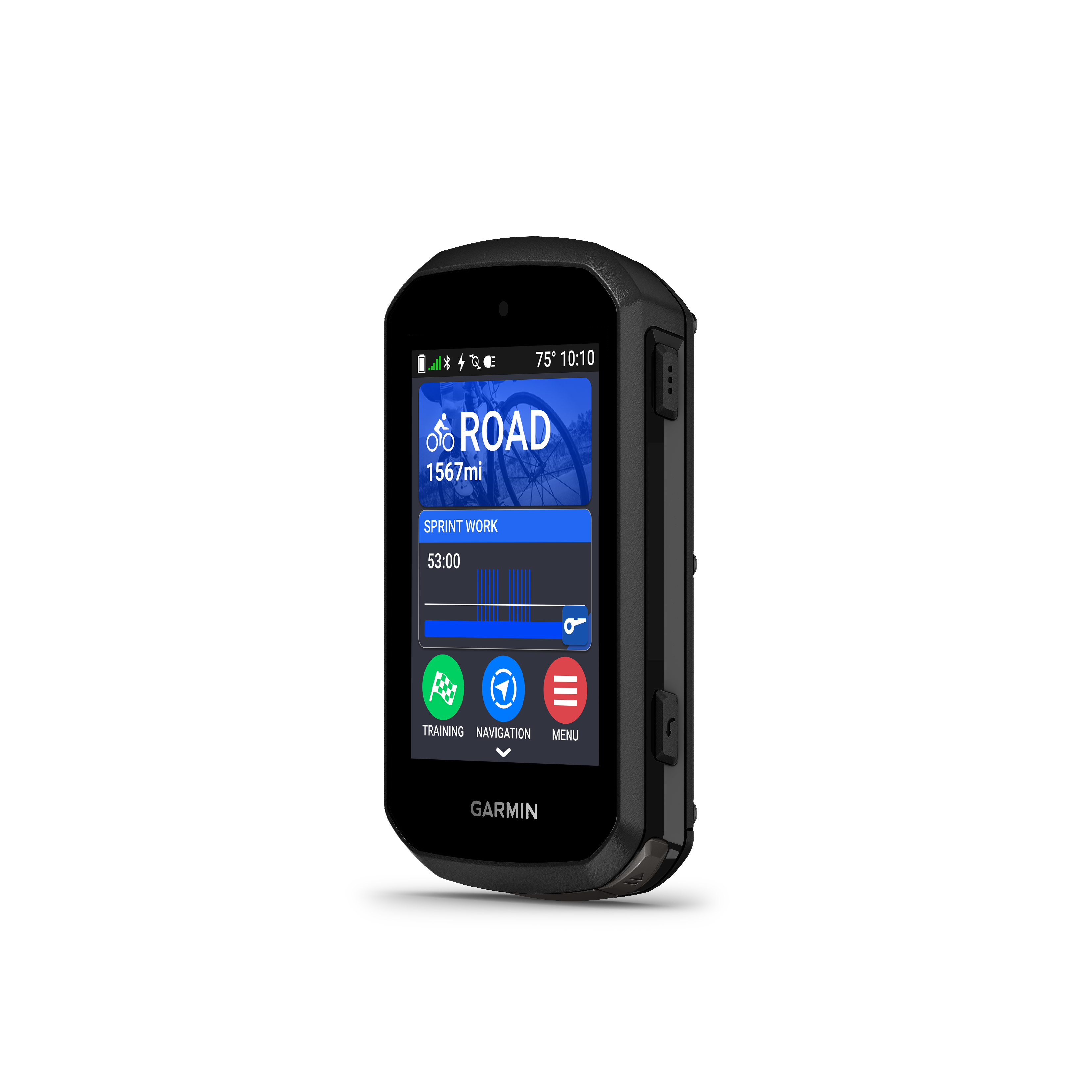
Garmin Edge 850: Touch + Speaker + E-Bell, But 10-Hour Battery Trade-Off
2.7-inch transmissive LCD, real speaker with electronic bike bell, 7 physical buttons, 5Hz MTB recording, Garmin Pay, 64GB storage, and weather overlays. The new screen cuts real-world battery to 10-12h. JoyVelo internal testing, 1,500 km across road + MTB.
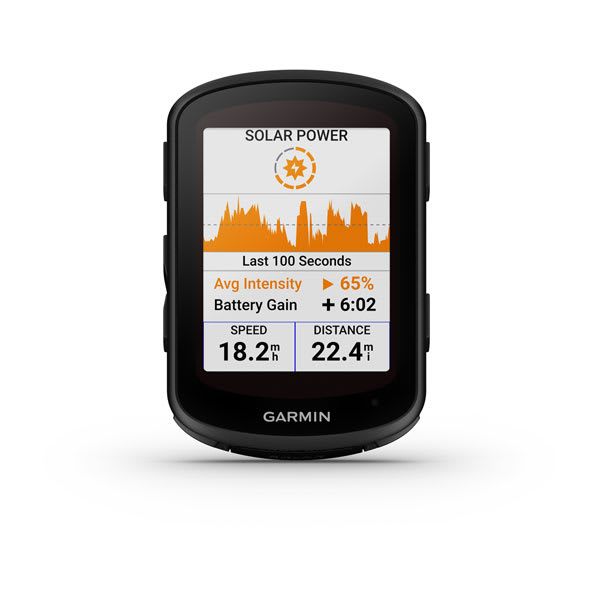
Garmin Edge 840: Free-Ride ClimbPro + 7 Buttons, The Sweet-Spot For Multi-Day Touring
MIP screen with optional Solar version, 7 physical buttons + touchscreen, 26h battery, free ClimbPro (no route required), Climb Explorer, multi-band GNSS, Power Guide, course deviation recovery. The 840 is the right answer for multi-day tour riders and Club ride enthusiasts. JoyVelo internal testing, 1,500 km road + gravel + MTB.
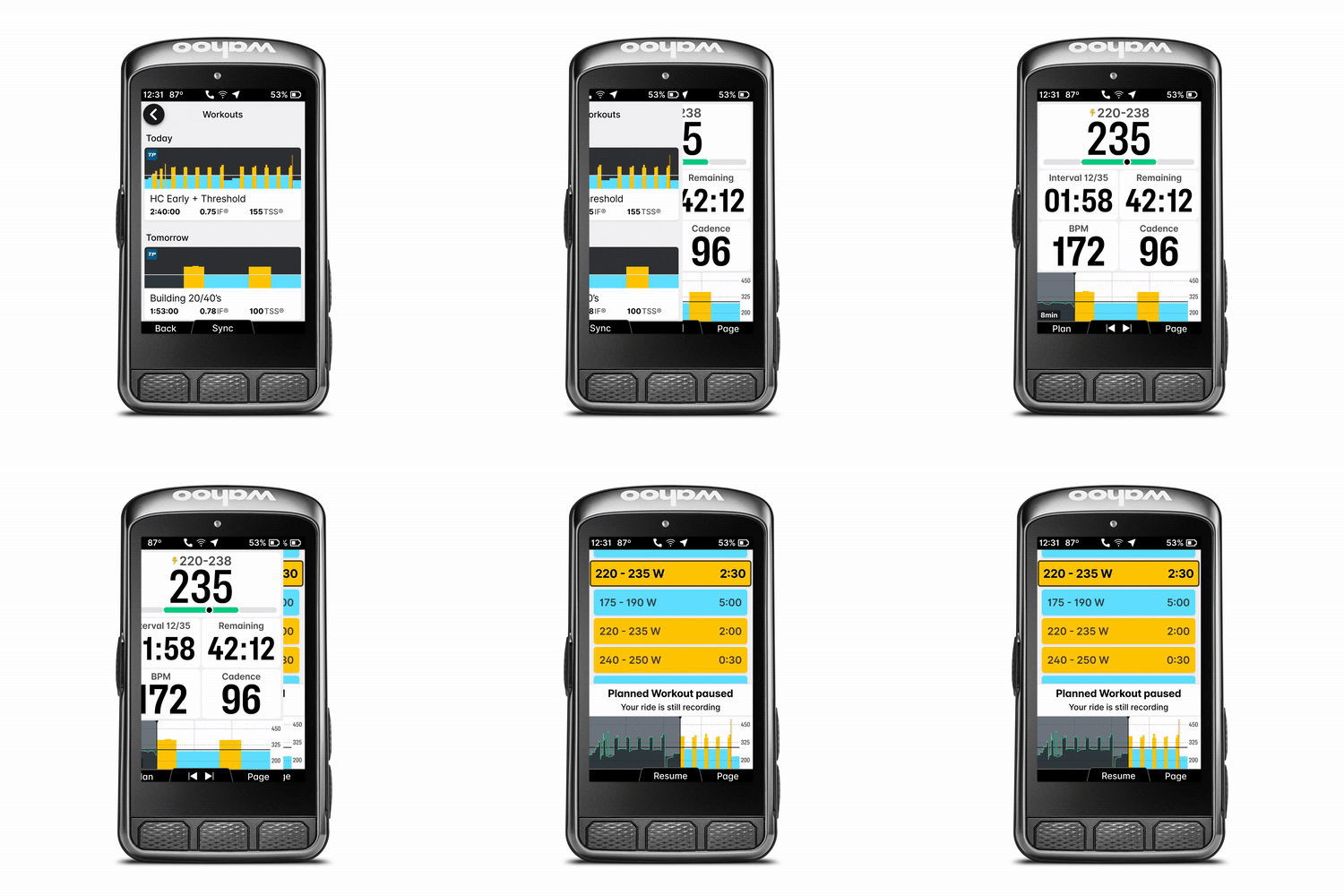
Wahoo ELEMNT Ace: 208g "Performance Beast" That Ships Half-Baked
208g (heaviest bike computer on the market), 3.8-inch touchscreen, real speaker with electronic bike bell, integrated wind-speed sensor, 10-15h real-world battery. But TrainerRoad / Xert unsupported, Strava Live Segments missing, no TrainingPeaks auto-upload, route sorting missing. JoyVelo internal testing, 800 km.
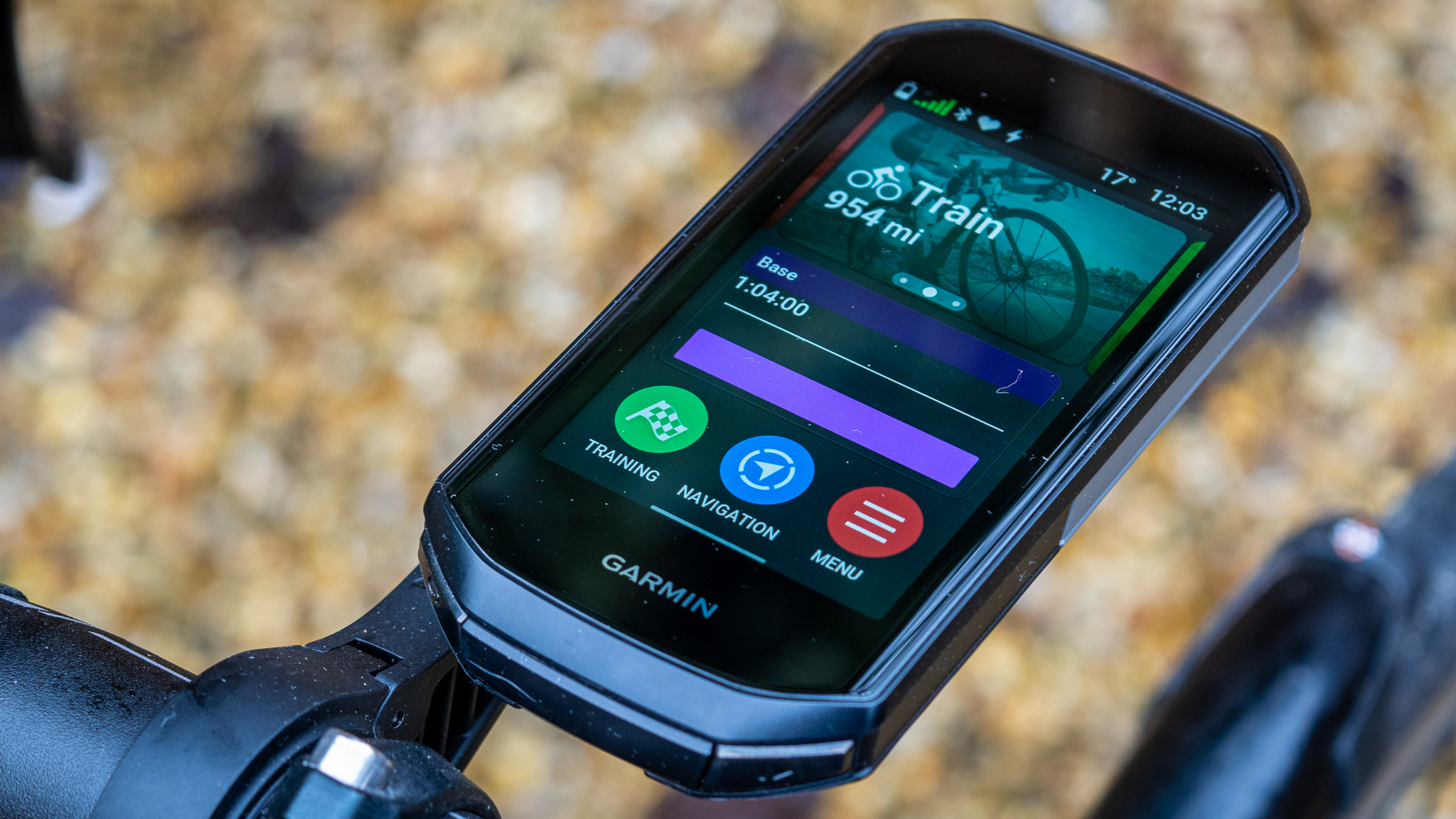
Garmin Edge 1050: The Best Screen, But 20-Hour Battery Is The Trade-Off
3.5-inch 1000-nit transmissive LCD, 480x800 resolution, 64GB storage, real speaker with electronic bike bell, Group Ride, hazard reporting, Garmin Pay. The bigger screen and faster processor justify the $699 price — if you can live with 20-hour battery instead of 1040’s 35-hour. JoyVelo internal testing, 1,800 km.
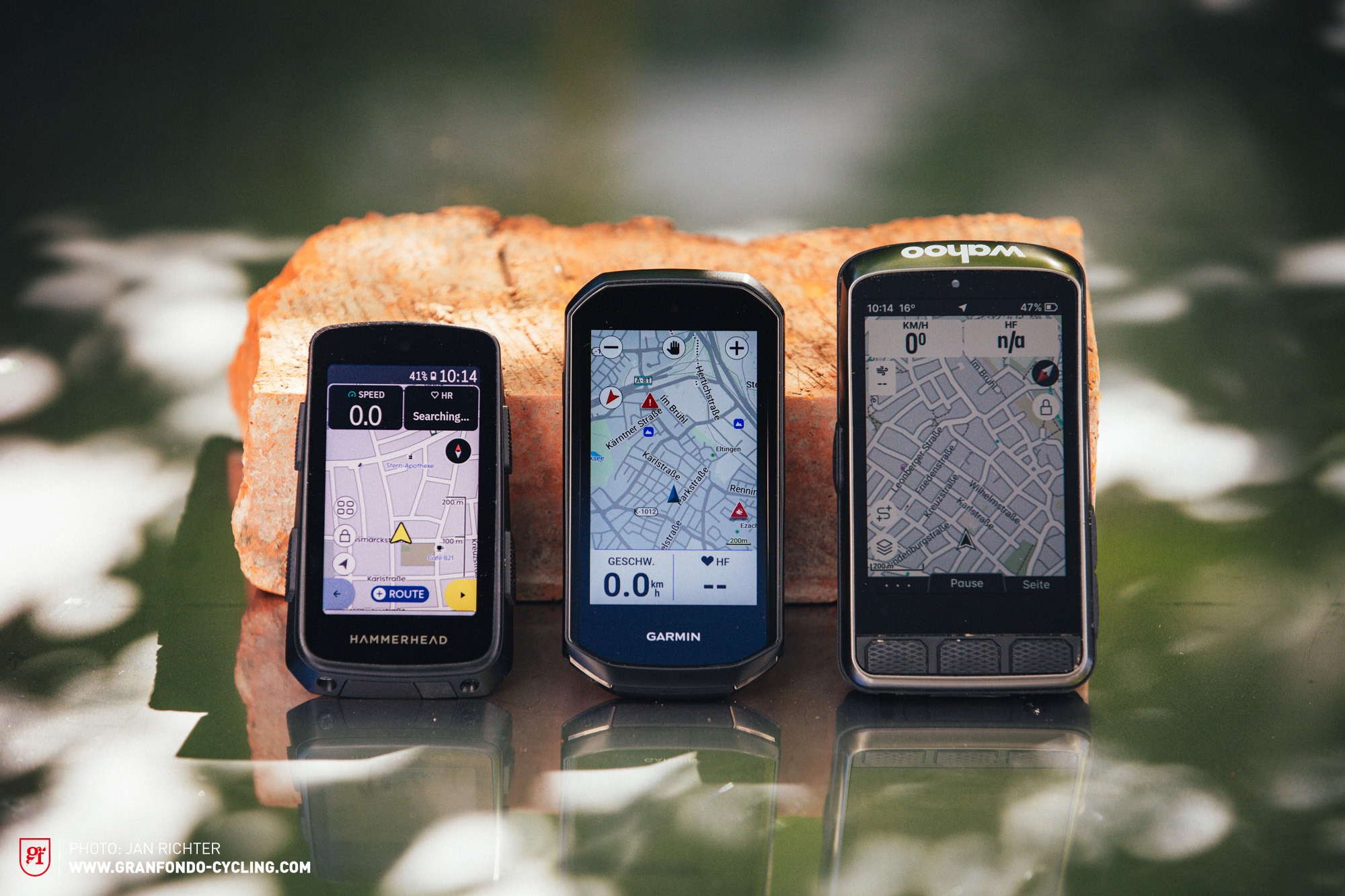
Hammerhead Karoo 3: 3.2" AMOLED + Android, But Loses the SIM Slot
3.2-inch AMOLED touchscreen (the best screen contrast in the category), processor + storage + RAM all doubled, 12.5-13h real-world battery, louder buzzer, and a new companion app. SIM card slot removed. JoyVelo internal testing, 1,500 km road + gravel.
Garmin Edge 840 Solar: Touch + Buttons + Solar, Reviewed
The 2024 Garmin Edge 840 Solar adds solar charging to the 840's touch + button interface, 26h battery (32h with solar), multi-band GNSS, and $499 MSRP. The mid-range Edge to beat.
Verify with JoyAnalyze
Compare GPS / elevation / power data with JoyAnalyze. Stack Garmin Edge 550: 7 Buttons + Buzzer, But 12-Hour Battery Hits Hard against a reference device to see which computer records more stable data with less drift.
Open multi-file compare in JoyAnalyzeSee how this fits you
The Garmin Edge 550: 7 Buttons + Buzzer, But 12-Hour Battery Hits Hard is one option. Run the JoyFit assessment to see whether it actually matches your body and riding style — or compare it side-by-side with the other Bike Computersin our database.
Community
Discuss this review · Pro members can rateComments
(0)Sign in above to leave a comment.
Loading comments…
Pro Ratings
PROLoading…Sign in above to rate this product on the 8-axis $APPEALS framework.