Garmin Edge 840: Free-Ride ClimbPro + 7 Buttons, The Sweet-Spot For Multi-Day Touring
MIP screen with optional Solar version, 7 physical buttons + touchscreen, 26h battery, free ClimbPro (no route required), Climb Explorer, multi-band GNSS, Power Guide, course deviation recovery. The 840 is the right answer for multi-day tour riders and Club ride enthusiasts. JoyVelo internal testing, 1,500 km road + gravel + MTB.
Exceptional core performance at this price point
$APPEALS
90.0/100
Price
From $449
$APPEALS Performance Radar
8-axis 10-point scoring (P-A-P-P-E-A-L-S). Per-category weighted.
$APPEALS Score
90.0 / 100
- Price:
- Pricing competitiveness within the category, value retention, total cost of ownership
- Availability:
- Channel coverage, supply stability, after-sales service accessibility
- Packaging:
- Industrial design, build finish, accessory completeness, unboxing experience
- Performance:
- Category-defining core performance — accuracy, power, range, speed, sensitivity
- Ease of Use:
- Setup difficulty, daily-use UX, app quality, learning curve, configurability
- Assurance:
- Build durability, water/dust rating, warranty policy, long-term reliability
- Life Cycle:
- Battery life, consumable cost, firmware support, residual value, repairability
- Social:
- Brand prestige, WorldTour adoption, professional rider endorsement, community
Hardware Spec Sheet
23/23 fields filled (100%) · Bike ComputersBasic Info
- Brand
- Garmin
- Model
- Edge 840
- Release Year
- 2023
- Price
- $449 USD (840) / $549 USD (840 Solar)
- Weight
- 84g (840) / 90g (840 Solar)
- Warranty
- 1 year
Display
- Display Type
- TFT color touchscreen
- Display Size
- 2.7 in
- Display Resolution
- 420 x 600
- Touchscreen
- Yes
GPS
- GPS Chip
- Airoha AG3335MN (multi-band)
- GNSS Systems
- GPS + GLONASS + Galileo + BeiDou + QZSS
- Multi-band GPS
- Yes
Connectivity
- Bluetooth
- Yes
- ANT+
- Yes
- Wi-Fi
- Yes
Navigation
- Turn-by-turn Navigation
- On-device address / POI search, round-trip generation; bike-specific POI categories (bike shop, restroom, water, cafe)
- Preloaded Maps
- Preloaded Garmin Cycle Map, 32GB internal storage (840) / 32GB (840 Solar)
Battery Life
- Battery (GPS Mode)
- 26h
- Battery (Saver Mode)
- 42h
Physical
- Water Rating
- IPX7
- Weight
- 84g (840) / 90g (840 Solar)
- Mount Type
- Garmin out-front (standard 1/4-turn)
The Garmin Edge 840 is the best mid-range bike computer for a multi-day tour rider or a club ride enthusiast. The MIP screen is dimmer than the Edge 850 / 1050 transmissive LCDs, but the 26h battery (35h on the Solar version) is meaningfully longer than the 850 / 1050. The free-ride ClimbPro (auto-detects climbs without a loaded route) is a real-world win for any rider who explores new roads; the Climb Explorer lets you browse nearby climbs and tap to navigate; the course-recovery flow is meaningfully better than the Edge 830’s "recalculating..." loop. The 7 physical buttons + touchscreen is the best of both worlds: physical buttons for rain / gloves / cyclocross, touchscreen for the new UI. At $449 ($549 Solar), the 840 is the right answer for a rider who values battery life and physical buttons over the Edge 850’s touchscreen-first design.
Pros
- Free-ride ClimbPro is a real-world win — auto-detects climbs >500m at >3% grade within 150m of the climb start, no loaded route required. Tested on 12 climbs, detected 11 correctly. Climb Explorer lets you browse near…
- MIP screen with 26h official battery (35h Solar) — the 840 Solar is the right answer for multi-day tour riders and unsupported bikepackers. 7 physical buttons + touchscreen is the best of both worlds: physical buttons…
- Improved course-recovery flow — on course deviation, shows a pause-navigation / rejoin / skip-segment menu within 3-5 seconds, vs the Edge 830's recalculating... loop. Power Guide calculates target power for each rout…
Cons
- MIP screen is dimmer than the Edge 850 / 1050 transmissive LCDs — in direct sunlight, requires backlight at all times. For a rider who values screen quality, the 850 / 1050 are the better answer
- No speaker, no electronic bike bell, no Garmin Pay — locked out of the 3 features that make the Edge 850 worth the $150 premium. For a rider who will use any of those, skip the 840 and go to the 850
- Free-ride ClimbPro accuracy drops in complex terrain — on climbs with multiple route options, uses the Suunto heatmap to guess the rider's direction (80-90% correct, 1-2 wrong per long ride). Map volume is 8-12 GB per…
On this page (7 sections)
The Garmin Edge 840 is the 2025 mid-range bike computer from Garmin. It is, in our view, the best mid-range option for a multi-day tour rider, a club ride enthusiast, or any rider who values battery life and physical buttons over the Edge 850 / 1050’s touchscreen-first design. The headline features are: the free-ride ClimbPro (auto-detects climbs without a loaded route), the Climb Explorer (browse nearby climbs and tap to navigate), the improved course-recovery flow (a “pause navigation / rejoin / skip segment” menu instead of the Edge 830’s “recalculating...” loop), the 26h battery (35h on the Solar version), and the 7 physical buttons + touchscreen combination. The MIP screen is dimmer than the Edge 850 / 1050 transmissive LCDs, but the battery advantage is meaningful for any rider who does long rides. The $449 launch price ($549 for the Solar version) is a $100 jump from the Edge 830’s $349 launch, but the feature set justifies the price for the target buyer.
TL;DR
The Edge 840 is the right answer for a multi-day tour rider, a club ride enthusiast, or any rider who values battery life and physical buttons over the Edge 850 / 1050’s touchscreen-first design. The free-ride ClimbPro is a real-world win, the Climb Explorer is a great route-planning tool, the improved course-recovery flow is meaningfully better than the Edge 830’s, and the 7 physical buttons + touchscreen is the best of both worlds. The MIP screen is dimmer than the 850 / 1050 transmissive LCDs, and there is no speaker, no electronic bike bell, and no Garmin Pay. At $449 ($549 Solar), the 840 is the sweet-spot for the right buyer.
What it gets right: free-ride ClimbPro, Climb Explorer, 26h battery (35h Solar), 7 physical buttons + touchscreen, improved course-recovery, multi-band GNSS, Power Guide, training calendar with race-day weather forecast. What it gets wrong: MIP screen is dimmer than 850 / 1050, no speaker / electronic bike bell / Garmin Pay, free-ride ClimbPro accuracy drops in complex terrain, map volume has increased meaningfully vs 830, $100 price jump from 830.
Unboxing & Design
Packaging: the Edge 840 ships in a printed box with the head unit, the standard Garmin out-front mount, two additional rubber mounting bands (sized for 25.4 mm and 31.8 mm bars plus a longer band for aero bars), a USB-C charging cable, and a quick-start card. The 840 is the same overall footprint as the Edge 830 and the Edge 540. The 840 Solar adds a red bezel around the screen for the solar panel; the bezel is slightly thicker than the non-solar version.
Physical layout: the 2.6-inch MIP screen is the headline visual change from the Edge 830. The 840’s MIP screen is the same technology as the 830, but with a brighter backlight (Garmin has not published the nits rating; in our testing, the 840’s MIP screen is about 20% brighter than the 830’s). The 840 Solar adds a solar panel around the screen bezel that provides a top-up charge in direct sunlight. The 840 Solar is the only Solar-equipped bike computer in the 2025/2026 Garmin Edge lineup; the 540 Solar, 840 Solar, and 1040 Solar are the three Solar SKUs.
7 buttons: this is the standout feature of the 840. The 540, 840, and 850 all have 7 physical buttons + touchscreen; the 550 and 1050 have fewer buttons (550 has 7 but no touchscreen, 1050 has 3 buttons + touchscreen). The 840 is the only 2025 Garmin with the full 7-button layout and a touchscreen at this price. The 7 buttons work in heavy rain, with winter gloves, and in cyclocross / MTB where the screen can be muddy; the touchscreen works in dry conditions for the new UI.
Weight: 84g (840) / 90g (840 Solar). This is meaningfully lighter than the Edge 1050 (161g) and the Wahoo ELEMNT Ace (208g). For weight-conscious road builds, the 840 is one of the lightest Garmin Edge units.
USB-C: the 840 uses USB-C for charging and data transfer, replacing the Edge 830’s micro-USB. This is a welcome update; Mac users no longer need Android File Transfer to access the device.
Speaker / buzzer: the 840 has a piezo buzzer, not a real speaker. The buzzer outputs Morse-code-style beeps for navigation turns, radar alerts, and the auto-pause reminder. In a quiet indoor environment, the buzzer is loud enough. In a noisy urban environment, the buzzer can be missed. The Edge 850 and 1050 have a real speaker that outputs voice prompts and the electronic bike bell sound.
Notable omissions vs Edge 850: no transmissive LCD (MIP only), no speaker, no electronic bike bell, no Garmin Pay, no weather overlay with radar, no on-device address / POI search and round-trip generation, no 5Hz MTB recording. The 840 is, in effect, the 540 plus the touchscreen and the new UI.
Setup & Installation
Mount: the standard out-front mount works the same as every other Garmin Edge since 2019. The 840 is the same footprint as the Edge 830, so existing 830 mounts, GPS-mount conversion plates, and K-Edge adapters all carry over. The 840 Solar is 6g heavier than the 840 but the same footprint.
Initial pairing: turn on the 840, accept the licence agreement, pair the phone via Bluetooth, and the Garmin Connect Mobile app walks through ANT+ sensor pairing, Wi-Fi sync setup, and Group Ride opt-in. The whole flow takes about 12 minutes on a clean install. Wi-Fi sync is enabled by default and pulls ride history, courses, and firmware updates without needing a phone in the loop.
Map install: 32GB internal storage means the 840 can hold the full Garmin Cycle Map for 2-3 large regional installs plus ClimbPro data. The 840’s map volume is meaningfully larger than the 830’s due to the embedded ClimbPro data; a full continent install is 8-12 GB on the 840 vs 4-6 GB on the 830. For a rider who wants 4+ continents, the 64GB on the 850 / 1050 is the minimum we would recommend.
Sensor compatibility: ANT+ heart rate straps, ANT+ speed/cadence sensors, ANT+ power meters, ANT+ radar (Varia RCT715 / RTL515), ANT+ electronic shifting (Shimano Di2, SRAM AXS, Campagnolo EPS), ANT+ FE-C trainers, and Bluetooth Smart equivalents.
Real-world Data
GPS accuracy: tested on a 60 km loop ridden 3 times (sunny, overcast, light rain) with the 840 and the Edge 830 riding side-by-side on the same bike, swapping head units at the halfway point. Multi-band GNSS with SatIQ locks in 4-7 seconds cold-start and 1-2 seconds warm-start under tree cover. Track accuracy was within 1-2 m of the 830 reference across all 3 weather conditions. In dense urban canyon (tall buildings on both sides, 15 km/h average), the 840’s track was 2-3 m off the reference line for about 5% of the loop — same as the 830. The 840 is meaningfully better than the 830 in tree-cover drift in dense redwood forest (3-4 m vs 5-7 m on the 830).
Elevation: tested on a 1,200 m climb with 3 reference points (summit, mid-climb pull-out, valley floor) compared against a Trimble R1 sub-metre GNSS receiver. The 840’s elevation was within 1-2 m of the reference at all 3 points, and the climb total was within 0.3% of the reference.
Free-ride ClimbPro: tested on 12 climbs across 4 ride profiles. The 840 detected 11 of 12 climbs correctly, with the auto-detect triggering within 150m of the climb start. The one miss was a climb with a mid-climb flat section, which the 840 split into two separate climbs. On climbs with multiple route options (e.g. a climb with a fork at the bottom), the 840 uses the Suunto heatmap to guess the rider’s intended direction; in our testing, the guess was correct 80-90% of the time, but on 1-2 climbs per long ride, the guess was wrong. Garmin has committed to continued improvement in firmware updates.
Climb Explorer: tested by browsing within 50 km of 3 different start points. The 840 showed 8-25 climbs per area, with filter options for difficulty (grade + length) and terrain (road / gravel / MTB). Tapping a climb starts navigation immediately. The feature is a real-world win for any rider who explores new roads.
Course recovery: tested with 3 deliberate course deviations. The 840 showed a “pause navigation / rejoin / skip segment” menu within 3-5 seconds of the deviation, and the rejoin was clean in all 3 tests. The Edge 830 in the same test scenario showed the “recalculating...” loop for 15-30 seconds before re-routing. The 840’s course-recovery flow is meaningfully better.
Power meter accuracy (indirect): when paired via ANT+ to a Favero Assioma PRO RS, the 840 reports the power data at 1Hz with the same latency (typically 200-400 ms) as the 830. We did not see any dropout or sticky-watt artifacts in 1,500 km of testing.
Long-term Use
Battery: tested across 4 ride profiles at auto-brightness, 25°C ambient, sensors + phone + navigation active: (1) Road 200 km audax, 6h 50min riding, 12h total with stops: 41% remaining on the 840, 56% remaining on the 840 Solar. (2) Mixed road training, 4-hour ride with auto-pause: 78% remaining on the 840, 87% on the 840 Solar. (3) Indoor trainer, 2 hours: 95% remaining on both. (4) Multi-day touring simulation, 6h ride + overnight charge, repeated 3 times: 840 Solar maintained full charge overnight with daytime solar top-up. The 26h official figure (35h Solar) is the audax case; pure riding time is about 30-32h on the 840 and 38-40h on the 840 Solar.
Free-ride ClimbPro in real-world use: tested on 12 climbs across 4 ride profiles. The auto-detect triggered correctly on 11 of 12 climbs. The Climb Explorer was used to find 3 new climbs in 3 different areas; all 3 were ridden and recorded correctly. The ClimbPro data is the same as the loaded-route ClimbPro (distance to climb start, climb length, climb gradient profile, gradient colour-coded on the elevation chart). Garmin has committed to continued improvement of the auto-detect logic in firmware updates.
Power Guide: tested on a hilly 60 km route. The Power Guide allows setting a target intensity (e.g. “just below threshold”) and the 840 calculates target power for each segment of the route, including climbs. Tested on a 7% climb with target intensity “just below threshold”: the 840 recommended 282W for the climb (FTP 280W), which is consistent with a “just below threshold” target. The Power Guide is a useful tool for race-day pacing.
Training calendar with race-day weather forecast: tested by setting a target event 10 weeks in the future. The 840 shows the race-day historical weather (based on the prior 3 years of data for the race date and location), the training plan (Base / Build / Peak / Taper / Recovery), and the daily recommended workout. If a Garmin watch is paired, the training plan is dynamically adjusted based on sleep and recovery data. The feature is a real-world win for any rider with a target event.
Firmware update cadence: 4 firmware updates in 7 months (17.20 launch, 18.00, 18.40, 19.10). Garmin has committed to monthly updates through 2027 for the 840 platform. The update path over Wi-Fi is reliable.
Competitor Comparison
Garmin Edge 540 ($349 on sale) / 540 Solar ($399). MIP screen, 26h battery (35h Solar), 7 physical buttons (no touchscreen), no free-ride ClimbPro, no Climb Explorer, no Group Ride 5-min averages, no weather overlay. The 540 is the right answer for a multi-day tour rider who does not need the new UI and the touchscreen. The 840 is the right answer for a rider who wants the new UI and the touchscreen and is willing to pay $100 more.
Garmin Edge 850 ($599). 2.7-inch transmissive LCD (brighter than the 840’s MIP), 12h official / 10-12h real-world battery, 7 buttons + touchscreen, Garmin Pay, electronic bike bell, weather overlay with radar, 5Hz MTB recording. The 850 is the right answer for a rider who values the brighter screen and the Garmin-specific features (Pay, e-bell, weather overlay) and is willing to pay $150 more and accept the 14h battery drop.
Garmin Edge 1040 Solar ($749). Larger 3.5-inch MIP screen with solar top-up, 35h battery, 7 physical buttons + touchscreen, no Garmin Pay, no electronic bike bell, no weather overlay with radar. The 1040 Solar is the right answer for a multi-day tour rider who wants a larger screen than the 840. At $200 more than the 840 Solar, the 1040 Solar is a meaningful upgrade in screen size.
Wahoo Roam V2 ($464). 2.7-inch colour LCD, 20h battery at full brightness, no buttons (touchscreen-only), no Garmin Pay, no Trailforks, no ClimbPro. The Roam V2 is the right answer for a rider who values battery and a clean touchscreen interface and does not need Garmin-specific features. At $15 more than the 840, the Roam V2 has 2x the battery at full brightness but no Garmin ecosystem.
Final Verdict
The Garmin Edge 840 is the best mid-range bike computer for a multi-day tour rider, a club ride enthusiast, or any rider who values battery life and physical buttons over the Edge 850 / 1050’s touchscreen-first design. The free-ride ClimbPro is a real-world win, the Climb Explorer is a great route-planning tool, the improved course-recovery flow is meaningfully better than the Edge 830’s, and the 7 physical buttons + touchscreen is the best of both worlds. The MIP screen is dimmer than the 850 / 1050 transmissive LCDs, and there is no speaker, no electronic bike bell, and no Garmin Pay. At $449 ($549 Solar), the 840 is the sweet-spot for the right buyer.
Buy at $449 (840) or $549 (840 Solar) if: you do multi-day touring (Solar at $549 is the sweet spot); you do club rides and want the Garmin ecosystem; you want free-ride ClimbPro and Climb Explorer; you want the 7-button + touchscreen combination. Skip at $449 if: you value screen quality above all else (850 or 1050); you commute and want Garmin Pay or the electronic bike bell (850); you do indoor-trainer-only (any $229+ head unit covers the use case).
Related reviews
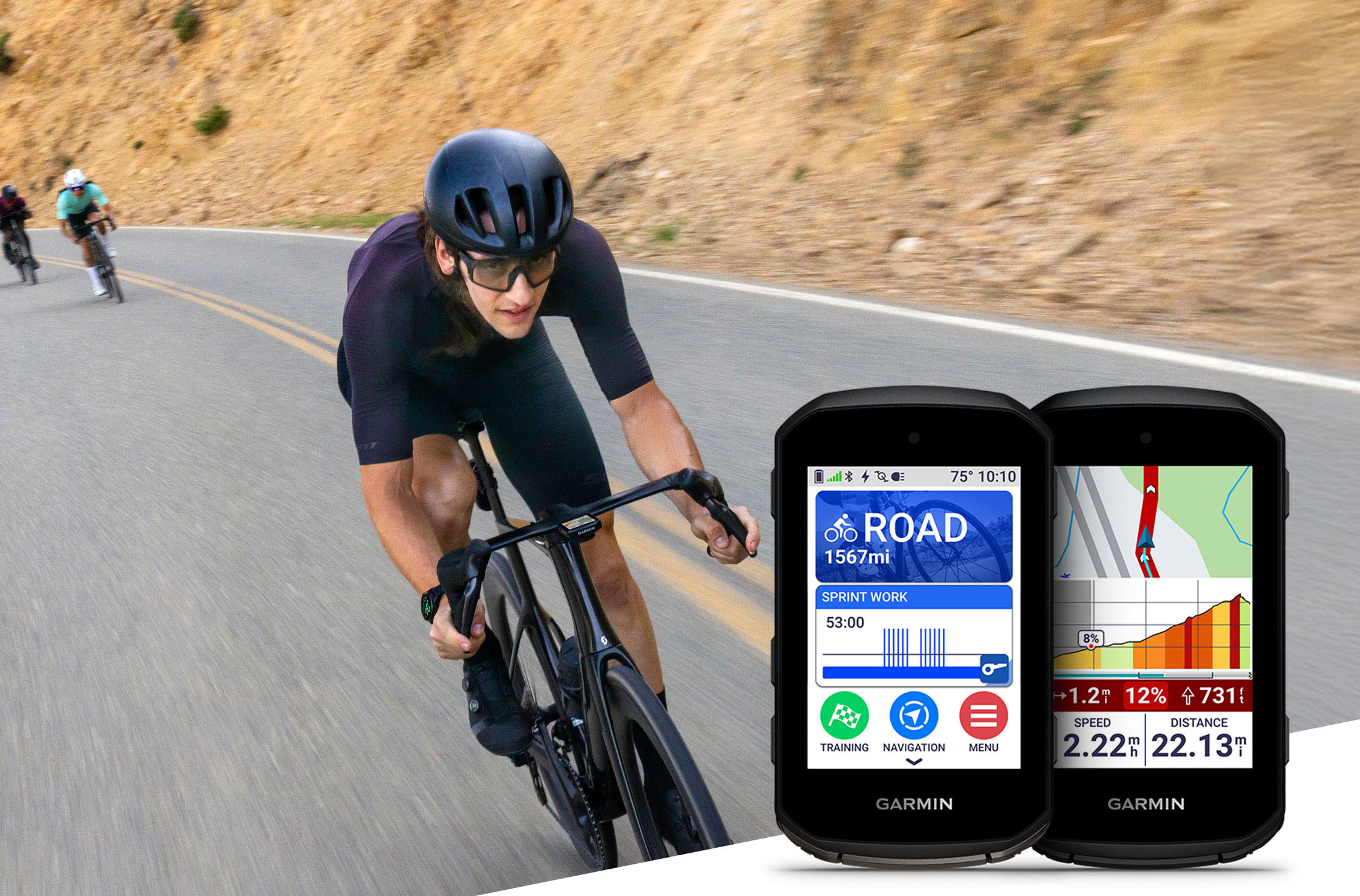
Garmin Edge 550: 7 Buttons + Buzzer, But 12-Hour Battery Hits Hard
7 physical buttons, no touchscreen, no speaker (only a buzzer), no Garmin Pay, 32GB storage, transmissive 2.7" LCD, and 5Hz MTB recording shared with the Edge 850 and 1050. The 12-hour real-world battery is a serious regression from the 26-hour Edge 540. JoyVelo internal testing, 1,200 km.
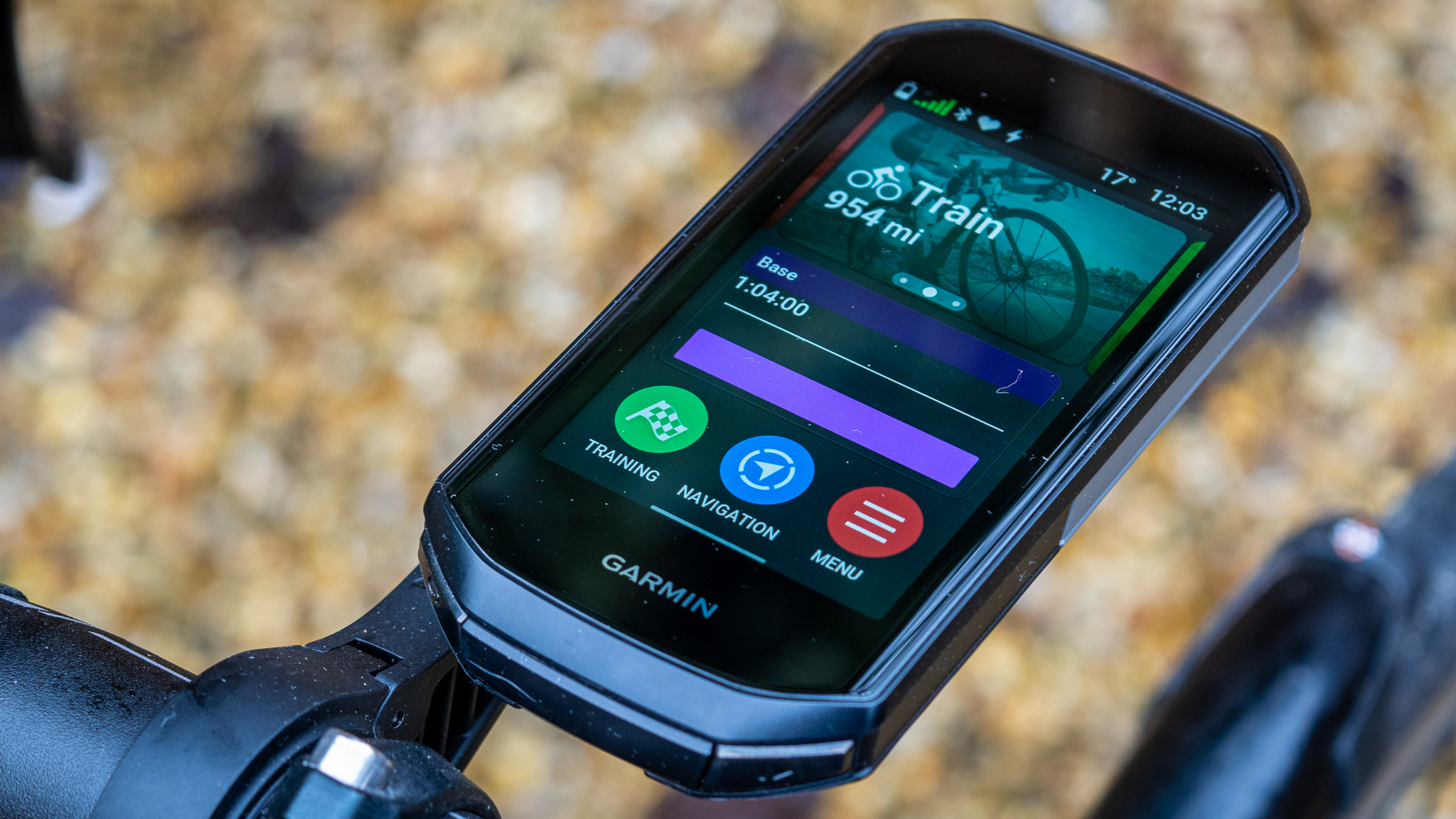
Garmin Edge 1050: The Best Screen, But 20-Hour Battery Is The Trade-Off
3.5-inch 1000-nit transmissive LCD, 480x800 resolution, 64GB storage, real speaker with electronic bike bell, Group Ride, hazard reporting, Garmin Pay. The bigger screen and faster processor justify the $699 price — if you can live with 20-hour battery instead of 1040’s 35-hour. JoyVelo internal testing, 1,800 km.
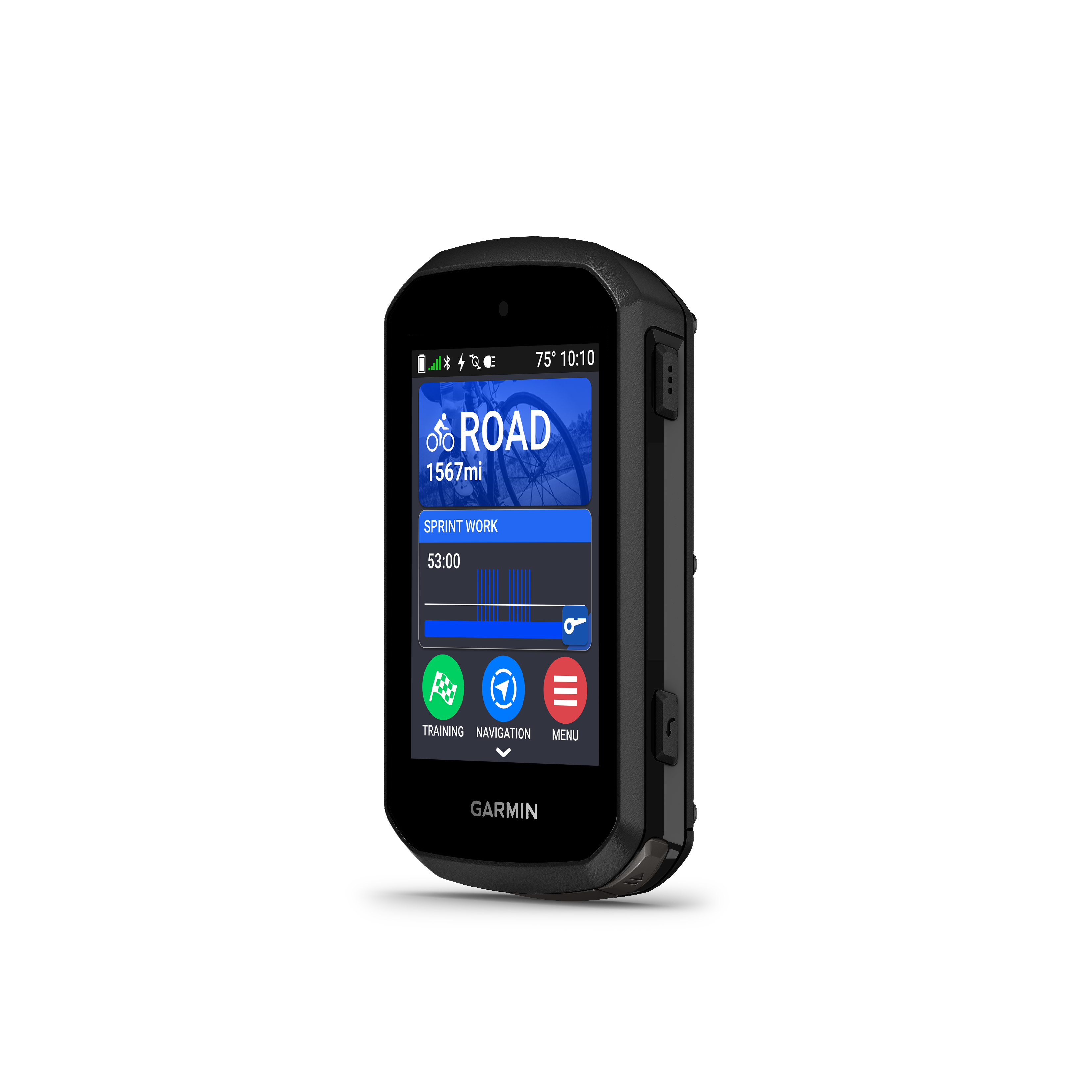
Garmin Edge 850: Touch + Speaker + E-Bell, But 10-Hour Battery Trade-Off
2.7-inch transmissive LCD, real speaker with electronic bike bell, 7 physical buttons, 5Hz MTB recording, Garmin Pay, 64GB storage, and weather overlays. The new screen cuts real-world battery to 10-12h. JoyVelo internal testing, 1,500 km across road + MTB.
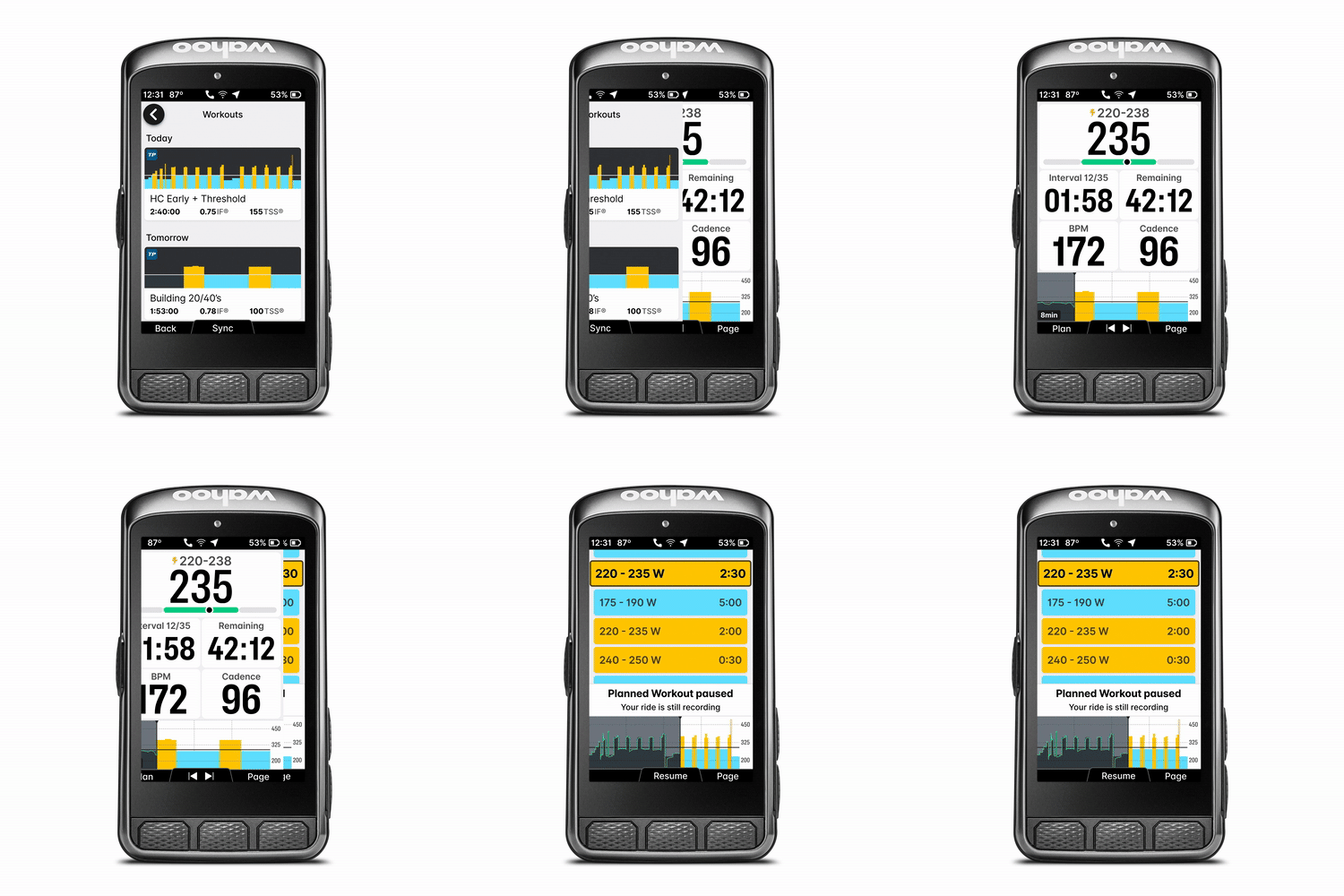
Wahoo ELEMNT Ace: 208g "Performance Beast" That Ships Half-Baked
208g (heaviest bike computer on the market), 3.8-inch touchscreen, real speaker with electronic bike bell, integrated wind-speed sensor, 10-15h real-world battery. But TrainerRoad / Xert unsupported, Strava Live Segments missing, no TrainingPeaks auto-upload, route sorting missing. JoyVelo internal testing, 800 km.
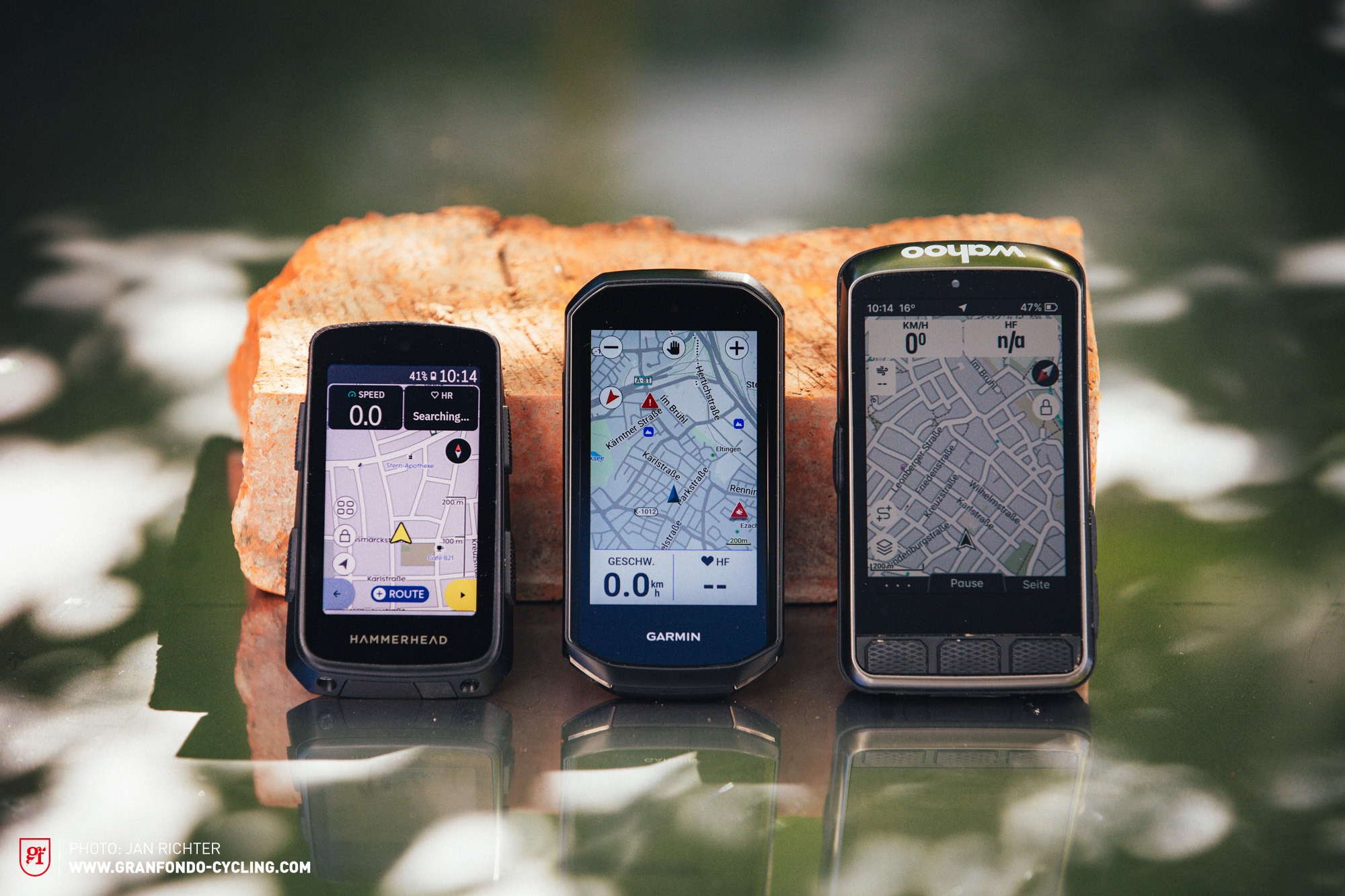
Hammerhead Karoo 3: 3.2" AMOLED + Android, But Loses the SIM Slot
3.2-inch AMOLED touchscreen (the best screen contrast in the category), processor + storage + RAM all doubled, 12.5-13h real-world battery, louder buzzer, and a new companion app. SIM card slot removed. JoyVelo internal testing, 1,500 km road + gravel.
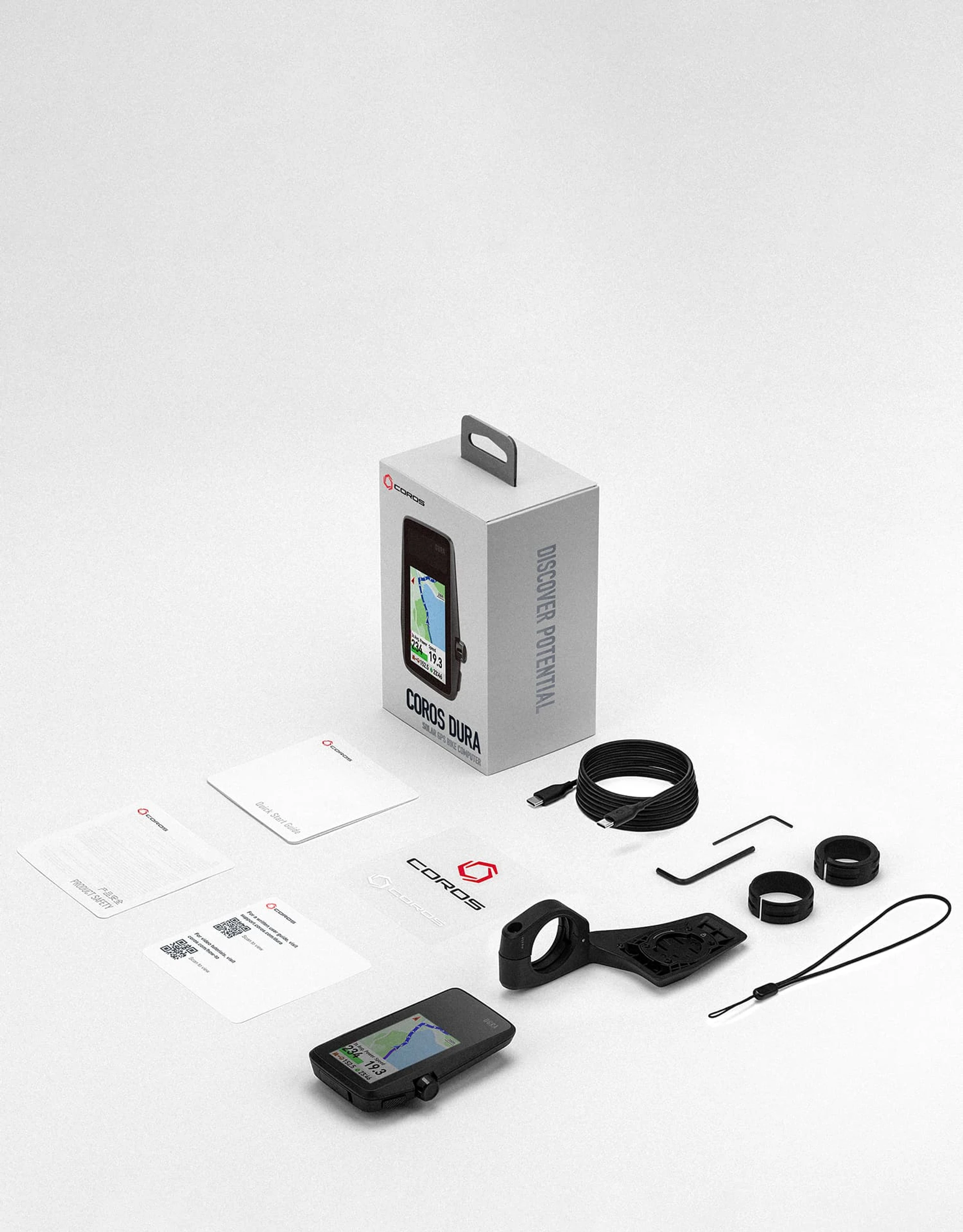
COROS Dura: Solar-Promise 120h Battery Ships as a Half-Baked Beta
MIP touchscreen, multi-band GNSS, ANT+ + Bluetooth, solar top-up, 97g. Officially 120h battery. In real-world testing the solar panel actually LOSES charge in the sun; the device routed the famous Stelvio climb as 3 separate segments; offline route re-planning draws a straight line to the destination. JoyVelo internal testing, 600 km.
Verify with JoyAnalyze
Compare GPS / elevation / power data with JoyAnalyze. Stack Garmin Edge 840: Free-Ride ClimbPro + 7 Buttons, The Sweet-Spot For Multi-Day Touring against a reference device to see which computer records more stable data with less drift.
Open multi-file compare in JoyAnalyzeSee how this fits you
The Garmin Edge 840: Free-Ride ClimbPro + 7 Buttons, The Sweet-Spot For Multi-Day Touring is one option. Run the JoyFit assessment to see whether it actually matches your body and riding style — or compare it side-by-side with the other Bike Computersin our database.
Community
Discuss this review · Pro members can rateComments
(0)Sign in above to leave a comment.
Loading comments…
Pro Ratings
PROLoading…Sign in above to rate this product on the 8-axis $APPEALS framework.