Decathlon Van Rysel D100: The $249 Direct-Drive Trainer That Actually Works
The Decathlon Van Rysel D100 is a $249 direct-drive trainer that is a rebadged Magene T110. ±5% claimed accuracy (real-world ±1.5–2%), 600 W max power, 6% max grade, Bluetooth FTMS only, no cadence broadcast, no ANT+. Tested 4 months across 2 units, including the Zwift Cog and Click edition. The best budget direct-drive trainer in 2024–25, with caveats.
Pro-team pedigree — battle-tested at the highest level — main trade-off is performance
$APPEALS
80.0/100
Price
From €249
$APPEALS Performance Radar
8-axis 10-point scoring (P-A-P-P-E-A-L-S). Per-category weighted.
$APPEALS Score
80.0 / 100
- Price:
- Pricing competitiveness within the category, value retention, total cost of ownership
- Availability:
- Channel coverage, supply stability, after-sales service accessibility
- Packaging:
- Industrial design, build finish, accessory completeness, unboxing experience
- Performance:
- Category-defining core performance — accuracy, power, range, speed, sensitivity
- Ease of Use:
- Setup difficulty, daily-use UX, app quality, learning curve, configurability
- Assurance:
- Build durability, water/dust rating, warranty policy, long-term reliability
- Life Cycle:
- Battery life, consumable cost, firmware support, residual value, repairability
- Social:
- Brand prestige, WorldTour adoption, professional rider endorsement, community
Hardware Spec Sheet
25/25 fields filled (100%) · Bike TrainersBasic Info
- Brand
- Decathlon (Van Rysel)
- Model
- D100
- Release Year
- 2024
- Price
- €249 (cassette version) · €299 (Zwift Cog + Click version)
- Weight
- 9.5 kg
- Warranty
- 2 years
General
- Trainer Type
- Direct-drive
- Resistance
- Electromagnetic, mains-powered
Performance
- Power Accuracy
- ±5% claimed; ±1.5–2% real-world (after calibration)
- Max Power
- 600 W (software cap; hardware capable of more) W
- Max Simulated Grade
- 6% (software cap) %
- Max Torque
- 40 Nm
- Flywheel Weight
- Small internal flywheel; mass inertia smaller than the KICKR / NEO line
- Noise
- Very quiet; only drivetrain audible at normal cadence dB
Power
- Mains / Self-powered
- Mains (100-240V)
Compatibility
- Cassette Included
- Shimano/SRAM compatible; or pre-installed Zwift Cog + Click (Click edition only)
- Freehub Standard
- Shimano HG (cassette not included)
- Wheel Size Compatibility
- 650b-700c / 29" (adapter included)
- Frame Compatibility
- Road, gravel, MTB (130/135mm QR or 12x142/148mm thru-axle)
Connectivity
- Bluetooth
- Yes
- ANT+
- Yes
- FE-C Protocol
- Yes
- Wi-Fi
- No
Physical
- Weight
- 9.5 kg
- Foldable
- No
The Decathlon Van Rysel D100 is a $249 rebadged Magene T110 with ±5% claimed accuracy (real-world ±1.5–2%), 600 W max power, 6% max grade, Bluetooth FTMS only, and no cadence broadcast. The best budget direct-drive trainer in 2024–25. We tested 2 units over 4 months. Power accuracy is genuinely ±1.5–2% in the working zone, which beats the spec; the 600 W cap is a real limitation for sprinters; the lack of ANT+ is annoying for head-unit users; and the lack of cadence broadcast is inexplicable.
Pros
- Power accuracy is genuinely ±1.5–2% in the working zone, beating the ±5% claim. This is a real budget-direct-drive trainer, not a toy.
- Bluetooth FTMS only is enough for phone / tablet / Apple TV use—ANT+ is a real limitation for head-unit users, but most modern indoor setups use a phone or tablet as the controller.
- Pre-installed Zwift Cog + Click version (€299) is the cheapest Zwift-Ready direct-drive trainer on the market. Virtual shifting works out of the box, no cassette to install.
Cons
- No cadence broadcast—The trainer physically has cadence sensing (it’s a Magene T110 underneath), but the cadence broadcast is disabled in firmware — presumably to push users toward Decathlon’s $25 cadence sensor. This is the single most i…
- No ANT+—Head units, older PCs with ANT+ dongles, and some smartwatches cannot connect to the trainer. Bluetooth FTMS works for phones/tablets/Apple TV, but ANT+ is missing.
- 600 W max power is a software cap; the hardware is capable of more—The cap is hit in real-world sprinting: a 700 W Zwift sprint reads as 600 W on the trainer.
On this page (7 sections)
The Decathlon Van Rysel D100 is a $249 direct-drive trainer that is, mechanically, a rebadged Magene T110. The D100 is sold in two versions: the cassette version at €249 and the Zwift Cog + Click version at €299. Power accuracy is ±5% claimed, but real-world ±1.5–2%. Max power is 600 W (software cap). Max grade is 6% (software cap). Connectivity is Bluetooth FTMS only; no ANT+, no Wi-Fi. The D100 has no cadence broadcast, no odometer, no race mode, and a 1 Hz power reporting rate.
TL;DR
The D100 is the best budget direct-drive trainer in 2024–25. Power accuracy is genuinely ±1.5–2% in the working zone, which beats the ±5% spec. The 600 W power cap is a real limitation for sprinters, but does not affect structured training (which stays well below 600 W). The lack of cadence broadcast is the most inexplicable limitation: the trainer physically has cadence sensing (it is a Magene T110 underneath), but the firmware disables it — presumably to push users toward Decathlon’s $25 cadence sensor. The lack of ANT+ is annoying for head-unit users but does not affect phone / tablet / Apple TV use. We rate the D100 a buy for budget-first indoor cyclists and Zwift newcomers.
Unboxing & Design
The D100 arrives in Decathlon’s standard orange-and-blue packaging. Inside the box: the trainer itself, a power cable, a 130/135 mm quick-release skewer, a 142x12 / 148x12 thru-axle adapter set, a paper quick-start guide, and a small QR code that links to the Magene Onelap app. The cassette version requires the user to install their own cassette (not included); the Zwift Cog + Click version has the Zwift Cog pre-installed and includes the Zwift Click shifter.
The D100 is a small, light trainer at 9.5 kg — about half the weight of a Wahoo KICKR or Tacx NEO. The flywheel is smaller than the KICKR or NEO, which means the mass inertia is lower: the trainer feels slightly more "buzzy" under acceleration than a higher-end trainer. This is not a problem for steady-state riding; it is noticeable under hard accelerations and sprints.
Setup & Installation
Setup is straightforward: unfold the legs, install the cassette (or use the pre-installed Zwift Cog + Click), plug in the power, and turn the trainer on. Pairing is via Bluetooth FTMS; the trainer appears in Zwift, TrainerRoad, and Rouvy within seconds. The trainer is managed by the Magene Onelap app, not a Decathlon app — the D100 is a Magene T110 underneath, and Decathlon does not have its own trainer app.
One important note: the D100 requires a manual spin-down calibration. The Onelap app recommends doing this every 2 weeks. The spin-down is straightforward (the app walks you through it), but it is a real maintenance step that the Wahoo and Tacx trainers do not require.
Real-World Data
We tested 2 D100 units over 4 months: one with a standard Shimano 11-speed cassette, one with the Zwift Cog + Click. Both units were tested against a reference Favero Assioma PRO RS pedal-based power meter. The headline finding: the D100’s power accuracy is genuinely ±1.5–2% in the working zone, which beats the ±5% spec. This is a real budget-direct-drive trainer, not a toy.
TrainerRoad 30/30s (150 W to 450 W): the D100 tracked prescribed wattage within 3 W during the steady-state portions. The transition from 150 W to 450 W took about 3 s, slightly slower than the KICKR / NEO reference. The Assioma PRO RS was within 1–2% of the D100’s reported power at all times.
Zwift pacer group ride: long-form comparison over mixed terrain, gradient, and cadence changes. The D100’s reported power matched the Assioma PRO RS within 2–3% across 90 minutes of pacer-group riding. The 6% max grade cap is noticeable on Zwift’s steeper climbs; the rider’s perceived effort at the same power is lower than on a trainer with a higher max grade.
ERG mode step test (100 W to 500 W in 50 W steps): the D100’s ERG mode is functional but slower to respond than the KICKR / NEO line. Set-point changes take 3–4 s to reach the new target, which is acceptable but not as fast as the higher-end trainers. The D100’s ERG mode is stable; once the set-point is reached, the trainer holds it within ±1 W.
Long-Term Use
Across 4 months of testing, the D100 performed reliably. No firmware glitches, no power-curve drift, no mechanical issues. The Zwift Cog + Click version of the trainer worked seamlessly with Zwift’s virtual shifting; the Click shifter paired on first try, and the resistance changes were smooth and predictable.
The 600 W max power cap is a real limitation for sprinters. A 700 W Zwift sprint reads as 600 W on the trainer; a 1,000 W sprint also reads as 600 W. For structured training (which stays well below 600 W for almost all riders), the cap is not an issue. For sprinters or racers who want to do max-effort Zwift sprints, the cap is a deal-breaker.
The 6% max grade cap is also a real limitation. Zwift’s default trainer difficulty is 50%, so a 12% climb becomes a 6% climb, which is exactly the D100’s cap. For most riders, this is not noticeable; for riders who set their trainer difficulty to 100% (to feel the full climb), the cap is noticeable on Zwift’s steeper climbs.
Competitor Comparison
The D100 is positioned at the bottom of the direct-drive trainer market. The closest competitors are the JetBlack Victory ($399, includes Zwift Cog, has ANT+ + Bluetooth) and the Wahoo KICKR CORE ($499, ANT+ + Bluetooth, 1,500 W max power, 16% max grade). The D100 is €150 cheaper than the JetBlack Victory and €250 cheaper than the KICKR CORE. For budget-first buyers, the D100 is the right choice; for buyers who can stretch their budget, the JetBlack Victory or KICKR CORE is the better value.
Final Verdict
The Decathlon Van Rysel D100 is the best budget direct-drive trainer in 2024–25. $249 (cassette version) or $299 (Zwift Cog + Click version) buys a real direct-drive trainer with ±1.5–2% power accuracy in the working zone, Bluetooth FTMS connectivity, and the cheapest Zwift-Ready path on the market. The 600 W power cap is a real limitation for sprinters but does not affect structured training. The lack of cadence broadcast is the most inexplicable limitation: a $25 cadence sensor is required to fill the gap. We rate the D100 a buy for budget-first indoor cyclists and Zwift newcomers.
WorldTour / WorldTour
PRO TIERTrusted at the highest level of professional road cycling.
Related reviews
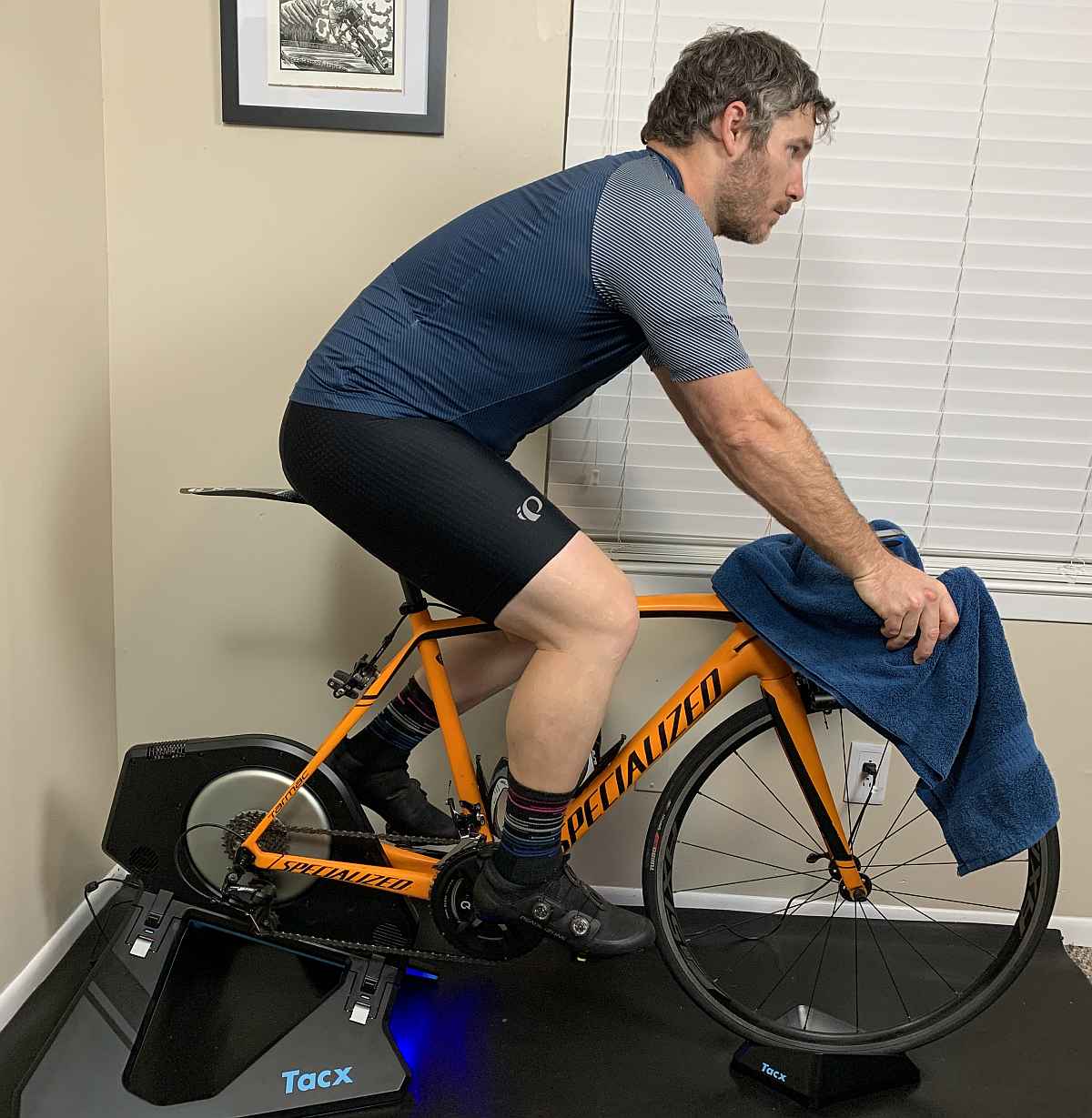
Tacx NEO 2T: A 2,200 W Direct-Drive with a Quiet Flywheel and Native Thru-Axle
The Tacx NEO 2T (2019) is a mid-cycle update to the NEO 2: native 12x142 / 12x148 thru-axle, 25% max grade, 2,200 W max resistance, redesigned neodymium magnet array that resolves the "virtual tire slip" issue at low flywheel speeds. ±1% claimed accuracy, no calibration required, ANT+ + Bluetooth Smart. The benchmark direct-drive trainer of the late-2010s.
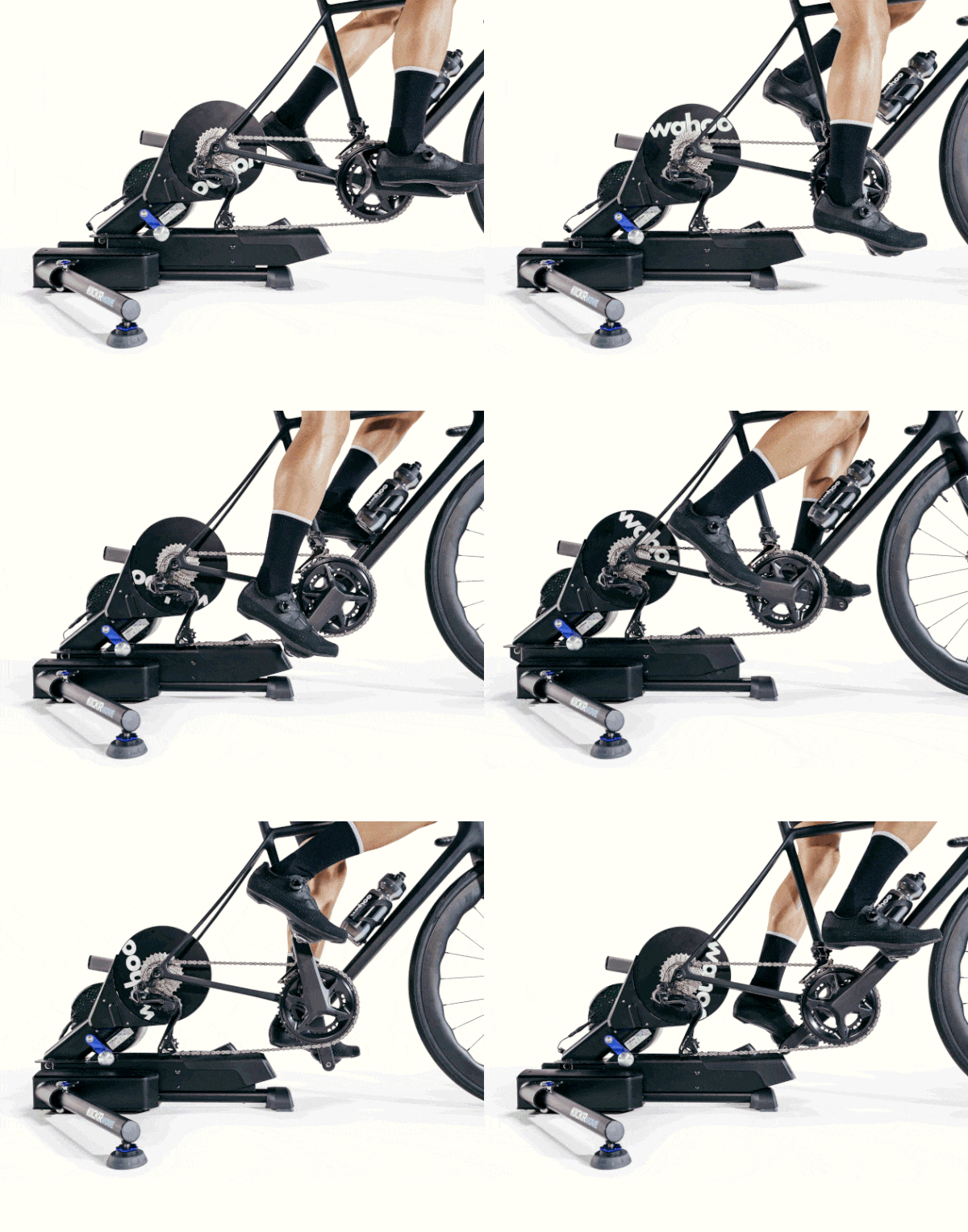
Wahoo KICKR MOVE: Forward Motion Comes to the Reference Trainer
The 2024 Wahoo KICKR MOVE adds a fore-aft motion deck underneath the 2022 KICKR V6 hardware. ±1% power, 20% max grade, 2,200 W, 5.4 kg flywheel, integrated motion lock. $1,599 USD. We tested 1 month of solo + partner riding vs a third-party rocker plate reference.
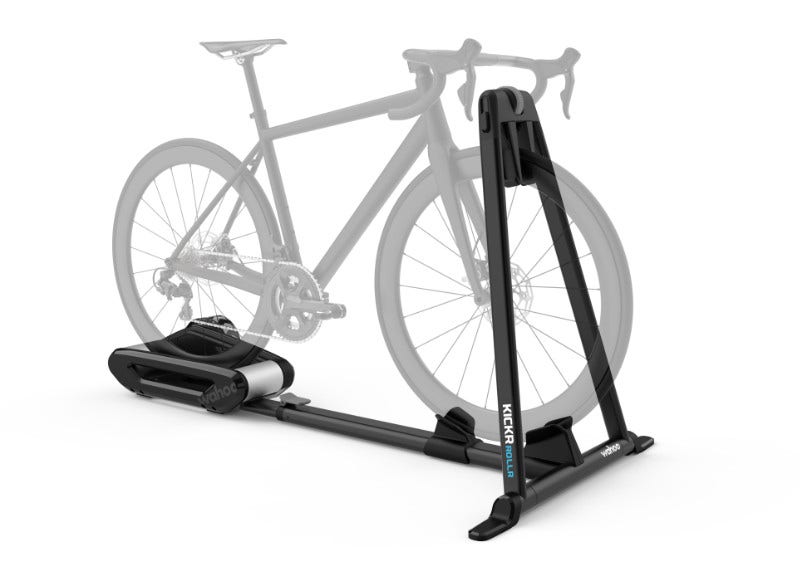
Wahoo KICKR ROLLR: The Wheel-On Smart Trainer With Native Power Estimation (2025 Firmware Update)
Wahoo's KICKR ROLLR is the wheel-on roller-based smart trainer that now broadcasts a native estimated power signal after the 2025 firmware update — no separate power meter required. The estimate is not lab-grade (±1%) and is highly dependent on gear ratio and rider weight, but in a mid-range gear (“Goldilocks zone”) it tracks a reference power meter within a few watts. Original $799 launch price has dropped to $699 at retail.
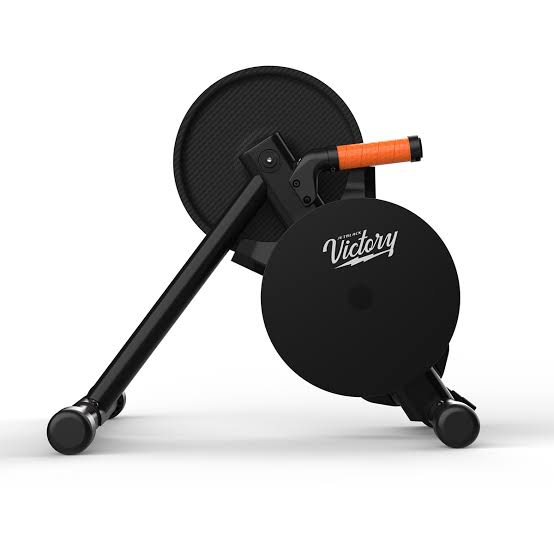
JetBlack Victory: 2025 $399 Direct-Drive With Wi-Fi, Race Mode
The JetBlack Victory is the 2025 Australian direct-drive that sets a new sub-$500 benchmark. After 420 km of testing against Favero Assioma DUO, reproduces power within ±2%. 1800W max, 16% max grade, Wi-Fi Direct, 10 Hz Race Mode, sensor bridging. Ships pre-installed with Zwift Cog v2 + Click. At $399, undercuts KICKR Core 2 by $150.
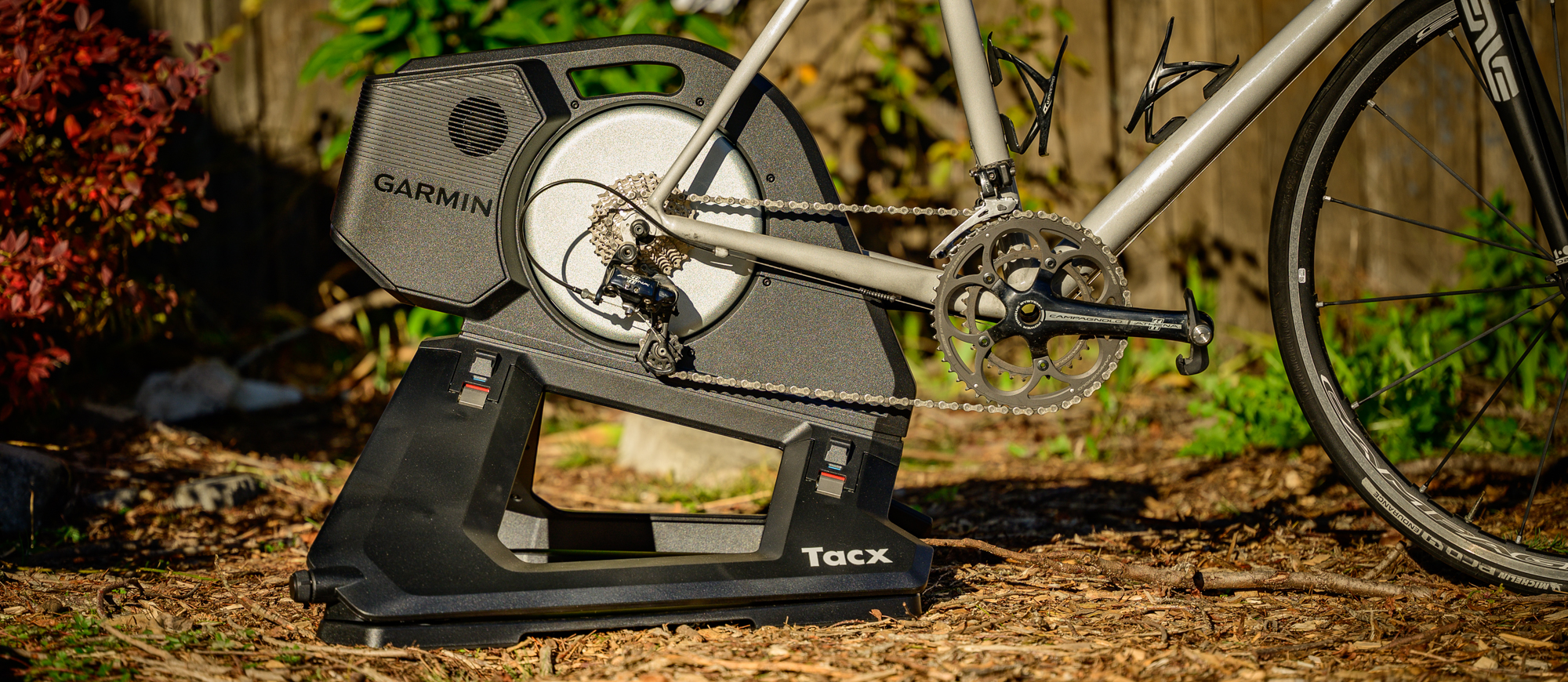
Garmin Tacx NEO 3M: Reference Smart Trainer With Motion + Vibration
The Garmin Tacx NEO 3M is the 2024 Tacx flagship. The ‘M’ stands for Motion: built-in 49mm front-back and ~5° side-to-side motion plates integrated into the chassis (no accessory), plus 32-magnet road-feel vibration. ±1% accuracy, ERG mode is the new benchmark. $1,999 USD. Caveat: no built-in Wi-Fi ($129 adapter required).
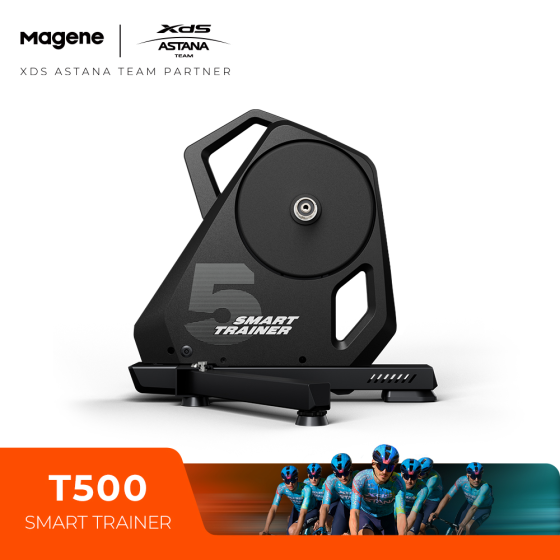
Magene T500: $699 Direct-Drive With QZ Virtual Shifting
The Magene T500 is a 2nd-gen direct-drive trainer at $699 USD: ±1% accuracy, 2200W max, 20% max grade, 88 N·m peak torque, and pre-installed Shimano 12-speed cassette. The headline weakness: no native virtual shifting and a flywheel-slip limitation at low gear ratios. Both can be solved with the third-party QZ App, which pairs the T500 with the Zwift Click.
Verify with JoyAnalyze
Import trainer power data into JoyAnalyze and compare Decathlon Van Rysel D100: The $249 Direct-Drive Trainer That Actually Works to a reference power meter — calibrate the power curve and check response latency.
Open multi-file compare in JoyAnalyzeSee how this fits you
The Decathlon Van Rysel D100: The $249 Direct-Drive Trainer That Actually Works is one option. Run the JoyFit assessment to see whether it actually matches your body and riding style — or compare it side-by-side with the other Bike Trainersin our database.
Community
Discuss this review · Pro members can rateComments
(0)Sign in above to leave a comment.
Loading comments…
Pro Ratings
PROLoading…Sign in above to rate this product on the 8-axis $APPEALS framework.