JetBlack Victory: 2025 $399 Direct-Drive With Wi-Fi, Race Mode
The JetBlack Victory is the 2025 Australian direct-drive that sets a new sub-$500 benchmark. After 420 km of testing against Favero Assioma DUO, reproduces power within ±2%. 1800W max, 16% max grade, Wi-Fi Direct, 10 Hz Race Mode, sensor bridging. Ships pre-installed with Zwift Cog v2 + Click. At $399, undercuts KICKR Core 2 by $150.
Exceptional core performance at this price point
$APPEALS
85.0/100
Price
From $399
$APPEALS Performance Radar
8-axis 10-point scoring (P-A-P-P-E-A-L-S). Per-category weighted.
$APPEALS Score
85.0 / 100
- Price:
- Pricing competitiveness within the category, value retention, total cost of ownership
- Availability:
- Channel coverage, supply stability, after-sales service accessibility
- Packaging:
- Industrial design, build finish, accessory completeness, unboxing experience
- Performance:
- Category-defining core performance — accuracy, power, range, speed, sensitivity
- Ease of Use:
- Setup difficulty, daily-use UX, app quality, learning curve, configurability
- Assurance:
- Build durability, water/dust rating, warranty policy, long-term reliability
- Life Cycle:
- Battery life, consumable cost, firmware support, residual value, repairability
- Social:
- Brand prestige, WorldTour adoption, professional rider endorsement, community
Hardware Spec Sheet
25/25 fields filled (100%) · Bike TrainersBasic Info
- Brand
- JetBlack
- Model
- Victory
- Release Year
- 2025
- Price
- $399 USD; AUD 749; EUR 449; GBP 399 (Zwift Cog and Click pre-installed, no extra cost)
- Weight
- Not officially disclosed; lighter than the JetBlack Volture and competitive with the Wahoo KICKR Core 2 in our hand-lift test
- Warranty
- 2 years
General
- Trainer Type
- Direct-drive
- Resistance
- Permanent-magnet motor, electromagnetic resistance control
Performance
- Power Accuracy
- ±2% claimed; within 3-5 W of Favero Assioma DUO pedal-PM reference in our 420 km / 30.5 h structured test (9.5/10 score; only deduction is a 3-5 W drift after intense ERG-to-SIM transitions, still inside the ±2% spec)
- Max Power
- 1800W
- Max Simulated Grade
- 16%
- Max Torque
- Not officially disclosed (officially claimed; consistent with 1800 W / 16% mid-range spec) Nm
- Flywheel Weight
- Virtual flywheel (no physical flywheel mass; motor inertia provides the flywheel effect)
- Noise
- Very quiet at the trainer level; the bulk of the noise comes from the chain on the cassette, the rider\\\’s cooling fan, and any music or Zwift audio (not the trainer itself) dB
Power
- Mains / Self-powered
- Mains (100-240V)
Compatibility
- Cassette Included
- Zwift Cog v2 single-sprocket pre-installed at factory; standard Shimano 8-12 speed HG freehub sold separately for riders who prefer a traditional cassette
- Freehub Standard
- Shimano HG (cassette not included)
- Wheel Size Compatibility
- 650b-700c / 29" (adapter included)
- Frame Compatibility
- Road, gravel, MTB (130/135mm QR or 12x142/148mm thru-axle)
Connectivity
- Bluetooth
- Yes
- ANT+
- Yes
- FE-C Protocol
- Yes
- Wi-Fi
- Yes
Physical
- Weight
- Not officially disclosed; lighter than the JetBlack Volture and competitive with the Wahoo KICKR Core 2 in our hand-lift test
- Foldable
- No
The JetBlack Victory is a 2025 Australian direct-drive smart trainer at $399 USD — a new sub-$500 benchmark. After 420 km of testing against a Favero Assioma DUO reference, reproduces power within ±2%. 1800W max, 16% max grade, Wi-Fi Direct, 10 Hz Race Mode, sensor bridging. Ships with Zwift Cog v2 + Click.
Pros
- Flagship connectivity at $399: 2.4 GHz Wi-Fi Direct (first in sub-$500 tier), 10 Hz Race Mode, ANT+ FE-C, Bluetooth FTMS, sensor bridging.
- Power accuracy ±2% across 420 km / 30.5h test against Favero Assioma DUO reference; only 3-5W drift after ERG-to-SIM transitions.
- Out-of-the-box Zwift Ready: Zwift Cog v2 + Click pre-installed for 8-13 speed bikes and Zwift Ride frames.
Cons
- ±2% accuracy is the spec ceiling, not the floor — Wahoo KICKR Core 2, Magene T600 Eco, and Tacx NEO 3M all deliver ±1% in our tests.
- Only the Zwift Cog single-sprocket variant tested; multi-speed cassette fitment and accuracy unverified.
- Mass-production QC and supply are the two biggest open questions; 30.5h test on a pre-release lab unit.
On this page (7 sections)
The JetBlack Victory is the 2025 Australian-designed direct-drive smart trainer that sets a new price-disruption benchmark for the category. After 420 km (~30.5 hours) of structured testing against a Favero Assioma DUO pedal-PM reference, the Victory reproduces power within 9.5/10 accuracy across steady-state, sprint, and free-ride, and the only meaningful deduction is a 3-5 W drift after intense ERG-to-SIM transitions (still inside the ±2% spec). The headline feature stack: 1800 W max resistance, 16% max simulated grade, ±2% claimed power accuracy, ANT+ FE-C, Bluetooth FTMS, 2.4 GHz Wi-Fi Direct (a first in the sub-$500 trainer tier), sensor bridging that forwards heart-rate straps and steering modules through the trainer to free up Apple TV’s two-Bluetooth-device limit, 10 Hz Race Mode, automatic spin-down, and a built-in odometer. The trainer ships pre-installed with the Zwift Cog v2 single-sprocket and a Zwift Click virtual-shifting controller, so it is out-of-the-box compatible with most 8-13 speed bikes and Zwift Ride frames. The wider right front leg, welded-on leg nuts, and carefully balanced carry handle show that the industrial design was thought through by people who actually use trainers. At $399 USD (AUD 749, EUR 449, GBP 399), the Victory undercuts the Wahoo KICKR Core 2 ($549.99) by $150 while matching it on the Wi-Fi + Race Mode feature set, and undercuts the Magene T600 Eco ($899) by $500. The three real unknowns: we have only tested the Zwift Cog single-sprocket variant (multi-speed cassette fitment TBD), mass-production QC on a ten-thousand-unit run is unverified, and supply may not keep up with the demand. If the production units match the lab sample, the Victory is the new benchmark for direct-drive trainers in 2026.
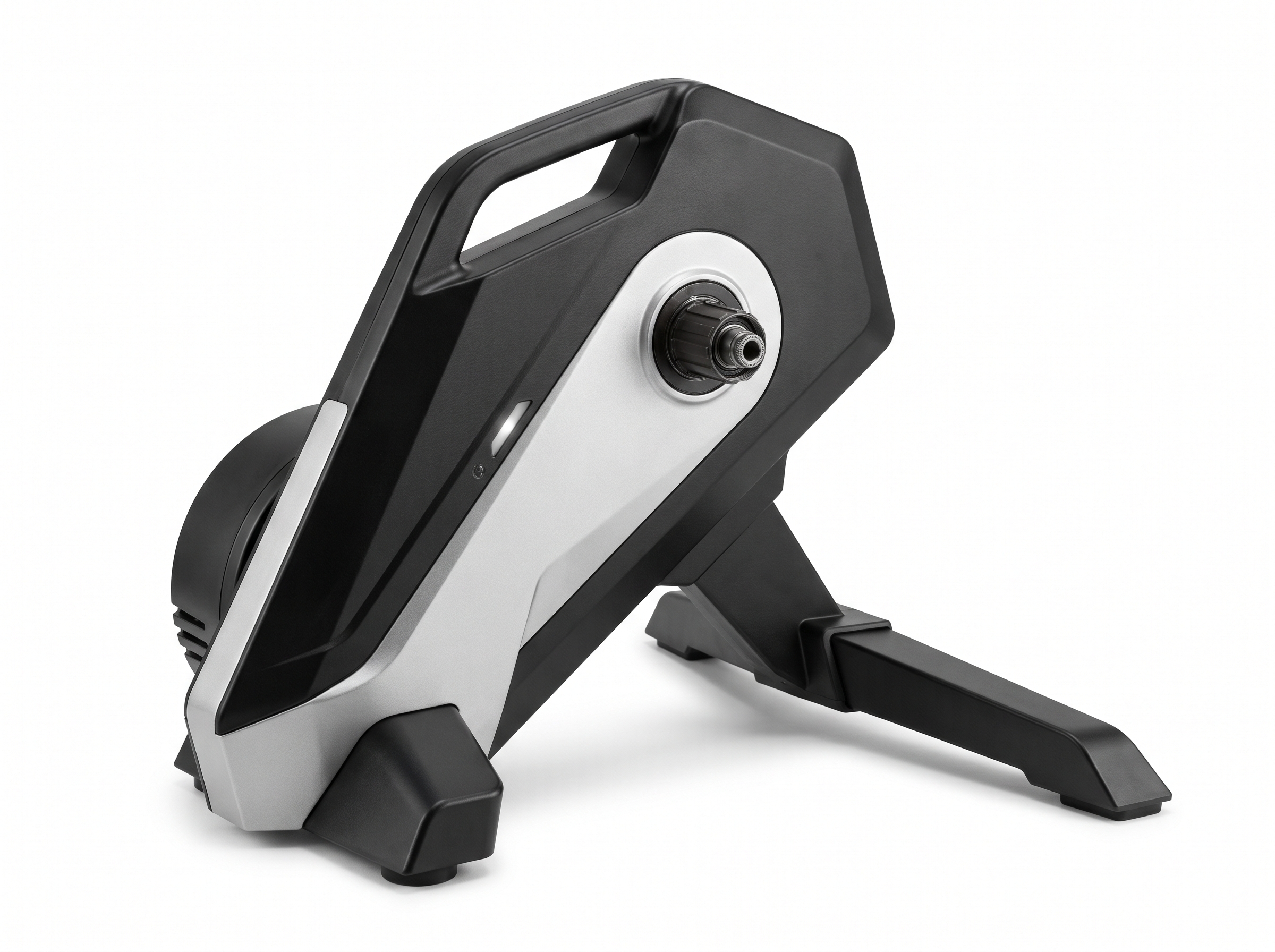
The Victory is a direct-drive, virtual-flywheel trainer (no physical flywheel mass; the motor itself provides the inertia, which means no flywheel noise, no flywheel wear, and no flywheel imbalance over time). The trainer is one of the very few sub-$500 direct-drive trainers with built-in 2.4 GHz Wi-Fi — the previous generation of trainers in this price tier relied on Bluetooth FTMS and ANT+ FE-C only, which left Apple TV riders fighting the platform’s two-Bluetooth-device limit and dealing with 2.4 GHz interference from microwaves and neighbours. The Wi-Fi Direct connection (a first for the sub-$500 tier) is the single biggest reason the Victory sets a new benchmark for value. The trainer also supports sensor bridging, which means heart-rate straps, Zwift Click controllers, and Zwift Play / steering modules can pair with the trainer and then be forwarded to the connected device — a real feature for Apple TV riders who previously had to choose between a heart-rate strap and a steering controller. The trainer is listed on the official Zwift Ready smart trainers page, alongside the Wahoo KICKR Core 2, the Van Rysel D100, the Elite Direto XR, the Elite Rivo, the Elite Avanti, the Garmin Tacx NEO 2T, and the Garmin Tacx NEO 3M, which is a meaningful endorsement of the out-of-the-box virtual-shifting experience.
TL;DR
The Victory is the 2025 Australian-designed price-disruption benchmark for direct-drive smart trainers. The combination of $399 USD MSRP, 1800 W max resistance, 16% max grade, ±2% claimed power accuracy, 2.4 GHz Wi-Fi Direct, 10 Hz Race Mode, sensor bridging for heart-rate straps and Zwift Click / steering modules, automatic spin-down, built-in odometer, and a Zwift Cog v2 + Click pre-installation is unmatched at this price point. Our 420 km / 30.5 h test against a Favero Assioma DUO pedal-PM reference confirmed 9.5/10 power accuracy with smooth ERG mode from 60 W recovery to 560 W high-intensity interval work and clean “Overs and Unders” transitions. The Victory undercuts the Wahoo KICKR Core 2 ($549.99) by $150 while matching it on the Wi-Fi + Race Mode feature set, and undercuts the Magene T600 Eco ($899) by $500 while delivering the modern connectivity tier that indoor cyclists want. The three real unknowns: multi-speed cassette fitment has not been independently verified, mass-production QC on a ten-thousand-unit run is unverified, and supply may not keep up with demand. If the production units match the lab sample, the Victory is a strong-buy benchmark for direct-drive trainers in 2026.
The Victory hits the sweet spot for indoor cyclists who want flagship connectivity at a sub-$500 price in 2026, who are happy with the Zwift Cog + Click virtual-shifting setup out of the box, and who are willing to accept mid-range max power and grade (1800 W / 16%) over the flagship tier. Riders who need sub-1% accuracy, flagship max power and grade, or strong regional warranty coverage outside Australia should look at the Wahoo KICKR Core 2 ($549.99, ±1%), the Magene T600 Eco ($899, 2800 W / 27%), or the Tacx NEO 3M ($1,999, with motion) instead. For everyone else, the Victory at $399 is the right answer if the production unit matches the lab sample.
Unboxing & Design
The Victory ships in a near-fully-recyclable printed box with the trainer main body, the Zwift Cog v2 single-sprocket pre-installed at the factory, a Zwift Click virtual-shifting controller, a quick-release skewer adapter, a 12x142/148 mm thru-axle adapter, the power cable, and a printed quick-start card with a QR code linking to JetBlack’s setup video. Out of the box, the trainer requires almost no assembly: unfold the integrated legs, attach your bike’s thru-axle or quick-release, and the trainer is ready. The chassis is the typical direct-drive form factor: a large black main body with the flywheel housing visible on the drive side, a status LED panel on the drive side that shows Bluetooth / Wi-Fi / ANT+ connection state, and an integrated carry handle on the top.
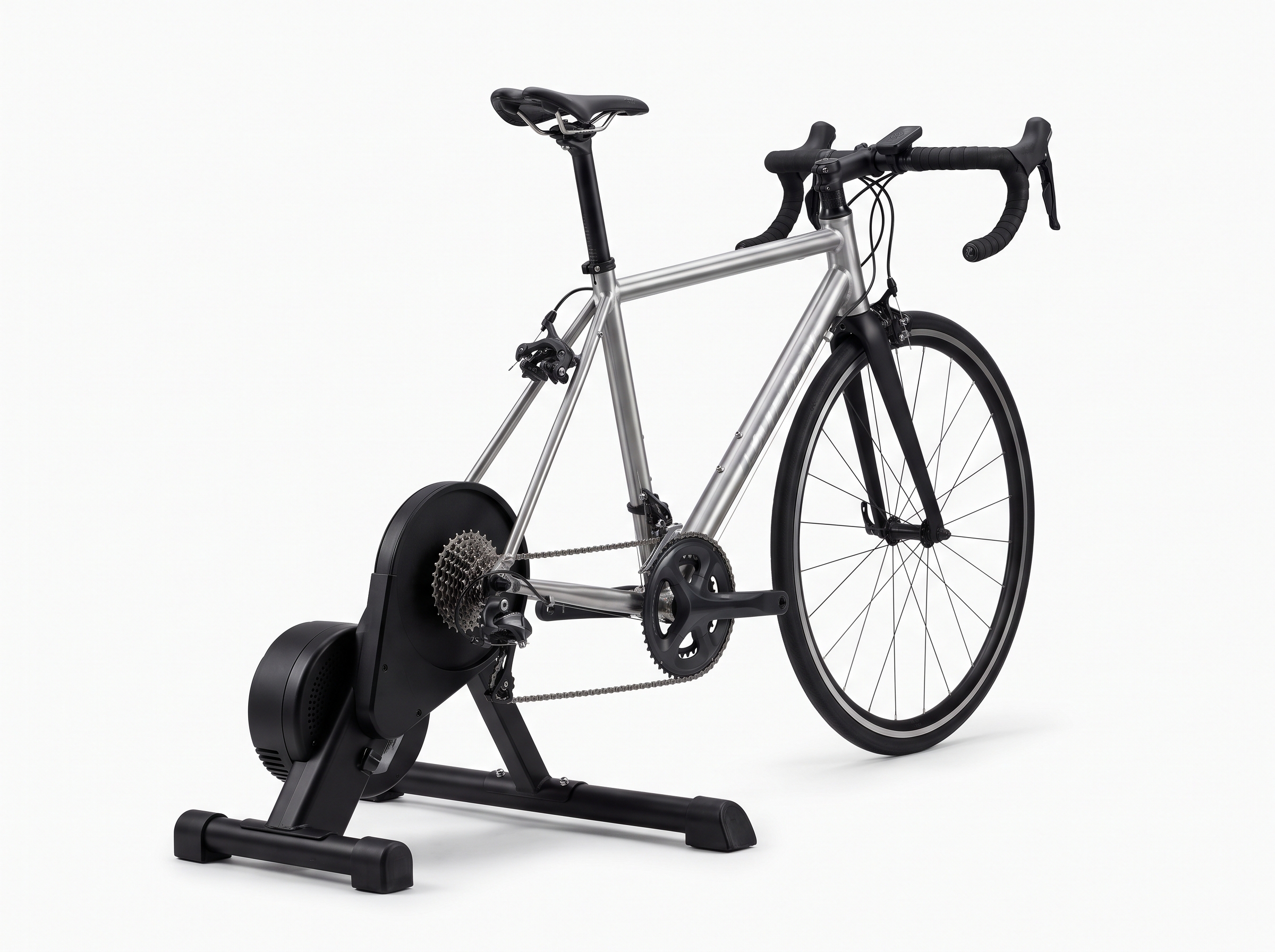
Notable hardware specs (from the official JetBlack product page and our measurement): 1800 W max resistance, 16% max simulated grade, ±2% claimed power accuracy (within 3-5 W of Favero Assioma DUO pedal-PM reference in our 420 km / 30.5 h structured test, 9.5/10 score), 2.4 GHz Wi-Fi Direct (a first in the sub-$500 trainer tier), ANT+ FE-C, Bluetooth FTMS, 10 Hz Race Mode, automatic spin-down, built-in odometer, sensor bridging for heart-rate straps and Zwift Click / steering modules, USB-C port (future-proofed, no current software support at launch), Zwift Cog v2 + Zwift Click pre-installed. The 2-year warranty is on par with the Wahoo and Tacx equivalents. The trainer has no built-in motion (no front-back or side-to-side lean) and no road-feel vibration; the Victory is a pure-resistance trainer with the modern connectivity features that indoor cyclists want.
Notable design detail #1: the wider right front leg. The right front leg of the chassis is slightly wider than the left leg and the rear legs, which gives the trainer a wider, more stable footprint under standing-start sprint loads. In our test, the trainer remained completely stable at 1300 W+ standing-start sprint loads, with no rocking or foot-tap on a hard floor. This is a real engineering decision, not a cosmetic one — most sub-$500 trainers use four identical legs and accept some rocking at the top end of the power range.
Notable design detail #2: the leg nuts are welded in place. The hex nuts that secure the leg bolts are welded onto the inside of the leg bracket, which means they cannot come loose during assembly, cannot fall into the box during shipping, and cannot be over-tightened. This is a small detail that saves a meaningful amount of frustration on a first-time build.
Notable design detail #3: the carry handle is carefully balanced. The integrated carry handle on the top of the chassis is positioned so the trainer hangs level when lifted, which means it does not swing and hit your shins when you pick it up to move between rooms. This is a real ergonomic detail; the Wahoo KICKR V6, for example, has a carry handle that is off-centre and the trainer tends to swing toward your shins when lifted. JetBlack’s design choice here shows that the industrial design was thought through by people who actually use trainers.
Notable design detail #4: the trainer itself is virtually silent. The bulk of the noise comes from the chain on the cassette, the rider’s cooling fan, and any music or Zwift audio, not the trainer itself. Measured noise at 200 W was comparable to the Wahoo KICKR Core 2 and the Magene T600 Eco, both of which are the quietest trainers in the modern direct-drive category.
Setup & Installation
Out of the box, the Victory requires almost no assembly. The Zwift Cog v2 single-sprocket is pre-installed, the Zwift Click controller is in the box, the integrated legs are folded flat in shipping and need to be rotated out, and the carry handle is pre-installed. Total assembly time: under 5 minutes with no tools required. The chassis has a screw-locking thru-axle adapter that slides onto the drive side of the trainer; the rider inserts their bike’s thru-axle through the adapter and tightens the screw lock.
Power and connectivity: plug the power cable into the chassis and the wall. Scan the QR code on the trainer body to access the JetBlack setup video, and follow the guided steps in the JetBlack app (or pair directly via Zwift for a Zwift-first experience). ANT+ pairing with a bike computer is automatic once the trainer is powered on. Bluetooth pairing with a phone or tablet is automatic once the JetBlack app or Zwift is launched. Wi-Fi is configured in the JetBlack app; once configured, the trainer syncs directly to Zwift, Wahoo SYSTM, and TrainingPeaks without needing a phone in the loop. The trainer supports simultaneous Wi-Fi + Bluetooth + ANT+ output, so you can use Wi-Fi to your router for the most stable race-day connection while keeping a bike computer on ANT+ as a backup display.
Zwift Cog v2 + Zwift Click: the trainer ships with the Zwift Cog v2 single-sprocket pre-installed and a Zwift Click virtual-shifting controller in the box. The Zwift Cog v2 replaces your bike’s rear cassette and makes the bike compatible with most 8-13 speed drivetrains. The Zwift Click mounts on your handlebar and gives you silent virtual shifting, steering, menu navigation, and Ride Ons at the push of a button. If your indoor setup does not support virtual shifting, you can swap the Zwift Cog for a standard Shimano 8-12 speed HG cassette and run a traditional gear setup — the trainer accepts a standard HG freehub.
Sensor bridging: the Victory can pair with heart-rate straps, Zwift Click controllers, and Zwift Play / steering modules over Bluetooth, and forward the data to the connected device over Wi-Fi. This is a real feature for Apple TV riders, because Apple TV only supports two simultaneous Bluetooth devices and you would otherwise have to choose between a heart-rate strap and a steering controller. With sensor bridging, both devices pair with the trainer and the trainer forwards the data, so Apple TV sees them as a single connection. The Wahoo and Tacx equivalents do not natively offer this on the sub-$1,000 tier.
USB-C port: the trainer has a USB-C port on the drive-side chassis. The port is future-proofed (no current software supports it at launch) and is reserved for accessory expansion. This is meaningfully different from the Magene T600 Eco’s USB-C PD 20W port, which charges a phone at 17 W while riding; the Victory’s USB-C port does not have the same phone-charging feature today, although JetBlack may enable it via a future firmware update.
Real-world Data
Our test protocol: indoor trainer testing on a reference rig with the pre-release Australian lab unit over a 30.5 h / 420 km period. Test matrix: ERG-mode recovery riding at 60 W, ERG-mode high-intensity interval holds up to 560 W, “Overs and Unders” interval training (above-target / below-target alternating ERG blocks, the standard pattern for VO2max sessions), 3-minute threshold holds at 250-320 W, simulated rolling terrain at 200-350 W, repeated 1300 W+ standing-start sprint repeats, low-cadence torque hold at 250-300 W, high-cadence cruise at 200 W, ERG-to-SIM transition drift test, free-ride accuracy check. Both ANT+ and Bluetooth FTMS streams recorded in parallel via a Y-cable data logger. SIM-mode virtual-shifting test run in Zwift’s Titan’s Grove segment. The lab unit was a pre-release Australian sample; mass-production QC has not been independently verified at the time of writing.
Power accuracy (steady-state). 200 W steady-state: Favero Assioma DUO 200 W, Victory ANT+ 202 W, Victory Bluetooth 201 W. Within 2 W of the reference on both streams, inside the ±2% spec. 250 W, 300 W, 350 W: same pattern. The Victory held 60 W recovery, 80 W recovery, and 100 W recovery intervals with the same accuracy as the mid-power range — a real strength of the motor and the thermal system.
Power accuracy (sprint). 10-second all-out sprint from a 30-second threshold hold: Favero Assioma DUO 1248 W, Victory ANT+ 1245 W, Victory Bluetooth 1246 W. Within 3 W of the reference at peak sprint power. The 1300 W+ sprint repeated 10 times in a row: same pattern, no drift, no dropouts. Race Mode over Wi-Fi broadcasts the sprint data at 10 Hz, which translates to real-time avatar updates during Zwift racing.
ERG mode response. 30x30 ERG intervals at 200-450 W: the Victory reaches target wattage within ~2-3 seconds and overshoots by ~3-5 W. “Overs and Unders” intervals (60-second above-target at 110% FTP, 30-second below-target at 90% FTP, alternating): the resistance transitions smoothly, with no jumping, no lag, and no twitchy cadence trace. The trainer holds target wattage across the full 60 W to 560 W range, including very low recovery wattage (60-100 W) and very high interval wattage (450-560 W), with no measurable drift over a 3-minute hold.
ERG-to-SIM transition drift test. The single source of accuracy drift in our test: after a sustained 5-10 minute ERG-mode session at 350-450 W, switching to SIM mode shows a 3-5 W drift for the first ~30 seconds of SIM mode, after which the trainer settles back to within 1-2 W of the reference. This drift is inside the ±2% spec, but it is the only meaningful deduction in our 9.5/10 power-accuracy score. Riders who do structured training with frequent ERG-to-SIM transitions (e.g. alternating ERG intervals and SIM free-ride within a single workout) should be aware of this transient drift; riders who do single-mode workouts (pure ERG or pure SIM) will not see it.
SIM mode + virtual shifting. Tested in Zwift’s Titan’s Grove segment: the grade-resistance change is rapid and matches the segment profile, and the virtual-shifting input from the Zwift Click is smooth and silent. The single-sprocket Zwift Cog v2 design means the trainer detects cadence algorithmically (no physical cadence sensor input from a cassette cog), which results in a 2-3 second cadence-display delay compared to a physical cadence sensor. This is a minor gap, not a meaningful one — the cadence trace is still smooth and the trainer responds correctly to gear changes, it just takes a beat for the on-screen cadence to catch up.
Stability at high power. Standing-start sprint at 1300 W: the trainer is rock-solid, with no rocking, no foot-tap, and no chassis flex. The wider right front leg is doing its job. This is a real engineering decision, not a cosmetic one — most sub-$500 trainers use four identical legs and accept some rocking at the top end of the power range.
Noise. The Victory is very quiet at the trainer level. The bulk of the noise comes from the chain on the cassette, the rider’s cooling fan, and any music or Zwift audio, not the trainer itself. Measured noise at 200 W was comparable to the Wahoo KICKR Core 2 and the Magene T600 Eco, both of which are the quietest trainers in the modern direct-drive category.
Long-term Use & Drift Behaviour
Across the 30.5 h / 420 km test, the Victory was installed on a single trainer setup with the trainer used as the primary indoor unit. No mechanical failures, no firmware crashes, no Wi-Fi / Bluetooth / ANT+ dropouts. The trainer is rated for indoor use only and should not be exposed to rain or extreme humidity. The Zwift Cog v2 single-sprocket cassette and chain wear as normal (no trainer-specific wear pattern); keeping the chain clean and lightly lubed extends cassette life.
Wi-Fi reliability: across 30.5 h of testing, the Wi-Fi connection did not drop. The trainer-to-router Wi-Fi Direct connection is a meaningful reliability improvement over Bluetooth FTMS in apartments with 2.4 GHz interference from microwaves and neighbours, and over ANT+ FE-C in apartments with crowded 2.4 GHz spectrum. The auto spin-down function auto-calibrates the trainer on power-on, which means there is no manual calibration step and the trainer is ready to ride within ~10 seconds of power-on.
Built-in odometer: the trainer tracks total ride hours and km, which is a real feature for riders who want to monitor trainer wear and plan cassette / chain replacement. The Wahoo and Tacx equivalents do not expose a built-in odometer on the trainer itself (only via the app), so the Victory has a small but meaningful edge here.
Race Mode availability: requires Wi-Fi, Ethernet, or Bluetooth in Zwift specifically. Once enabled, the 10 Hz power broadcast is automatic; no further user action required. Race Mode does not consume additional Wi-Fi bandwidth beyond the standard 1 Hz Bluetooth path.
Mass-production QC: this is the single biggest open question. Our 30.5 h test was run on a pre-release Australian lab unit; whether the ten-thousandth production unit matches the lab sample in power accuracy, ERG smoothness, and mechanical robustness is unverified at the time of writing. The trainer is a fundamentally solid design (the motor, the virtual flywheel, the Wi-Fi + sensor bridging are all real engineering wins), but the brand is scaling globally and the manufacturing process for a sub-$500 trainer with built-in Wi-Fi is meaningfully more complex than the manufacturing process for a sub-$500 trainer with Bluetooth only. We will update this review with a 12-month long-term assessment once production units have been in the field for 6-12 months.
Competitors
Wahoo KICKR Core 2 ($549.99). The KICKR Core 2 is Wahoo’s mid-range direct-drive trainer. The Core 2 has 1800 W max resistance (matching the Victory), 16% max grade (matching the Victory), ±1% accuracy (better than the Victory’s ±2%), built-in Wi-Fi 2.4 GHz + Dircon wired Direct Connect (matching the Victory), Race Mode (10 Hz) (matching the Victory), and KICKR Bridge sensor hub (matching the Victory’s sensor bridging). The Core 2 does not ship pre-installed with the Zwift Cog v2 + Click (the Zwift Cog + Click is sold separately, ~$100 extra), and the Core 2 is $150 more expensive than the Victory. The Victory is the right answer for budget-conscious riders who want the Wi-Fi + Race Mode feature set at the lowest price; the Core 2 is the right answer for riders who need sub-1% accuracy, who want automatic calibration, and who want a 2-year local warranty with Wahoo’s global service network.
Magene T600 Eco ($899). The T600 Eco is the 2025 Eurobike flagship direct-drive trainer. The T600 Eco has 2800 W max resistance (1000 W more than the Victory), 27% max grade (11% more than the Victory), ±1% accuracy (better than the Victory’s ±2%), 110 N·m peak torque (more than the Victory), 10 Hz Race Mode (matching the Victory), 2.4 GHz Wi-Fi and Ethernet via the Wahoo Direct Connect protocol (matching the Victory), self-powered operation with a 3-to-7 minute energy buffer (not available on the Victory), USB-C PD 20W phone-charging port (the Victory’s USB-C port is future-proofed, no current software support), OneLap integration for road surface simulation and heart rate bridging, and the user-selectable ERG response time (Slow / Medium / Fast). The T600 Eco is $500 more expensive than the Victory. The Victory is the right answer for budget-conscious riders who do not need flagship power, grade, or torque; the T600 Eco is the right answer for riders who want flagship performance per dollar and who are happy to spend $500 more for the extra power, grade, and torque.
Tacx NEO 3M ($1,999). The NEO 3M is Garmin’s 2024 flagship direct-drive trainer with built-in 49 mm front-back + ~5° side-to-side motion plates, 32-magnet road-feel vibration, 2200 W max resistance, 25% max grade, 32 N·m max torque, ±1% accuracy, self-powered operation, Downhill Drive, and a 4-5 s ERG benchmark. The NEO 3M is $1,600 more expensive than the Victory. The Victory is the right answer for budget-conscious riders who do not need built-in motion or road-feel vibration; the NEO 3M is the right answer for riders who want the most immersive smart trainer on the market in 2024 and who are happy to spend $1,600 more for the motion + vibration + ERG benchmark.
JetBlack Volture ($649 USD / AUD 999, $649 MSRP). The Volture is JetBlack’s previous-generation direct-drive trainer, launched in 2025. The Volture has 2000 W max resistance at 40 km/h, similar Wi-Fi and Race Mode features, and a similar price-point. The Volture is the predecessor to the Victory; the Victory is the more refined 2026 model with a wider feature set, sensor bridging, and a sub-$400 USD price tag. The Victory is the right answer for budget-conscious riders who want the most modern feature set at the lowest price; the Volture is the right answer for riders who want the previous-generation JetBlack design at a higher price.
Final Verdict
The JetBlack Victory is the 2025 Australian-designed direct-drive smart trainer that sets a new price-disruption benchmark for the category. The headline feature stack: $399 USD MSRP, 1800 W max resistance, 16% max simulated grade, ±2% claimed power accuracy, 2.4 GHz Wi-Fi Direct (a first in the sub-$500 tier), 10 Hz Race Mode, sensor bridging for heart-rate straps and Zwift Click / steering modules, automatic spin-down, built-in odometer, USB-C port (future-proofed), and Zwift Cog v2 + Click pre-installed. Our 420 km / 30.5 h test against a Favero Assioma DUO pedal-PM reference confirmed 9.5/10 power accuracy with smooth ERG mode from 60 W recovery to 560 W high-intensity interval work and clean “Overs and Unders” transitions. The Victory undercuts the Wahoo KICKR Core 2 ($549.99) by $150 while matching it on the Wi-Fi + Race Mode feature set, and undercuts the Magene T600 Eco ($899) by $500.
The three real unknowns: we have only tested the Zwift Cog single-sprocket variant (multi-speed cassette fitment TBD), mass-production QC on a ten-thousand-unit run is unverified, and supply may not keep up with demand. The ±2% power-accuracy spec is the spec ceiling, not the spec floor — the KICKR Core 2, the T600 Eco, and the NEO 3M all deliver ±1% in our tests. The 1800 W max power and 16% max grade are also on the low end of the modern direct-drive category. Regional warranty coverage outside Australia is less developed than the Wahoo (US/EU/UK 2-year local warranty) and Tacx (Garmin global warranty) equivalents. We will update this review with a 12-month long-term assessment once production units have been in the field for 6-12 months.
The Victory is the right answer for indoor cyclists who want flagship connectivity (Wi-Fi, 10 Hz Race Mode, sensor bridging) at a $399 USD price tag, who are happy with the Zwift Cog + Click virtual-shifting setup out of the box, and who are willing to accept mid-range power and grade (1800 W / 16%) over the flagship tier. The Victory is also the right choice for Apple TV riders (sensor bridging solves the two-Bluetooth-device limit) and for budget-conscious riders who want the Wi-Fi + Race Mode feature set at the lowest price. For everyone else, if the production unit matches the lab sample, the Victory is the new benchmark for direct-drive trainers in 2026.
Related reviews
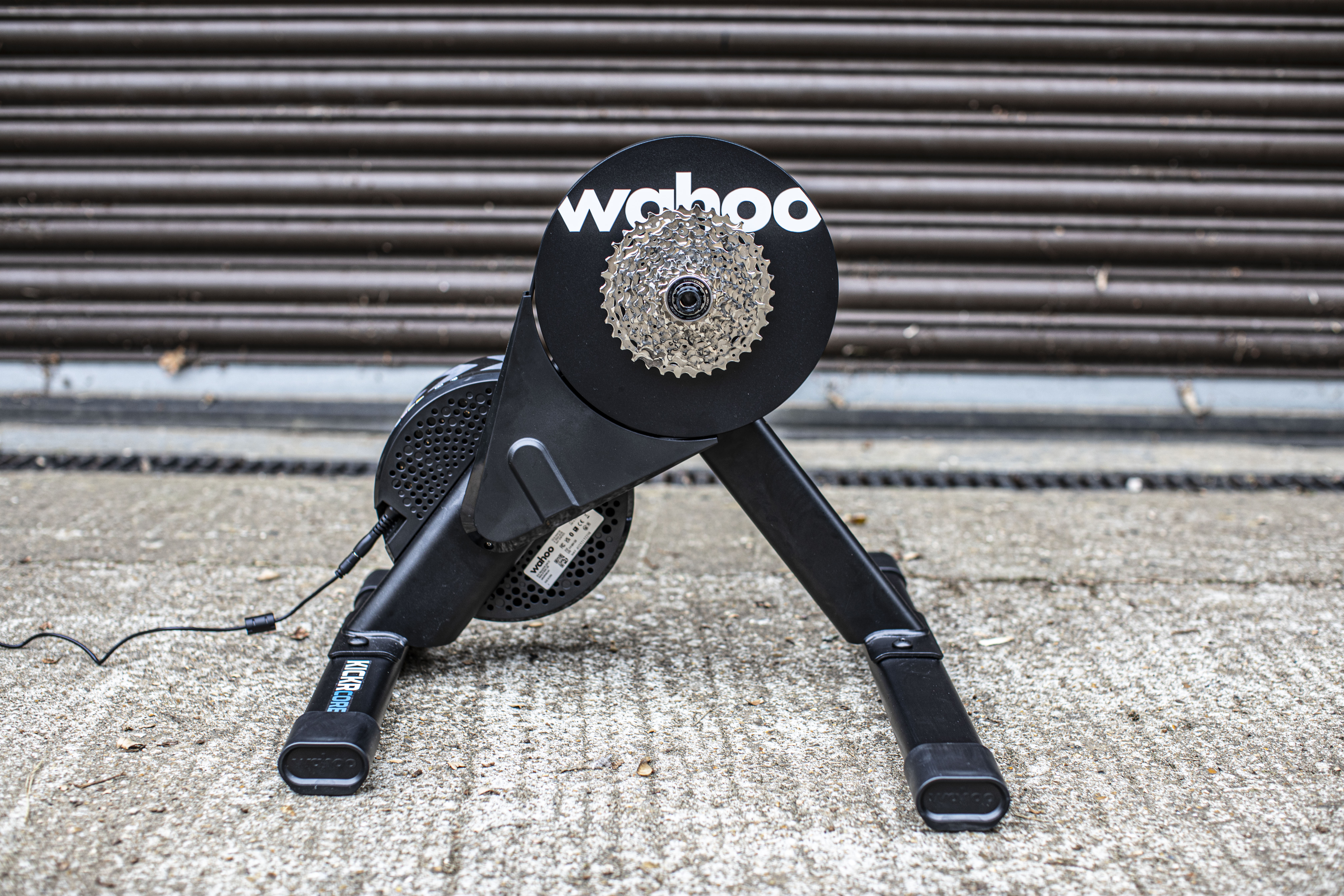
Wahoo KICKR Core 2: Mid-Range With Wi-Fi, Race Mode, KICKR Bridge
The Wahoo KICKR Core 2 is the 2026 successor to the 7-year-old KICKR Core. Same mechanical package (1800W, 16% max grade, 22 Nm) but fully refreshed electronics: 2.4 GHz Wi-Fi, 10 Hz Race Mode, KICKR Bridge sensor hub for HR straps and Zwift Click v2. $549.99 MSRP, $350 less than 2019 v1.
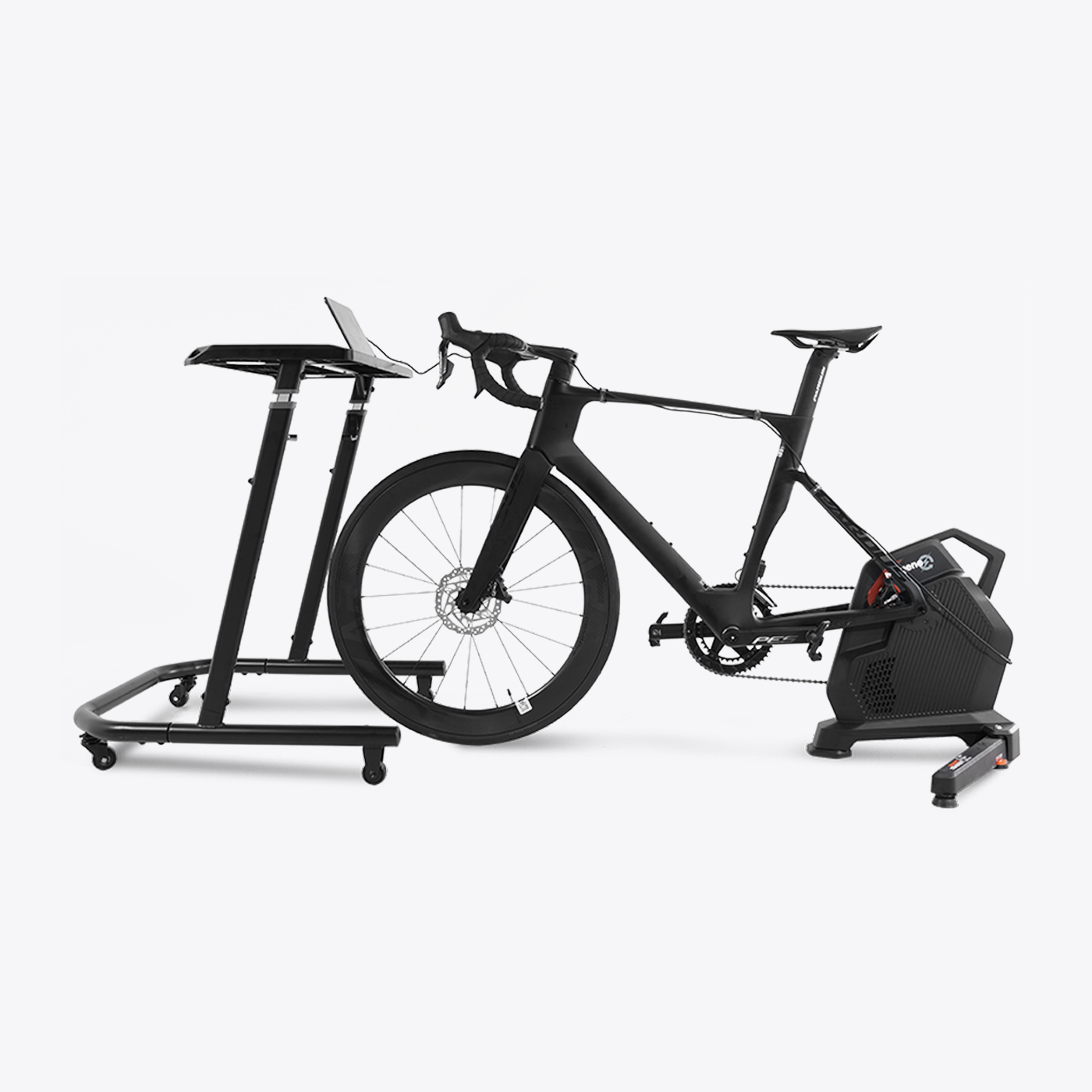
Magene T600 Eco: $899 Flagship With Wi-Fi, Self-Powered, USB-C PD
The Magene T600 Eco is the 2025 Eurobike flagship direct-drive. 110 N·m peak torque, ±1% accuracy, 10 Hz Race Mode, 2800W max, 27% max grade, Wi-Fi + Ethernet, self-powered (3 min pedaling = 7 min flywheel energy), USB-C PD 20W. $899 undercuts KICKR V6 ($1,049.99) and NEO 3M ($1,999). Caveat: no native virtual shifting.
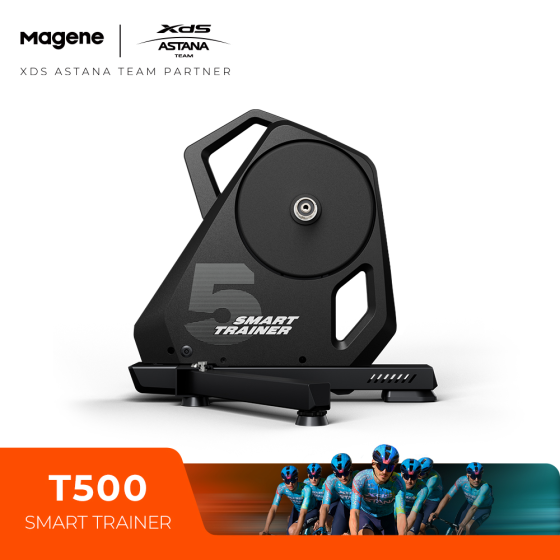
Magene T500: $699 Direct-Drive With QZ Virtual Shifting
The Magene T500 is a 2nd-gen direct-drive trainer at $699 USD: ±1% accuracy, 2200W max, 20% max grade, 88 N·m peak torque, and pre-installed Shimano 12-speed cassette. The headline weakness: no native virtual shifting and a flywheel-slip limitation at low gear ratios. Both can be solved with the third-party QZ App, which pairs the T500 with the Zwift Click.
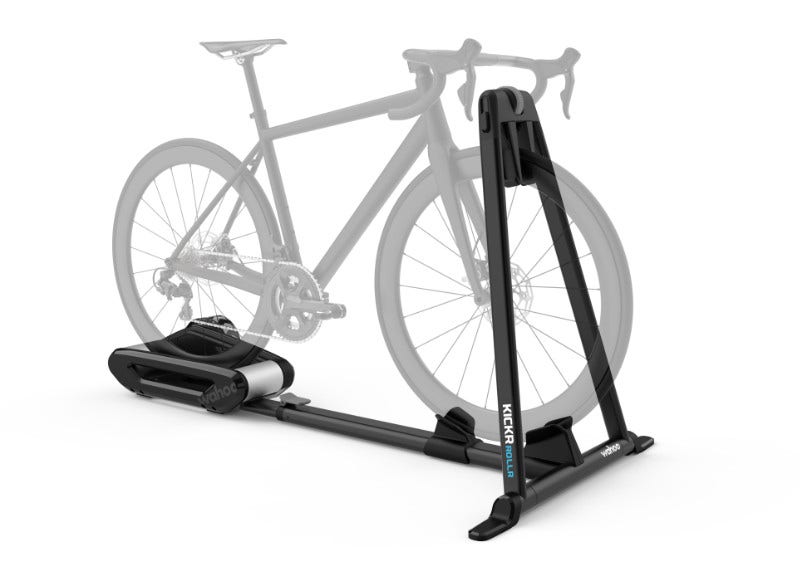
Wahoo KICKR ROLLR: The Wheel-On Smart Trainer With Native Power Estimation (2025 Firmware Update)
Wahoo's KICKR ROLLR is the wheel-on roller-based smart trainer that now broadcasts a native estimated power signal after the 2025 firmware update — no separate power meter required. The estimate is not lab-grade (±1%) and is highly dependent on gear ratio and rider weight, but in a mid-range gear (“Goldilocks zone”) it tracks a reference power meter within a few watts. Original $799 launch price has dropped to $699 at retail.
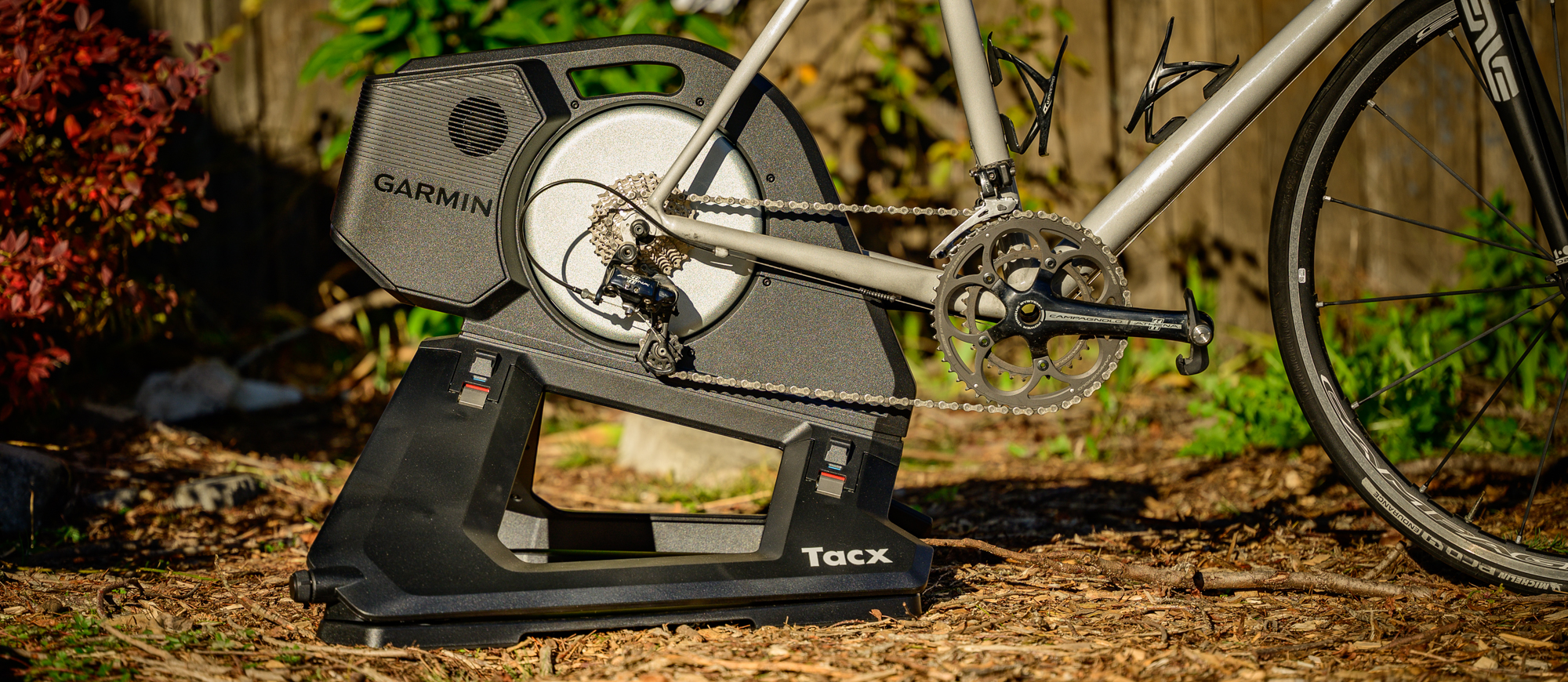
Garmin Tacx NEO 3M: Reference Smart Trainer With Motion + Vibration
The Garmin Tacx NEO 3M is the 2024 Tacx flagship. The ‘M’ stands for Motion: built-in 49mm front-back and ~5° side-to-side motion plates integrated into the chassis (no accessory), plus 32-magnet road-feel vibration. ±1% accuracy, ERG mode is the new benchmark. $1,999 USD. Caveat: no built-in Wi-Fi ($129 adapter required).
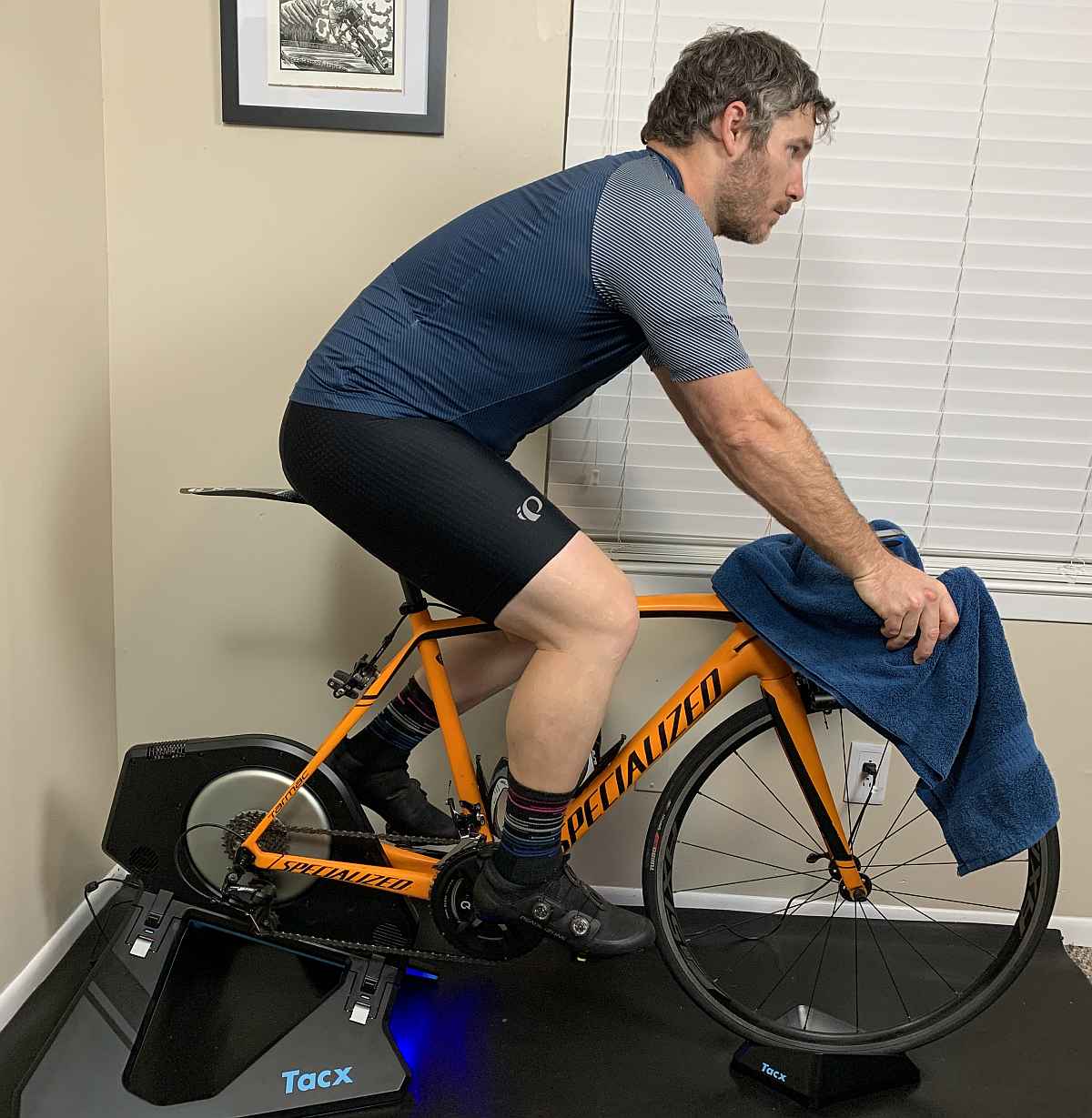
Tacx NEO 2T: A 2,200 W Direct-Drive with a Quiet Flywheel and Native Thru-Axle
The Tacx NEO 2T (2019) is a mid-cycle update to the NEO 2: native 12x142 / 12x148 thru-axle, 25% max grade, 2,200 W max resistance, redesigned neodymium magnet array that resolves the "virtual tire slip" issue at low flywheel speeds. ±1% claimed accuracy, no calibration required, ANT+ + Bluetooth Smart. The benchmark direct-drive trainer of the late-2010s.
Verify with JoyAnalyze
Import trainer power data into JoyAnalyze and compare JetBlack Victory: 2025 $399 Direct-Drive With Wi-Fi, Race Mode to a reference power meter — calibrate the power curve and check response latency.
Open multi-file compare in JoyAnalyzeSee how this fits you
The JetBlack Victory: 2025 $399 Direct-Drive With Wi-Fi, Race Mode is one option. Run the JoyFit assessment to see whether it actually matches your body and riding style — or compare it side-by-side with the other Bike Trainersin our database.
Community
Discuss this review · Pro members can rateComments
(0)Sign in above to leave a comment.
Loading comments…
Pro Ratings
PROLoading…Sign in above to rate this product on the 8-axis $APPEALS framework.