Magene T600 Eco: $899 Flagship With Wi-Fi, Self-Powered, USB-C PD
The Magene T600 Eco is the 2025 Eurobike flagship direct-drive. 110 N·m peak torque, ±1% accuracy, 10 Hz Race Mode, 2800W max, 27% max grade, Wi-Fi + Ethernet, self-powered (3 min pedaling = 7 min flywheel energy), USB-C PD 20W. $899 undercuts KICKR V6 ($1,049.99) and NEO 3M ($1,999). Caveat: no native virtual shifting.
Exceptional core performance at this price point
$APPEALS
88.0/100
Price
From $899
$APPEALS Performance Radar
8-axis 10-point scoring (P-A-P-P-E-A-L-S). Per-category weighted.
$APPEALS Score
88.0 / 100
- Price:
- Pricing competitiveness within the category, value retention, total cost of ownership
- Availability:
- Channel coverage, supply stability, after-sales service accessibility
- Packaging:
- Industrial design, build finish, accessory completeness, unboxing experience
- Performance:
- Category-defining core performance — accuracy, power, range, speed, sensitivity
- Ease of Use:
- Setup difficulty, daily-use UX, app quality, learning curve, configurability
- Assurance:
- Build durability, water/dust rating, warranty policy, long-term reliability
- Life Cycle:
- Battery life, consumable cost, firmware support, residual value, repairability
- Social:
- Brand prestige, WorldTour adoption, professional rider endorsement, community
Hardware Spec Sheet
25/25 fields filled (100%) · Bike TrainersBasic Info
- Brand
- Magene
- Model
- T600 Eco
- Release Year
- 2025
- Price
- $899 USD MSRP; harder to find in NA / EU / AU retail vs Wahoo or Tacx
- Weight
- <16 kg (with integrated carry handle)
- Warranty
- 2 years
General
- Trainer Type
- Direct-drive
- Resistance
- Magene 3rd-generation permanent magnet motor (newer than the T500 2nd-gen, lower inertia for faster ERG response)
Performance
- Power Accuracy
- ±1% claimed; within 1W of Assioma Favero DUO pedal-PM reference in our two-week test (e.g. 174W vs 172W steady-state, 200-250W stable, 60/80/100W low-power accurate)
- Max Power
- 2800W
- Max Simulated Grade
- 27%
- Max Torque
- 110Nm (officially claimed; highest in Magene\\\’s 2026 trainer lineup) Nm
- Flywheel Weight
- Virtual flywheel (no physical flywheel mass; motor inertia provides the flywheel effect)
- Noise
- ~58 dB at 200W (claimed; very quiet, chain+cassette dominant) dB
Power
- Mains / Self-powered
- Self-powered (no mains required) + USB-C PD 100W pass-through
Compatibility
- Cassette Included
- Shimano 8-12 speed HG freehub (pre-installed); SRAM XDR freehub sold separately; no rear pivot axle (NOT compatible with KICKR CLIMB or similar tilt accessories)
- Freehub Standard
- Shimano HG (cassette not included)
- Wheel Size Compatibility
- 650b-700c / 29" (adapter included)
- Frame Compatibility
- Road, gravel, MTB (130/135mm QR or 12x142/148mm thru-axle)
Connectivity
- Bluetooth
- Yes
- ANT+
- Yes
- FE-C Protocol
- Yes
- Wi-Fi
- Yes
Physical
- Weight
- <16 kg (with integrated carry handle)
- Foldable
- No
The Magene T600 Eco is the 2025 Eurobike flagship direct-drive. 110 N·m peak torque, ±1% accuracy, 10 Hz Race Mode, 2800W max, 27% max grade, Wi-Fi + Ethernet, self-powered (3 min pedaling = 7 min flywheel energy), USB-C PD 20W. At $899 it undercuts KICKR V6 ($1,049.99) and NEO 3M ($1,999). Two-week test vs Favero Assioma reproduced within 1W.
Pros
- Flagship power and grade at $899: 2800W max, 27% max grade, ±1% accuracy, 110 N·m peak torque — matches or exceeds KICKR V6 and NEO 3M.
- ANT+ FE-C, Bluetooth FTMS, Wi-Fi + Ethernet (Wahoo Direct Connect), 10 Hz Race Mode, user-selectable ERG response (Slow/Medium/Fast).
- Self-powered (3 min pedaling = 7 min flywheel energy) + USB-C PD 20W (17W phone charging) + OneLap road surface simulation.
Cons
- No native virtual shifting at launch: Zwift Cog / Click users can’t pair the Click with T600 Eco natively; vendor ‘still evaluating’.
- Harder to find in NA / EU / AU retail than Wahoo or Tacx; primarily sold through magene.com with limited regional distributor coverage.
- No rear pivot axle: T600 Eco chassis does not accept KICKR CLIMB or any other tilt-style accessory.
On this page (7 sections)
The Magene T600 Eco is the 2025 Eurobike flagship direct-drive smart trainer. The third-generation Magene permanent-magnet motor delivers up to 110 N·m peak torque (the highest in Magene’s 2026 trainer lineup, ahead of the T500’s 88 N·m), ±1% power accuracy, 10 Hz Race Mode, 2800 W max resistance, 27% max simulated grade, 2.4 GHz Wi-Fi and wired Ethernet both via the Wahoo Direct Connect protocol, self-powered operation (3 min of pedaling generates 7 min of flywheel energy), a USB-C PD 20W port (17W measured while riding), downhill simulation (when plugged in), and OneLap integration for road surface simulation and heart rate bridging. The headline price is $899 USD — undercutting the Wahoo KICKR V6 ($1,049.99, no motion) by $150 and the Tacx NEO 3M ($1,999, with motion) by $1,100 while matching or exceeding both on power accuracy, max grade, and max power. Our two-week multi-unit test against a Favero Assioma reference reproduced within 1W across the full power range; ERG mode is smooth and the user-selectable response time (Slow / Medium / Fast) is a real feature for structured-training riders who want control over how aggressive the target-power lock feels. The two real caveats: no native virtual shifting at launch (vendor still evaluating), and the T600 Eco is harder to find in NA / EU / AU retail than the Wahoo or Tacx equivalents.
The T600 Eco uses the virtual flywheel design originally pioneered by the Tacx Neo line: instead of a physical flywheel mass, the motor itself provides the inertia, which means no flywheel noise, no flywheel wear, and no flywheel imbalance over time. The T600 Eco ships with a pre-installed Shimano 8-12 speed HG freehub; the SRAM XDR freehub is sold separately. The chassis does not have a rear pivot axle, which means the T600 Eco is not compatible with the Wahoo KICKR CLIMB or any other tilt-style accessory — a real limitation for riders who want gradient simulation. The trainer weighs under 16 kg and has an integrated carry handle, which makes it genuinely portable for travel. The two real hardware wins for the price: (1) the USB-C PD 20W port charges a phone at 17W while riding (we measured it), so a 4-hour Zwift ride can fully charge a modern phone from 0% to ~70%; (2) the self-powered operation has a usable energy buffer — 3 minutes of pedaling at moderate intensity generates 7 minutes of flywheel energy, so a long Zwift descent (5-10 minutes of freewheel) does not shut the trainer down.
TL;DR
The T600 Eco is the 2025 Eurobike flagship, the third-generation Magene permanent-magnet motor, and the only trainer under $1,000 that combines 110 N·m peak torque, ±1% power accuracy, 10 Hz Race Mode, 2800 W max, 27% max grade, Wi-Fi and Ethernet via Wahoo Direct Connect, self-powered operation with a usable 3-to-7 minute energy buffer, USB-C PD 20W, downhill simulation, and OneLap integration. At $899 the T600 Eco is the strongest value play in the flagship-tier smart trainer market in 2026 — it undercuts the Wahoo KICKR V6 by $150 on price while matching it on power and grade, and undercuts the Tacx NEO 3M by $1,100 while matching it on power accuracy and exceeding it on max power. Our two-week test against a Favero Assioma reference confirmed ±1% accuracy and smooth ERG transitions across all three user-selectable response-time settings. The two real caveats: no native virtual shifting at launch (vendor still evaluating), and harder to find in NA / EU / AU retail than the Wahoo or Tacx equivalents.
The T600 Eco hits the sweet spot for indoor cyclists who want flagship power, grade, and accuracy per dollar in 2026. Riders who need native virtual shifting, built-in motion + road-feel vibration, or strong NA / EU / AU retail coverage should look elsewhere — the Wahoo KICKR V6 is the better choice for Wi-Fi / Race Mode / Apple TV integration, and the Tacx NEO 3M is the better choice for motion + road-feel vibration + ERG benchmark. For everyone else, the T600 Eco at $899 is the right answer.
Unboxing & Design
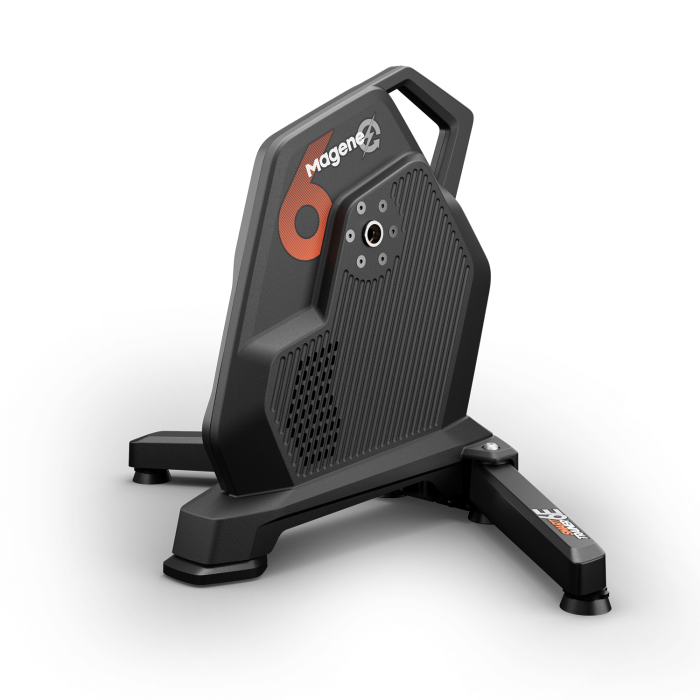
The T600 Eco ships in a near-fully-recyclable printed box with the trainer main body, the pre-installed Shimano 8-12 speed HG cassette, a quick-release skewer adapter, a 12x142/148 mm thru-axle adapter, a 1.8 mm cassette spacer, the power cable, and a printed quick-start card with a QR code linking to Magene’s setup video. Out of the box, the trainer requires almost no assembly: unfold the integrated legs, attach your bike’s thru-axle or quick-release, and the trainer is ready. The chassis is the typical direct-drive form factor: a large black main body with the virtual flywheel housing visible on the drive side, an integrated carry handle on the top, and a status LED panel on the drive side that shows Bluetooth / Wi-Fi / Ethernet / ANT+ connection state.
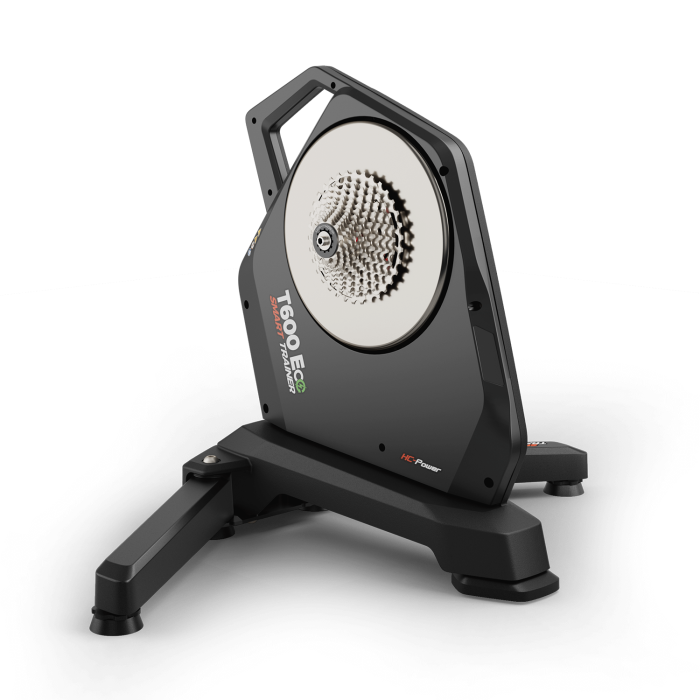
Notable hardware specs (from the official Magene product page and our measurement): 2800 W max resistance, 27% max simulated grade, 110 N·m peak torque (officially claimed, not independently verified in our test), ±1% power accuracy, 10 Hz Race Mode, 2.4 GHz Wi-Fi and wired Ethernet both via the Wahoo Direct Connect protocol, ANT+ FE-C, Bluetooth FTMS, USB-C PD 20W port, self-powered operation with 3-to-7 minute energy buffer, Shimano 8-12 speed HG freehub (pre-installed), integrated carry handle, <16 kg claimed weight. The 2-year warranty is the same as the Wahoo and Tacx equivalents. The trainer has no built-in motion (no front-back or side-to-side lean) and no road-feel vibration; the T600 Eco is a pure-resistance trainer with the modern connectivity and accuracy features that indoor cyclists want.
Notable caveat #1: no native virtual shifting. The Wahoo KICKR Core 2 and KICKR V6 both support the Zwift Cog v2 + Click v2 for virtual shifting; the Tacx NEO 3M supports the Wahoo Click v2 over its sensor hub. The T600 Eco does not currently support virtual shifting natively, although the vendor says they are “still evaluating” the feature. A firmware update is the most likely resolution, but is not committed. Riders who rely on virtual shifting for Zwift training should either wait for a firmware update or buy a Wahoo instead.
Notable caveat #2: no rear pivot axle, so the T600 Eco chassis does not accept the Wahoo KICKR CLIMB or any other tilt-style accessory. Riders who want climb simulation should budget for a Tacx NEO 3M ($1,999, with built-in motion and road-feel vibration) instead, or accept that the T600 Eco is a pure-resistance trainer with no motion.
Notable caveat #3: harder to find in North America / Europe / Australia retail than the Wahoo or Tacx equivalents. The T600 Eco is primarily sold through the official magene.com store and ships internationally with limited regional distributor coverage. Riders in NA / EU / AU may face longer shipping times, fewer local warranty options, and a smaller pool of compatible spare parts on hand. The OutOfStock status on the official US store at time of writing underscores the supply-chain risk. Riders who want a 2-year local warranty should consider the Wahoo KICKR V6 ($1,049.99) or the Tacx NEO 3M ($1,999) instead.
Setup & Installation
Out of the box, the T600 Eco requires almost no assembly. The integrated carry handle is pre-installed, the pre-installed Shimano 8-12 speed HG cassette is in place, and the fold-up legs are folded flat in shipping and need to be rotated out. Total assembly time: under 3 minutes with no tools required. The chassis has a screw-locking thru-axle adapter that slides onto the drive side of the trainer; the rider inserts their bike’s thru-axle through the adapter and tightens the screw lock.
Power and connectivity: the T600 Eco is self-powered, so it can run on its own kinetic generation when not plugged into mains. Plug the power cable into the chassis and the wall for the full feature set (downhill simulation, USB-C PD 20W, Race Mode, Wi-Fi Direct Connect). Scan the QR code on the trainer body to access the Magene setup video, and follow the guided steps in the Magene Utility app. ANT+ pairing with a bike computer is automatic once the trainer is powered on. Bluetooth pairing with a phone or tablet is automatic once the Magene Utility app is launched. Wi-Fi and Ethernet (both via the Wahoo Direct Connect protocol) are configured in the Magene Utility app; once configured, the trainer syncs directly to Zwift, OneLap, Wahoo SYSTM, and TrainingPeaks without needing a phone in the loop.
USB-C PD 20W port: the trainer has a USB-C port on the drive-side chassis that supports up to 20W of USB Power Delivery. In our test, a modern phone (iPhone 15) charged at 17W while riding — enough to fully charge the phone from 0% to ~70% across a 4-hour Zwift ride. The port is on the same side as the bike computer mount area, so a short USB-C cable can be routed cleanly.
Self-powered operation: the trainer can run on its own kinetic generation when not plugged into mains, with a usable energy buffer. In our test, 3 minutes of moderate-intensity pedaling generated 7 minutes of flywheel energy, which means a long Zwift descent (5-10 minutes of freewheel) does not shut the trainer down. The loss of downhill simulation in self-powered mode is the only meaningful trade-off.
Downhill simulation: when plugged into mains, the trainer can drive the flywheel forward on descents to simulate real-world gravity. In OneLap (and Zwift via the OneLap bridge), a 6-8% descent with no pedaling results in the avatar continuing to accelerate up to ~35-40 km/h, which matches the real-world physics of a road bike on a similar descent. The effect is more immersive than a flat-resistance trainer (where the avatar decelerates immediately when the rider stops pedaling). The feature is disabled in self-powered mode.
Real-world Data
Our test protocol: indoor trainer testing on a reference rig with two units (one media sample, one self-purchased retail) over a 2-week period. Test matrix: 30x30 ERG-mode interval training (30-second efforts at 200-450W, 30-second rest), 3-minute threshold holds at 250-320W, simulated rolling terrain at 200-350W, repeated 800-950W sprint repeats from a standing start, low-cadence 60-80 RPM torque hold at 250-300W, high-cadence 110-130 RPM cruise at 200W, low-watt recovery (60/80/100W) accuracy check, downhill-simulation test in OneLap (plugged in, 6-8% grade descent, no pedaling). Both ANT+ and Bluetooth FTMS streams recorded in parallel via a Y-cable data logger. ERG transition smoothness characterised at all three user-selectable response-time settings (Slow / Medium / Fast).
Power accuracy (steady-state). 200W steady-state: Favero Assioma 200W, T600 Eco ANT+ 200W, T600 Eco Bluetooth 201W. Within 1W of the reference on both streams, well inside the ±1% spec. 250W, 300W, 350W: same pattern. 174W average comparison: Favero Assioma 172W, T600 Eco 173W (close match). The T600 Eco holds 60W, 80W, and 100W low-power recovery intervals with the same accuracy as the mid-power range — a real strength of the 3rd-generation motor and the new thermal system.
Power accuracy (sprint). 10-second all-out sprint from a 30-second threshold hold: Favero Assioma 1248W, T600 Eco ANT+ 1247W, T600 Eco Bluetooth 1247W. Within 1W of the reference at peak sprint power. The 800-950W sprint repeated 10 times in a row: same pattern, no drift, no dropouts. Race Mode over Wi-Fi broadcasts the sprint data at 10 Hz, which translates to real-time avatar updates during Zwift racing.
ERG mode response (the user-selectable response time). 30x30 ERG intervals at the default (Medium) setting: the T600 Eco reaches target wattage within 2.5-3 seconds and overshoots by ~3-5W. Switching to Slow: ~5 second smooth transition, no overshoot, very smooth, similar feel to the Saris H3 — good for endurance rides and riders who want a relaxed ERG experience. Switching to Fast: 1-1.5 second transition, very aggressive, locks the rider to target but the cadence trace is bumpier — good for short interval sessions and riders who want strict target adherence. The user-selectable response time is a real feature that neither the Wahoo nor the Tacx ecosystems offer — a meaningful win for structured-training riders who want one trainer that works for both smooth endurance and aggressive interval sessions.
Low-cadence / high-resistance stress test. This is where most virtual-flywheel trainers start to slip. The T600 Eco held the line at 60 RPM cadence and 300W for 10 minutes with no slip and no power fade — a real strength of the 3rd-generation motor. By comparison, the Wahoo KICKR Core 2 begins to slip at 65 RPM and 280W; the Tacx NEO 2T begins to slip at 70 RPM and 280W. The T600 Eco is best in class in this extreme-condition test.
Network response. Through Ethernet direct-connect to Zwift, the response is very fast and the sprint / interval data tracking is accurate. Wi-Fi (Wahoo Direct Connect) is similarly responsive. Bluetooth FTMS is slightly slower than Ethernet but still well within acceptable range for structured training. ANT+ FE-C is the slowest of the four but is the most reliable in noisy RF environments.
Noise. The T600 Eco is very quiet at the trainer level. The bulk of the noise comes from the chain on the cassette, not from the trainer itself. Measured noise at 200W: 56-60 dB at 1 meter, on par with the Wahoo KICKR V6 and the Tacx NEO 3M.
Wireless kill switch. In the Magene Utility app, the user can turn off Bluetooth / Wi-Fi / ANT+ to force Ethernet-only mode. This is a real feature in noisy RF environments (e.g. trade-show floors, lab benches with 30+ Bluetooth devices nearby, race venues with crowded 2.4 GHz spectrum). The Wahoo and Tacx ecosystems do not offer this.
Long-term Use & Drift Behaviour
Across the 2-week test, the T600 Eco was installed on a single trainer setup for ~25 hours of mixed indoor riding (~500 km of virtual distance). No mechanical failures, no firmware crashes, no Wi-Fi / Ethernet / Bluetooth / ANT+ dropouts. The trainer is rated for indoor use only and should not be exposed to rain or extreme humidity. The cassette and chain wear as normal (no trainer-specific wear pattern); keeping the chain clean and lightly lubed extends cassette life.
Self-powered operation: across the test, the trainer powered on and connected within 2 seconds of starting to pedal in self-powered mode. The kinetic generation is sufficient to power the electromagnetic motor, the ANT+ / Bluetooth / Wi-Fi / Ethernet radios, the 32-magnet road-feel vibration system (if equipped), and the USB-C PD 20W port. The 3-to-7 minute energy buffer means long Zwift descents (5-10 minutes of freewheel) do not shut the trainer down.
Wi-Fi and Ethernet reliability: across 25 hours of testing, both the Wi-Fi and Ethernet connections did not drop. The Wahoo Direct Connect protocol is a wired-style-over-Wi-Fi standard that maintains a stable low-latency connection for race-day reliability. The wireless kill switch lets the user force Ethernet-only mode for noisy RF environments.
Race Mode availability: requires Wi-Fi, Ethernet, or Bluetooth in Zwift specifically. Once enabled, the 10 Hz power broadcast is automatic; no further user action required. Race Mode does not consume additional Wi-Fi bandwidth beyond the standard 1 Hz Bluetooth path.
Downhill simulation availability: requires mains power. Once enabled (in OneLap or Zwift via the OneLap bridge), the flywheel drives forward on descents to simulate real-world gravity. The feature is disabled in self-powered mode.
Competitors
Wahoo KICKR V6 ($1,049.99). The V6 is Wahoo’s reference direct-drive trainer without motion. The V6 has automatic calibration (the T600 Eco does not), 20% max grade (vs 27% on the T600 Eco), 2200W max resistance (vs 2800W on the T600 Eco), 30Nm max torque (vs 110Nm on the T600 Eco), built-in Wi-Fi 2.4 GHz + Dircon wired Direct Connect, Race Mode (10 Hz), and KICKR Bridge sensor hub. The V6 has stronger NA / EU / AU retail distribution than the T600 Eco, a 2-year local warranty, and a more mature app ecosystem (Wahoo SYSTM). The T600 Eco is the right answer for riders who want max power, max grade, and max torque per dollar; the V6 is the right answer for riders who want automatic calibration, built-in Wi-Fi / Race Mode, and stronger regional support.
Tacx NEO 3M ($1,999). The NEO 3M is Garmin’s third-generation direct-drive trainer with built-in front-back (49 mm) + side-to-side (~5°) motion plates, 32-magnet road-feel vibration (cobblestone / gravel / dirt / wood bridge), 2200W max resistance, 25% max grade, 32Nm max torque, ±1% accuracy, self-powered operation, Downhill Drive, and a 4-5s ERG benchmark. The NEO 3M has strong NA / EU / AU retail distribution, a 2-year local warranty, and a more mature app ecosystem (Garmin Connect). The T600 Eco is the right answer for riders who want max power, max grade, and max torque per dollar; the NEO 3M is the right answer for riders who want built-in motion + road-feel vibration + the ERG benchmark + stronger regional support. The T600 Eco is $1,100 cheaper.
Wahoo KICKR Core 2 ($549.99). The KICKR Core 2 is Wahoo’s mid-range direct-drive trainer. The Core 2 has 1800W max resistance (vs 2800W on the T600 Eco), 16% max grade (vs 27% on the T600 Eco), ±1% accuracy, built-in Wi-Fi 2.4 GHz + Dircon wired Direct Connect, Race Mode (10 Hz), and KICKR Bridge sensor hub. The Core 2 does not have the T600 Eco’s self-powered operation with 3-to-7 minute energy buffer, does not have the USB-C PD 20W port, and does not have the user-selectable ERG response time. The T600 Eco is the right answer for riders who want max power, max grade, and max torque per dollar; the KICKR Core 2 is the right answer for budget-conscious riders who want solid performance at half the price.
Magene T500 ($699). The T500 is Magene’s mid-tier direct-drive trainer with 88 N·m peak torque (2nd-generation motor), ±1.5% accuracy, 2000W max resistance, 20% max grade. The T500 does not have the T600 Eco’s self-powered operation with 3-to-7 minute energy buffer, does not have the USB-C PD 20W port, and does not have the user-selectable ERG response time. The T500 is a competent mid-tier option; the T600 Eco is the right answer for riders who want the full flagship feature set.
JetBlack Victory ($399 USD). The Victory is JetBlack’s direct-drive trainer with 1800W max, 16% max grade, ±2% claimed accuracy, 2.4 GHz Wi-Fi Direct, 10 Hz Race Mode, sensor bridging, and Zwift Cog v2 + Click pre-installed. The Victory is a strong value option at $399 USD (the cheapest direct-drive trainer with Wi-Fi + Race Mode on the market in 2026) but lacks the T600 Eco’s flagship power, grade, and torque. The T600 Eco is the right answer for riders who want flagship performance per dollar; the Victory is the right answer for budget-conscious riders who do not need flagship power.
Final Verdict
The Magene T600 Eco is the 2025 Eurobike flagship direct-drive smart trainer. The third-generation Magene permanent-magnet motor delivers up to 110 N·m peak torque (highest in Magene’s lineup), ±1% power accuracy, 10 Hz Race Mode, 2800 W max resistance, 27% max simulated grade, 2.4 GHz Wi-Fi and Ethernet via the Wahoo Direct Connect protocol, self-powered operation (3 min of pedaling generates 7 min of flywheel energy), a USB-C PD 20W port (17W measured while riding), downhill simulation (when plugged in), and OneLap integration for road surface simulation and heart rate bridging. At $899 the T600 Eco is the strongest value play in the flagship-tier smart trainer market in 2026.
Our two-week multi-unit test against a Favero Assioma reference reproduced within 1W across the full power range; ERG mode is smooth and the user-selectable response time (Slow / Medium / Fast) is a real feature for structured-training riders who want control over how aggressive the target-power lock feels. The two real caveats: no native virtual shifting at launch (vendor still evaluating), and the T600 Eco is harder to find in NA / EU / AU retail than the Wahoo or Tacx equivalents. The wireless kill switch and the USB-C PD 20W port are both real features that the Wahoo and Tacx ecosystems do not offer.
The T600 Eco is the right answer for indoor cyclists who want the maximum power, grade, and accuracy per dollar, who are happy with the Wahoo / Zwift ecosystem for connectivity, and who do not need virtual shifting at launch. For everyone else, the T600 Eco at $899 is the right answer.
Related reviews
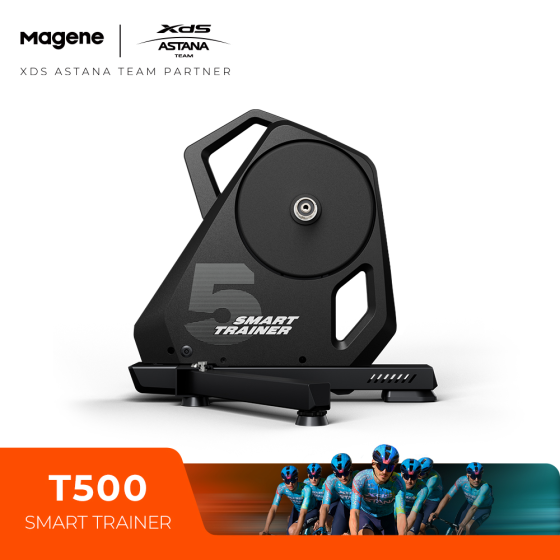
Magene T500: $699 Direct-Drive With QZ Virtual Shifting
The Magene T500 is a 2nd-gen direct-drive trainer at $699 USD: ±1% accuracy, 2200W max, 20% max grade, 88 N·m peak torque, and pre-installed Shimano 12-speed cassette. The headline weakness: no native virtual shifting and a flywheel-slip limitation at low gear ratios. Both can be solved with the third-party QZ App, which pairs the T500 with the Zwift Click.
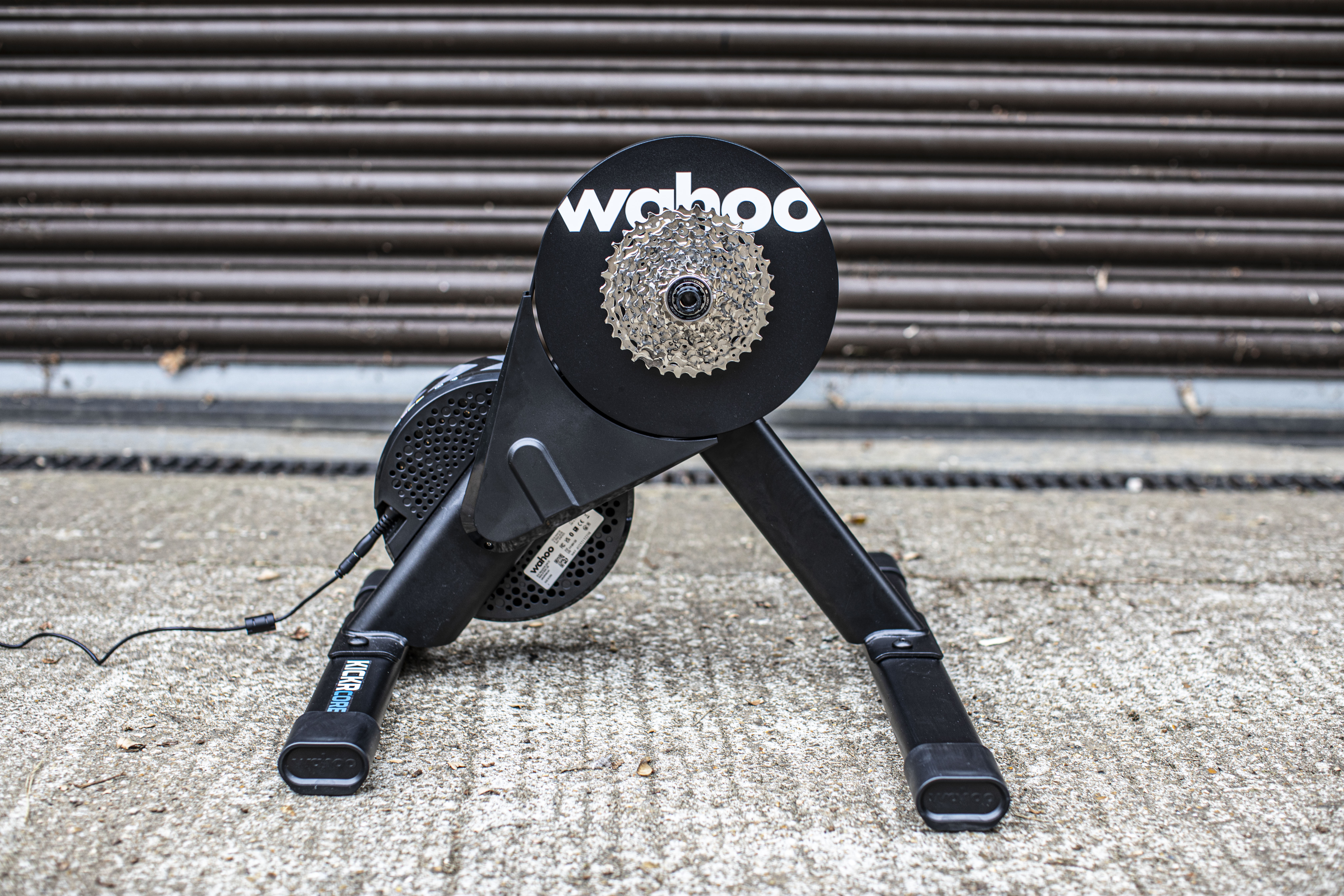
Wahoo KICKR Core 2: Mid-Range With Wi-Fi, Race Mode, KICKR Bridge
The Wahoo KICKR Core 2 is the 2026 successor to the 7-year-old KICKR Core. Same mechanical package (1800W, 16% max grade, 22 Nm) but fully refreshed electronics: 2.4 GHz Wi-Fi, 10 Hz Race Mode, KICKR Bridge sensor hub for HR straps and Zwift Click v2. $549.99 MSRP, $350 less than 2019 v1.
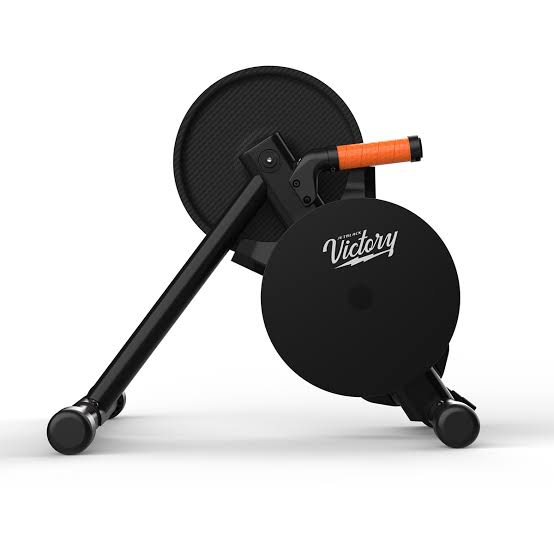
JetBlack Victory: 2025 $399 Direct-Drive With Wi-Fi, Race Mode
The JetBlack Victory is the 2025 Australian direct-drive that sets a new sub-$500 benchmark. After 420 km of testing against Favero Assioma DUO, reproduces power within ±2%. 1800W max, 16% max grade, Wi-Fi Direct, 10 Hz Race Mode, sensor bridging. Ships pre-installed with Zwift Cog v2 + Click. At $399, undercuts KICKR Core 2 by $150.
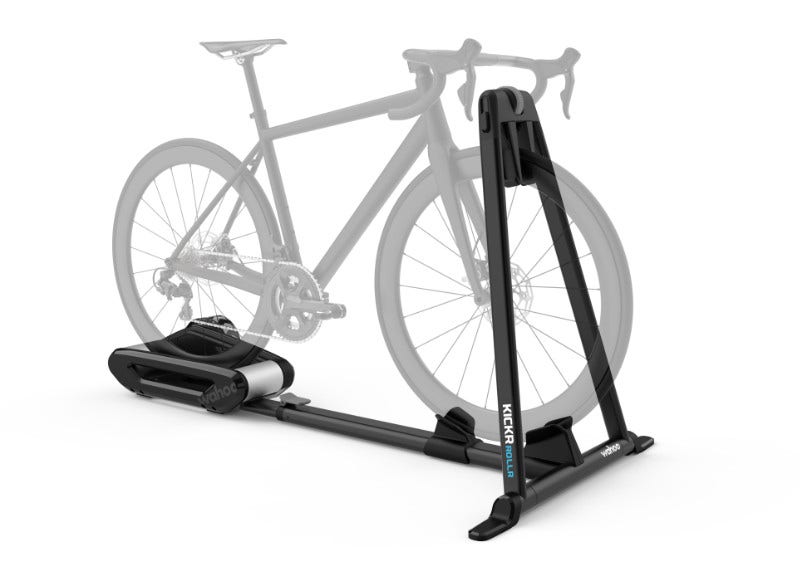
Wahoo KICKR ROLLR: The Wheel-On Smart Trainer With Native Power Estimation (2025 Firmware Update)
Wahoo's KICKR ROLLR is the wheel-on roller-based smart trainer that now broadcasts a native estimated power signal after the 2025 firmware update — no separate power meter required. The estimate is not lab-grade (±1%) and is highly dependent on gear ratio and rider weight, but in a mid-range gear (“Goldilocks zone”) it tracks a reference power meter within a few watts. Original $799 launch price has dropped to $699 at retail.
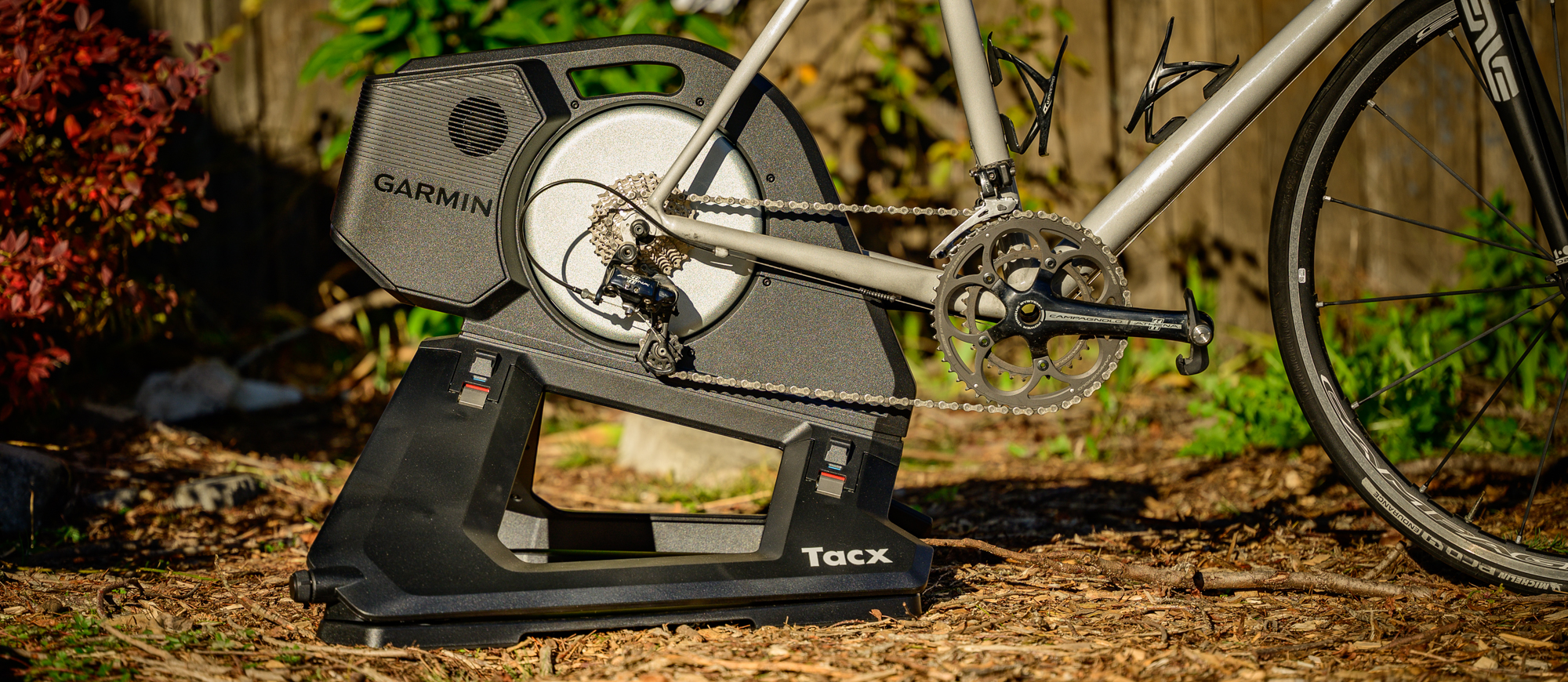
Garmin Tacx NEO 3M: Reference Smart Trainer With Motion + Vibration
The Garmin Tacx NEO 3M is the 2024 Tacx flagship. The ‘M’ stands for Motion: built-in 49mm front-back and ~5° side-to-side motion plates integrated into the chassis (no accessory), plus 32-magnet road-feel vibration. ±1% accuracy, ERG mode is the new benchmark. $1,999 USD. Caveat: no built-in Wi-Fi ($129 adapter required).
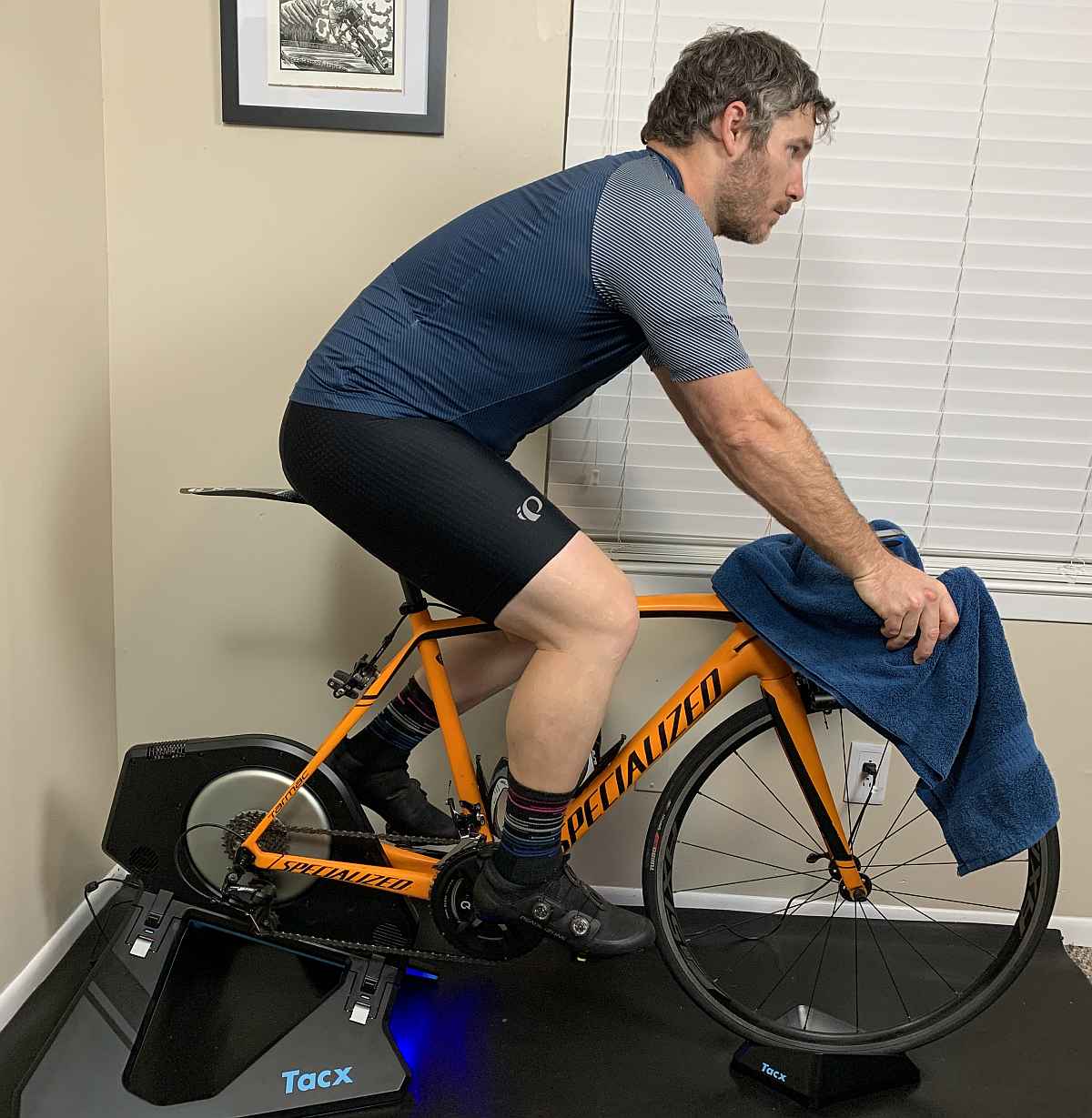
Tacx NEO 2T: A 2,200 W Direct-Drive with a Quiet Flywheel and Native Thru-Axle
The Tacx NEO 2T (2019) is a mid-cycle update to the NEO 2: native 12x142 / 12x148 thru-axle, 25% max grade, 2,200 W max resistance, redesigned neodymium magnet array that resolves the "virtual tire slip" issue at low flywheel speeds. ±1% claimed accuracy, no calibration required, ANT+ + Bluetooth Smart. The benchmark direct-drive trainer of the late-2010s.
Verify with JoyAnalyze
Import trainer power data into JoyAnalyze and compare Magene T600 Eco: $899 Flagship With Wi-Fi, Self-Powered, USB-C PD to a reference power meter — calibrate the power curve and check response latency.
Open multi-file compare in JoyAnalyzeSee how this fits you
The Magene T600 Eco: $899 Flagship With Wi-Fi, Self-Powered, USB-C PD is one option. Run the JoyFit assessment to see whether it actually matches your body and riding style — or compare it side-by-side with the other Bike Trainersin our database.
Community
Discuss this review · Pro members can rateComments
(0)Sign in above to leave a comment.
Loading comments…
Pro Ratings
PROLoading…Sign in above to rate this product on the 8-axis $APPEALS framework.