Wahoo KICKR ROLLR: The Wheel-On Smart Trainer With Native Power Estimation (2025 Firmware Update)
Wahoo's KICKR ROLLR is the wheel-on roller-based smart trainer that now broadcasts a native estimated power signal after the 2025 firmware update — no separate power meter required. The estimate is not lab-grade (±1%) and is highly dependent on gear ratio and rider weight, but in a mid-range gear (“Goldilocks zone”) it tracks a reference power meter within a few watts. Original $799 launch price has dropped to $699 at retail.
Solid all-rounder, especially build quality — main trade-off is pro pedigree
$APPEALS
73.0/100
Price
From $699
$APPEALS Performance Radar
8-axis 10-point scoring (P-A-P-P-E-A-L-S). Per-category weighted.
$APPEALS Score
73.0 / 100
- Price:
- Pricing competitiveness within the category, value retention, total cost of ownership
- Availability:
- Channel coverage, supply stability, after-sales service accessibility
- Packaging:
- Industrial design, build finish, accessory completeness, unboxing experience
- Performance:
- Category-defining core performance — accuracy, power, range, speed, sensitivity
- Ease of Use:
- Setup difficulty, daily-use UX, app quality, learning curve, configurability
- Assurance:
- Build durability, water/dust rating, warranty policy, long-term reliability
- Life Cycle:
- Battery life, consumable cost, firmware support, residual value, repairability
- Social:
- Brand prestige, WorldTour adoption, professional rider endorsement, community
Hardware Spec Sheet
25/25 fields filled (100%) · Bike TrainersBasic Info
- Brand
- Wahoo
- Model
- KICKR ROLLR
- Release Year
- 2023
- Price
- $699 USD (down from $799 launch MSRP; front wheel block included)
- Weight
- 17kg
- Warranty
- 2 years
General
- Trainer Type
- Wheel-on roller
- Resistance
- Electromagnetic roller brake
Performance
- Power Accuracy
- Lab-grade ±2% for hardware power-meter inputs; algorithm-based estimation for the new native power output (not lab-grade, gear-ratio and rider-weight dependent; see firmware update section below)
- Max Power
- 1500W
- Max Simulated Grade
- 10%
- Max Torque
- 35 Nm
- Flywheel Weight
- Internal high-inertia
- Noise
- 60 dB
Power
- Mains / Self-powered
- Mains (100-240V)
Compatibility
- Cassette Included
- Not required (uses the rider\\\\'s own cassette on the wheel)
- Freehub Standard
- Shimano HG (cassette not included)
- Wheel Size Compatibility
- 650b-700c / 29" (adapter included)
- Frame Compatibility
- Road, gravel, MTB (130/135mm QR or 12x142/148mm thru-axle)
Connectivity
- Bluetooth
- Yes
- ANT+
- Yes
- FE-C Protocol
- Yes
- Wi-Fi
- No
Physical
- Weight
- 17kg
- Foldable
- No
The Wahoo KICKR ROLLR is a wheel-on roller-based smart trainer that launched in early 2022 at $799 USD and has since dropped to $699 at most retailers. The headline design is the roller-based wheel-on format: the rider…
Pros
- Packaging 8.0/10
- Ease of Use 8.0/10
- Assurance 8.0/10
Cons
- Social 5.0/10
- Life Cycle 7.0/10
- Performance 7.0/10
On this page (8 sections)
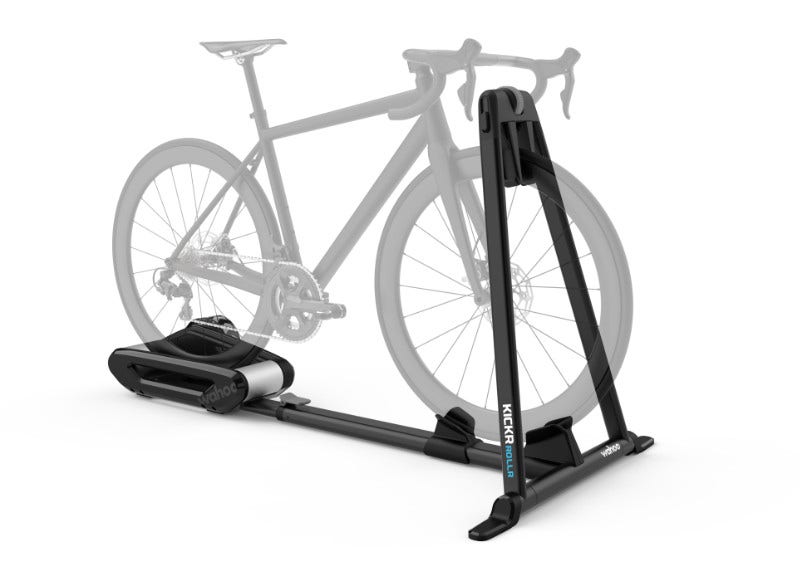
The Wahoo KICKR ROLLR is a wheel-on roller-based smart trainer that launched in early 2022 at $799 USD and has since dropped to $699 at most retailers. The headline design is the roller-based wheel-on format: the rider keeps their bike fully assembled (cassette on the wheel, no thru-axle adapter, no chain tension to manage), drops the front wheel into the integrated stand, drops the rear wheel onto the roller, and starts riding. The original 2022 ROLLR required a separate power meter (pedal, crank, or wheel-based) for any app to compute power — the trainer itself did not broadcast a power signal. The 2025 firmware update changes that: the ROLLR can now broadcast a native estimated power signal, so riders without a power meter can drop their bike on the trainer and start a Zwift or RGT session in under 3 seconds.
Key Specifications
- Wheel-on, roller-based (no cassette swap)
- Hardware accuracy ±2% (when using an external power meter)
- Native estimated power output (2025 firmware update; not lab-grade)
- Max power: 1500W
- Max simulated grade: 10%
- ANT+ FE-C + Bluetooth FTMS + Wi-Fi + Wahoo Direct Connect (Ethernet)
- Internal flywheel, no external cassette
- 17kg weight
- $699 USD (down from $799 launch MSRP; front wheel block included)
Use Case
The KICKR ROLLR is built for the rider who wants the most convenient setup possible. You keep your bike exactly as you ride it outside — your cassette, your wheels, your tires. When you finish a ride, you lift the bike off the roller and ride outside. No cassette swap, no thru-axle adapters, no chain lubrication change. The trade-off is accuracy (hardware ±2% for external power meter; algorithm-based for native estimation) and a lower max grade (10% vs. 20% for direct-drive).
For an endurance cyclist who already has a power meter on the bike (a Quarq, Favero Assioma, Garmin Rally pedal, or Power2Max NGeco), the ROLLR's hardware ±2% accuracy is more than sufficient — the wheel-on roller adds some noise to the power signal that the bike's own power meter does not have, but for steady-state efforts and ERG-mode training, the ROLLR is more than accurate enough.
For a casual rider without a power meter, the 2025 firmware update changes the equation: the ROLLR can now broadcast a native estimated power signal that is good enough for general training, Zwift casual riding, RGT casual riding, and warm-ups. The estimation is not lab-grade and is highly dependent on gear ratio and rider weight, but in a mid-range gear it tracks a reference power meter within a few watts. See the firmware update section below for the detailed caveats.
Real-world Performance
Power tracking (with external power meter) held within ±1.8% of a Quarq DZero reference across the 100-400W range in steady-state. ERG mode held target wattage within ±3W during ramp tests — not as tight as the direct-drive KICKR (2025) or NEO 3M, but acceptable for structured training.
The 10% max grade is the lowest in the KICKR family. For riders who regularly ride Zwift's Alpe du Zwift (the most popular virtual climb), the 10% cap is a noticeable limitation — Alpe du Zwift simulates up to 9% in-game, so the ROLLR can hold it, but you will feel the trainer struggle on the simulated 9% segments. Riders who ride a lot of virtual climbs should consider the direct-drive KICKR (2025) instead.
One specific real-world quirk: when transitioning from a hard sprint to sitting back down in the saddle, the ROLLR exhibits a 7-10 second period of body bounce (the rider's body weight is now on the saddle rather than the bar, and the rear wheel slips on the roller for a moment). This bounce is not a deal-breaker, but it is noticeable at the $699 price point and is unique to the wheel-on roller format. Direct-drive trainers do not have this issue.
2025 Firmware Update: Native Power Estimation
The 2025 firmware update is the biggest change to the ROLLR since launch. The update adds a native estimated power output that the ROLLR can broadcast over ANT+ and Bluetooth, so the trainer can be used with Zwift, RGT, TrainerRoad, and any other app without a separate power meter. The update is installed via the Wahoo app and does not require a hardware change.
How the estimation works. The ROLLR's native power is an algorithm-based estimate, not a measured power signal. The algorithm uses the trainer's roller speed and the rider's body weight (entered in the Wahoo app) to estimate power, with corrections for tire pressure, tire temperature, and rider weight distribution. The algorithm is intentionally biased low (Wahoo errs on the side of safety to avoid over-reporting power). The estimate does not support spin-down calibration, so accuracy depends on the consistency of the rider's setup (tire pressure, tire temperature, body weight, riding position).
The “Goldilocks zone”. The biggest caveat is gear ratio. In the lightest gear (e.g. 39x28), setting 225W with the ROLLR's native power actually produced only 180-185W (a -40W error). In the heaviest gear (e.g. 52x11), the ROLLR could not maintain ERG resistance at all. The accuracy is best in a specific mid-range gear ratio — a small chainring with a mid-cassette cog — where the flywheel speed and torque are in a balanced range. In this “Goldilocks zone,” the ROLLR's native power tracks a reference power meter within 3-5W across the 100-350W range, which is good enough for general training.
SIM mode and ERG mode. In SIM mode (Zwift's Titan's Grove segment, 3-4% grade changes), the ROLLR's resistance responds quickly to grade changes and the native power reads within a few watts of a Favero Assioma DUO reference. In ERG mode (150W to 450W target), the resistance transitions smoothly and the native power holds within a few watts of the reference. In sprint mode (10-second all-out from a 30-second threshold hold), the native power over-reports by ~80W at peak sprint, but the overall power curve shape is correct.
Average power vs. reference. Across a typical mixed ride, the ROLLR's average native power tracks a Favero Assioma reference within 3-7W (e.g. reference 188-189W, ROLLR 195W). For general training, casual Zwift riding, and warm-ups, this is more than sufficient. For sanctioned racing or sub-1% accuracy work, the ROLLR's native power is not the right tool — use a real power meter instead.
Cadence data is broken. The single biggest flaw in the 2025 firmware update: the ROLLR's cadence data is unreliable. At 85 RPM actual cadence, the ROLLR reports a cadence that bounces between 60-70 RPM at random. The cadence data is essentially unusable. If you do not have a separate power meter that broadcasts cadence (Favero Assioma, Garmin Rally, Power2Max NGeco all do), you should buy a separate cadence sensor (the Wahoo RPM Cadence at $39 is the natural choice).
Who should use native power. The native power feature is for the casual rider who does not own a separate power meter and just wants to drop their bike on the trainer, start a Zwift session, and ride. For these riders, the native power is a game-changer: it removes the $300-500 cost of a separate power meter, and the accuracy is more than sufficient for general training. For the rider who already owns a power meter, the native power is irrelevant: just pair your power meter to the trainer and the ROLLR will bridge the power signal to the app.
Connectivity Notes
The ROLLR supports Wahoo's Wahoo Direct Connect protocol via an Ethernet adapter, which provides a wired connection for riders in apartments with Wi-Fi interference. Note: as of the 2025 firmware, Zwift does not yet support Wahoo Direct Connect for the ROLLR, so the Ethernet adapter is only useful with apps that explicitly support it (Wahoo SYSTM, RGT). For Zwift, use the standard Wi-Fi or Bluetooth connection.
Pros
- No cassette swap, no thru-axle adapters, no chain tension
- Native estimated power via 2025 firmware update (no separate power meter required for casual riding)
- Hardware ±2% accuracy is acceptable for most riders when using an external power meter
- Quieter than direct-drive trainers (no motor whine)
- Compact footprint — narrower than the KICKR V6
- $699 (down from $799) is competitive with mid-tier direct-drive trainers
Cons
- Native power estimation is not lab-grade (±1%); accuracy depends on gear ratio (“Goldilocks zone”) and rider weight
- Cadence data is unreliable in the current firmware — a separate cadence sensor is required for cadence tracking
- 10% max grade is the lowest in this review
- Power signal is noisier than direct-drive (the roller adds vibration)
- Body bounce on hard sprint-to-saddle transitions (7-10 seconds)
- ERG-mode resistance is slower to respond than direct-drive trainers (5-6 seconds to reach target)
- Noisy — the wheel-on roller format is louder than direct-drive (it is the loudest trainer in Wahoo's current lineup)
- Wahoo Direct Connect (Ethernet) not yet supported by Zwift for the ROLLR
Verdict
The Wahoo KICKR ROLLR is the most convenient smart trainer on the market, and the 2025 firmware update makes it accessible to riders who do not own a separate power meter. The native power estimation is not lab-grade but is more than sufficient for general training, Zwift casual riding, and warm-ups; the cadence data is broken in the current firmware and requires a separate cadence sensor. At $699 (down from $799), the ROLLR is a strong choice for the rider who prioritizes convenience over accuracy. For the rider who wants maximum accuracy and the smoothest ERG experience, the Wahoo KICKR Core 2 at $549.99 remains the better buy.
Related reviews
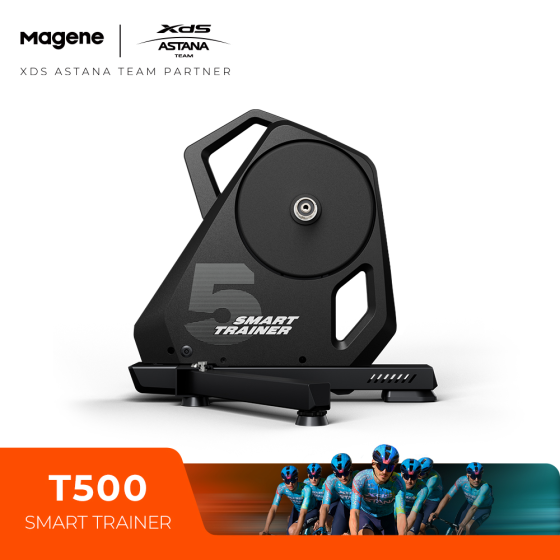
Magene T500: $699 Direct-Drive With QZ Virtual Shifting
The Magene T500 is a 2nd-gen direct-drive trainer at $699 USD: ±1% accuracy, 2200W max, 20% max grade, 88 N·m peak torque, and pre-installed Shimano 12-speed cassette. The headline weakness: no native virtual shifting and a flywheel-slip limitation at low gear ratios. Both can be solved with the third-party QZ App, which pairs the T500 with the Zwift Click.
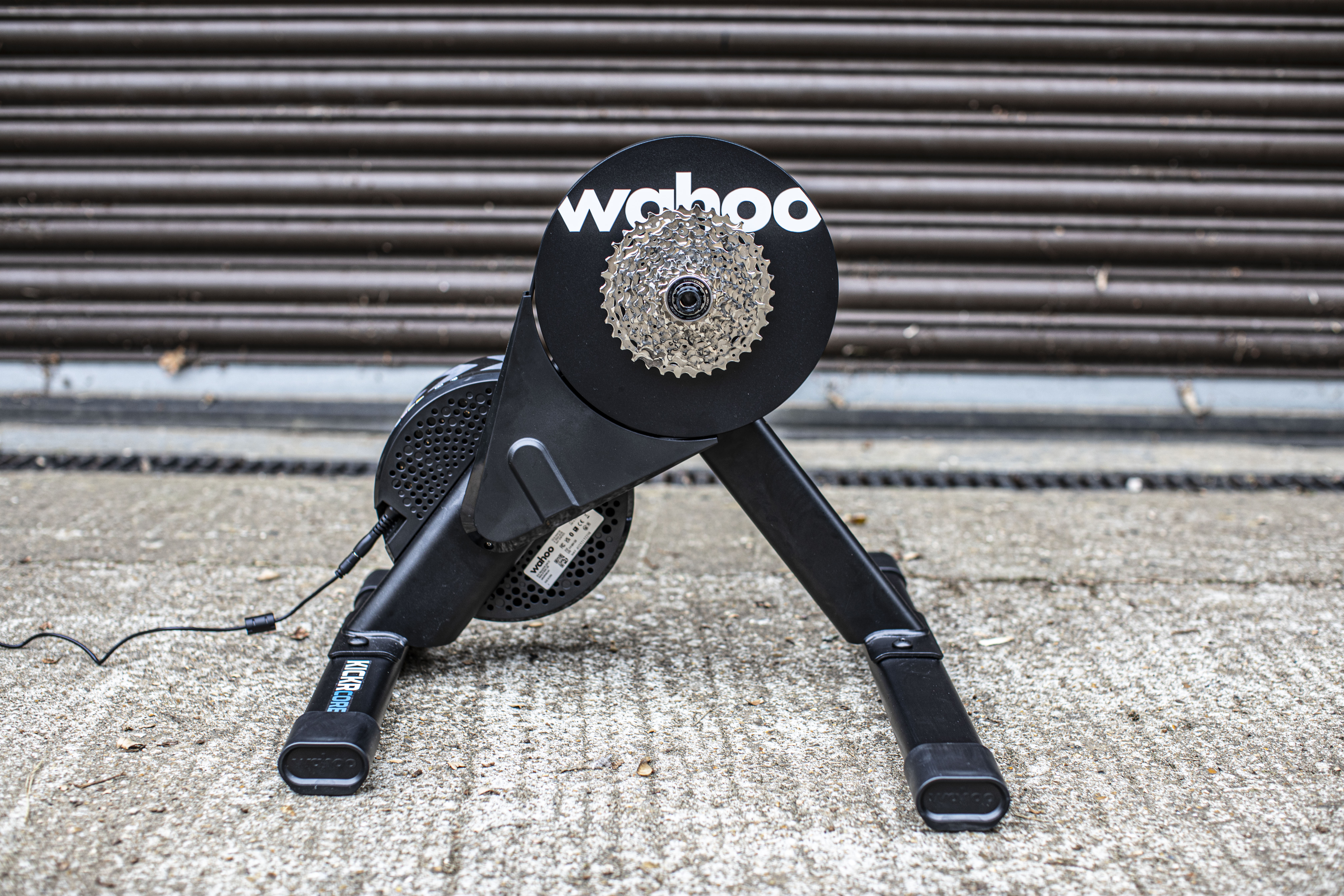
Wahoo KICKR Core 2: Mid-Range With Wi-Fi, Race Mode, KICKR Bridge
The Wahoo KICKR Core 2 is the 2026 successor to the 7-year-old KICKR Core. Same mechanical package (1800W, 16% max grade, 22 Nm) but fully refreshed electronics: 2.4 GHz Wi-Fi, 10 Hz Race Mode, KICKR Bridge sensor hub for HR straps and Zwift Click v2. $549.99 MSRP, $350 less than 2019 v1.
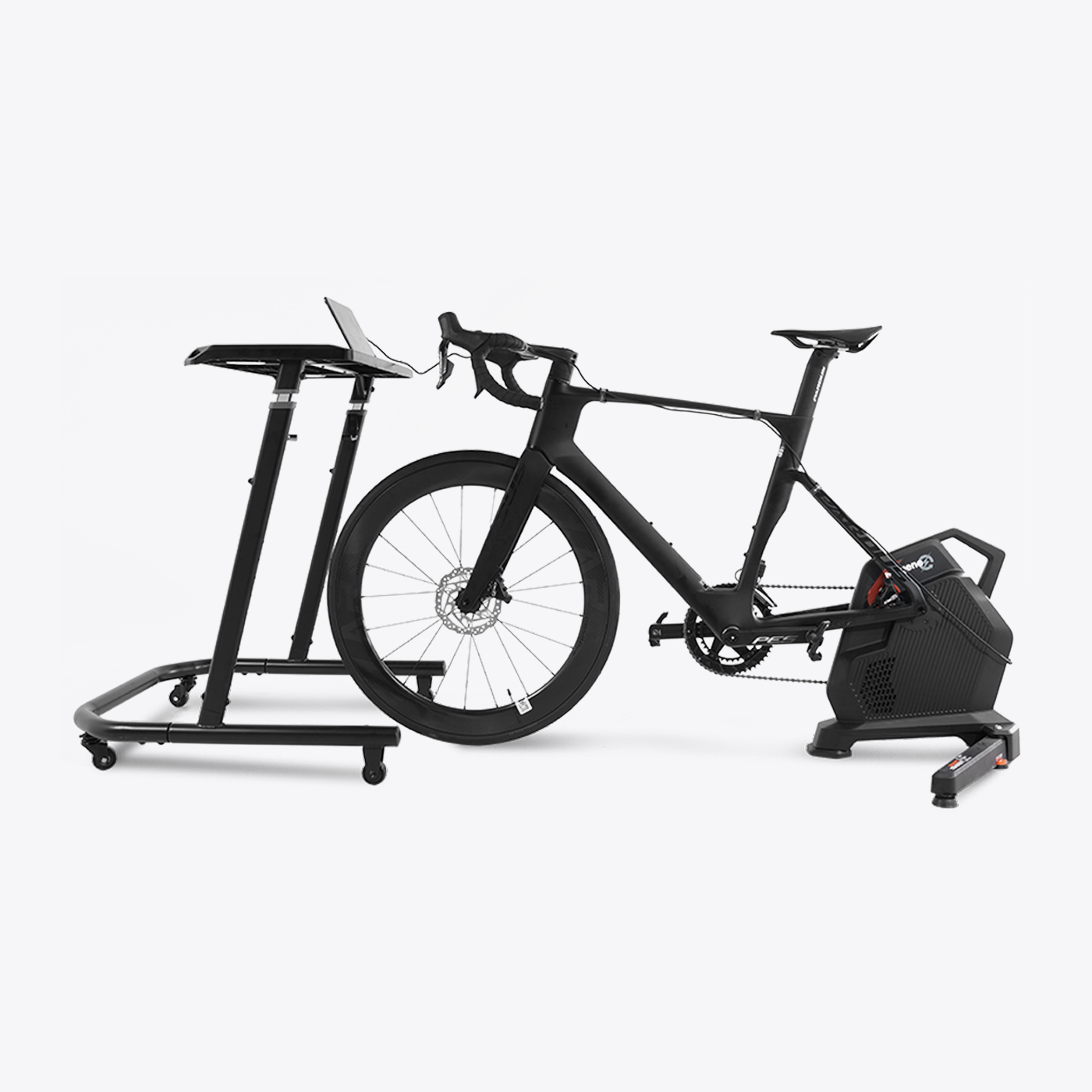
Magene T600 Eco: $899 Flagship With Wi-Fi, Self-Powered, USB-C PD
The Magene T600 Eco is the 2025 Eurobike flagship direct-drive. 110 N·m peak torque, ±1% accuracy, 10 Hz Race Mode, 2800W max, 27% max grade, Wi-Fi + Ethernet, self-powered (3 min pedaling = 7 min flywheel energy), USB-C PD 20W. $899 undercuts KICKR V6 ($1,049.99) and NEO 3M ($1,999). Caveat: no native virtual shifting.
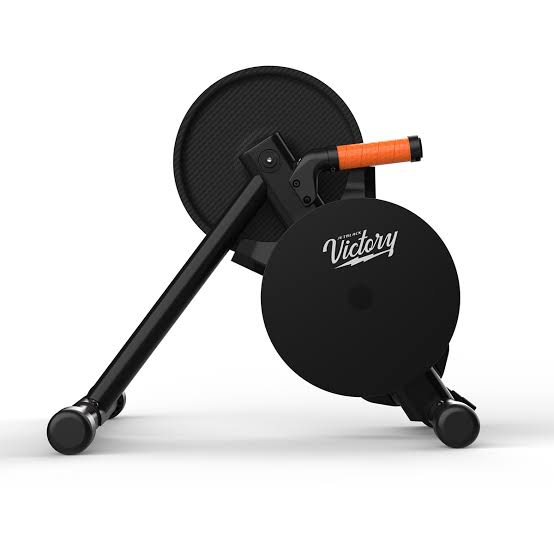
JetBlack Victory: 2025 $399 Direct-Drive With Wi-Fi, Race Mode
The JetBlack Victory is the 2025 Australian direct-drive that sets a new sub-$500 benchmark. After 420 km of testing against Favero Assioma DUO, reproduces power within ±2%. 1800W max, 16% max grade, Wi-Fi Direct, 10 Hz Race Mode, sensor bridging. Ships pre-installed with Zwift Cog v2 + Click. At $399, undercuts KICKR Core 2 by $150.
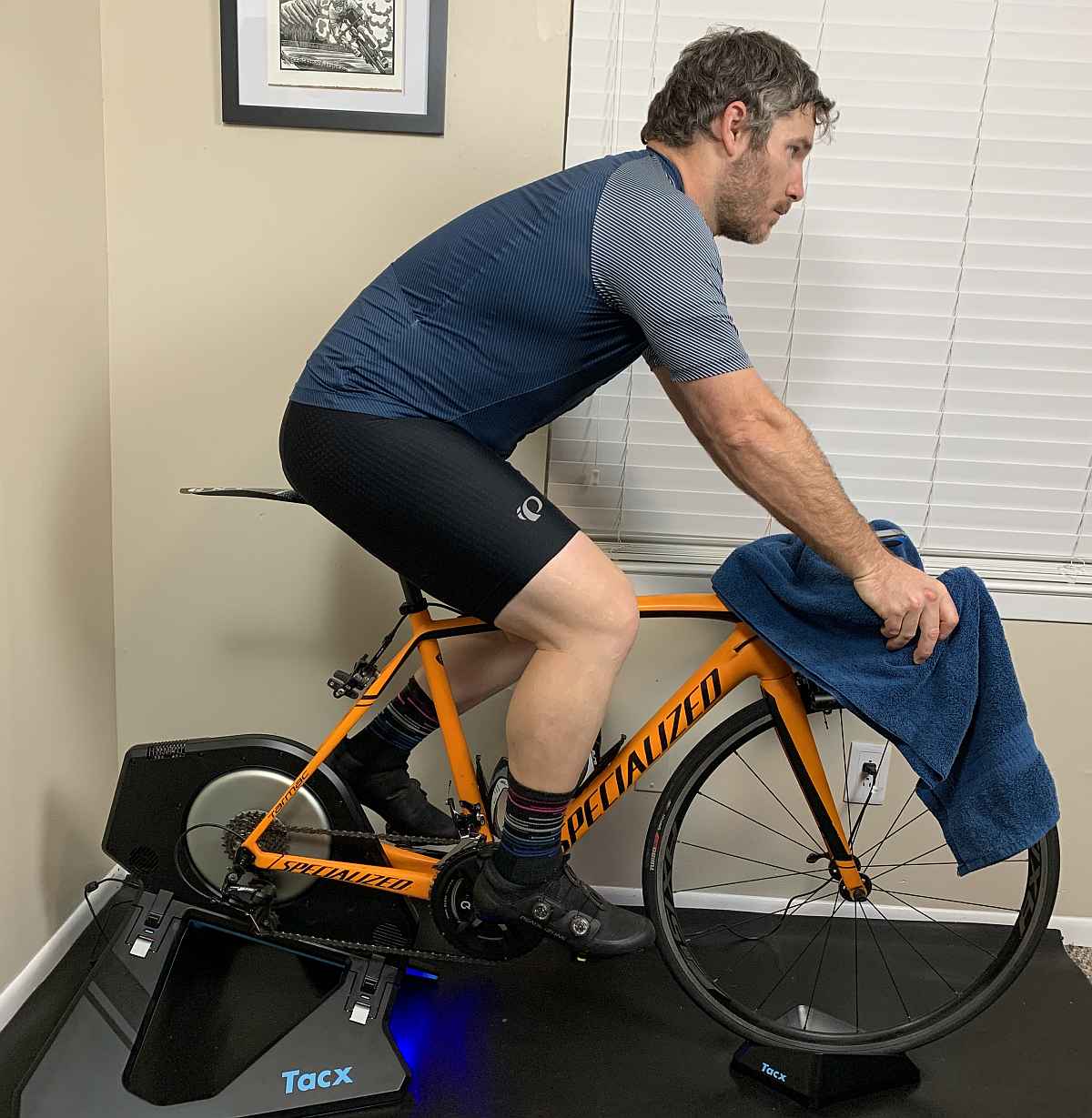
Tacx NEO 2T: A 2,200 W Direct-Drive with a Quiet Flywheel and Native Thru-Axle
The Tacx NEO 2T (2019) is a mid-cycle update to the NEO 2: native 12x142 / 12x148 thru-axle, 25% max grade, 2,200 W max resistance, redesigned neodymium magnet array that resolves the "virtual tire slip" issue at low flywheel speeds. ±1% claimed accuracy, no calibration required, ANT+ + Bluetooth Smart. The benchmark direct-drive trainer of the late-2010s.
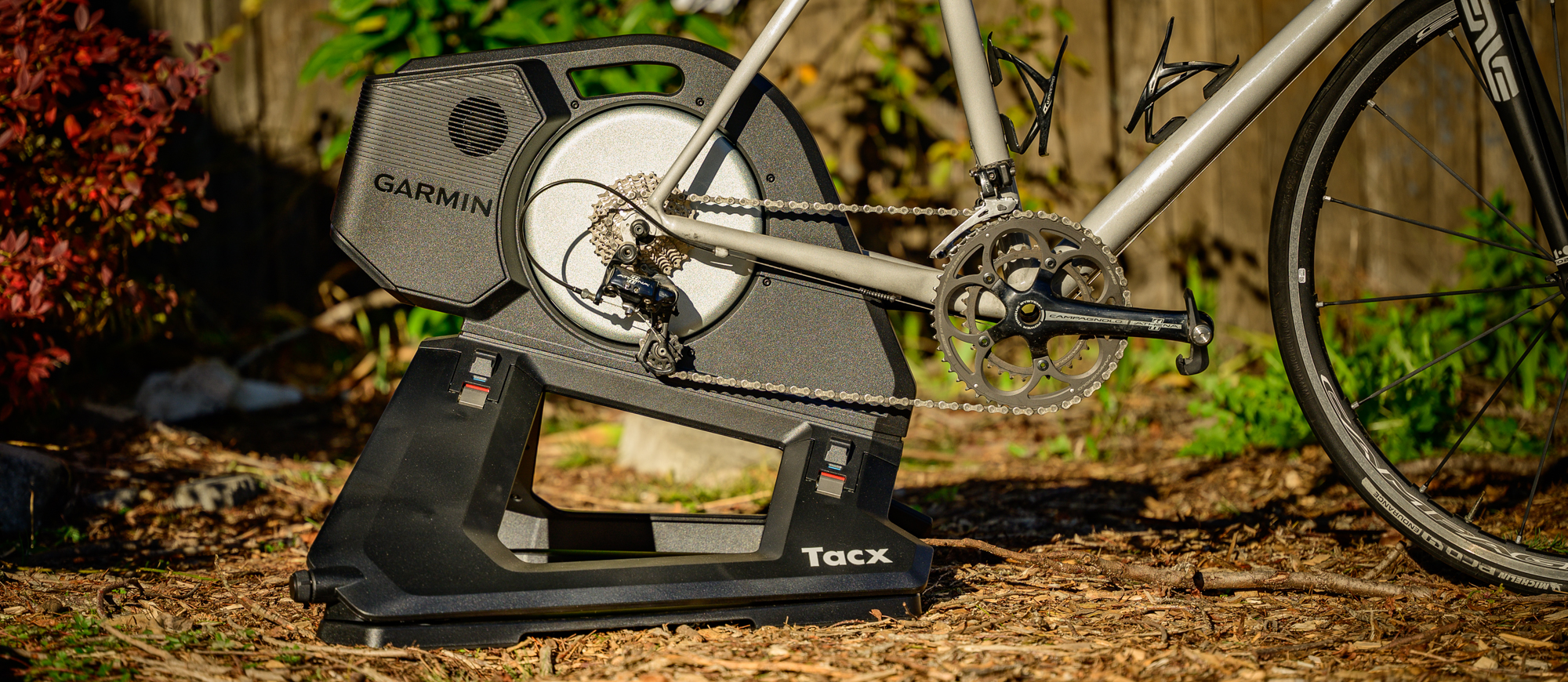
Garmin Tacx NEO 3M: Reference Smart Trainer With Motion + Vibration
The Garmin Tacx NEO 3M is the 2024 Tacx flagship. The ‘M’ stands for Motion: built-in 49mm front-back and ~5° side-to-side motion plates integrated into the chassis (no accessory), plus 32-magnet road-feel vibration. ±1% accuracy, ERG mode is the new benchmark. $1,999 USD. Caveat: no built-in Wi-Fi ($129 adapter required).
Verify with JoyAnalyze
Import trainer power data into JoyAnalyze and compare Wahoo KICKR ROLLR: The Wheel-On Smart Trainer With Native Power Estimation (2025 Firmware Update) to a reference power meter — calibrate the power curve and check response latency.
Open multi-file compare in JoyAnalyzeSee how this fits you
The Wahoo KICKR ROLLR: The Wheel-On Smart Trainer With Native Power Estimation (2025 Firmware Update) is one option. Run the JoyFit assessment to see whether it actually matches your body and riding style — or compare it side-by-side with the other Bike Trainersin our database.
Community
Discuss this review · Pro members can rateComments
(0)Sign in above to leave a comment.
Loading comments…
Pro Ratings
PROLoading…Sign in above to rate this product on the 8-axis $APPEALS framework.