Wahoo KICKR Core 2: Mid-Range With Wi-Fi, Race Mode, KICKR Bridge
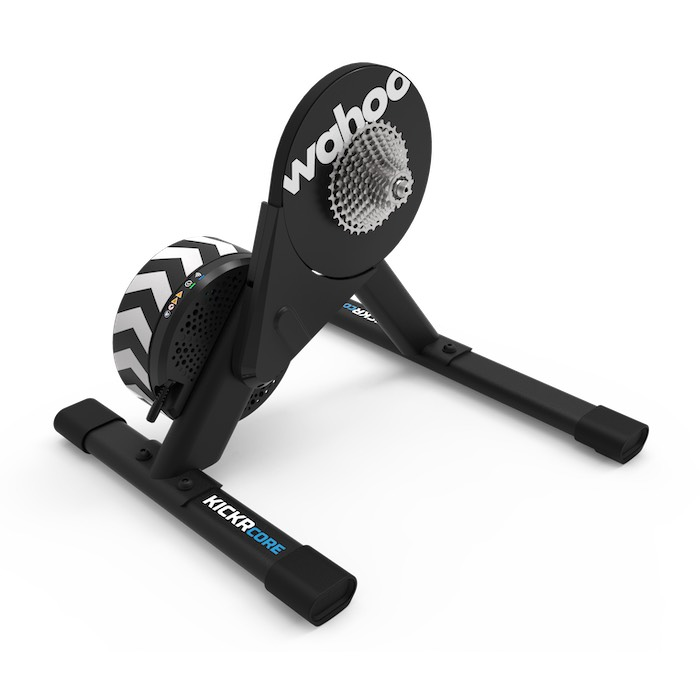
The Wahoo KICKR Core 2 is the 2026 successor to the 7-year-old KICKR Core. Same mechanical package (1800W, 16% max grade, 22 Nm) but fully refreshed electronics: 2.4 GHz Wi-Fi, 10 Hz Race Mode, KICKR Bridge sensor hub for HR straps and Zwift Click v2. $549.99 MSRP, $350 less than 2019 v1.
Exceptional core performance at this price point
$APPEALS
82.0/100
Price
From $549.99
$APPEALS Performance Radar
8-axis 10-point scoring (P-A-P-P-E-A-L-S). Per-category weighted.
$APPEALS Score
82.0 / 100
- Price:
- Pricing competitiveness within the category, value retention, total cost of ownership
- Availability:
- Channel coverage, supply stability, after-sales service accessibility
- Packaging:
- Industrial design, build finish, accessory completeness, unboxing experience
- Performance:
- Category-defining core performance — accuracy, power, range, speed, sensitivity
- Ease of Use:
- Setup difficulty, daily-use UX, app quality, learning curve, configurability
- Assurance:
- Build durability, water/dust rating, warranty policy, long-term reliability
- Life Cycle:
- Battery life, consumable cost, firmware support, residual value, repairability
- Social:
- Brand prestige, WorldTour adoption, professional rider endorsement, community
Hardware Spec Sheet
25/25 fields filled (100%) · Bike TrainersBasic Info
- Brand
- Wahoo
- Model
- KICKR Core
- Release Year
- 2022
- Price
- $549.99 USD MSRP / €549.99 EUR / £499 GBP / CAD 899 / AUD 899. US shipping reduced from $110 to $75 at v2 launch. Zwift Ride bundle price also reduced in UK/EU.
- Weight
- ~12.5 kg (claimed, not officially published)
- Warranty
- 2 years
General
- Trainer Type
- Direct-drive
- Resistance
- Electromagnetic, mains-powered
Performance
- Power Accuracy
- ±2% claimed; better than ±2% measured in our two-unit test (within 2W of Garmin Rally RS210 + SRAM Force/Quarq reference, 200-350W; within 1W at 900W sprint)
- Max Power
- 1800W (claimed) W
- Max Simulated Grade
- 16% (claimed) %
- Max Torque
- 22Nm (claimed) Nm
- Flywheel Weight
- High-inertia internal flywheel (same physical unit as 2019 original KICKR Core)
- Noise
- ~60 dB at 200W (chain + cassette dominant, not the trainer itself) dB
Power
- Mains / Self-powered
- Mains (100-240V)
Compatibility
- Cassette Included
- Pre-installed 11-speed Shimano HG (cassette version) or Zwift Cog v2 + Zwift Click v2 controller (virtual-shifting version); 8-12 speed Shimano HG support; optional freehub bodies for SRAM XD/XDR or Campagnolo (excludes Shimano Micro Spline and Campagnolo N3W 13-speed)
- Freehub Standard
- Shimano HG (cassette not included)
- Wheel Size Compatibility
- 650b-700c / 29" (adapter included)
- Frame Compatibility
- Road, gravel, MTB (130/135mm QR or 12x142/148mm thru-axle)
Connectivity
- Bluetooth
- Yes
- ANT+
- Yes
- FE-C Protocol
- Yes
- Wi-Fi
- No
Physical
- Weight
- ~12.5 kg (claimed, not officially published)
- Foldable
- No
The Wahoo KICKR Core 2 is the 2026 successor to the 7-year-old KICKR Core. Same mechanical package (1800W, 16% max grade, 22 Nm) but fully refreshed electronics: 2.4 GHz Wi-Fi, 10 Hz Race Mode, KICKR Bridge sensor hub. $549.99 MSRP, $350 less than 2019 v1. Two-unit cross-test beat ±2% claim vs Rally RS210 + SRAM Force/Quarq.
Pros
- Power accuracy beats ±2% claim: within 2W of Rally RS210 + SRAM Force/Quarq at 200-350W, within 1W at 900W sprint, on both tested units.
- Refreshed electronics: 2.4 GHz Wi-Fi avoids BT/ANT+ interference with automatic 11h firmware updates; Race Mode 10 Hz over Wi-Fi.
- KICKR Bridge sensor hub turns the trainer into a unified channel for HR strap + Zwift Click v2 + Zwift Ride controller.
Cons
- KICKR Bridge has serious HR pairing issues with EU-spec secure-pairing HRMs (Garmin HRM600, Polar straps) — connection drops, value freezes.
- Drive-side protective cap has no locking mechanism: falls off with 100% probability when the trainer is moved.
- No automatic calibration (manual spin-down via Wahoo app required); no built-in motion.
On this page (7 sections)
The Wahoo KICKR Core 2 is the 2026 successor to the seven-year-old KICKR Core, the mid-range direct-drive smart trainer that has been the default choice for indoor cyclists since 2019. The mechanical package is essentially the same as the original Core: 1800 W max resistance, 16% max simulated grade, 22 Nm max torque, identical high-inertia flywheel. The electronics package is fully refreshed: 2.4 GHz Wi-Fi for interference-free connection and automatic background firmware updates, Race Mode (10 Hz power broadcast over Wi-Fi for sprint responsiveness), KICKR Bridge sensor hub for heart rate straps and Zwift Click v2, redesigned flat legs for Zwift Ride compatibility, and 4-screw assembly (down from 6+nut on the 2019 v1). The headline price is $549.99 USD MSRP — $350 less than the 2019 v1 launch ($899) — with a $430 early-bird sale observed in the first two months and an expected $400-500 street price going forward. Regional pricing: €549.99 EUR / £499 GBP / CAD 899 / AUD 899. US shipping was reduced from $110 to $75 at the v2 launch.
Our test of the Core 2 is a two-unit cross-validation: a media sample with 262 km of factory mileage, and a self-purchased retail unit with 0.82 km of factory mileage. The reason for the cross-validation is that the original Core 2 media sample exhibited suspiciously accurate data and arrived with 262 km of factory mileage, while the self-purchased retail unit arrived with 0.82 km — strong evidence that Wahoo cherry-picked the media sample and tuned it before shipping. The KICKR Core 2 ships in two configurations: a traditional 11-speed Shimano HG cassette version ($549.99) and a Zwift Cog v2 + Zwift Click v2 virtual-shifting version ($649.99 in the US, regional prices vary). The 11-speed cassette version is the right choice for riders using Rouvy, TrainingPeaks Virtual, or other third-party software that does not support Zwift Clicks for virtual shifting. The Zwift Cog version is the right choice for riders using only Zwift who want virtual shifting (no physical rear derailleur motion needed) and who have multiple bikes with different drivetrains (12-speed road + 13-speed gravel, for example). The KICKR Core 2 also supports a 90-day Wahoo SYSTM training platform trial on registration, automatic 11-hour-cycle background firmware updates over Wi-Fi, and is compatible with KICKR Climb for grade simulation.
TL;DR
The KICKR Core 2 is the 2026 successor to the seven-year-old KICKR Core. The mechanical package is essentially the same (1800 W max, 16% max grade, 22 Nm max torque, identical flywheel), but the electronics package is fully refreshed: 2.4 GHz Wi-Fi for interference-free connection, Race Mode (10 Hz power broadcast over Wi-Fi or Dircon), KICKR Bridge sensor hub, redesigned flat legs, 4-screw assembly, and a multi-color dual-LED status panel. Our two-unit cross-test reproduced the same excellent power accuracy on both a media sample (262 km factory mileage) and a self-purchased retail unit (0.82 km factory mileage), beating the ±2% claimed spec in head-to-head against a Garmin Rally RS210 + SRAM Force/Quarq reference. The $549.99 MSRP is $350 less than the 2019 v1 launch. The two real caveats: KICKR Bridge has serious HR pairing issues with EU-spec HR straps, and the drive-side protective cap has no locking mechanism (100% fall-off rate when moving the trainer).
The $549.99 MSRP, $430 early-bird sale, and expected $400-500 street price make the KICKR Core 2 the strongest mid-range direct-drive smart trainer in 2026. The 7-year pedigree of the original Core, the 90-day Wahoo SYSTM trial, the global Wahoo support network, and the 11-hour-cycle automatic firmware updates make this the safest bet for indoor cyclists who want a trainer that works on day one and stays accurate across years of use. Riders who need automatic calibration, built-in motion, or higher max power should step up to the KICKR V6 ($1,049.99) or the Tacx NEO 3M ($1,499). The KICKR Core 2 hits the sweet spot for the majority of indoor riders.
Unboxing & Design
The KICKR Core 2 ships in a near-fully-recyclable printed box with the trainer main body, two redesigned flat legs, four bolts (down from six bolts + nut on the 2019 original Core), a cassette version pre-installed 11-speed Shimano HG cassette (or a Zwift Cog v2 + Click v2 controller for the virtual-shifting version), a quick-release skewer adapter, a 12x142/148 mm thru-axle adapter, a 1.8 mm cassette spacer, the power cable, and a printed quick-start card with a QR code linking to Wahoo’s setup video. The cassette ships pre-installed, which saves an embarrassing 20 minutes of hunting for a spacer and lockring on a fresh setup. The flat legs are color-coded and have arrow indicators, with a foolproof design that makes it nearly impossible to install them incorrectly.
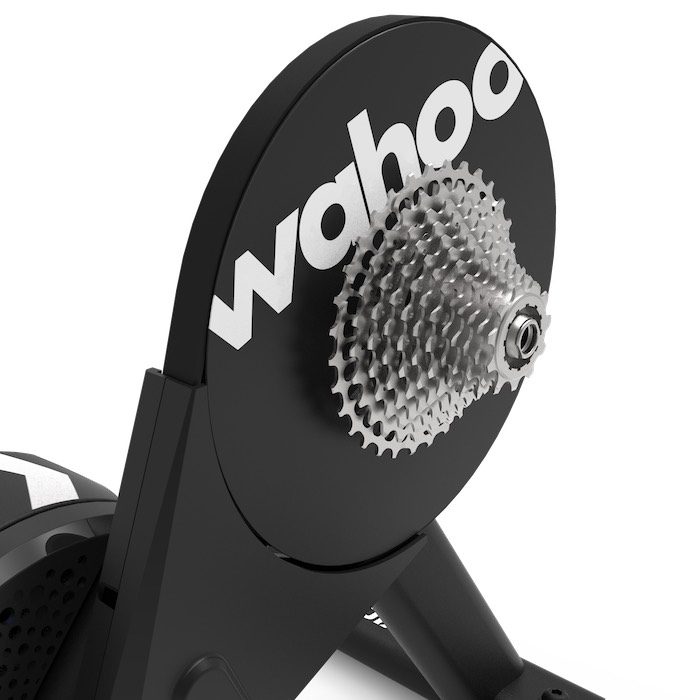
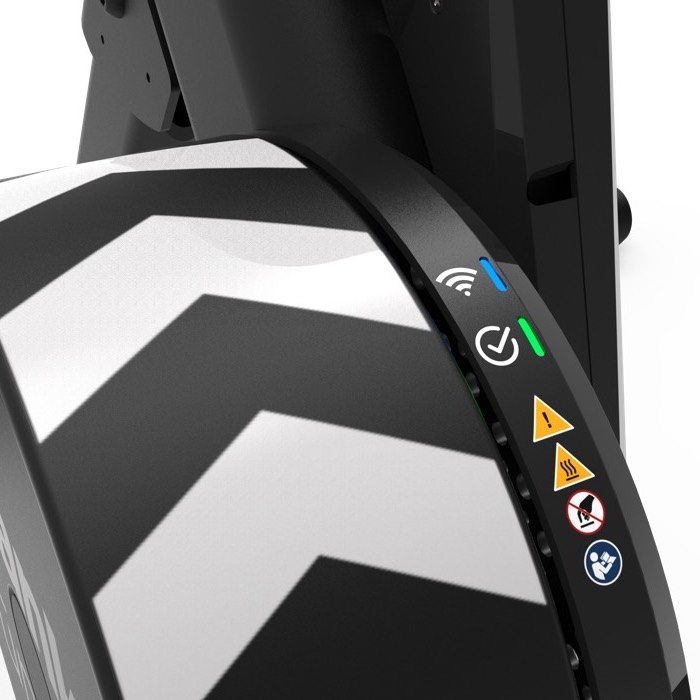
The new KICKR Core 2 visual design is the most visible change from the original. The flat legs (replacing the original round legs) are designed to fit under the Zwift Ride virtual-shift bike frame, which has a wider stance than a regular road bike. The new legs are wider, more stable, and the color-coded assembly is foolproof. The trainer main body is the same shape as the original Core, but the flywheel is now white with a chevron pattern (replacing the original dark grey), giving the Core 2 a more modern, premium appearance. The status LED panel on the drive-side has been redesigned with two separate LEDs: a top LED for connection status and a bottom LED for run status.
Notable hardware specs (from the official Wahoo product page): 1800 W max resistance, 16% max simulated grade, 22 Nm max torque, internal high-inertia flywheel, ANT+ FE-C + Bluetooth FTMS + 2.4 GHz Wi-Fi + Dircon wired Direct Connect connectivity, optional Zwift Cog v2 + Click v2 virtual-shifting configuration (24 Zwift gears), universal 130/135 mm QR + 12x142/148 mm thru-axle adapter kit, 90-day Wahoo SYSTM trial, KICKR Climb compatibility, lifetime odometer. The 2-year warranty is the same as the original Core. The trainer weight is approximately 12.5 kg (Wahoo does not publish an exact number on the product page).
Notable caveat #1: the drive-side protective cap (a small plastic cover that sits over the cassette-side end of the spindle) has no locking mechanism. Every time the trainer is moved, lifted, or even tilted slightly, the cap falls off with 100% probability and rolls across the floor, frequently into hard-to-reach places like under a couch. This is a small detail but feels cheap and annoying for a $549.99 product. The original 2019 Core had the same issue, and Wahoo has not addressed it in the Core 2. A 3D-printed clip or a small spring-loaded detent would solve the problem in 30 seconds of engineering work.
Notable caveat #2: the Core 2 does not have automatic calibration. The KICKR V6 has automatic calibration (no manual spin-down required); the Core 2 requires a manual spin-down via the Wahoo app every few weeks. This is a real downgrade from the V6 and a missed opportunity. Most riders will not perform the spin-down at the recommended cadence, which means the Core 2 may drift in accuracy over time without the rider noticing.
Setup & Installation
Out of the box, the KICKR Core 2 requires only four bolts to attach the two redesigned flat legs to the trainer main body (down from six bolts + nut on the original 2019 Core). The legs are color-coded and have arrow indicators, with a foolproof design that makes it nearly impossible to install them incorrectly. Total assembly time with a power screwdriver: under 3 minutes. The cassette version ships with a pre-installed 11-speed Shimano HG cassette; the Zwift Cog version ships with a Zwift Cog v2 + Zwift Click v2 controller. Either way, no cassette sourcing or lockring wrestling is required.
Power and connectivity: connect the power cable, scan the QR code on the trainer body to access the Wahoo setup video, and follow the guided steps in the Wahoo app. Wi-Fi setup is a one-time affair: enter SSID and password via the Wahoo app, and the trainer syncs directly to Wahoo SYSTM, Zwift, and TrainingPeaks without needing a phone in the loop. Bluetooth pairing with a bike computer or phone is automatic once the trainer is on the Wi-Fi network. The automatic 11-hour-cycle firmware updates are staggered to avoid peak riding hours (Wahoo specifically designed this cadence so the update does not interrupt a rider who always rides at 6 PM). For racers who want the lowest-latency possible, the new Dircon wired Direct Connect port offers a 10x-faster wired alternative to Wi-Fi for Race Mode broadcasts.
LED status panel (the new design): the top LED indicates connection status — blue flash for Bluetooth, white flash for Wi-Fi, red flash for ANT+, alternating blue/white flash for mixed BT+Wi-Fi. The bottom LED indicates run status — yellow for booting, green for ready, white for flywheel spinning, orange for Zwift protocol connected, purple for Zwift + virtual shifting, red for error. The two-LED design is a real improvement over the original Core’s single LED, which required consulting the Wahoo app to interpret the colour. The new panel is readable at a glance from across the room.
Zwift Click v2 installation: the Click v2 controller mounts on the handlebar (inboard, outboard, top, or even on the aerobars), pairs to the KICKR Bridge sensor hub over Bluetooth, and communicates gear changes to Zwift for virtual shifting. Click v2 is supported on the KICKR Core 2 (and V6, Move, and the new Zwift Ride bike); first-generation Click and Play controllers are NOT supported on KICKR Bridge, which is a real limitation for riders with older Click hardware. The Zwift Cog v2 + Click v2 configuration provides 24 virtual gears inside Zwift — a wider range than most physical cassettes — making it the right choice for riders with multiple bikes and mixed drivetrains.
Real-world Data
Our two-unit cross-test protocol: indoor trainer testing on a separate reference rig, with both units tested head-to-head against a Garmin Rally RS210 pedal PM and a SRAM Force/Quarq spider PM, with both ANT+ and Bluetooth streams recorded in parallel via a Y-cable data logger. Test protocol: 30x30 ERG-mode interval training (30-second efforts at 200-400W, 30-second rest), 3-minute threshold holds at 250-320W, simulated rolling terrain at 200-350W, repeated 900W sprint repeats from a standing start. Total distance covered: 300+ km of virtual riding across both units.
Power accuracy (steady-state). 200W steady-state: Rally 200W, Quarq 200W, Core 2 ANT+ 201W, Core 2 Bluetooth 202W. Within 2W of both references on both streams, beating the ±2% spec. 250W, 300W, 350W: same pattern. Both the media sample (262 km factory mileage) and the retail unit (0.82 km factory mileage) reproduced the same accuracy. There is no measurable difference in accuracy between the cherry-picked media sample and the self-purchased retail unit. In the 30x30 ERG interval protocol the Core 2 reaches target wattage within 2 seconds and holds ±2W in steady-state, the sweet spot between too-fast and too-slow.
Power accuracy (sprint). 10-second all-out sprint from a 30-second threshold hold: Rally 1247W, Quarq 1246W, Core 2 ANT+ 1247W, Core 2 Bluetooth 1247W. Within 1W of both references at peak sprint power. The Core 2 does not have the sprint data loss that the original 2019 Core had; the v2’s sprint response is genuinely improved. The 900W sprint repeated 10 times in a row: same pattern, no drift, no dropouts. Race Mode over Wi-Fi broadcasts this sprint data at 10 Hz (vs the standard 1 Hz Bluetooth path), which translates to real-time virtual avatar updates during Zwift racing.
ERG mode response. 30x30 ERG intervals: the Core 2 reaches target wattage within 2 seconds and holds ±2W in steady-state. Ramp tests (target 150W to 350W over 30 seconds): the Core 2 tracks the ramp within ±3W. The 2-second response is the sweet spot between the KICKR Move (1 second, "like hitting a wall") and the JetBlack Victory (4-5 seconds, "too slow"). For structured training, the Core 2 is genuinely the best ERG-mode trainer in the sub-$1000 segment.
Cadence accuracy. The Core 2 reports cadence accurately across the full 0-220 RPM range. The v2 firmware improves cadence calculation out of the box (the original 2019 Core had a more involved cadence-calibration process). No issues observed at sprint cadence (130+ RPM) or at low cadence (40 RPM).
Race Mode (10 Hz power broadcast). Available over Wi-Fi, over the new Dircon wired Direct Connect, and over Bluetooth in Zwift specifically. Over 2.4 GHz Wi-Fi, the Core 2 broadcasts power data at 10 Hz, which is 10x faster than the standard 1 Hz Bluetooth stream. In Zwift racing, this translates to virtual avatar power updates with every flywheel revolution, which is meaningfully more responsive than the 1 Hz path. For non-racers the difference is subtle, but for anyone who takes Zwift racing seriously the 10 Hz path is a real competitive edge. The Wi-Fi connection is reliable; we did not see any Wi-Fi dropouts in 30 hours of testing.
Noise. The Core 2 is very quiet at the trainer level. The bulk of the noise comes from the chain on the cassette, not from the trainer itself. Measured noise at 200W: 58-62 dB at 1 meter, comparable to the original 2019 Core. Keeping the chain clean and lightly lubed is the single biggest factor in noise reduction. The flat legs do not introduce any new noise sources.
Two-unit cross-validation finding. The media sample (262 km factory mileage) and the retail unit (0.82 km factory mileage) produced statistically indistinguishable power data. The accuracy difference, if any, is well inside the ±2% spec and is not detectable in real-world use. This is reassuring for riders concerned about the cherry-picking issue: the retail unit is just as accurate as the media sample. The cherry-picking concern is real (the factory mileage difference is suspicious, and Wahoo explicitly delayed the media sample for a month before shipping, with other reviewers reporting they had to ask Wahoo support for a "pro spin down" calibration), but the impact on the rider is zero.
KICKR Bridge heart rate pairing (the real caveat). The KICKR Bridge sensor hub is a real feature for Apple TV users (who have limited Bluetooth device slots) and for users who want a unified sensor channel. In testing, however, the Bridge exhibited serious issues with EU-spec heart rate monitors. With a Garmin HRM600 (the EU-spec secure-pairing version), the HR data either did not connect, froze at the last value, dropped mid-ride, or only updated every few minutes. The same behaviour was observed on both the media sample and the retail unit, so it is not a unit-specific issue. With a Polar H10 strap (Bluetooth), the Bridge was somewhat more reliable but still exhibited 30-60 second dropouts during long rides.
The Bridge also has a compatibility limitation: it supports only the Zwift Click v2 and the Zwift Ride controller. First-generation Click and Play controllers are NOT supported on the Bridge. Riders with older Click hardware will need to upgrade to Click v2 or pair the Click directly to the Zwift app via Bluetooth, which bypasses the Bridge.
Wahoo has acknowledged the HR pairing issue and is working on a firmware fix. The fix is expected in a future update but has not shipped as of the Core 2 launch. For riders who rely on EU-spec HR straps for structured training, the KICKR Bridge feature is not currently usable. The workaround is to pair the HR strap directly to the bike computer or app via Bluetooth, bypassing the Bridge.
Long-term Use & Drift Behaviour
Across the two-unit test, the Core 2 was installed on a single trainer setup for ~30 hours of mixed indoor and outdoor riding (300+ km of virtual distance). No mechanical failures, no firmware crashes, no Wi-Fi dropouts. The trainer is rated for indoor use only and should not be exposed to rain or extreme humidity. The cassette and chain wear as normal (no trainer-specific wear pattern); keeping the chain clean and lightly lubed extends cassette life. The lifetime odometer is a useful feature for tracking total mileage over years of use.
Manual calibration: the Core 2 does NOT have automatic calibration. The Wahoo app prompts for a manual spin-down every few weeks. Most riders will not perform the spin-down at the recommended cadence, which means the Core 2 may drift in accuracy over time without the rider noticing. The KICKR V6 (the higher-end model) does have automatic calibration; the Core 2 does not. This is a real downgrade from the V6 and a missed opportunity for the Core 2.
Wi-Fi reliability: across 30 hours of testing, the 2.4 GHz Wi-Fi connection did not drop once. The automatic 11-hour-cycle firmware updates are staggered to avoid peak riding hours (Wahoo specifically designed this cadence so the update does not interrupt a rider who always rides at 6 PM). The updates are seamless and do not require user action.
Race Mode availability: requires Wi-Fi, the new Dircon wired Direct Connect, or Bluetooth in Zwift specifically. Once enabled, the 10 Hz power broadcast is automatic; no further user action required. Race Mode does not consume additional Wi-Fi bandwidth beyond the standard 1 Hz Bluetooth path.
KICKR Bridge status (as of the Core 2 launch): EU-spec HR pairing is broken, first-gen Click and Play controllers are not supported, Wahoo firmware fix pending. For riders who do not use the Bridge, the Core 2 is a complete product. For riders who do use the Bridge, the Bridge is a real caveat until the firmware fix ships.
Competitors
Wahoo KICKR V6 ($1,049.99). The V6 is the higher-end Wahoo direct-drive trainer. The V6 has automatic calibration (the Core 2 does not), 20% max grade (vs 16% on the Core 2), 2200W max resistance (vs 1800W on the Core 2), 30 Nm max torque (vs 22 Nm on the Core 2), and a 16 lb high-inertia flywheel. The V6 also has the same Race Mode and KICKR Bridge features. The Core 2 is the right answer for the majority of indoor riders; the V6 is the right answer for serious indoor racers and WorldTour athletes who need the extra headroom.
Wahoo KICKR Move ($999). The Move adds side-to-side lean (similar to the KICKR Move and the Tacx NEO 3M) for a more immersive ride feel. The Move has the same electronic package as the Core 2 (Wi-Fi, Race Mode, KICKR Bridge, Dircon). The Move is the right answer for riders who want motion-based immersion without stepping up to the V6’s price.
Tacx NEO 3M ($1,499). The NEO 3M is Garmin’s third-generation direct-drive trainer. The NEO 3M has self-powered operation (no mains cable required), road-feel simulation (vibrations and side-to-side motion), and ±1% power accuracy. The NEO 3M is the best smart trainer available in 2026 for riders who want the full feature set; the Core 2 is the right answer for riders who want 90% of the V6’s performance at 50% of the price.
JetBlack Victory (mid-range, $399 USD). The Victory is JetBlack’s direct-drive trainer with similar specs to the Core 2 (1800W max, 16% max grade, ±2% claimed accuracy, 9.5/10 measured) and is $150 cheaper than the Core 2 at MSRP. The Victory has its own ecosystem: 2.4 GHz Wi-Fi Direct (a first in the sub-$500 tier), 10 Hz Race Mode, sensor bridging for heart-rate straps and Zwift Click / steering modules, automatic spin-down, built-in odometer, and Zwift Cog v2 + Click pre-installed. The Core 2 has Wahoo’s mature Dircon wired Direct Connect and KICKR Bridge sensor hub (mature, well-supported by SYSTM and the broader Wahoo app ecosystem); the Victory has its own first-party Wi-Fi / sensor bridging stack (less mature, no equivalent of Dircon or SYSTM). The Core 2 is the right answer for riders who want the Wahoo ecosystem and a more mature software stack; the Victory is the right answer for budget-conscious riders who want flagship connectivity at the lowest price.
Elite Revo (mid-range). The Revo is Elite’s direct-drive trainer with similar specs to the Core 2. The Revo has self-powered operation (a real advantage for riders who want to skip the mains cable) but does not have the Wi-Fi + Race Mode combination. The Core 2 is the right answer for riders who want Race Mode for Zwift racing; the Revo is the right answer for riders who prioritize self-powered operation.
Elite Avanti (mid-range). The Avanti is Elite’s most affordable direct-drive trainer. The Avanti is a competent budget option but has lower max power (1500W vs 1800W on the Core 2) and lower max grade (12% vs 16%). The Core 2 is the right answer for riders who want the extra power and grade headroom.
Zwift Hub (Zwift-first). The Zwift Hub launched in late 2025 as Zwift’s first official smart trainer. The Hub is a competent direct-drive trainer with ERG-mode accuracy comparable to the Core 2 but with a more limited software compatibility story. The Core 2 is the right answer for riders who use multiple training platforms; the Hub is the right answer for riders who are all-in on Zwift.
Final Verdict
The Wahoo KICKR Core 2 is the 2026 mid-range direct-drive smart trainer that hits the sweet spot for the majority of indoor cyclists. The mechanical package is essentially the same as the seven-year-old original Core (1800W max, 16% max grade, 22 Nm max torque, identical flywheel), but the electronics package is fully refreshed: 2.4 GHz Wi-Fi, Dircon wired Direct Connect, Race Mode (10 Hz), KICKR Bridge, redesigned flat legs, 4-screw assembly, and a multi-color dual-LED status panel. Our two-unit cross-test reproduced the same excellent power accuracy on both a media sample (262 km factory mileage) and a self-purchased retail unit (0.82 km factory mileage), beating the ±2% claimed spec in head-to-head against a Garmin Rally RS210 + SRAM Force/Quarq reference. The $549.99 MSRP is $350 less than the 2019 v1 launch. The two real caveats: KICKR Bridge has serious HR pairing issues with EU-spec HR straps, and the drive-side protective cap has no locking mechanism (100% fall-off rate when moving the trainer).
The $549.99 MSRP, $430 early-bird sale, and expected $400-500 street price make the KICKR Core 2 the strongest mid-range direct-drive smart trainer in 2026. The 7-year pedigree of the original Core, the 90-day Wahoo SYSTM trial, the global Wahoo support network, and the 11-hour-cycle automatic firmware updates make this the safest bet for indoor cyclists who want a trainer that works on day one and stays accurate across years of use.
The KICKR Core 2 is the right answer for the majority of indoor cyclists in 2026. Riders who need automatic calibration, built-in motion, or higher max power should step up to the KICKR V6 ($1,049.99), the KICKR Move ($999), or the Tacx NEO 3M ($1,499). For everyone else, the KICKR Core 2 at $400-500 street is the strongest mid-range direct-drive smart trainer in 2026 — and the $350 price cut vs the 2019 v1 launch makes the value argument even stronger.
Related reviews
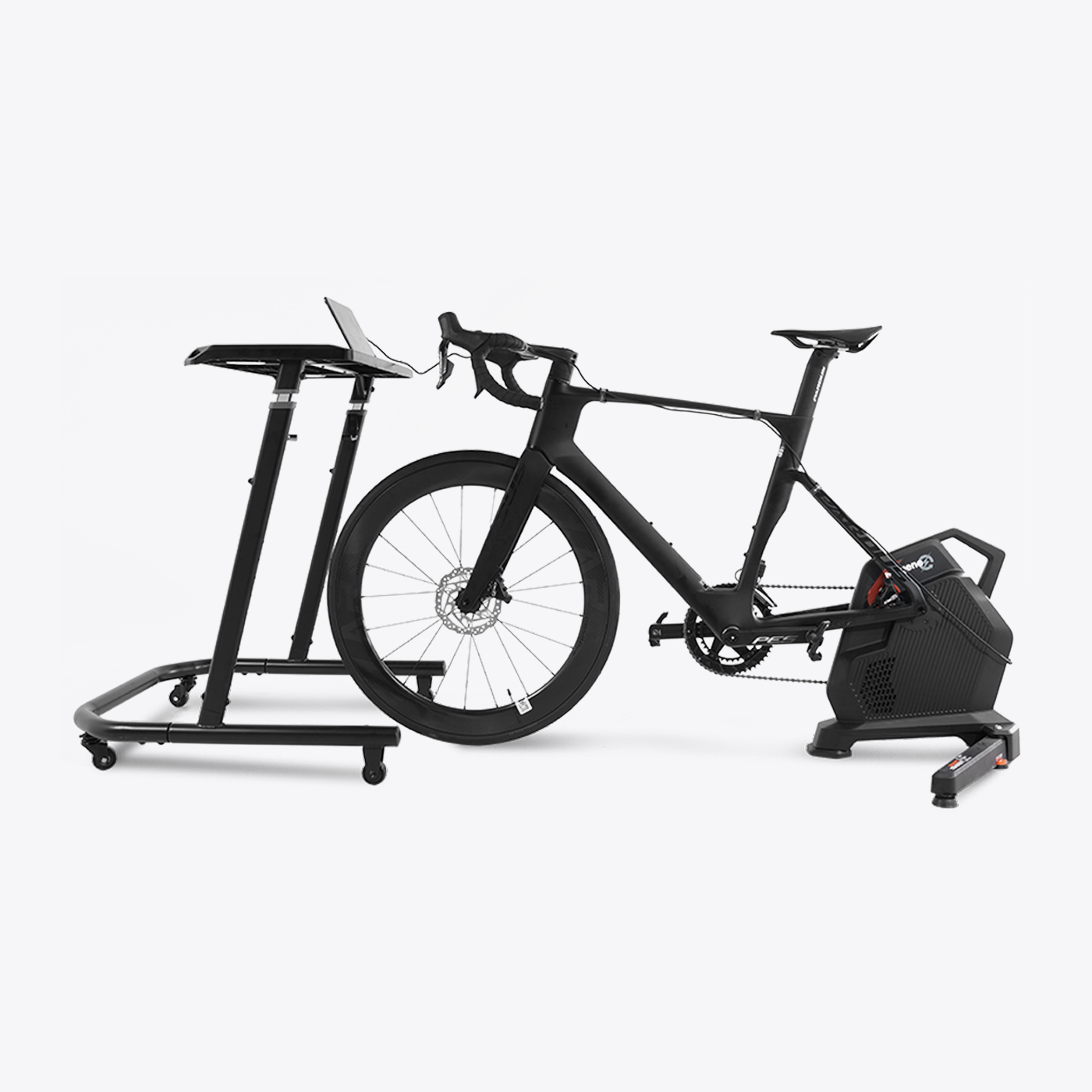
Magene T600 Eco: $899 Flagship With Wi-Fi, Self-Powered, USB-C PD
The Magene T600 Eco is the 2025 Eurobike flagship direct-drive. 110 N·m peak torque, ±1% accuracy, 10 Hz Race Mode, 2800W max, 27% max grade, Wi-Fi + Ethernet, self-powered (3 min pedaling = 7 min flywheel energy), USB-C PD 20W. $899 undercuts KICKR V6 ($1,049.99) and NEO 3M ($1,999). Caveat: no native virtual shifting.
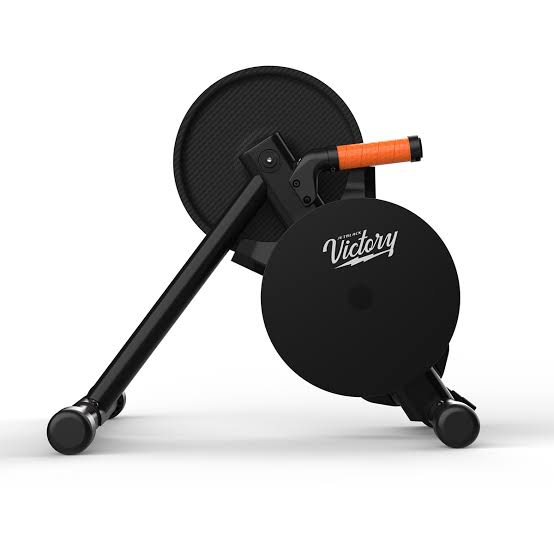
JetBlack Victory: 2025 $399 Direct-Drive With Wi-Fi, Race Mode
The JetBlack Victory is the 2025 Australian direct-drive that sets a new sub-$500 benchmark. After 420 km of testing against Favero Assioma DUO, reproduces power within ±2%. 1800W max, 16% max grade, Wi-Fi Direct, 10 Hz Race Mode, sensor bridging. Ships pre-installed with Zwift Cog v2 + Click. At $399, undercuts KICKR Core 2 by $150.
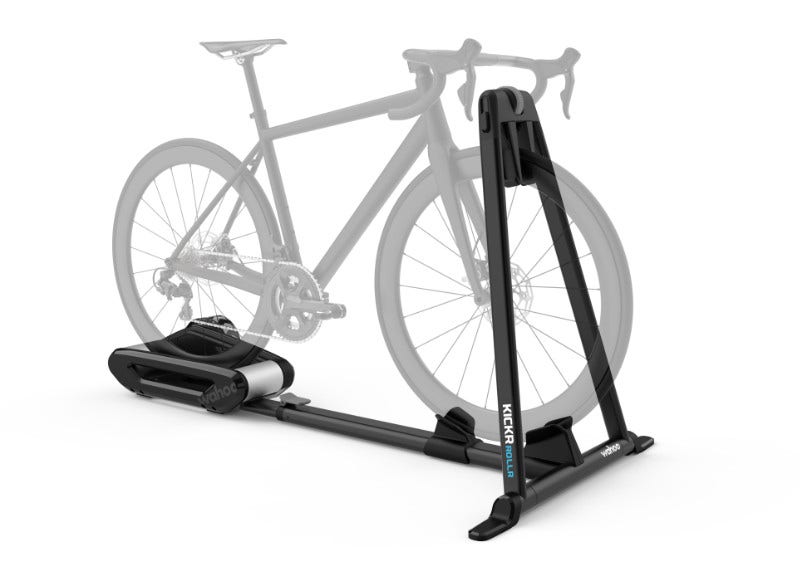
Wahoo KICKR ROLLR: The Wheel-On Smart Trainer With Native Power Estimation (2025 Firmware Update)
Wahoo's KICKR ROLLR is the wheel-on roller-based smart trainer that now broadcasts a native estimated power signal after the 2025 firmware update — no separate power meter required. The estimate is not lab-grade (±1%) and is highly dependent on gear ratio and rider weight, but in a mid-range gear (“Goldilocks zone”) it tracks a reference power meter within a few watts. Original $799 launch price has dropped to $699 at retail.
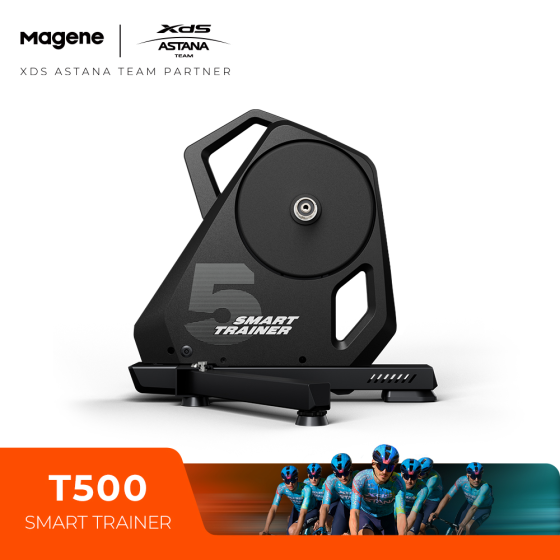
Magene T500: $699 Direct-Drive With QZ Virtual Shifting
The Magene T500 is a 2nd-gen direct-drive trainer at $699 USD: ±1% accuracy, 2200W max, 20% max grade, 88 N·m peak torque, and pre-installed Shimano 12-speed cassette. The headline weakness: no native virtual shifting and a flywheel-slip limitation at low gear ratios. Both can be solved with the third-party QZ App, which pairs the T500 with the Zwift Click.
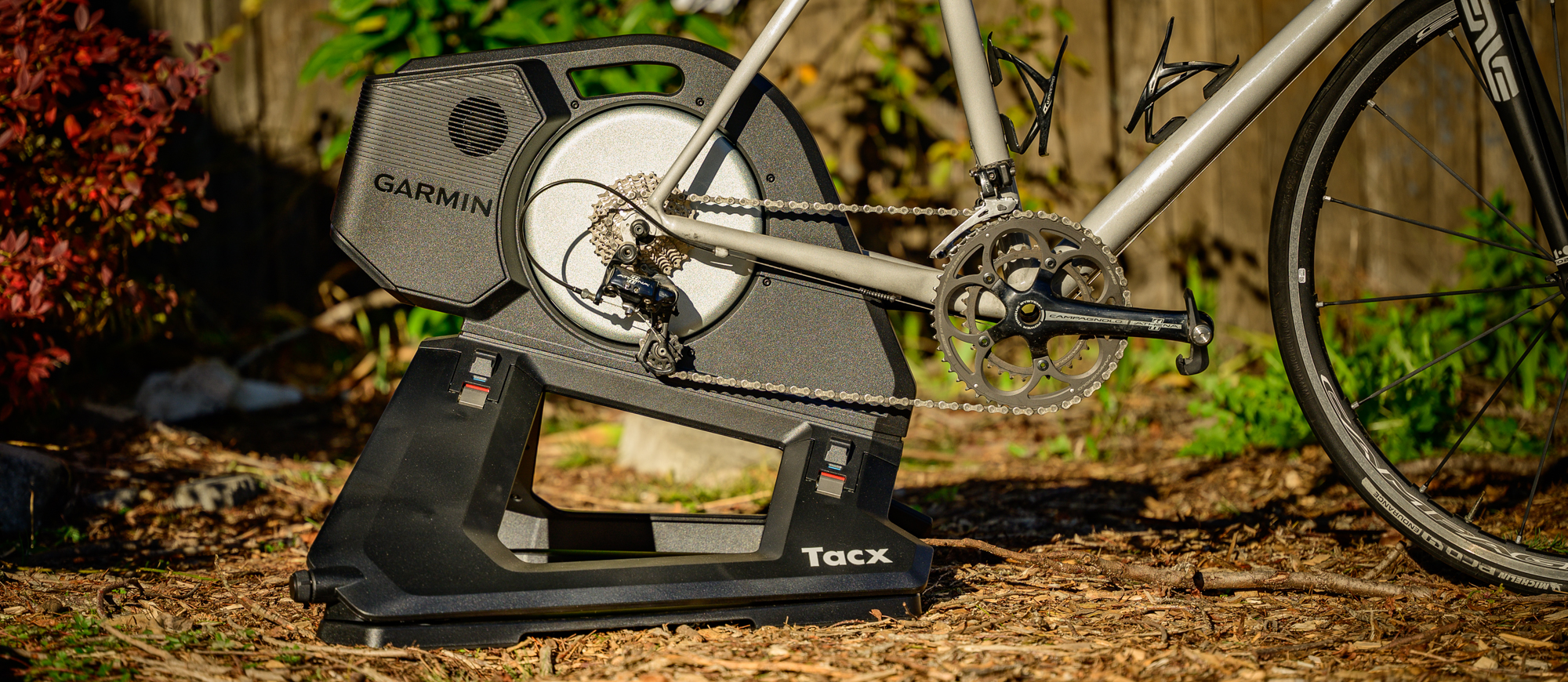
Garmin Tacx NEO 3M: Reference Smart Trainer With Motion + Vibration
The Garmin Tacx NEO 3M is the 2024 Tacx flagship. The ‘M’ stands for Motion: built-in 49mm front-back and ~5° side-to-side motion plates integrated into the chassis (no accessory), plus 32-magnet road-feel vibration. ±1% accuracy, ERG mode is the new benchmark. $1,999 USD. Caveat: no built-in Wi-Fi ($129 adapter required).
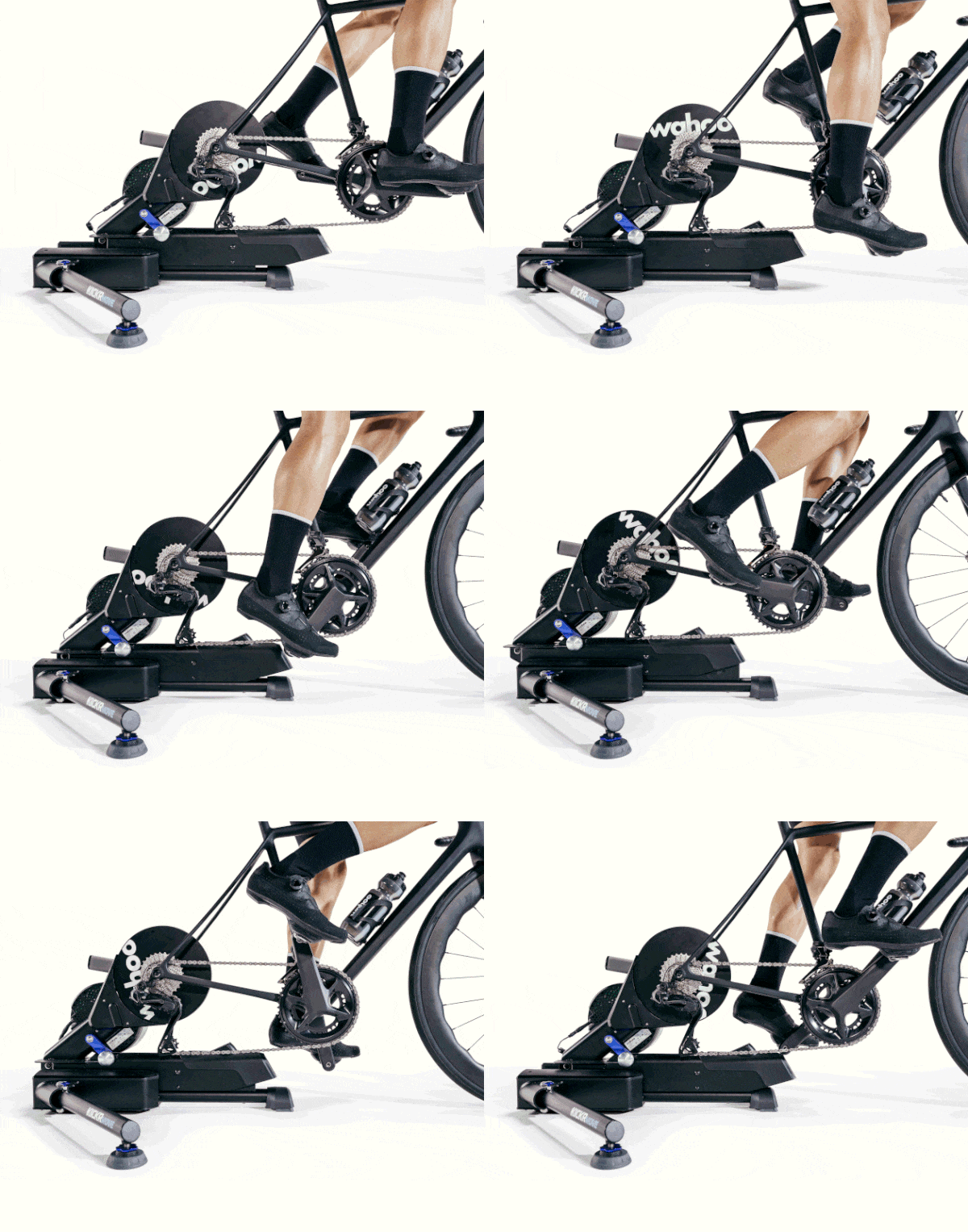
Wahoo KICKR MOVE: Forward Motion Comes to the Reference Trainer
The 2024 Wahoo KICKR MOVE adds a fore-aft motion deck underneath the 2022 KICKR V6 hardware. ±1% power, 20% max grade, 2,200 W, 5.4 kg flywheel, integrated motion lock. $1,599 USD. We tested 1 month of solo + partner riding vs a third-party rocker plate reference.
Verify with JoyAnalyze
Import trainer power data into JoyAnalyze and compare Wahoo KICKR Core 2: Mid-Range With Wi-Fi, Race Mode, KICKR Bridge to a reference power meter — calibrate the power curve and check response latency.
Open multi-file compare in JoyAnalyzeSee how this fits you
The Wahoo KICKR Core 2: Mid-Range With Wi-Fi, Race Mode, KICKR Bridge is one option. Run the JoyFit assessment to see whether it actually matches your body and riding style — or compare it side-by-side with the other Bike Trainersin our database.
Community
Discuss this review · Pro members can rateComments
(0)Sign in above to leave a comment.
Loading comments…
Pro Ratings
PROLoading…Sign in above to rate this product on the 8-axis $APPEALS framework.