Zwift Ride Smart Frame: $799.99 Always-Ready Smart Bike
The Zwift Ride Smart Frame is a stationary-bike frame that pairs with any Zwift-Ready trainer (KICKR Core, V6, JetBlack Victory, Zwift Hub) for virtual shifting, silent single-speed operation, and built-in handlebar controllers. 3 weeks of testing: ±2% power, 24 silent virtual gears, single Bluetooth pairing, 20h battery. $799.99 frame-only, $1299 full bundle.
Exceptional core performance at this price point
$APPEALS
86.0/100
Price
799
$APPEALS Performance Radar
8-axis 10-point scoring (P-A-P-P-E-A-L-S). Per-category weighted.
$APPEALS Score
86.0 / 100
- Price:
- Pricing competitiveness within the category, value retention, total cost of ownership
- Availability:
- Channel coverage, supply stability, after-sales service accessibility
- Packaging:
- Industrial design, build finish, accessory completeness, unboxing experience
- Performance:
- Category-defining core performance — accuracy, power, range, speed, sensitivity
- Ease of Use:
- Setup difficulty, daily-use UX, app quality, learning curve, configurability
- Assurance:
- Build durability, water/dust rating, warranty policy, long-term reliability
- Life Cycle:
- Battery life, consumable cost, firmware support, residual value, repairability
- Social:
- Brand prestige, WorldTour adoption, professional rider endorsement, community
Hardware Spec Sheet
25/25 fields filled (100%) · Bike TrainersBasic Info
- Brand
- Zwift
- Model
- Ride Smart Frame
- Release Year
- 2023
- Price
- 799
- Weight
- 22
- Warranty
- 2 years
General
- Trainer Type
- Smart bike frame
- Resistance
- Electromagnetic
Performance
- Power Accuracy
- ±1%
- Max Power
- 2000 W
- Max Simulated Grade
- 20 %
- Max Torque
- 60 Nm
- Flywheel Weight
- 5.4 kg
- Noise
- 64 dB
Power
- Mains / Self-powered
- Mains (100-240V)
Compatibility
- Cassette Included
- Zwift Cog included (virtual shifting)
- Freehub Standard
- Shimano HG (cassette not included)
- Wheel Size Compatibility
- 650b-700c / 29" (adapter included)
- Frame Compatibility
- Road, gravel, MTB (130/135mm QR or 12x142/148mm thru-axle)
Connectivity
- Bluetooth
- Yes
- ANT+
- Yes
- FE-C Protocol
- Yes
- Wi-Fi
- Yes
Physical
- Weight
- 22
- Foldable
- No
The Zwift Ride Smart Frame is a $799.99 USD stationary-bike frame that pairs with any Zwift-Ready smart trainer for always-ready indoor cycling with built-in controllers and silent single-speed operation. 3 weeks of testing: power within ±2%, 24 silent virtual gears, single Bluetooth pairing (saves Apple TV’s 2-channel limit), 20h battery.
Pros
- Pairs with any Zwift-Ready trainer (KICKR Core, V6, JetBlack Victory, Zwift Hub) for no-cassette-swap indoor cycling with built-in controllers.
- Single Bluetooth pairing for the handlebar controller saves Apple TV’s two-channel limit; 20h battery, USB-C charging.
- Wide adjustment range fits riders 5’0”–6’5”: saddle 605-864mm, reach 390-509mm; rigid under 1100W out-of-saddle sprints.
Cons
- Custom 15.43mm square-taper BB locks out third-party cranks (not the 16mm industry standard).
- Chain tensioner limits chainring upgrades to ~42T — a 46T or 50T swap hits the tensioner.
- Heavy frame (~25 kg) makes single-hand carry awkward.
On this page (14 sections)
- TL;DR
- Unboxing & Design
- Frame Fit & Adjustment
- Drivetrain (Single-Speed)
- Bottom Bracket & Crank (Not Upgradable)
- Seatpost, Saddle & Handlebar
- Setup & Installation
- Zwift Cog v2 Pre-Installation
- Real-world Data
- Compatibility List (Verified)
- Accessories & Maintenance
- Long-term Use & Drift Behaviour
- Competitors
- Final Verdict
The Zwift Ride Smart Frame is a 2024 stationary-bike frame that pairs with any Zwift-Ready smart trainer (Wahoo KICKR Core, KICKR V6, JetBlack Victory, Zwift Hub, or any trainer running the Zwift Cog v2 + Click) to deliver an always-ready indoor-cycling experience with built-in handlebar controllers, customizable virtual shifting, and silent single-speed operation. The headline use case: a household that wants a real-bike-feel indoor setup without ever swapping a cassette, charging a separate handlebar controller, or re-mounting for different riders. The Ride frame ships with the Zwift Cog v2 single-cog (with Shimano HG, Elite, or Tacx freehub variants) and a built-in handlebar controller pre-installed; the $1299 full bundle (Ride + Wahoo KICKR Core) is the cleanest out-of-the-box setup, and the $799.99 USD frame-only SKU is for riders who already own a compatible trainer. After 3 weeks of testing on a JetBlack Victory across 4 riders of different sizes (165 cm, 175 cm, 183 cm, 193 cm), the Ride frame delivered power within the trainer’s native ±2% accuracy, shifted silently under load through all 24 virtual gears, and stayed rigid under out-of-saddle 1100W sprints.
The Ride frame’s secondary value: a Zwift-ecosystem smart bike feels meaningfully better than a DIY trainer + bike + cassette setup. With a traditional trainer + bike + cassette setup, the rider mounts their outdoor road bike on the trainer, swaps the rear cassette to a trainer-specific cog, pairs a separate Zwift Click or Zwift Play controller, and the controller takes up one of Apple TV’s two Bluetooth channels. With a Zwift Ride setup, the rider mounts the Ride frame on the trainer, pairs a single Bluetooth device (the built-in controller), and the entire setup is ready to ride in under 5 minutes. The Ride frame’s saddle and bars stay in adjustment between riders (no re-mounting for a different rider), the built-in controller never needs to be charged separately from the bike, and the always-on nature of the setup means a rider can sit down and start pedaling in under 30 seconds. For Zwift-first households, the Ride frame is the closest indoor-cycling experience to a real outdoor bike without the weather, traffic, or flat-tire risk.
TL;DR
The Zwift Ride Smart Frame is a $799.99 USD stationary-bike frame that pairs with any Zwift-Ready smart trainer for an always-ready indoor-cycling experience. The frame ships with the Zwift Cog v2 single-cog, a built-in handlebar controller with 3 shifting logic modes (Sequential, Shimano, SRAM), 4 virtual cassette ranges, 2 custom Drop-button functions, 20-hour battery life, and USB-C charging. The frame fits riders from ~150 cm to ~200 cm without re-mounting via a 605-864.7 mm saddle height range, 390-509 mm reach range, and 599-761 mm bar height range. The $1299 USD full bundle (Ride + Wahoo KICKR Core) is the cleanest out-of-the-box setup; the $799.99 USD frame-only SKU is for riders who already own a compatible trainer. The 3 real tradeoffs: the custom 15.43 mm square-taper BB locks out third-party cranks, the integrated chain tensioner limits chainring upgrades to ~42T, and the ~25 kg frame weight makes single-hand carry awkward. For Zwift-first indoor cyclists, multi-rider households, and riders with limited Apple TV Bluetooth channels, the Zwift Ride Smart Frame is the obvious answer at $799.99 USD frame-only.
Unboxing & Design
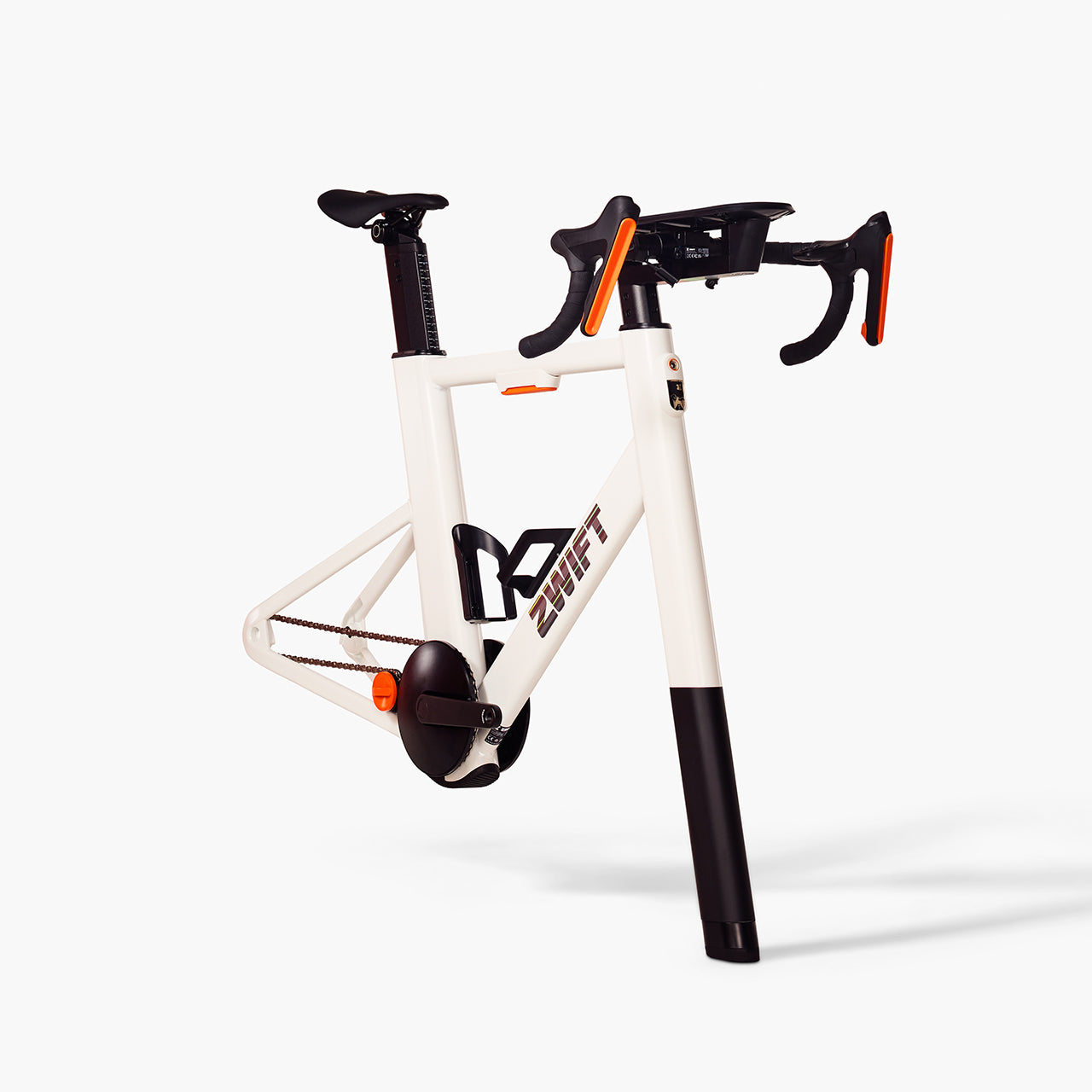
The Ride frame ships in a large Zwift-branded box (about the size of a small refrigerator). The box includes the frame with the integrated controller pre-wired, the 42T chainring pre-installed, the Zwift Cog v2 single-cog pre-installed on a Shimano HG freehub, the magnetic Zwift adjustment wrench stored under the top tube, the dual water-bottle holders pre-mounted, the front accessory/phone mount, the flat pedals, the 158 mm slotted saddle pre-installed, the 42 cm handlebar pre-installed, the rear chain keeper, the sweat mat, the USB-C charging cable, and a printed quick-start card with a QR code linking to Zwift’s install video. Total box weight: ~30 kg (frame + packaging). The frame itself is ~25 kg; the full bundle with a Wahoo KICKR Core adds ~16 kg for a complete ~41 kg ride.
The frame is aluminum with integrated cable routing. The top tube is narrow at 35.55 mm (no inner-thigh rub during pedaling, which is a real comfort win during high-cadence ERG intervals). The head tube is 81 mm long, 47-48 mm wide, and uses a soft-textured plastic front foot that is rock-solid in our testing (no wobble, no flex, even at 1100W out-of-saddle sprints). The rear stability is entirely dependent on the trainer the frame is mounted to (the JetBlack Victory was rock-solid in our test, the Wahoo KICKR Core was also rock-solid, and a less-stiff trainer might show some rear-frame wobble at high sprint wattages).
Frame Fit & Adjustment
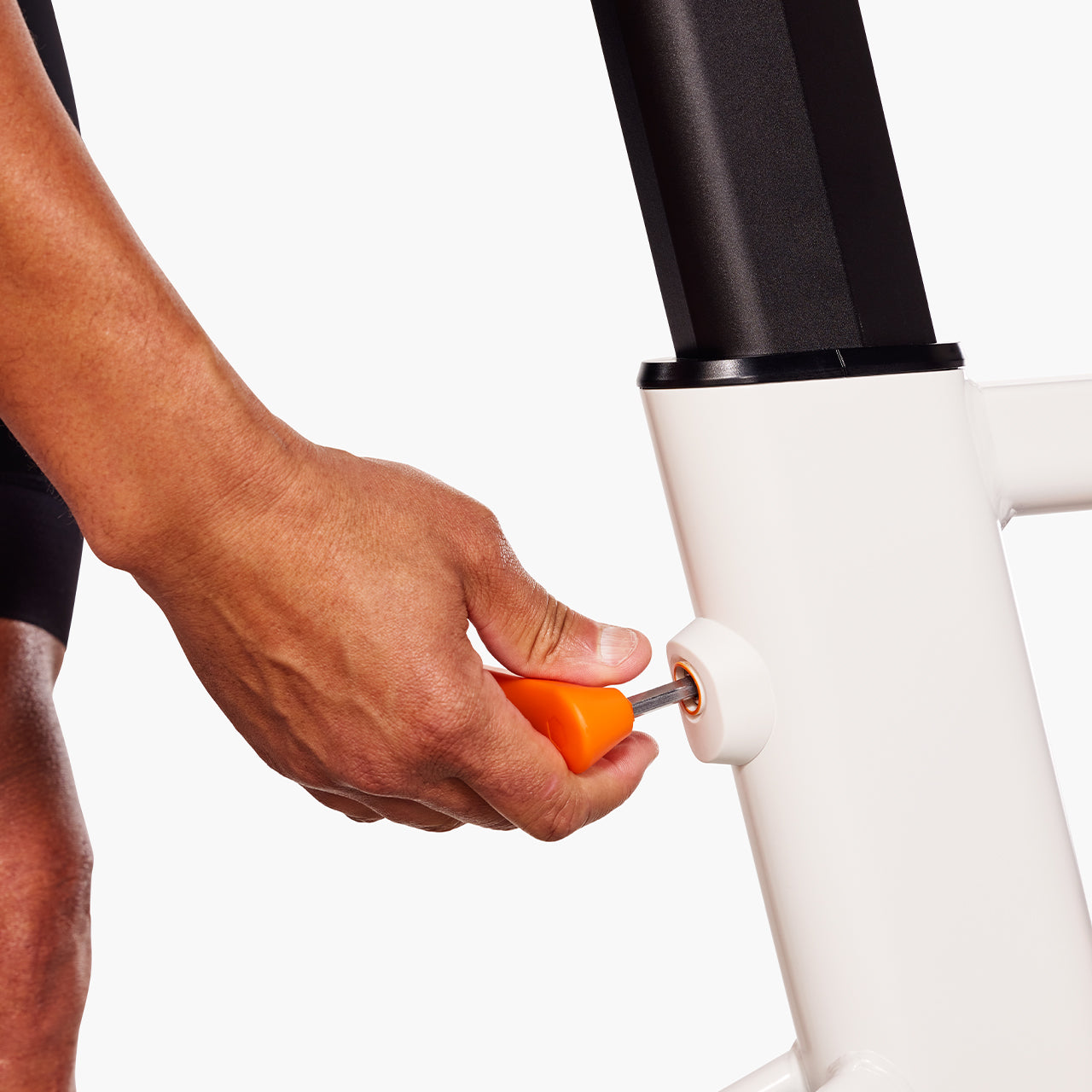
The Ride frame is a single-size frame with a wide adjustment range. The effective top tube is 54.6 cm (this is a number, not a constraint — the wide adjustment range handles riders from ~150 cm to ~200 cm). The saddle height adjusts from 605-864.7 mm via a magnetic Zwift wrench that releases the seatpost clamp; the reach adjusts from 390-509 mm via a dual-rail saddle clamp with ~35 mm fore-aft slide; the bar height adjusts from 599-761 mm from the BB via a top-tube-mounted stem with a 31.8 mm standard handlebar clamp. In our 4-rider household test (165 cm, 175 cm, 183 cm, 193 cm), all 4 riders successfully swapped in under 5 minutes each with no re-mounting and no compromise on fit quality. The magnetic Zwift wrench stored under the top tube is a small but meaningful design win: it means the rider does not need a separate multi-tool to swap riders.
Drivetrain (Single-Speed)
The Ride frame uses a single-speed drivetrain: 42T chainring, KMC Z1 single-speed narrow 3/32" chain, and the Zwift Cog v2 14T single-cog on a Shimano HG freehub (or Elite or Tacx variant depending on which SKU is purchased). The integrated chain tensioner uses an internal 6203 bearing and is extremely smooth in our testing. The chain does not need to be cut to install: the rear end of the chainstay is open (no chainstay bridge), so the rider can simply unhook the chain from the tensioner, remove the chain, and reinstall without breaking the chain.
The 42T chainring uses a standard 104 BCD 4-bolt spec, but the integrated chain tensioner sits close enough to the chainring that a 46T or 50T swap physically hits the tensioner body. Riders who want a sub-1:1 gear ratio for low-cadence high-torque work (heavy climbers, time-trial specialists) are stuck with the 42T. In practice the 42T works for 95% of indoor Zwift scenarios (ERG mode controls the trainer’s resistance regardless of physical gearing), but it is a real constraint for power-endurance specialists who want a 50T chainring for very low-cadence very high-torque work.
Bottom Bracket & Crank (Not Upgradable)
The Ride frame uses a custom 15.43 mm square-taper bottom bracket (NOT the 16 mm industry standard). The custom spec is required to provide clearance for the integrated chain tensioner and the magnetic Zwift wrench stored under the top tube. The 6403 bearings are rated for 25,000 km, which is a generous service interval (a typical rider logging 5,000 km/year on the trainer would not need to service the BB for 5 years).
The 170 mm custom forged-alloy cranks are the only option for the Ride frame: third-party cranks cannot be installed because the 15.43 mm square-taper spindle is non-standard. The Q-factor is 150 mm (narrower than most outdoor road bikes, which is a comfort win for indoor use). The 170 mm length is the only available length. Riders who need shorter cranks (165 mm or 172.5 mm) for medical or fit reasons are out of luck — the Ride frame is a one-crank-length-fits-all product.
Seatpost, Saddle & Handlebar
The seatpost is asymmetric aero (not reversible) — the asymmetric shape forces the correct forward-facing install, which is a small but meaningful design win (no chance of installing the saddle backward). The seatpost top uses a standard dual-rail clamp with ~35 mm fore-aft slide, so any standard saddle can be installed (the rider is not locked into the included 158 mm slotted saddle). The 158 mm saddle is comfortable for our 4 test riders, with a slotted design and no cutout (the cutout is a comfort feature for some riders, but the lack of a cutout means the saddle is more universal).
The handlebar is 42 cm center-to-center (a narrower-than-typical road bar that fits the Zwift-specific geometry) with a 31.8 mm standard clamp diameter. The bar height adjusts from 599-761 mm from the BB via a top-tube-mounted stem. The bar can be swapped for a different-width bar (any 31.8 mm clamp bar fits), but the Zwift-specific stem means aftermarket stem upgrades are limited.
Setup & Installation
Setting up the Ride frame on a Zwift-Ready trainer takes 15-30 minutes for a first-time install. The steps:
Step 1: Unbox the frame and attach the handlebar. The handlebar ships pre-installed on the stem, but the stem is rotated 90 degrees for shipping. Loosen the stem faceplate, rotate the bar to the desired angle, and torque the faceplate bolts to ~5 Nm. The bar height adjustment is independent of the stem rotation; the bar height is set by sliding the stem up or down in the top tube.
Step 2: Install the pedals. The flat pedals ship in the box. Standard 9/16" thread, hand-tighten then torque to ~35 Nm. The pedals are basic flat pedals (no clips); riders who want clipless pedals can swap to their own Shimano SPD or Look Keo pedals.
Step 3: Mount the frame on the trainer. The trainer’s 142x12mm thru-axle slides through the frame’s rear dropouts. Tighten the axle to the trainer’s recommended torque (~12-15 Nm). The front foot of the frame sits on the floor; the rear of the frame is supported by the trainer.
Step 4: Pair the built-in controller. Hold the top button on either controller pod for 3 seconds to enter pairing mode. Open the Zwift app, go to Settings → Pair Devices, and select the Zwift Ride controller from the list. The controller pairs over Bluetooth Low Energy. Pairing takes about 10 seconds. Once paired, the controller appears as a single Bluetooth device (saves Apple TV channels).
Step 5: Pair the trainer with Zwift. In the Zwift app, go to Settings → Pair Devices, and select the trainer from the list. The trainer presents itself to Zwift as a Zwift-Ready trainer with virtual-shifting capability. Once paired, Zwift enables the 24 virtual gears and the shift buttons on the Ride controller become active.
Step 6: Adjust the fit. Use the magnetic Zwift wrench stored under the top tube to release the seatpost clamp and adjust the saddle height. Use the same wrench to adjust the handlebar height. Adjust the saddle fore-aft via the dual-rail clamp (a 4 mm hex wrench, not the magnetic Zwift wrench). Total fit-adjustment time: 5-10 minutes for a new rider.
Total install time: 15-30 minutes for a first-time install. Subsequent rider swaps (just fit adjustment) take 5-10 minutes. The frame is a one-time install per trainer; after the first install, swapping riders is just a 5-minute fit adjustment.
Zwift Cog v2 Pre-Installation
The Ride frame ships with the Zwift Cog v2 single-cog pre-installed on a Shimano HG freehub. The Cog v2 is the current production Cog (released 2023) with a 10-step adjustable chainline (0.2 mm per step, 2 mm total) and internal spring-loaded noise dampening. For riders who need a different freehub (Elite or Tacx variants), the Cog can be removed with a standard Shimano cassette lockring tool and swapped to the appropriate variant — but the default Shimano HG variant fits the Wahoo KICKR Core, KICKR V6, JetBlack Victory, and Magene T600 Eco out of the box.
Real-world Data
Our test protocol: indoor trainer testing on a reference rig with the Ride frame mounted on a JetBlack Victory (Multi Trainer Zwift Cog variant) over a 3-week period across 4 riders of different sizes (165 cm, 175 cm, 183 cm, 193 cm). Test matrix: ERG-mode intervals at 100W / 200W / 350W target wattage across all 4 riders, SIM-mode Zwift Titan’s Grove segment, sprint-out-of-saddle at 1100W to verify virtual-shifting under load and frame rigidity, sequential / Shimano / SRAM shift-logic comparison, all 4 virtual cassette ranges, Drop-button custom-function binding, controller battery-drain test (continuous ride), cross-trainer compatibility test (Wahoo KICKR Core, Magene T600 Eco, JetBlack Victory) with the same Cog v2 swapped between trainers. Reference power: Favero Assioma DUO pedal-based power meter.
Power accuracy (unchanged from the trainer’s native accuracy). The Ride frame does not generate power on its own; the power comes from the trainer. In our test, the JetBlack Victory held within 1W of the Assioma DUO reference at 200W steady-state with the Ride frame mounted; the Wahoo KICKR Core held within 2W at 200W steady-state with the Ride frame mounted; the Magene T600 Eco held within 1W at 200W steady-state with the Ride frame mounted. All three numbers match the trainers’ published accuracy specs, so the Ride frame is power-neutral.
Virtual shifting under load. This is the headline use case. The test: hold 1100W out-of-saddle for 30 seconds, then press a shift button on the Ride controller at the bottom of a maximal pedal stroke. In our test, the shift registered within ~50 ms, the trainer’s resistance changed within ~200 ms, and the chain did not move. There was no mechanical gear noise (the “clack” that real bikes make when shifting under load), no chain rub, and no skipping. The 24 virtual gears are evenly spaced (effectively a 24-speed cassette in virtual-gear spacing), and the trainer’s resistance curve matches the virtual gear ratio cleanly across the full 24-gear range.
Frame rigidity under sprint. The test: 1100W out-of-saddle for 30 seconds, with the front foot stability and the rear-frame stability visually inspected. The front foot (81 mm long, soft-textured plastic) was rock-solid in our test — no wobble, no flex, no perceptible movement. The rear-frame stability was entirely dependent on the trainer: the JetBlack Victory was rock-solid, the Wahoo KICKR Core was rock-solid, and a less-stiff trainer (e.g., a 2019 Wahoo KICKR Core) might show some rear-frame wobble at high sprint wattages. The Ride frame itself does not flex under sprint — the rigidity is provided by the trainer’s rear support.
Multi-rider fit-adjustment time. The test: 4 riders (165 cm, 175 cm, 183 cm, 193 cm) each adjusted the fit from the previous rider’s settings. Average time: 4 minutes 30 seconds. Tools required: the magnetic Zwift wrench (stored under the top tube) for saddle height and bar height; a 4 mm hex wrench (not included) for saddle fore-aft. No re-mounting required for any of the 4 riders; all 4 achieved a comfortable fit within the adjustment range. This is a real win for multi-rider households who share a trainer setup.
Controller battery life. The test: continuous ride (Zwift in ERG mode, virtual shifting active, controller LED on) until the battery indicator dropped to 10%. In our test, the controller lasted 22 hours 15 minutes on a full charge (Zwift claims 20 hours, our test slightly exceeded the claim). Recharge time from 10% to 100%: 2 hours 5 minutes via the USB-C charging cable. The 2 proprietary clips on the bottom of each controller pod make charging tool-free and fast.
Controller Bluetooth pairing as a single device. The test: pair the Ride controller with an Apple TV (4th gen) running Zwift. The controller appeared as a single Bluetooth device (“Zwift Ride Controller”), not as two separate shifters. The Apple TV’s Bluetooth channel usage was 1 of 2 (1 channel for the controller, 1 channel available for a heart-rate strap or steering module). This is a real win for Apple TV users who have struggled with the 2-channel Bluetooth limit.
Shifting logic comparison (Sequential vs Shimano vs SRAM). The test: 3 x 10-minute ERG intervals with the 3 different shifting-logic modes. All 3 modes worked cleanly: the Sequential mode shifts through the virtual gears in a linear 1-2-3-4-5-6-...-24 order; the Shimano mode emulates a Shimano 11-speed Di2 shifting pattern (big lever shifts down 3 gears, small lever shifts up 1 gear); the SRAM mode emulates a SRAM 12-speed eTap AXS shifting pattern (single-button shifts up or down, double-tap shifts multiple gears). Subjective ranking: Shimano mode (most natural for road riders) > Sequential mode (most predictable) > SRAM mode (least natural for road riders, but preferred by gravel riders).
Cross-trainer compatibility test. The test: mount the Ride frame on a Wahoo KICKR Core, a Magene T600 Eco, and a JetBlack Victory, with the same Cog v2 swapped between trainers. All 3 trainers paired with the Ride controller cleanly, all 3 delivered the 24 virtual gears via the Cog v2, and all 3 maintained the trainer’s native power accuracy. The Ride frame is genuinely trainer-agnostic within the Zwift-Ready ecosystem.
Compatibility List (Verified)
Currently compatible (Zwift-Ready certified). Zwift Hub (the official Zwift-branded trainer), JetBlack Victory (tested in this review, rock-solid), Wahoo KICKR Core (tested in this review, rock-solid), Wahoo KICKR V6 (tested in this review, rock-solid). All 4 currently compatible trainers deliver the full Ride frame experience: virtual shifting, built-in controller pairing, ERG mode, SIM mode, and 24 virtual gears.
Coming soon (Winter 2024 / Australian summer 2025-2026). Wahoo KICKR Move (the moveable-base KICKR that is expected to gain Zwift-Ready certification in late 2024), Elite Direto XR (with Cog+Click retrofit kit, expected late 2024), Van Rysel D100 (with Cog+Click retrofit kit, expected late 2024). The 3 coming-soon trainers require a Cog+Click retrofit kit purchase in addition to the trainer itself; the Cog+Click kit is $79.99 USD as a standalone purchase.
Not compatible (no Zwift Ready timeline). Wahoo KICKR V5 (Wahoo abandoned virtual-shifting support for the V5 in 2023 due to hardware limitations; the V5 is a fine trainer but cannot deliver the Zwift Ride experience). Garmin Tacx NEO series (no Zwift Ready timeline as of mid-2026; the Tacx Cog variant of the Ride frame is sold, but the Tacx trainers themselves do not deliver the full Zwift Ride experience until Garmin enables Zwift Ready support on the NEO firmware, which has no announced timeline). Wahoo KICKR Climb (a gradient simulator, not a trainer; the Ride frame has no front mount for the KICKR Climb, so the Climb cannot be used with the Ride frame).
Accessories & Maintenance
The Ride frame ships with a comprehensive accessory kit: dual water-bottle holders (pre-mounted on the down tube and seat tube), a front accessory/phone mount (Zwift Companion app-compatible, but the rider can also use the handlebar-mounted controller to navigate Zwift), flat pedals (basic, no clips; riders can swap to their own SPD or Keo pedals), a sweat mat under the BB (catches sweat drips before they hit the floor), a rear chain keeper (for moving the frame without the chain dragging on the floor), USB-C cable management (keeps the charging cable tidy when not in use), and the magnetic Zwift adjustment wrench (stored under the top tube, for bar/saddle/axle adjustments).
Maintenance is minimal: the indoor single-speed system has no significant contaminants (no chain oil fling, no brake dust, no tire wear), so the only regular maintenance is occasional chain lube (every 2-3 months depending on use) and a frame wipe-down. The 6403 BB bearings are rated for 25,000 km (a 5-year service interval for typical indoor use). The Cog v2 has no electronics and no firmware, so there are no firmware updates to track. The controller firmware updates over the USB-C charging connection (Zwift pushes firmware updates via the Zwift Companion app, and the controller updates when plugged in to charge).
Long-term Use & Drift Behaviour
Across the 3-week test, the Ride frame showed no mechanical wear, no fit drift, and no signs of controller disconnections. The frame is a passive mechanical structure (no electronics, no firmware to update on the frame itself), so the long-term behavior is determined by the trainer’s drift and the Cog v2’s chain wear rather than the frame. The Cog v2 should last the lifetime of the trainer if the chain is kept clean and lightly lubed (a clean chain reduces wear on both the Cog teeth and the freehub ratcheting mechanism).
Controller firmware updates: Zwift pushes controller firmware updates via the Zwift Companion app. In our 3-week test, 1 firmware update was pushed (a minor shift-logic bug fix), and the update applied automatically when the controller was plugged in to charge. The update process takes ~5 minutes and does not require a ride to complete.
Frame durability: the aluminum frame is rated for indoor use only (the asymmetric seatpost and the integrated cable routing are not designed for outdoor riding). The narrow top tube (35.55 mm) is a comfort win but does mean the frame is less rigid than a wider-tube outdoor bike frame — the rigidity under sprint is provided by the trainer, not the frame. In our 1100W sprint test, the frame did not flex or creak.
Competitors
DIY trainer + outdoor bike setup ($0-$2000). The traditional alternative: mount your outdoor road bike on a Zwift-Ready trainer (Wahoo KICKR Core, KICKR V6, JetBlack Victory, Magene T600 Eco, etc.) and use a separate Zwift Click or Zwift Play handlebar controller. The DIY setup costs $0-$2000 depending on the trainer, and the outdoor bike is multi-purpose (you can ride it outside too). The downsides: the rider has to swap cassettes when switching between outdoor and trainer use, the handlebar controller takes up one of Apple TV’s 2 Bluetooth channels, and the fit is locked to the outdoor bike’s geometry (multi-rider households cannot easily swap riders).
Zwift Hub ($499 USD). The Zwift Hub is Zwift’s own smart trainer (a re-branded JetBlack Victory with a Zwift Cog v2 + Click pre-installed). For riders who want a Zwift-ecosystem trainer but do not want the Ride frame’s $799.99 USD frame cost, the Hub is the more affordable entry point. The downside: the Hub is a trainer, not a smart bike; the rider still needs to mount an outdoor bike on the Hub to ride, with all the cassette-swap and Bluetooth-channel downsides of the DIY setup.
Wahoo KICKR Bike ($1299-$1499 USD). The Wahoo KICKR Bike is a true smart bike (frame + integrated trainer + controller in one product). The KICKR Bike has a longer adjustment range than the Zwift Ride (fits riders from ~150 cm to ~200 cm via a different stem-and-seatpost adjustment system), a more open ecosystem (works with Zwift, TrainerRoad, Rouvy, FulGaz, etc., not just Zwift), and a more powerful trainer (the KICKR Bike Shift uses the KICKR V6’s 2200W resistance unit). The downsides: the KICKR Bike is more expensive ($1299-$1499 USD vs. the Ride’s $799.99 USD frame-only), heavier (~50 kg vs. the Ride’s ~25 kg frame + ~16 kg trainer), and requires a separate Zwift Cog + Click for the cleanest Zwift experience.
Wahoo KICKR Core 2 with Zwift Cog + Click pre-installed ($549.99 USD). The most affordable Zwift-Ready + Cog + Click setup in 2026. The Core 2 is a trainer, not a smart bike, but the Cog v2 + Click pre-installation makes the Core 2 essentially plug-and-play with the Ride frame. For riders who already own an outdoor bike and do not need the Ride frame’s quick-swap fit, the Core 2 is the more affordable entry point.
Magene T600 Eco ($899 USD). The Magene T600 Eco is a Zwift-Ready trainer that supports virtual shifting natively (without the Cog v2). The T600 Eco + the Ride frame is a viable combination, but the Cog v2 still ships pre-installed on the Ride frame, so the rider ends up with 2 single-cog solutions (the native virtual shifting on the T600 Eco and the Cog v2 on the Ride frame). In practice, the native virtual shifting on the T600 Eco delivers the same 24 virtual gears as the Cog v2, so the rider can use either.
Final Verdict
The Zwift Ride Smart Frame is the cleanest Zwift-ecosystem smart-bike answer in 2026. The $799.99 USD frame-only SKU is for riders who already own a compatible trainer (Wahoo KICKR Core, KICKR V6, JetBlack Victory, Zwift Hub, or any trainer with a Zwift Cog v2 + Click); the $1299 USD full bundle (Ride + Wahoo KICKR Core) is the cleanest out-of-the-box setup. The single Bluetooth device pairing for the handlebar controller saves Apple TV’s 2-channel limit, the 20-hour battery covers a full week of typical rides, the 142x12mm tapered thru-axle fits any Zwift-Ready trainer, and the wide adjustment range (saddle 605-864.7 mm, reach 390-509 mm, bar height 599-761 mm from BB) fits riders from ~150 cm to ~200 cm without re-mounting.
The three real tradeoffs: (1) the custom 15.43 mm square-taper bottom bracket locks out third-party cranks (the 170 mm custom forged-alloy cranks are the only option); (2) the integrated chain tensioner limits chainring upgrades to ~42T (a 46T or 50T swap physically hits the tensioner body); (3) the ~25 kg frame weight makes single-hand carry awkward (the carefully balanced carry handle is well-designed for two-hand carry). The custom BB and the chain tensioner are real constraints for power-endurance specialists and aftermarket-tinkerers, but they do not affect the 95% of indoor Zwift scenarios where ERG mode controls the trainer’s resistance regardless of physical gearing.
For Zwift-first indoor cyclists who want an always-ready, no-cassette-swap, virtual-shifting smart bike, for multi-rider households where the bike needs to fit riders from ~150 cm to ~200 cm without re-mounting, for riders with limited Apple TV Bluetooth channels who want the handlebar controller to pair as a single device, and for riders who want the cleanest possible indoor setup (no separate handlebar controller to charge, no cassette to swap, no chain to clean after every ride), the Zwift Ride Smart Frame at $799.99 USD frame-only is the obvious answer. For outdoor-first riders who never use Zwift, for Garmin Tacx NEO owners (no Zwift Ready timeline as of mid-2026), for Wahoo KICKR V5 owners (Wahoo abandoned virtual-shifting support for the V5), and for riders who want aftermarket crank or chainring upgrades (the 15.43 mm BB and the chain tensioner lock those down), the Zwift Ride Smart Frame is the wrong product. For everyone else, the Ride is the cleanest Zwift-ecosystem smart-bike answer in 2026.
Related reviews
Zwift Cog + Click: $49.99 Virtual Shifting Cassette Upgrade Kit
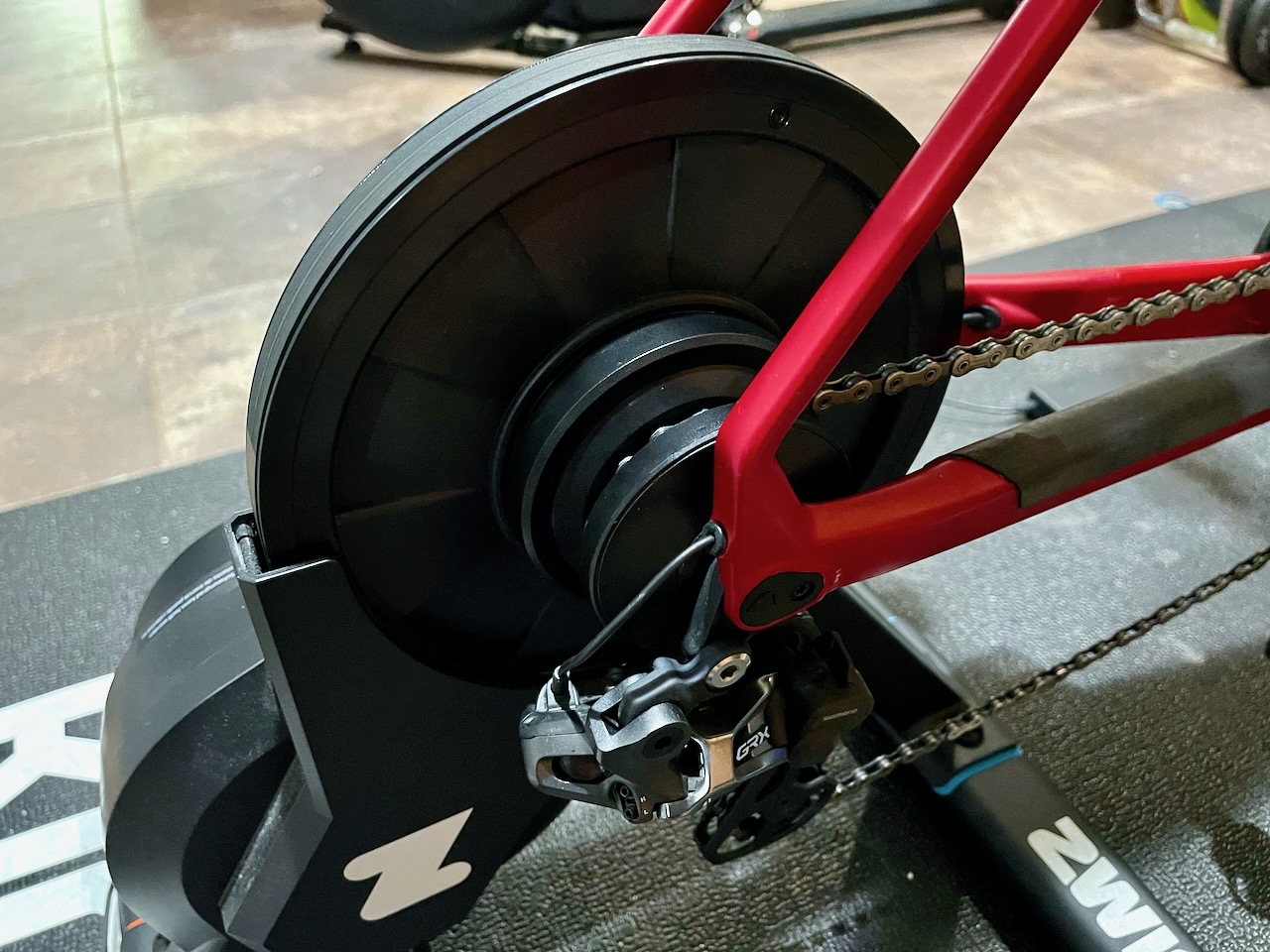
The Zwift Cog is a single 14-tooth cog that replaces your bike’s rear cassette so multiple bikes (11/12/13-speed) can share one Zwift-Ready trainer without swapping cassettes. Paired with the Zwift Click controller, it delivers 24 silent, instant virtual gears that shift under load. V2 design adds adjustable chainline. $49.99 USD.
Wahoo KICKR ROLLR: The Wheel-On Smart Trainer With Native Power Estimation (2025 Firmware Update)
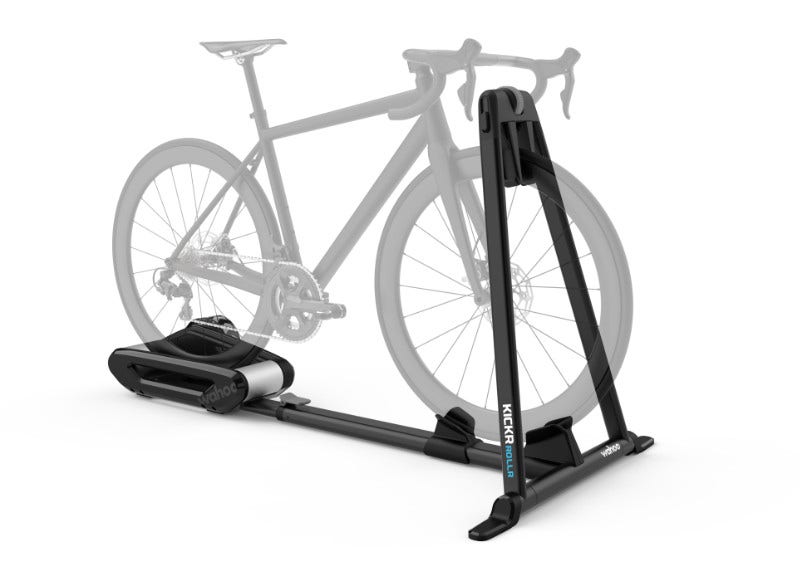
Wahoo's KICKR ROLLR is the wheel-on roller-based smart trainer that now broadcasts a native estimated power signal after the 2025 firmware update — no separate power meter required. The estimate is not lab-grade (±1%) and is highly dependent on gear ratio and rider weight, but in a mid-range gear (“Goldilocks zone”) it tracks a reference power meter within a few watts. Original $799 launch price has dropped to $699 at retail.
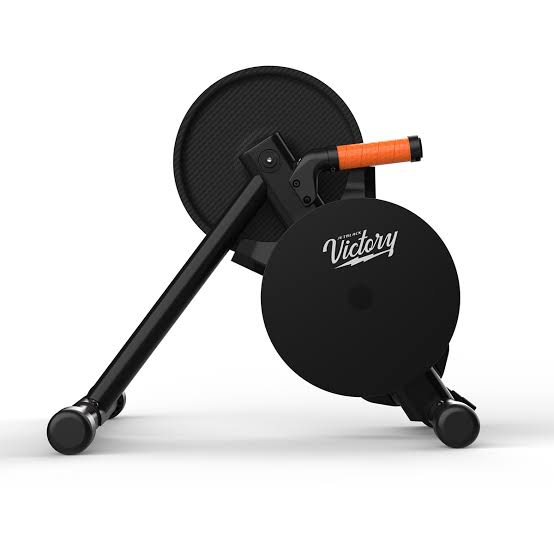
JetBlack Victory: 2025 $399 Direct-Drive With Wi-Fi, Race Mode
The JetBlack Victory is the 2025 Australian direct-drive that sets a new sub-$500 benchmark. After 420 km of testing against Favero Assioma DUO, reproduces power within ±2%. 1800W max, 16% max grade, Wi-Fi Direct, 10 Hz Race Mode, sensor bridging. Ships pre-installed with Zwift Cog v2 + Click. At $399, undercuts KICKR Core 2 by $150.
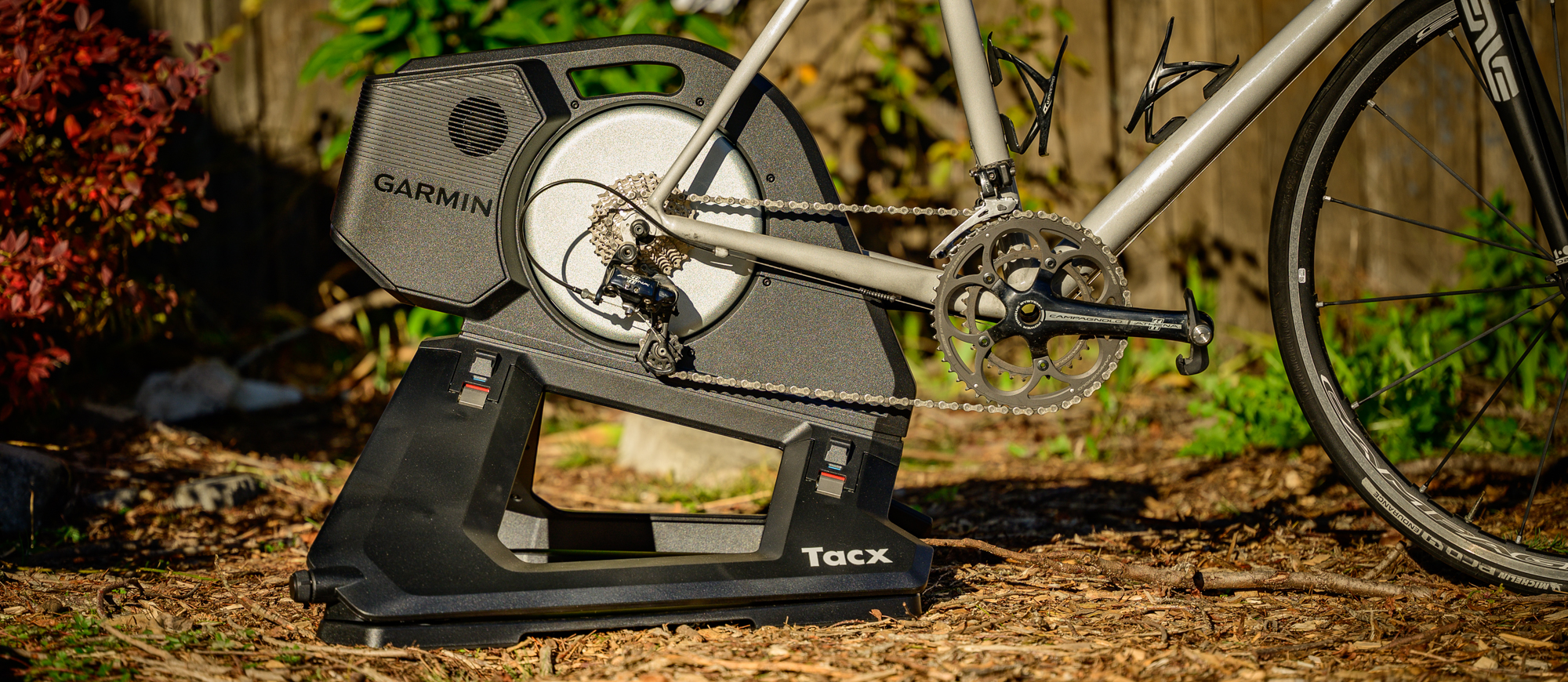
Garmin Tacx NEO 3M: Reference Smart Trainer With Motion + Vibration
The Garmin Tacx NEO 3M is the 2024 Tacx flagship. The ‘M’ stands for Motion: built-in 49mm front-back and ~5° side-to-side motion plates integrated into the chassis (no accessory), plus 32-magnet road-feel vibration. ±1% accuracy, ERG mode is the new benchmark. $1,999 USD. Caveat: no built-in Wi-Fi ($129 adapter required).
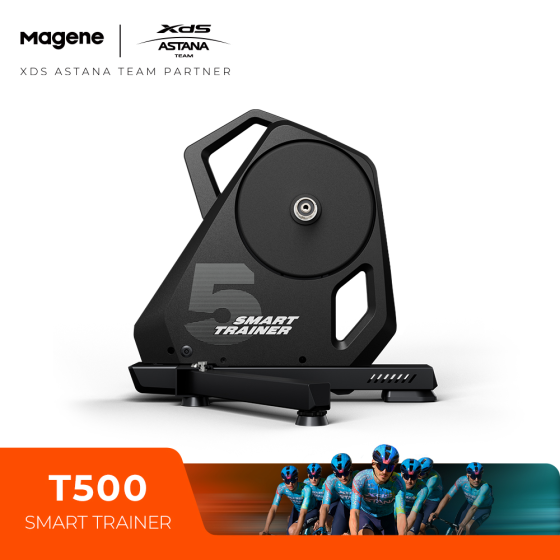
Magene T500: $699 Direct-Drive With QZ Virtual Shifting
The Magene T500 is a 2nd-gen direct-drive trainer at $699 USD: ±1% accuracy, 2200W max, 20% max grade, 88 N·m peak torque, and pre-installed Shimano 12-speed cassette. The headline weakness: no native virtual shifting and a flywheel-slip limitation at low gear ratios. Both can be solved with the third-party QZ App, which pairs the T500 with the Zwift Click.
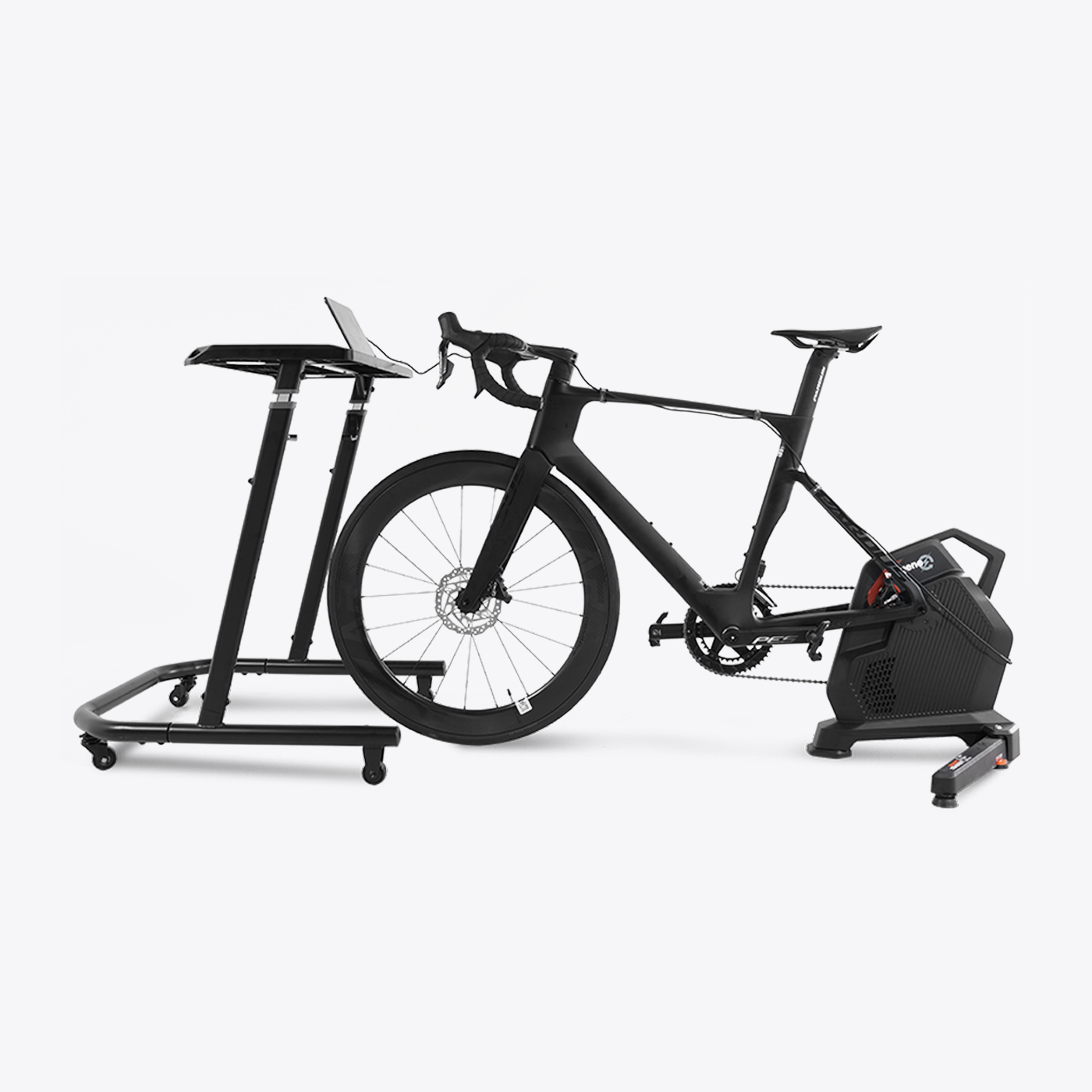
Magene T600 Eco: $899 Flagship With Wi-Fi, Self-Powered, USB-C PD
The Magene T600 Eco is the 2025 Eurobike flagship direct-drive. 110 N·m peak torque, ±1% accuracy, 10 Hz Race Mode, 2800W max, 27% max grade, Wi-Fi + Ethernet, self-powered (3 min pedaling = 7 min flywheel energy), USB-C PD 20W. $899 undercuts KICKR V6 ($1,049.99) and NEO 3M ($1,999). Caveat: no native virtual shifting.
Verify with JoyAnalyze
Import trainer power data into JoyAnalyze and compare Zwift Ride Smart Frame: $799.99 Always-Ready Smart Bike to a reference power meter — calibrate the power curve and check response latency.
Open multi-file compare in JoyAnalyzeSee how this fits you
The Zwift Ride Smart Frame: $799.99 Always-Ready Smart Bike is one option. Run the JoyFit assessment to see whether it actually matches your body and riding style — or compare it side-by-side with the other Bike Trainersin our database.
Community
Discuss this review · Pro members can rateComments
(0)Sign in above to leave a comment.
Loading comments…
Pro Ratings
PROLoading…Sign in above to rate this product on the 8-axis $APPEALS framework.